


Popular articles


What Can You Not Bring on a Plane? 25 Items to Check Before You Pack
 Travel PlanningWhat Can You Not Bring on a Plane? 25 Items to Check Before You Pack
Travel PlanningWhat Can You Not Bring on a Plane? 25 Items to Check Before You Pack
What Can You Not Bring on a Plane? 25 Items to Check Before You Pack
Article content

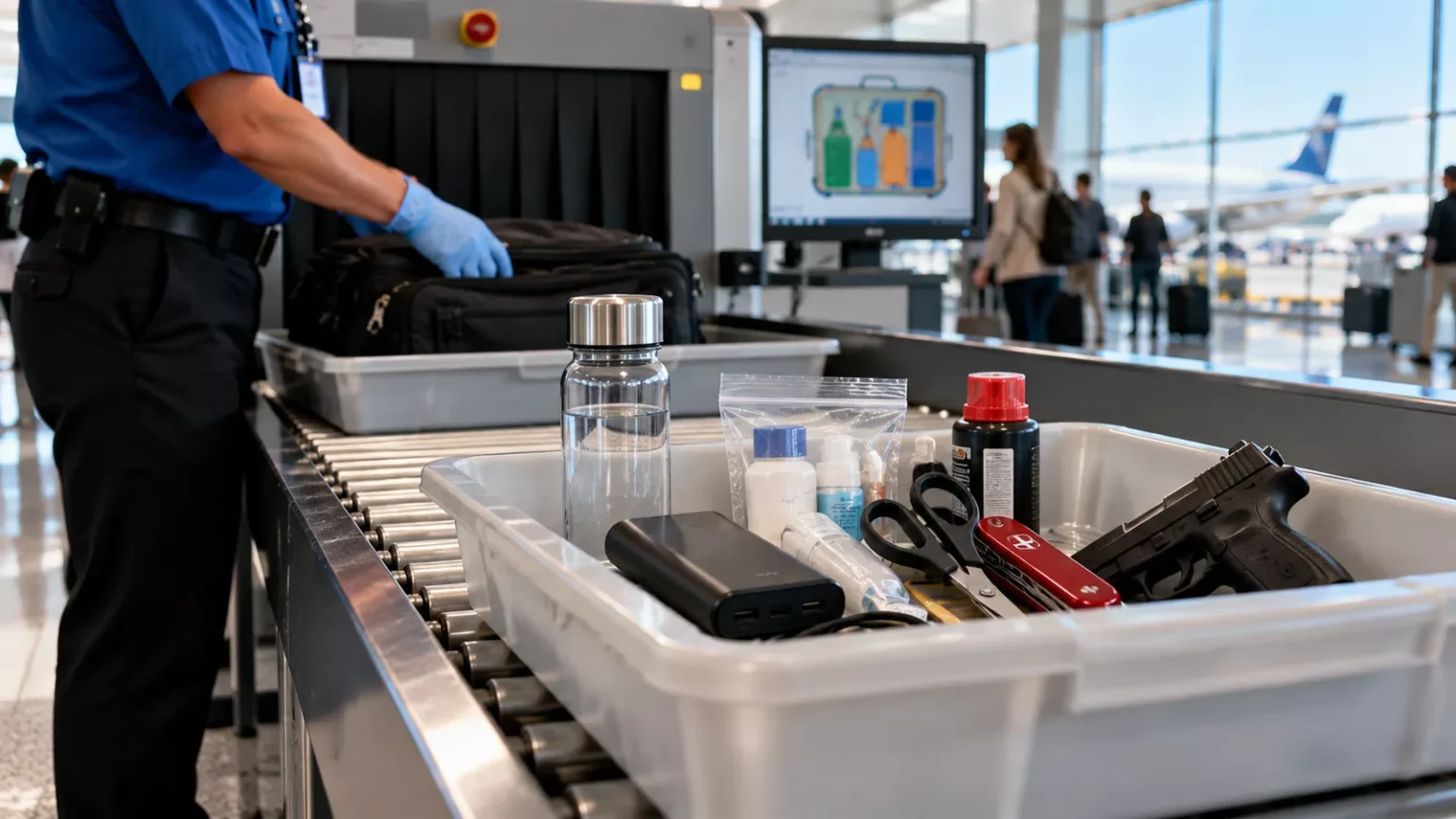
Packing for a flight gets confusing because “not allowed on a plane” can mean several completely different things. A pocket knife may be prohibited in a carry-on but permitted in checked baggage, while a power bank creates the opposite problem: it belongs in the cabin and must not go in checked baggage.
Then there are items such as fireworks and certain hazardous chemicals that should not be packed in either bag. Add liquids, food, medication, batteries, sporting equipment and airline-specific policies, and a perfectly ordinary packing list can suddenly become complicated.
So, what can you not bring on a plane? For flights departing from the United States, the answer depends primarily on Transportation Security Administration security rules, Federal Aviation Administration hazardous-material regulations and any additional restrictions imposed by the airline. International travelers also need to check the rules at every airport where they will pass through security because another country’s limits can differ from U.S. rules.
The most useful approach is therefore not memorizing one enormous prohibited-items list. It is understanding which bag an item belongs in, whether it has a size or quantity limit and whether it is prohibited altogether.
What Can You Not Bring on a Plane? The Quick Answer
You generally cannot take weapons, most knives, many sharp objects, large quantities of liquids and gels, and certain tools or sporting equipment through a U.S. airport security checkpoint in carry-on baggage. Explosives, many flammable substances and some hazardous chemicals are prohibited from both carry-on and checked baggage.
There is one major exception to the “put it in checked luggage” instinct: spare lithium batteries, power banks and e-cigarettes belong in the cabin, not in checked baggage. That distinction is one of the most important packing rules to understand before flying.
This quick table covers the items travelers most often need to sort before leaving for the airport.
| Item | Carry-on | Checked bag | What to know |
|---|---|---|---|
| Water over 3.4 oz/100 mL | No through TSA security | Yes | Empty bottle is allowed |
| Full-size shampoo | No | Yes | Carry-on container limit is 3.4 oz/100 mL |
| Peanut butter | Limited to 3.4 oz/100 mL | Yes | TSA treats it as a liquid/gel |
| Pocket knife | No | Generally yes | Secure sharp objects |
| Swiss Army knife | No | Generally yes | Blade makes it unsuitable for carry-on |
| Large scissors | Restricted | Generally yes | Check current TSA blade-length rule |
| Box/utility cutter | No | Yes | Checked baggage only |
| Hammer | No | Yes | Considered a restricted tool in carry-on |
| Baseball bat | No | Yes | Sporting equipment that can be used as a striking object |
| Golf club | No | Yes | Must travel outside the cabin |
| Power bank | Yes | No | Must remain in the cabin |
| Spare lithium battery | Yes | No | Protect terminals from short circuit |
| Vape/e-cigarette | Yes | No | Must be protected against activation |
| Battery over 160 Wh | Generally no | Generally no | Passenger-aircraft restrictions apply |
| Damaged/recalled lithium battery | No | No | Do not travel with it unless made safe under applicable rules |
| Fireworks | No | No | Prohibited |
| Torch lighter | No | No | Prohibited |
| Lighter fluid | No | No | Prohibited |
| Liquid bleach | No | No | Prohibited |
| Pool chlorine | No | No | Prohibited |
| Alcohol over 70% ABV | No | No | More than 140 proof is prohibited |
| Large snow globe | No | Yes | Small versions must satisfy liquid rules |
| Gel candle | No | Yes | Solid candles are treated differently |
| Smart bag with nonremovable battery | Depends | Restricted | Battery design matters |
| Camp stove with fuel/residue | No | No | Must be completely empty and cleaned to qualify |
The table is only a starting point. Some items have special instructions, airline approval requirements or exceptions for medical needs, infants and mobility equipment.
1. Water Bottles and Drinks Over 3.4 Ounces
A full bottle of water is one of the most common answers to what can you not bring on a plane through TSA security. Under the standard U.S. liquids rule, ordinary liquids in carry-on baggage must be in containers of 3.4 ounces (100 milliliters) or less.
The key word is container. A nearly empty 12-ounce bottle does not become compliant simply because only an ounce of water remains inside.
There is an easy solution: bring an empty reusable water bottle through security and fill it afterward. This avoids buying another bottle in the terminal and keeps the same container available throughout the trip.
2. Full-Size Shampoo, Sunscreen and Other Toiletries
Full-size liquid toiletries are another common mistake when travelers ask what can you not bring on a plane in a carry-on. Shampoo, conditioner, lotion, liquid deodorant, sunscreen, toothpaste, gels, creams and many similar products are subject to TSA’s liquids restrictions.
Each carry-on container generally needs to hold 3.4 ounces or 100 milliliters or less, with qualifying liquids, aerosols, gels, creams and pastes fitting into the permitted quart-size bag.
Solid alternatives can make carry-on packing easier. Bar soap and solid deodorant, for example, do not create the same standard liquid-limit problem.
For longer journeys, deciding what belongs in the cabin and what belongs in the suitcase is part of broader trip preparation. LitiTravels’ Travel Planning guides cover packing, itineraries, costs and other practical decisions that are easier to solve before departure than at the airport.
3. Peanut Butter, Hummus and Other Spreadable Foods
Peanut butter may look like food rather than a travel liquid, but that distinction does not work at a TSA checkpoint. Creamy or spreadable foods such as peanut butter, hummus, dips, jams, jellies and many sauces are treated under the liquids and gels rules.
That means a large jar of peanut butter cannot simply be packed into a carry-on because it is edible. A container above 3.4 ounces/100 milliliters should generally go into checked baggage if it is otherwise permitted.
Solid food is much simpler. Bread, solid chocolate and many other solid foods can travel in carry-on baggage, although officers can request additional screening.
4. Pocket Knives
Pocket knives should not be packed in a carry-on for a U.S. flight. TSA generally prohibits knives through the passenger security checkpoint, with narrow exceptions for items such as plastic or round-bladed butter knives.
That includes the tiny knife that may have lived unnoticed in a hiking backpack for months. Check every small pocket before leaving for the airport, particularly when reusing outdoor, fishing or camping bags.
Knives permitted in checked baggage should be sheathed or securely wrapped so they cannot injure baggage handlers or inspectors.
5. Swiss Army Knives and Multi-Tools With Blades
A Swiss Army knife is still a knife even when its main purpose on a trip is opening bottles or tightening screws. Multi-tools containing blades therefore create the same basic carry-on problem.
This is particularly easy to forget because multi-tools often live permanently in backpacks, camera bags or outdoor kits. Travelers may not consciously “pack” one for the flight at all.
Inspect gear that has been used for hiking, road trips or camping before repacking it for air travel. Removing one forgotten multi-tool at home is far easier than deciding what to do with it at airport security.
6. Utility Knives and Box Cutters
Utility knives and box cutters cannot go through TSA security in carry-on baggage. They belong in checked baggage when permitted and should be packed safely.
This can catch business travelers, photographers, tradespeople and anyone reusing a work backpack. A tool that is perfectly ordinary at work can become a prohibited cabin item at the airport.
Do not assume removing the blade automatically makes every utility-knife-style item acceptable. TSA guidance specifically addresses utility knives, including models presented without blades.
7. Large Scissors
Scissors are not universally prohibited, but size matters. Small scissors can be permitted in carry-on baggage under TSA rules, while larger scissors need to go into checked luggage.
Because regulations specify how blade length is measured, travelers near the limit should check the current TSA entry for the exact pair rather than estimating.
If the scissors are not essential during the flight, packing them securely in checked baggage removes the uncertainty.
8. Hammers and Certain Tools
A hammer is an example of something that may be completely ordinary at the destination but inappropriate in the aircraft cabin. TSA does not permit hammers in carry-on bags.
Other tools can depend on their type and dimensions. That makes a toolbox a poor candidate for assumption-based packing.
Check individual tools rather than asking whether “tools” in general are allowed. Power tools also introduce a second issue because removable lithium batteries may need to be separated and carried in the cabin.
9. Baseball Bats and Similar Sporting Equipment
Baseball bats cannot travel in carry-on baggage. The same basic issue applies to several sporting items capable of being used as striking objects.
This is why what can you not bring on a plane is not limited to obvious weapons. An item can be designed entirely for recreation and still be unsuitable for the aircraft cabin.
Athletes should check both security rules and airline baggage policies. An item permitted in checked baggage may still be oversized or subject to a special sporting-equipment fee.
10. Golf Clubs
Golf clubs cannot be carried into the aircraft cabin under standard TSA screening rules. They need to travel as checked sporting equipment when accepted by the airline.
The airline side matters here as much as airport security. Weight, dimensions, packaging and fees can differ between carriers even when the security rule is straightforward.
Confirm sporting-equipment conditions before arriving at the airport. A prohibited carry-on item and an oversized checked item are two separate problems.
11. Power Banks
Power banks are where many travelers get the rule exactly backward. A portable charger is generally allowed on a plane, but it belongs in carry-on baggage and cannot be placed in checked baggage.
FAA rules limit ordinary spare rechargeable lithium-ion batteries to 100 watt-hours (Wh). With airline approval, up to two larger spare batteries in the 101–160 Wh range may be carried, while batteries above 160 Wh are generally forbidden on passenger aircraft.
This matters even if the power bank seems small. Check its Wh rating before travel, especially with large laptop chargers, high-capacity battery packs and portable power stations.
A portable charger is useful on trips where navigation and mobile connectivity matter throughout the day. The LitiTravels guide to the best time to visit Scotland includes a practical destination packing list where a portable charger makes sense – but for the flight itself, that charger needs to remain in the cabin.
12. Spare Lithium Batteries
Spare lithium batteries follow the same crucial cabin rule as power banks. Uninstalled lithium batteries must not go into checked baggage and should be carried with the passenger.
Battery terminals must be protected against short circuits. Keeping batteries in original retail packaging, using an appropriate battery case or protecting exposed terminals are among the methods described by FAA guidance.
This rule becomes especially important if a carry-on is unexpectedly gate-checked. Remove spare lithium batteries and power banks before handing the bag over.
13. Large Lithium Batteries Over 160 Wh
Large rechargeable lithium batteries above 160 Wh generally cannot travel on passenger aircraft as ordinary passenger baggage. These are more likely to appear in large power stations, heavy-duty equipment and some specialized electronics than in a typical phone charger.
Batteries between 101 and 160 Wh occupy a separate category and require airline approval, with limits applying to larger spare batteries.
Never judge battery eligibility by physical size alone. Look for the Wh rating printed on the battery or calculate it from the manufacturer’s electrical specifications when appropriate.
14. Damaged or Recalled Lithium Batteries
A damaged battery is not simply another power bank with a packing restriction. FAA guidance states that damaged or recalled batteries and battery-powered devices likely to create sparks or dangerous heat must not be carried aboard an aircraft unless the battery has been removed or otherwise made safe under applicable requirements.
Warning signs such as swelling or obvious physical damage should not be ignored before a flight. A battery that works intermittently is not automatically safe for air travel.
Check manufacturer recall information when there is any doubt. The consequences of a lithium-battery fire make this one of the more important rules in the entire packing guide.
15. Vapes and E-Cigarettes in Checked Luggage
Vapes and electronic cigarettes can create another counterintuitive packing mistake. FAA rules require battery-powered electronic smoking devices to remain on the passenger or in carry-on baggage, not in checked luggage.
The device must also be protected against accidental activation. Spare lithium batteries associated with it need appropriate protection against short circuits.
Using or charging these devices aboard the aircraft is not permitted. Airline policies and destination laws may impose additional restrictions, so being allowed to transport a device under U.S. aviation rules does not mean it is legal at the destination.
16. Fireworks and Sparklers
Fireworks are not a “put them in the checked bag instead” item. Firecrackers, fireworks and sparklers are prohibited in passenger baggage.
This can become relevant around holidays, weddings and festivals when travelers may consider bringing celebratory items home. Something sold legally at the destination is not automatically legal or safe to transport by air.
Leave fireworks out of both carry-on and checked baggage.
17. Torch Lighters
Torch lighters are prohibited from passenger baggage under U.S. aviation rules. They create a hotter, more concentrated flame than an ordinary lighter and are treated differently from some common lighter types.
This distinction is why asking “can you bring a lighter on a plane?” is too broad. The answer depends on what kind of lighter it is and how it is being transported.
If the exact type is unclear, check the FAA PackSafe and TSA item guidance before packing it.
18. Lighter Fluid
Lighter fluid cannot be packed in ordinary carry-on or checked passenger baggage. It belongs to the category of flammable materials that travelers should leave at home.
The same principle applies to many fuels. A container is not necessarily acceptable simply because it looks empty.
Camping and outdoor equipment deserves particular attention because fuel residues can create restrictions even after the obvious fuel has been removed.
19. Liquid Bleach
Liquid bleach is prohibited from carry-on and checked passenger baggage. This is another useful reminder that the liquids rule is not simply about container size.
A 3-ounce container does not make every liquid acceptable. Hazardous substances can remain prohibited regardless of whether they satisfy the standard 3.4-ounce limit.
When asking what can you not bring on a plane, always separate two questions: “Is this substance allowed at all?” and “If it is allowed, does the liquids rule apply?”
20. Chlorine for Pools and Spas
Pool and spa chlorine is another substance that should not be packed for a flight. TSA lists chlorine for pools and spas as prohibited in both carry-on and checked baggage.
This can matter on longer vacation rentals, boating trips or stays at private properties where travelers are accustomed to bringing supplies themselves.
Buy these products at the destination when necessary rather than attempting to transport them on a passenger aircraft.
21. Alcohol Over 140 Proof
Alcohol rules depend on alcohol concentration. Beverages containing more than 70% alcohol by volume, or more than 140 proof, are prohibited in passenger carry-on and checked baggage.
Alcohol above 24% but not more than 70% ABV can be permitted subject to quantity and packaging limits. FAA rules currently limit this category to 5 liters per passenger, in unopened retail packaging.
Carry-on alcohol must also comply with TSA liquid restrictions when passing through the security checkpoint. In addition, passengers cannot simply drink their own alcohol during the flight – alcohol consumed aboard must be served by the air carrier.
22. Large Snow Globes
Snow globes are a classic souvenir that travelers forget contains liquid. For carry-on purposes, the liquid still matters.
TSA allows sufficiently small snow globes in carry-on baggage when they appear to contain no more than 3.4 ounces of liquid and the entire globe, including its base, fits into the permitted quart-size liquids bag.
Larger snow globes should go into checked baggage. If it is fragile, protect it carefully or consider shipping it rather than letting a souvenir become a packing problem.
23. Gel-Type Candles
Solid candles are generally allowed, but gel-type candles are treated differently. TSA permits gel candles in checked baggage rather than carry-on baggage.
That difference can surprise travelers bringing gifts or souvenirs home. Two products both sold as “candles” can therefore have different security outcomes depending on what they are made from.
When an unusual souvenir contains liquid, gel, fuel, batteries or a sharp component, check the actual material rather than relying on the product name.
24. Smart Luggage With Lithium Batteries
Smart luggage can be more complicated than an ordinary suitcase because the battery itself becomes part of the aviation-safety question. Bags with lithium batteries may need the battery removed before the suitcase can be checked.
FAA guidance states that baggage equipped with lithium batteries should be carried in the cabin unless the batteries can be removed, subject to specific exceptions for very small batteries used in devices such as qualifying luggage trackers.
Before buying or flying with smart luggage, find out whether the battery is removable and identify its specifications. Do not wait until the check-in desk to discover that the airline cannot accept the bag as packed.
You may also be interested in our article: 15 Best Honeymoon Destinations in the World for 2026/27 – And How to Pick the Right One
This is a good example of why a packing list should be matched to the actual trip rather than copied blindly. On remote itineraries, electronics and charging gear can be genuinely important: the LitiTravels guide to the Uyuni Salt Flats includes a power bank among useful items for multi-day travel, but aviation rules still determine where that battery must be packed during the flight.
25. Camp Stoves That Still Contain Fuel or Fuel Residue
A camp stove is not automatically prohibited, but the condition of the stove matters. TSA allows camp stoves in carry-on or checked baggage only when they are empty of fuel and cleaned so that no fuel vapors or residue remain.
That is an important distinction for hikers and campers. Simply pouring the fuel out shortly before leaving for the airport may not satisfy the requirement if vapors or residue remain.
Fuel itself creates separate restrictions. Travelers planning a camping trip should verify the stove, fuel container and any related equipment individually rather than treating them as one item.
What Can You Not Bring in a Carry-On but Can Put in Checked Baggage?
Many things travelers cannot bring through a U.S. security checkpoint are not prohibited from the aircraft entirely. They simply belong outside the cabin.
Common examples include:
- Most Knives. Pocket knives and Swiss Army knives should go into checked baggage when otherwise permitted.
- Utility Knives. These belong in checked baggage and should be safely secured.
- Hammers. They cannot travel in carry-on baggage.
- Golf Clubs. These should travel as checked sporting equipment.
- Baseball Bats. They are prohibited from the cabin but can generally travel checked.
- Large Toiletries. Ordinary permitted toiletries above the carry-on liquid limit can usually go into checked baggage, subject to applicable FAA quantity limits.
- Large Snow Globes. Pack them securely in checked baggage.
- Gel Candles. These should go into checked baggage.
The important phrase is “when otherwise permitted.” Checked baggage is not a universal loophole for prohibited items. Explosives and many hazardous substances remain prohibited regardless of which suitcase they are placed in.
What Can You Not Put in Checked Baggage?
Some of the most important aviation packing rules concern items that should not go into the cargo hold. This is where travelers who know the carry-on rules can still make a serious mistake.
The most common examples are:
- Power Banks. Carry them in the cabin.
- Spare Lithium Batteries. Carry them in the cabin and protect them against short circuits.
- E-Cigarettes And Vapes. Keep them with you or in carry-on baggage and protect them from accidental activation.
- Certain Smart-Luggage Batteries. Removable batteries may need to be taken out before checking the bag.
- Damaged Or Recalled Lithium Batteries. These may be prohibited from the aircraft entirely.
If an airline employee gate-checks a carry-on, remove power banks, spare lithium batteries and electronic smoking devices before surrendering the bag. A bag that started the journey as carry-on luggage becomes checked baggage once it is placed in the cargo hold.
What Can You Not Bring on a Plane in Either Bag?
Some items are prohibited in ordinary passenger baggage regardless of whether they are placed in a carry-on or checked suitcase. Moving them from one bag to another does not solve the problem.
Examples include fireworks, sparklers, torch lighters, lighter fluid, liquid bleach, pool chlorine, many explosives and highly flammable materials, and alcoholic beverages above 70% ABV.
FAA PackSafe is particularly useful for this category because many restrictions concern hazardous materials rather than ordinary security screening.
If an item is flammable, explosive, corrosive, pressurized or chemically hazardous, do not assume that checking the bag makes it acceptable.
What Is the TSA 3-1-1 Liquids Rule?
For standard U.S. carry-on screening, each ordinary liquid, aerosol, gel, cream or paste container must generally be 3.4 ounces (100 milliliters) or smaller, and qualifying containers must fit into the permitted quart-size bag.
This is why the rule affects more than bottled drinks and shampoo. Toothpaste, sunscreen, lotion, liquid makeup, peanut butter, hummus, jam and other spreadable products can all fall under liquid or gel restrictions.
The size of the container matters, not merely how much remains inside. A half-empty 6-ounce bottle is still a 6-ounce container.
What Counts as a Liquid on a Plane?
If an item can be poured, pumped, squeezed, spread, smeared or sprayed, it may fall under TSA liquid, gel, aerosol, cream or paste rules. That is why seemingly solid travel purchases such as hummus and peanut butter can create problems.
Solid foods generally have fewer carry-on restrictions. A sandwich, bread, solid chocolate and many other solid foods can usually pass through TSA screening.
International rules can differ, particularly when connecting through another country. The security rules at the airport where screening takes place are the ones that matter at that checkpoint.
Can You Bring Medication on a Plane?
Yes. Medically necessary liquids can be carried in quantities larger than the standard 3.4-ounce limit when reasonable for the trip, but they should be declared to TSA officers for screening.
TSA recommends labeling medications to help facilitate screening, although labeling is not universally required under TSA procedure. Prescription laws at the destination are a separate issue, particularly for international travel.
Do not assume that a medication legal in the United States can automatically enter another country. Some destinations regulate common prescription and over-the-counter drugs differently.
Can You Bring Baby Formula and Breast Milk on a Plane?
Yes. Formula, breast milk, toddler drinks and qualifying baby or toddler foods are treated as medically necessary liquids and can exceed the ordinary 3.4-ounce carry-on limit.
They do not need to fit inside the standard quart-size liquids bag. Travelers should inform the TSA officer at the beginning of screening and remove the relevant items for separate inspection.
Associated cooling accessories such as ice packs and freezer packs can also qualify under special screening procedures. A child or infant does not necessarily need to be present for breast milk to qualify.
Can You Bring Food on a Plane?
Yes, most solid foods can travel in carry-on or checked baggage, but liquids and spreadable foods are subject to additional rules. The security question is therefore often about the food’s consistency rather than whether it is edible.
Solid chocolate is straightforward. Liquid chocolate is subject to the liquids limit. Bread is generally straightforward, while soup, gravy, hummus and creamy dips are treated as liquids or gels for carry-on screening.
International travel creates a second question after airport security: customs and agricultural rules at the destination. An item can be permitted aboard the aircraft but restricted from entering another country.
Can You Bring a Power Bank on a Plane?
Yes, most ordinary consumer power banks can be brought on a plane, but they must travel in the cabin. Never intentionally pack a power bank in checked baggage.
Standard lithium-ion power banks up to 100 Wh are generally allowed for personal use. Larger models from 101 to 160 Wh require airline approval and are subject to additional limits, while those above 160 Wh are generally prohibited on passenger aircraft.
Many airlines apply stricter rules than the federal baseline. Always check the operating carrier, particularly when carrying several batteries or a high-capacity charger.
How Do You Calculate a Power Bank’s Watt-Hours?
The most reliable option is to read the Wh rating printed on the battery. When the manufacturer provides voltage and amp-hours instead, watt-hours can be calculated as:
Wh = Volts × Amp-hours
If capacity is shown in milliamp-hours, divide mAh by 1,000 to obtain Ah before multiplying by voltage.
For example, the familiar “20,000 mAh” printed on a power bank is not by itself the regulatory Wh measurement. Check the manufacturer’s label or specifications rather than guessing from marketing capacity.
What About AirTags and Luggage Trackers?
Small luggage trackers are not treated like large power banks. FAA guidance allows qualifying baggage-tracking devices in checked luggage when their batteries remain below specific lithium-content or watt-hour thresholds.
Airline policies can still differ, particularly on international routes. Check the carrier if the tracker or smart-bag system is unusual.
The broader rule is simple: do not assume every device containing a lithium battery follows the same baggage rule. A tiny tracker, a smartphone, a removable spare battery and a 200 Wh power station are very different aviation-safety cases.
Can You Bring an Empty Water Bottle Through TSA?
Yes. An empty reusable water bottle can go through a TSA checkpoint and can be filled after security.
This is one of the easiest ways to avoid losing a drink at the checkpoint. Empty the bottle before entering the security line rather than throwing it away.
The same principle applies to many empty ordinary beverage containers. It is the liquid passing through security that creates the standard 3-1-1 issue, not an ordinary empty bottle.
What Happens If TSA Finds a Prohibited Item?
What happens depends on the item and circumstances. A traveler may have options for some ordinary prohibited carry-on items, while dangerous, illegal or suspicious items can create much more serious consequences.
Do not rely on being able to store or mail something from the airport. Services differ by airport, and returning to a vehicle or checked-baggage counter may not be practical once screening has begun.
The better strategy is a five-minute bag check before leaving home. Look inside every side pocket, toiletry pouch, hiking compartment and old backpack pocket rather than checking only the items consciously packed that morning.
TSA Rules vs. Airline Rules: They Are Not the Same Thing
TSA decides what can pass through U.S. passenger security screening, while FAA hazardous-material rules address aviation-safety risks such as lithium batteries, flammable materials and dangerous goods. Airlines can impose additional restrictions.
A bag can therefore satisfy TSA security requirements and still create an airline baggage problem. Carry-on dimensions, weight, sporting equipment, battery limits and unusual baggage can all involve carrier-specific policies.
International journeys add another layer because foreign security authorities and aviation regulators apply their own requirements. For a trip involving multiple countries, check the rules for the departure airport, connecting security checkpoints and operating airline.
7 Things to Check Before Closing Your Suitcase
Most airport packing problems can be caught at home in a few minutes. The final check should focus on the categories most likely to be forgotten rather than rereading an entire packing list.
Before leaving for the airport:
- Check Every Liquid Container. Move ordinary containers over 3.4 ounces/100 milliliters out of the carry-on unless an exception applies.
- Search Every Pocket For Sharp Objects. Hiking and work backpacks often hide pocket knives or multi-tools.
- Move Power Banks To The Carry-On. Never leave them in checked luggage.
- Move Spare Lithium Batteries To The Carry-On. Protect the terminals from short circuit.
- Remove Vapes From Checked Bags. Electronic smoking devices belong in the cabin under applicable U.S. aviation rules.
- Check Camping And Sporting Equipment Separately. These categories contain many special restrictions.
- Check The Airline’s Own Policy. Federal rules are a baseline, not a promise that every airline accepts every item.
This final check is especially important when a bag has been used for another purpose before the trip. The item most likely to cause trouble may not be something intentionally packed for the vacation at all.
The Simplest Rule for What You Can and Cannot Bring on a Plane
When an item seems questionable, classify it before packing it. Is it a liquid or gel? Does it have a blade? Could it function as a striking tool? Does it contain a lithium battery? Is it flammable, pressurized, corrosive or explosive?
That quickly identifies most items that need a closer look.
Then determine which of four outcomes applies:
Carry-on only → Checked baggage only → Either bag with restrictions → Not permitted on the aircraft.
That distinction matters more than memorizing a generic list of what can you not bring on a plane. A power bank and a pocket knife are both “restricted,” but putting each one in the wrong suitcase produces opposite problems.
For unusual items, use the official TSA “What Can I Bring?” database for security screening and FAA PackSafe for hazardous-material restrictions, then check the airline. That takes less time than repacking at the airport.
FAQ About What You Can Not Bring on a Plane
What can you not bring on a plane in your carry-on?
You generally cannot bring most knives, box cutters, large sharp objects, hammers, baseball bats, golf clubs or ordinary liquids in containers larger than 3.4 ounces/100 milliliters through a U.S. TSA checkpoint. Some items can instead travel in checked baggage.
What can you not bring on a plane at all?
Fireworks, sparklers, lighter fluid, torch lighters, liquid bleach, pool chlorine, many explosives and hazardous substances, and alcoholic beverages over 70% ABV are among items prohibited from ordinary passenger baggage. Always check the exact item because hazardous-material rules are highly specific.
What can you not bring on a plane in checked baggage?
Power banks, spare lithium batteries and e-cigarettes or vaping devices must not be packed in checked baggage under U.S. aviation rules. They belong in the cabin when otherwise permitted.
Can you bring a power bank on a plane?
Yes. Most ordinary power banks up to 100 Wh can travel in carry-on baggage, but they cannot go in checked baggage. Models between 101 and 160 Wh require airline approval, and larger batteries are generally prohibited on passenger aircraft.
Can you bring a 20,000 mAh power bank on a plane?
Often yes, but the relevant aviation measurement is watt-hours rather than mAh alone. Check the Wh rating printed on the device. A standard consumer power bank below 100 Wh generally qualifies for carry-on transport, subject to airline restrictions.
Can you bring toothpaste on a plane?
Yes. Toothpaste is treated as a paste under the TSA liquids rule, so a standard carry-on container should be 3.4 ounces/100 milliliters or smaller. Larger ordinary tubes should go into checked baggage.
Can you bring deodorant on a plane?
Yes, but the type matters. Solid deodorant is generally allowed without the standard liquid-size restriction, while liquid, gel and aerosol deodorants are subject to applicable liquid and aerosol rules.
Can you bring perfume on a plane?
Yes. Carry-on perfume must comply with TSA liquid limits, meaning each standard container should be 3.4 ounces/100 milliliters or less. Larger permitted toiletries can generally travel in checked baggage subject to FAA aggregate quantity limits.
Can you bring food on a plane?
Most solid food is allowed through TSA security, but liquid and spreadable foods must comply with liquid restrictions. Peanut butter, hummus, jam, sauces and similar products above 3.4 ounces/100 milliliters generally cannot pass through the checkpoint in a carry-on.
Can you bring an empty water bottle on a plane?
Yes. Empty reusable bottles can pass through TSA security and can be filled after the checkpoint.
Can you bring scissors on a plane?
Some small scissors are allowed in carry-on baggage, while larger scissors must be checked. Because the rule depends on blade dimensions, check the current TSA guidance for the specific pair before flying.
Can you bring a pocket knife on a plane?
Not in a carry-on bag through a U.S. TSA checkpoint. Most ordinary pocket knives can instead be transported in checked baggage when properly secured and otherwise legal.
Can you bring a lighter on a plane?
It depends on the lighter. Some common lighters are permitted under specific conditions, while torch lighters and lighter fluid are prohibited. Check the exact lighter type rather than relying on a general rule.
Can you bring alcohol on a plane?
Yes, within limits. Alcohol above 70% ABV or 140 proof is prohibited, while beverages between 24% and 70% ABV are subject to quantity and packaging restrictions. Carry-on bottles passing through TSA security must also comply with the standard liquids rule unless another applicable exception exists.
Can you bring medication over 3.4 ounces on a plane?
Yes. TSA permits medically necessary liquids in reasonable quantities exceeding the standard 3.4-ounce limit. Declare them to officers at the checkpoint so they can be screened appropriately.
Can you bring breast milk or baby formula over 3.4 ounces on a plane?
Yes. Breast milk, formula, toddler drinks and qualifying baby foods can exceed the standard liquids limit and do not have to fit inside the quart-size liquids bag. Tell the TSA officer about them before screening.
Can you bring a vape on a plane?
A vape or e-cigarette can generally travel in the cabin under U.S. aviation rules but cannot go into checked baggage. It must be protected from accidental activation, and using or charging it aboard the aircraft is prohibited.
Can you bring batteries on a plane?
Many batteries are allowed, but the rules depend on chemistry, size and whether the battery is installed in a device. Spare lithium batteries must remain in carry-on baggage, and lithium-ion batteries above certain Wh limits require airline approval or are prohibited.
Can you bring AirTags on a plane?
Qualifying small luggage trackers can generally be used in checked luggage under FAA battery rules. Airline and international requirements can differ, so check the carrier when traveling outside the United States or using an unusual tracking device.
What should you do if you are not sure whether an item is allowed on a plane?
Check the exact item in TSA’s official “What Can I Bring?” database, consult FAA PackSafe if it contains batteries or hazardous material, and then review the operating airline’s policy. For international flights, also check the rules of countries and airports where security screening will occur.


Author of LitiTravels Portal


Articles by the author:
All articles by author


The best honeymoon destinations in the world are not simply the places with the prettiest beaches. This 2026/27 shortlist compares 15 romantic trips by season, budget, privacy, travel time and what couples can realistically do ...
 October 13, 2026
 7
7
A canceled flight can turn an airport into chaos within minutes, but the longest customer-service line is not always the best place to start. This step-by-step guide explains how to get rebooked faster, protect your refund righ...
October 12, 2026
12

The best Chicago foodie spots go far beyond deep-dish pizza. Find iconic sandwiches, neighborhood taquerias, Michelin-recognized restaurants and global food districts, with what to order, what meals cost and a practical food ro...
October 11, 2026
23

Athens does not have to be an expensive sightseeing city. Many of its best views, ancient landmarks, neighborhoods and local experiences are completely free. Here are 25 things to do in Athens for free or very little, plus a wa...
October 10, 2026
23
Subscribe to “lititravels” on Telegram for gaming intel.
No filler, no fuss—just your daily XP boost. Hop in and level up, squad!



Read also
The best honeymoon destinations in the world are not simply the places with the prettiest beaches. This 2026/27 shortlist compares 15 romantic trips by season, budget, privacy, travel time and what couples can realistically do ...
October 13, 2026
7
A canceled flight can turn an airport into chaos within minutes, but the longest customer-service line is not always the best place to start. This step-by-step guide explains how to get rebooked faster, protect your refund righ...
October 12, 2026
12

The best travel backpack is not necessarily the biggest or most expensive. These 2026 picks cover budget city breaks, European low-cost flights, week-long trips and premium one-bag travel, with practical sizes and prices to hel...
October 9, 2026
46
A wrong name does not always mean buying another flight. Learn when you can change the name on a plane ticket, why a typo differs from transferring a ticket, how the U.S. 24-hour rule can help and what to do before contacting t...
October 7, 2026
29

Paris and Venice deserve their reputations, but they are not automatically the right romantic city for every couple. These 17 destinations reveal where to go for food, sunsets, culture, quiet streets, a honeymoon or an unforget...
October 4, 2026
43

Geneva looks polished and compact, but trying to see everything in two days can waste more time than it saves. These 17 things to do in Geneva show what deserves priority, what can be skipped when time is tight, and how to turn...
October 2, 2026
36

A cheap hotel does not guarantee a cheap family vacation. Flights, parking, meals, seat fees and daily activities can double the real cost. These 12 trip ideas show where families can save – and where “budget” vacations become ...
September 30, 2026
47
Cruise packing is different from packing for a hotel because your suitcase may disappear for hours after boarding and some everyday travel items are banned at sea. This checklist covers what you need, what belongs in your carry...
September 29, 2026
41

Scotland's busiest months are not automatically its best. May can beat midsummer for road trips, September brings a quieter Highlands experience, and winter has advantages of its own. Here's how to choose the right month for yo...
September 26, 2026
84

October is one of Latin America's most underrated travel months. Spring reaches the south, Caribbean Costa Rica catches a drier window, Patagonia wakes up and Oaxaca starts preparing for Día de Muertos. These 15 places make the...
September 23, 2026
513

Cooperation
Looking to shine a spotlight on your project? LitiTravels has you covered! We offer article-based promotion, manage branded blogs on our platform, drive engagement through our social media channels, and create content that delivers real results. Get in touch today and let’s make your brand stand out!
Subscribe to the monthly news digest from LitiTravels
The main news and updates from the team about gadgets, sports, cars, health, and lifestyle.
