


Popular articles


Flight Canceled at the Airport? 10 Things to Do Before You Join the Longest Line
 Travel PlanningFlight Canceled at the Airport? 10 Things to Do Before You Join the Longest Line
Travel PlanningFlight Canceled at the Airport? 10 Things to Do Before You Join the Longest Line
Flight Canceled at the Airport? 10 Things to Do Before You Join the Longest Line
Article content

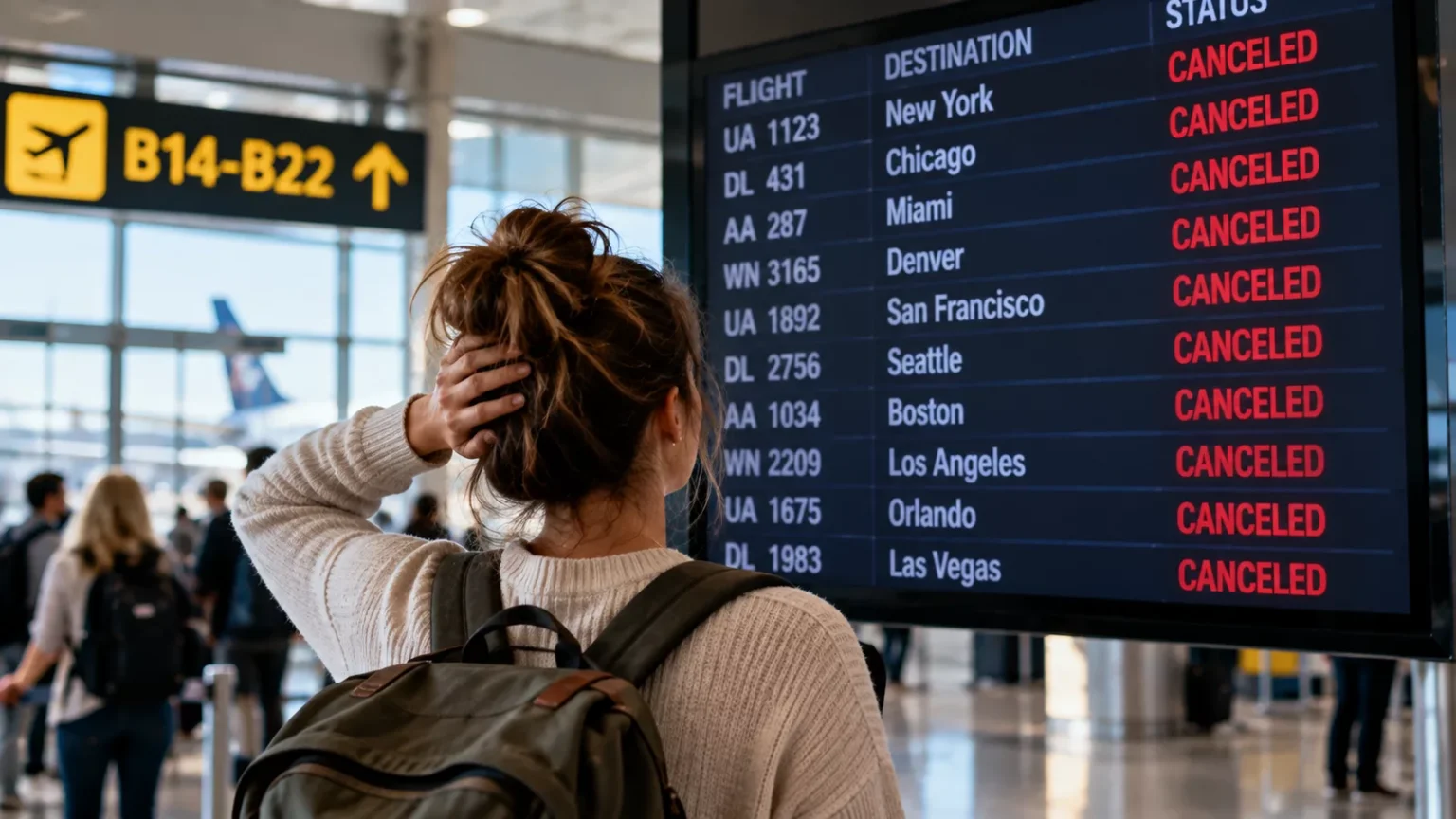
A flight cancellation at the airport creates an immediate problem: hundreds of passengers may suddenly be competing for a limited number of seats on the next available flights.
That is why the first few minutes matter. When a flight is canceled, the best response is usually not to stand still waiting for an announcement. Open the airline app, check whether the airline has already rebooked the reservation, look for alternative flights, and get into the customer-service queue at the same time.
The exact rights after a flight cancellation depend on where the flight is operating, which airline is operating it, why it was canceled and whether the passenger still wants to travel. A passenger on a domestic U.S. flight does not necessarily have the same compensation rights as someone departing from Paris, London or another airport covered by European or UK passenger-protection rules.
The practical response, however, begins the same way almost everywhere: protect the reservation first, understand the available alternatives, and do not casually accept a voucher or cancel anything until the consequences are clear.
This guide explains what to do if a flight is canceled at the airport, how rebooking works, when a refund may be better, what happens to checked baggage, when airlines may provide hotels and meals, and what to do when the cancellation causes a missed connection.
Flight canceled: what to do in the first 10 minutes
If your flight is canceled, immediately check the airline app, search for alternative flights and contact the airline through more than one channel. Do not wait until reaching the front of a customer-service line before looking for another option.
The first available replacement seats can disappear quickly during widespread disruption. This is especially important when weather affects an entire airport and thousands of passengers need to travel in the same direction.
Follow these steps in order:
- Confirm that the flight is officially canceled. Check the operating airline’s app, website, text alert or airport departure board.
- Open the reservation in the airline app. The airline may already have assigned a replacement flight.
- Check other flights to the destination. Look at later departures, nearby airports and reasonable connections.
- Join the customer-service line if necessary. Do this while working on the problem through the app or phone.
- Call the airline. Phone support may respond before the airport line moves.
- Use a self-service kiosk if available. Some airlines allow disrupted passengers to select replacement flights without an agent.
- Screenshot the cancellation. Keep the flight number, original schedule and cancellation notice.
- Find out why the flight was canceled. The reason can affect hotel, meal and compensation rights.
- Do not cancel the reservation yourself unless necessary. An unnecessary voluntary cancellation can complicate the situation.
- Decide whether getting to the destination or getting the money back matters more. That decision determines the next move.
The key is to work in parallel. A traveler can stand in the physical line while searching the app and speaking to telephone support.
Travelers who want their phone ready before disruption happens can use LitiTravels’ best travel apps for 2026 guide to set up airline apps, flight alerts, offline booking information and other useful tools before leaving home.
What happens when an airline cancels your flight?
When an airline cancels a flight, it will commonly offer rebooking, but the passenger may also have a right to a refund depending on the applicable law and whether the alternative trip is accepted.
Do not assume that rebooking is mandatory.
For flights to, from or within the United States, the U.S. Department of Transportation requires a refund when the airline cancels the flight and the passenger chooses not to travel or accept alternative compensation. This applies regardless of why the airline canceled the flight.
That creates two fundamentally different choices:
Option 1: You still need to travel. Concentrate on finding the fastest reasonable replacement flight.
Option 2: The trip no longer makes sense. Investigate the refund rather than automatically accepting a flight the following day.
The distinction matters because accepting and traveling on the replacement flight generally means the passenger is no longer entitled to a refund of the original airfare under U.S. refund rules.
Should you rebook or ask for a refund after a flight cancellation?
Choose rebooking when reaching the destination still has value; choose a refund when the replacement itinerary makes the trip pointless or another transportation option works better.
Imagine a Friday-evening flight for a weekend event. If the airline can only rebook the passenger for Sunday afternoon, accepting that replacement may make little sense.
A seven-day vacation is different. Arriving eight hours late may be frustrating but still preferable to abandoning the entire trip.
Before accepting a replacement flight, compare:
| Situation | Rebooking usually makes more sense | Refund usually makes more sense |
|---|---|---|
| Replacement leaves in 2–4 hours | Yes | Rarely |
| Replacement leaves next morning | Often | Depends on trip |
| Weekend trip loses most usable time | Maybe not | Often |
| Important event will be missed | Maybe not | Often |
| Long vacation delayed one day | Usually | Sometimes |
| Another airline has a much better flight | Compare total cost first | Possibly |
| Train or rental car can complete the trip | Possibly | Often worth comparing |
| Return trip is no longer useful | Depends on ticket and rules | Investigate refund rights |
The cheapest decision is not always the best one. A full refund does not help much if buying a last-minute ticket on another airline costs three times as much.
Can you get a refund if your flight is canceled?
Yes, for flights covered by U.S. Department of Transportation rules, passengers are entitled to a refund when the airline cancels the flight and they choose not to travel or accept the alternative offered.
This right applies even to a ticket originally sold as nonrefundable. The important distinction is that the airline canceled the flight, rather than the passenger simply deciding not to travel.
For covered U.S. flights, DOT rules require eligible refunds to go back to the original form of payment rather than being replaced with an airline voucher unless the passenger affirmatively chooses the alternative compensation.
Refunds are also intended to include the unused ticket price and applicable taxes and fees. Fees for ancillary services that were not provided because of the cancellation may also be refundable.
For credit-card purchases, an eligible refund is generally due within seven business days after it becomes due. For other forms of payment, DOT rules generally provide up to 20 calendar days.
This is why travelers should not automatically click “accept travel credit” when a flight is canceled. A credit can be useful, but it is not the same thing as money returned to the original payment method.
Does the airline have to rebook you for free?
U.S. airlines commonly commit to rebooking passengers on their own flights without additional cost after a controllable cancellation, but rebooking practices can differ by airline and situation.
The U.S. Department of Transportation’s Airline Cancellation and Delay Dashboard shows that the major U.S. airlines listed on the dashboard commit to rebooking passengers on the same airline at no additional cost when a cancellation is within the carrier’s control.
The more difficult question is whether the airline will put the passenger on another airline.
Some U.S. carriers commit to rebooking on a partner airline, or another airline with which they have an agreement, at no additional cost after a controllable cancellation. Others do not make that commitment.
That is why a useful question at the airport is:
“Can you rebook me on another carrier that gets there sooner?”
Do not assume the answer is automatically yes or no.
What if another airline has a flight leaving sooner?
Ask the original airline whether it can rebook you onto the competing carrier before buying the new ticket yourself.
This can save hundreds of dollars.
Search alternative flights while waiting for assistance and identify the exact option: airline, flight number, departure time and destination. Presenting an agent with a workable itinerary can be more effective than simply asking, “Is there anything else?”
However, do not assume the airline is legally required to purchase a ticket on any competing carrier under ordinary U.S. rules.
If the original airline will not transfer the ticket and the alternative flight is worth buying independently, compare the cost with the refund available from the canceled flight. Also check travel insurance or credit-card trip protection before spending a large amount.
Do not expect the original airline to reimburse a self-purchased replacement ticket unless the applicable rules, airline policy or an authorized representative clearly support it.
Should you book another flight yourself immediately?
Usually not before checking whether the original airline can rebook you, but self-rebooking can make sense when time matters more than the additional cost.
During a major storm, replacement seats can disappear rapidly. A traveler attending a wedding, boarding a cruise or making an important international connection may decide that securing another ticket is worth the financial risk.
Before pressing “buy,” check four things:
- Whether the original airline can rebook the same flight for free.
- Whether the canceled ticket will be refundable.
- Whether travel insurance or credit-card protection may cover the replacement.
- Whether the new ticket itself can be canceled if the original airline suddenly provides a better solution.
Keep screenshots and receipts.
A $700 emergency ticket bought without documentation is much harder to dispute or claim later than an expense supported by a clear timeline showing the original cancellation and lack of reasonable alternatives.
Will the airline pay for a hotel after a canceled flight?
Sometimes, but in the United States a hotel is not automatically owed after every flight cancellation. The reason for the cancellation matters.
For controllable cancellations, such as certain maintenance or crew problems, many major U.S. airlines make customer-service commitments that include complimentary hotel accommodation when a passenger must wait overnight.
However, these commitments are not identical across every carrier.
Weather is the classic complication. If a severe snowstorm, hurricane or other event outside the airline’s control causes the cancellation, U.S. passengers should not assume the carrier must pay for a hotel.
Ask the airline specifically:
“Is this cancellation considered controllable, and are you providing hotel accommodation?”
That wording is more useful than simply asking whether a free room is available.
If the airline will not provide accommodation, check travel insurance and the trip-delay benefits attached to the credit card used for the booking.
Will the airline pay for food if your flight is canceled?
Many major U.S. airlines commit to providing a meal, meal voucher or meal cash after a controllable cancellation that causes a passenger to wait at least three hours for a new flight.
Again, this is not a universal promise for every cancellation.
The U.S. Department of Transportation’s dashboard distinguishes between disruptions within an airline’s control and events such as severe weather that may be outside it.
Ask for the voucher before buying an expensive airport meal. If staff cannot provide the promised assistance and reimbursement may later be possible, keep itemized receipts and spend reasonably.
A $20 dinner is much easier to justify than a $150 airport restaurant bill.
Does the airline owe cash compensation for a canceled flight in the United States?
Usually not simply because a flight was canceled. U.S. federal rules provide strong refund rights, but they do not create the same broad cancellation-compensation system found in the European Union or United Kingdom.
This distinction causes substantial confusion.
A refund gives back money paid for transportation that will no longer be used. Compensation is additional money paid because of the disruption itself.
Those are different concepts.
The major U.S. airlines listed on DOT’s cancellation dashboard do not currently commit to cash compensation merely because a controllable cancellation leaves a passenger waiting three hours or more.
An airline may still provide miles, credits or other goodwill benefits depending on its policy. But passengers should not assume a U.S. cancellation automatically creates a statutory cash payout.
Flight canceled because of weather: what should you do?
If a flight is canceled because of weather, concentrate on rebooking quickly because hotel and meal assistance may be more limited than after an airline-controlled cancellation.
Weather disruptions can be especially difficult because they affect many flights at once.
A single mechanical cancellation may strand 150 passengers. A snowstorm can strand tens of thousands.
That makes alternative airports and routes much more important.
For example, instead of asking only for the next nonstop flight, investigate:
- A connection through another hub.
- A nearby departure airport.
- A nearby destination airport.
- A flight the following morning.
- Rail for part of the journey.
- A rental car when distances are reasonable.
Do not create a more dangerous problem trying to solve the flight problem. Driving long distances through the same winter storm that grounded aircraft can be far worse than waiting.
Flight canceled because of maintenance or crew problems: what changes?
A cancellation caused by maintenance, crew availability or another airline-controlled issue may trigger more airline-provided assistance than a weather cancellation.
DOT describes controllable disruptions as problems essentially caused by the airline, with examples including maintenance or crew issues, cabin cleaning, baggage loading and fueling.
This is when the airline’s customer-service commitments become particularly important.
Ask whether the cancellation is officially classified as controllable. If it is, check whether the airline promises:
- Free rebooking on its own flights.
- Rebooking on a partner airline.
- A meal or meal voucher.
- Hotel accommodation.
- Ground transportation between the airport and hotel.
- Travel credits or frequent-flyer miles.
The commitments vary, so check the operating airline rather than assuming every carrier provides the same package.
What happens if a canceled flight makes you miss a connection?
If the canceled flight and connection are on the same ticket, the airline will generally need to address the disrupted itinerary rather than treating the first flight in isolation.
Look at the final destination, not merely the next airport.
If a passenger is traveling Boston → Chicago → Tokyo and the Boston flight is canceled, being rebooked to Chicago after the Tokyo flight has already departed solves nothing.
Tell the agent the final destination and ask for an itinerary that works all the way through.
This becomes much more complicated with separate tickets. If the first airline cancels a separately booked flight, the second airline may treat the missed onward flight according to the conditions of that independent ticket.
Separate-ticket itineraries can save money, but disruption is one reason they carry additional risk.
Travelers building complicated connections can use LitiTravels’ broader Travel Planning guides to plan more realistic transfer times and reduce avoidable itinerary risks before booking.
What happens to checked bags when a flight is canceled?
Do not leave the airport until you know whether the checked bag will be returned, held or automatically transferred to the replacement flight.
Baggage handling after cancellation depends on the airport, airline and replacement itinerary.
Ask the airline: “Where is my checked bag going?”
If the passenger is rebooked quickly, the bag may remain within the airline’s system. If travel moves to the next day, baggage procedures may be different.
A traveler switching to another airline, airport, train or rental car has an especially strong reason to confirm baggage status before leaving.
Keep the baggage tag.
It is also smart to keep medication, travel documents, valuables, chargers and one change of essential clothing in carry-on baggage. A canceled flight becomes significantly harder when everything needed for the next 12 hours is inaccessible inside a checked suitcase.
What if your flight is canceled overnight?
First determine whether the airline will provide accommodation, then secure a room quickly if thousands of other passengers are stranded at the same airport.
Hotel inventory near airports can disappear rapidly during widespread cancellations. Ask the airline whether it is providing:
- A hotel voucher.
- Transportation to and from the hotel.
- Meal vouchers.
- A confirmed replacement flight.
- Access to checked baggage.
If the airline is responsible for the disruption but cannot immediately provide the assistance promised under its customer-service plan, document the situation before arranging reasonable expenses yourself.
For weather cancellations in the United States, do not assume reimbursement will follow.
This is also where travel insurance and credit-card trip-delay coverage can become valuable. Check the exact policy requirements before choosing an expensive hotel.
What if the airline automatically rebooks you on a terrible flight?
You do not necessarily have to accept the first replacement automatically assigned by the airline. Search for better alternatives immediately.
An automatic rebooking system may prioritize availability rather than convenience.
A passenger may be moved from a 6 p.m. nonstop to a 6 a.m. flight with a connection the following day, even though another workable itinerary exists.
Open the airline’s schedule and search manually.
Then ask:
“I see flight 123 through Denver arriving at 9:20 p.m. Can you move me to that itinerary instead?”
Specific requests are easier to evaluate.
Also check nearby airports. A passenger trying to reach New York may have options involving John F. Kennedy International Airport, LaGuardia Airport or Newark Liberty International Airport. Similar multi-airport possibilities exist around London, Paris, Tokyo, Washington, D.C., Los Angeles and many other major metropolitan areas.
Should you accept an airline voucher after a cancellation?
Accept a voucher only after understanding whether a cash refund is available and whether the voucher is actually more valuable to you.
A voucher is not automatically a bad deal.
An airline might offer additional value, making a credit attractive to someone who knows they will fly with the carrier again.
But compare:
- The voucher amount.
- The cash refund amount.
- Expiration rules.
- Airline restrictions.
- Whether the voucher can be transferred.
- Whether it can be used for taxes and fees.
- Whether the traveler realistically expects to fly that airline again.
For flights covered by U.S. DOT refund rules, an airline cannot simply replace an eligible refund with a voucher unless the passenger affirmatively chooses the alternative compensation.
Do not click through an offer without reading what is being accepted.
What if you booked through an online travel agency?
The refund process can involve the ticket agent if it is the merchant of record, so determine who actually charged the card.
A third-party booking adds another layer when a flight is canceled.
For flights to, from or within the United States, DOT rules place refund responsibilities on the merchant of record when the conditions for a refund are met. The merchant of record is generally the company shown on the payment statement for the airfare transaction.
At the airport, the operating airline may still control immediate flight operations and rebooking possibilities.
For the refund itself, however, the booking agency may need to be involved.
Keep the booking confirmation, airline record locator and agency reference available. Having only one of those numbers can slow down assistance.
What if an award flight booked with miles is canceled?
Contact the airline or loyalty program that issued the award ticket and ask for rebooking before abandoning the reservation.
Award tickets create additional possibilities because available seats for cash and miles do not always behave identically.
If the airline cancels the flight, ask what replacement flights can be opened or provided for the disrupted itinerary rather than simply searching normal award availability and assuming there are no seats.
If travel is abandoned, confirm how the miles and any taxes or fees will be returned.
For U.S.-covered refunds, DOT rules recognize the original form of payment, including airline miles where applicable.
What if your flight is canceled after you already boarded?
The practical process becomes similar once the flight is officially canceled, but passengers may first need to deplane and wait for instructions about baggage and rebooking.
Do not assume the same aircraft will depart later.
Once the flight is formally canceled, open the airline app immediately. Replacement seats may already be disappearing while passengers are still leaving the aircraft.
If the cancellation follows a long onboard delay, preserve the timeline: scheduled departure, boarding time, time spent on the aircraft, deplaning time and cancellation notice.
This documentation can matter for insurance claims and complaints.
What if the flight returns to the departure airport and is then canceled?
Treat the itinerary as disrupted even though the aircraft technically took off. Confirm the flight’s official status and ask how the airline is handling rebooking and baggage.
This scenario can occur after mechanical problems, weather changes or other operational issues.
Passenger rights depend on the applicable jurisdiction and circumstances, so do not rely on the assumption that “the plane took off, therefore it was not canceled.”
Under EU passenger-rights guidance, for example, a flight that takes off, returns to the airport of departure and transfers passengers to another flight is treated as a cancellation.
The operating airline should be the first source for the flight’s official status.
What if a U.S. flight is significantly changed instead of canceled?
A sufficiently large schedule change can also create a refund right under U.S. rules when the passenger chooses not to travel.
DOT defines several situations as a significant change for refund purposes.
These include an itinerary that results in arrival at the destination three hours or more later for a domestic itinerary or six hours or more later for an international itinerary, as well as certain airport changes, additional connections and involuntary cabin downgrades.
A flight therefore does not always need to display the word “CANCELED” for refund rights to become relevant.
This is especially important when an airline replaces a simple nonstop with an itinerary involving additional connections or a substantially later arrival.
What if your flight is canceled in the European Union?
Flights covered by EU passenger-rights rules can provide stronger rerouting, care and compensation rights than ordinary U.S. cancellation rules.
Under EU rules, a passenger whose covered flight is canceled has a choice between reimbursement, rerouting or, where relevant, return.
The airline may also owe assistance while the passenger waits, including food and refreshments and, when necessary, hotel accommodation and transport between the airport and accommodation.
Additional financial compensation may be payable depending on the circumstances, including when the cancellation was announced and why it happened.
However, compensation is not automatic for every cancellation. Extraordinary circumstances can remove the compensation obligation even though rerouting, reimbursement and care rights may still apply.
Coverage also depends on the route and operating airline. Do not assume that merely flying somewhere in Europe automatically makes every itinerary eligible.
What if your flight is canceled in the UK?
Covered UK flights provide rights to rerouting or a refund, plus care while passengers wait, and compensation may apply in qualifying cases.
The UK Civil Aviation Authority states that covered passengers can choose between a refund for unused parts of the ticket and an alternative flight.
Airlines must also provide care and assistance where applicable, including food and drink, communication assistance and, when required, accommodation and transport.
If airline staff cannot provide reasonable care during major disruption, the UK CAA advises passengers that they can arrange reasonable care themselves and seek reimbursement afterward. Keep receipts and do not spend more than reasonably necessary.
Compensation depends on the circumstances and is separate from the basic right to rerouting or reimbursement.
U.S. vs EU vs UK flight cancellation rights
The largest practical difference is that EU and UK systems can provide standardized monetary compensation in qualifying cancellations, while U.S. federal rules focus more heavily on refunds and enforceable airline service commitments.
This simplified comparison helps show why the airport where disruption occurs and the itinerary itself matter.
| Issue | United States | European Union | United Kingdom |
|---|---|---|---|
| Refund if airline cancels and passenger does not travel | Yes for covered flights | Yes, subject to applicable rules | Yes, subject to applicable rules |
| Rerouting rights | Airline policies and commitments matter | Strong statutory rights | Strong statutory rights |
| Meals during qualifying disruption | Often based on airline commitments for controllable cancellations | Care rights may apply | Care rights may apply |
| Hotel for qualifying overnight disruption | Often based on airline commitments for controllable cancellations | Care rights may apply | Care rights may apply |
| Standardized cash cancellation compensation | Generally no broad federal equivalent | Possible in qualifying cases | Possible in qualifying cases |
| Weather cancellation compensation | Generally no automatic cash compensation | Usually no compensation if extraordinary circumstances apply | Usually no compensation if extraordinary circumstances apply |
| Receipts important | Yes | Yes | Yes |
You may also be interested in our article: 9 Best Travel Backpacks in 2026 That Are Actually Worth the Money
International itineraries can become legally complicated because the departure point, destination, operating carrier and applicable regulation all matter. Use this table as orientation rather than assuming it resolves every cross-border itinerary.
What should you save as proof after a canceled flight?
Save enough evidence to reconstruct exactly what happened without relying on memory.
This takes only a few minutes and can make an insurance claim or passenger-rights complaint much easier.
Keep:
- The original boarding pass.
- The original booking confirmation.
- A screenshot of the cancellation.
- The airline’s email or text notice.
- The replacement itinerary.
- Baggage receipts and tags.
- Meal receipts.
- Hotel receipts.
- Ground transportation receipts.
- Screenshots of alternative flights if relevant.
- Any written explanation of the cancellation reason.
- Records of conversations with airline representatives where available.
Do not throw away receipts simply because the expense seems small. Several small disruption expenses can add up quickly.
For more practical preparation beyond flight disruptions, LitiTravels’ travel tips and guides cover the everyday planning decisions that can make an international trip easier before the airport becomes part of the problem.
What should you ask the airline agent when your flight is canceled?
Ask precise questions about rebooking, cause, expenses and baggage rather than simply asking, “What can you do?”
A useful airport conversation should cover:
- “What is the earliest flight that can get me to my final destination?”
- “Can you route me through another hub?”
- “Can you rebook me on a partner or another airline?”
- “Is this cancellation considered within the airline’s control?”
- “Are you providing meal vouchers?”
- “Are you providing a hotel tonight?”
- “Is transportation to the hotel included?”
- “Where is my checked bag?”
- “If I decline this itinerary, am I eligible for a refund?”
- “Can you send the new itinerary to me in writing?”
Specific questions reduce ambiguity and help passengers compare their real options.
Should you leave the airport after a canceled flight?
Leave only after the replacement itinerary, baggage situation and overnight plan are clear.
A cancellation does not automatically mean the passenger should head home or to a hotel.
The airline may find another departure within two hours. A standby option may appear. The replacement flight may depart from another terminal.
Before leaving, confirm:
- The new flight.
- Departure date and time.
- Departure airport.
- Checked-baggage status.
- Whether check-in must be repeated.
- Hotel arrangements if relevant.
- When to return to the airport.
If the replacement flight is the next morning, check the new boarding pass before going to sleep rather than discovering at 5 a.m. that something is missing.
What if every flight is sold out?
Ask about alternative airports, connections and later dates, then compare the value of waiting against a refund and another form of transportation.
A cancellation during Christmas, a major storm or another peak travel period can leave no realistic same-day air option.
Expand the search.
Instead of one nonstop route, look at connections. Instead of one destination airport, consider another within reasonable ground-transport distance. For shorter journeys, compare trains, buses and rental cars.
But calculate the entire alternative.
A $120 rental car may look cheaper than waiting until tomorrow until one-way fees, fuel, parking and a six-hour drive are included.
Similarly, a flight to an airport 100 miles from the destination is only useful if there is a realistic way to complete the last 100 miles.
What if the canceled flight causes you to miss a cruise, hotel or tour?
The airline does not automatically become responsible for every separate travel purchase lost because of a cancellation, so contact the other providers immediately and check insurance coverage.
This can be the most expensive consequence of disruption.
Call the hotel, cruise company, tour operator or rental-car company as soon as it becomes clear the reservation will be missed. Some businesses will modify the booking even when the formal terms allow them to keep the money.
Travel insurance may cover qualifying prepaid, nonrefundable losses depending on the policy and reason for the cancellation.
Cruises require particular caution. Flying into a cruise departure city on embarkation day leaves almost no recovery margin after a cancellation. Arriving at least a day earlier can be a much safer planning choice for an expensive sailing.
Can travel insurance help after a flight cancellation?
Yes, but coverage depends on the policy, the cause of cancellation and the expenses involved.
Trip-delay benefits may cover qualifying meals, hotels and transportation after a specified delay. Trip-interruption coverage may apply to some lost prepaid expenses. Other policies can cover additional transportation under specific circumstances.
Read the policy rather than assuming “flight cancellation” automatically means every expense is covered.
Insurance often requires documentation showing the reason and duration of the disruption. This is another reason to preserve airline notices and receipts.
Also check the credit card used to pay for the ticket. Some cards include travel protections that passengers forget they already have.
7 mistakes to avoid when your flight is canceled
The most expensive flight-cancellation mistakes usually happen when passengers act before understanding their options.
Avoid these common errors:
- Waiting only in the airport line. Use the app, website, phone and kiosk at the same time.
- Accepting the first bad rebooking automatically. Search for better flights before agreeing.
- Taking a voucher without checking refund rights. A travel credit and a cash refund are not the same.
- Buying a replacement ticket without checking rebooking first. The airline may be able to provide the same seat without additional cost.
- Leaving without checking baggage. A bag may remain in the airline system after the passenger has left.
- Throwing away receipts. Hotels, meals and transport may become part of an insurance or reimbursement claim.
- Assuming U.S., EU and UK rules are identical. Passenger rights depend on the itinerary and jurisdiction.
A cancellation is stressful, but speed does not mean acting blindly. The best response is fast, documented and deliberate.
What to do before your next flight so a cancellation is easier
Prepare for a cancellation before arriving at the airport, especially during winter weather, hurricane periods and peak holiday travel.
A few precautions can dramatically reduce the damage.
Install and sign in to the operating airline’s app. Turn on flight notifications. Save the reservation number offline. Keep medications, documents and chargers in carry-on baggage. Avoid dangerously tight separate-ticket connections. Know whether the credit card includes trip-delay protection.
For particularly important trips, add buffer time.
A traveler flying to a wedding, cruise, safari departure or expensive nonrefundable tour has much more to lose from a cancellation than someone beginning an open-ended city break.
The most useful cancellation strategy can therefore happen before the ticket is purchased: choose an itinerary with enough margin to survive disruption.
FAQ: Flight canceled, what should you do?
My flight was canceled. What should I do first?
Open the airline app immediately and check whether you have already been rebooked. Search for better replacement flights while joining the customer-service line or calling the airline. The goal is to secure a workable itinerary before remaining seats disappear.
What should I do if my flight is canceled at the airport?
Confirm the cancellation, check the airline app, search alternative flights, join the service queue and call the airline at the same time. Save screenshots and find out why the flight was canceled before paying for hotels, meals or replacement transportation.
Can I get my money back if my flight is canceled?
For flights covered by U.S. DOT rules, yes, if the airline cancels and you choose not to travel or accept the alternative offered. EU and UK rules also provide refund rights for covered cancellations, although the details differ.
Can I get a refund for a nonrefundable ticket if the airline cancels the flight?
Yes, under U.S. rules a nonrefundable ticket can still qualify for a refund when the airline cancels the flight and the passenger chooses not to travel. “Nonrefundable” does not allow the airline to keep the fare for transportation it canceled when the applicable refund requirements are met.
Does an airline have to put me on another flight after a cancellation?
Airlines commonly offer rebooking, but the exact obligation depends on the jurisdiction and applicable policy. In the U.S., major airlines publish specific rebooking commitments. EU and UK rules provide stronger statutory rerouting rights for covered flights.
Does an airline have to book me on another airline?
Not always in the United States. Some carriers commit to rebooking passengers on partner airlines or other carriers with which they have agreements after controllable cancellations, while others do not. Ask before purchasing another ticket yourself.
Does the airline have to pay for my hotel if my flight is canceled?
Not after every U.S. cancellation. Many airlines provide hotels after qualifying overnight cancellations within their control, but weather disruptions generally do not create the same commitments. Covered EU and UK flights have broader care obligations.
Does the airline have to give me food if my flight is canceled?
It depends on the applicable rules and reason for the cancellation. Major U.S. airlines make various meal commitments for controllable disruptions, while covered EU and UK passengers may have statutory care rights during qualifying waits.
Do airlines pay compensation for canceled flights?
It depends on where the passenger-rights rules apply. The United States generally does not have an EU-style federal cash-compensation system for ordinary flight cancellations, while qualifying EU and UK cancellations can result in additional compensation.
What happens if my flight is canceled because of weather?
The airline should still address the canceled transportation, but U.S. passengers may receive fewer hotel and meal benefits when weather caused the disruption. Rebook quickly because widespread weather events can fill alternative flights for several days.
What happens to my checked bag if my flight is canceled?
Ask the airline before leaving the airport. The bag may be returned, held or transferred to the replacement flight depending on the itinerary and airline procedure. Keep the baggage tag until the bag is back in your possession.
Should I accept a voucher if my flight is canceled?
Only after comparing it with any refund right. A voucher can make sense if its value is attractive and the airline will realistically be used again, but an eligible cash refund offers greater flexibility.
Can I buy another airline ticket after my flight is canceled?
Yes, but check whether the original airline can rebook you first. If you purchase a replacement independently, do not assume the original carrier will reimburse the fare. Keep documentation and check travel-insurance or credit-card coverage.
What happens if my canceled flight makes me miss my connection?
If the flights are on the same ticket, ask the airline to rebook the complete journey to the final destination. Separate tickets are riskier because the second carrier may not be responsible for a missed flight caused by disruption to an unrelated first booking.
How long does an airline have to refund a canceled U.S. flight?
For eligible refunds under U.S. rules, the deadline is generally seven business days for credit-card purchases and 20 calendar days for other forms of payment. The refund should return to the original form of payment unless the passenger affirmatively chooses an alternative such as a voucher.
What if the airline rebooks me automatically?
Check whether the new itinerary actually works before accepting it. Search for better options in the airline’s schedule and ask to be moved if another reasonable flight reaches the destination sooner.
What if the next available flight is tomorrow?
Ask whether the airline is providing a hotel, meals and transportation, and find out whether the cancellation is considered within its control. If the replacement makes the trip no longer worthwhile, compare rebooking with the available refund option.
Should I leave the airport when my flight is canceled?
Only after confirming the new itinerary, checked-baggage status and any hotel arrangements. A same-day replacement may become available quickly, so leaving prematurely can create another problem.
What proof should I keep after a flight cancellation?
Keep the boarding pass, booking confirmation, cancellation notice, screenshots, replacement itinerary and every relevant receipt. Documentation is particularly important for insurance, expense reimbursement and passenger-rights claims.
Is it better to call the airline or stand in line after a cancellation?
Do both when possible. Join the airport queue while using the airline app and calling customer service. Whichever channel produces a workable rebooking first solves the problem.
What is the most important rule when your flight is canceled?
Do not make an irreversible decision before understanding the alternatives. Search for rebooking options, establish the reason for the cancellation, check refund rights and document the disruption before accepting a voucher, abandoning the ticket or buying an expensive replacement.


Author of LitiTravels Portal


Articles by the author:
All articles by author


The best Chicago foodie spots go far beyond deep-dish pizza. Find iconic sandwiches, neighborhood taquerias, Michelin-recognized restaurants and global food districts, with what to order, what meals cost and a practical food ro...
 October 11, 2026
 10
10

Athens does not have to be an expensive sightseeing city. Many of its best views, ancient landmarks, neighborhoods and local experiences are completely free. Here are 25 things to do in Athens for free or very little, plus a wa...
October 10, 2026
10

Budapest can swallow a weekend if every famous sight becomes a separate mission. These 25 things to do combine thermal baths, Danube views, grand architecture, food and neighbourhoods into a route that leaves time to enjoy the ...
October 10, 2026
13

The best travel backpack is not necessarily the biggest or most expensive. These 2026 picks cover budget city breaks, European low-cost flights, week-long trips and premium one-bag travel, with practical sizes and prices to hel...
October 9, 2026
29
Subscribe to “lititravels” on Telegram for gaming intel.
No filler, no fuss—just your daily XP boost. Hop in and level up, squad!



Read also
The best travel backpack is not necessarily the biggest or most expensive. These 2026 picks cover budget city breaks, European low-cost flights, week-long trips and premium one-bag travel, with practical sizes and prices to hel...
October 9, 2026
29
A wrong name does not always mean buying another flight. Learn when you can change the name on a plane ticket, why a typo differs from transferring a ticket, how the U.S. 24-hour rule can help and what to do before contacting t...
October 7, 2026
21

Paris and Venice deserve their reputations, but they are not automatically the right romantic city for every couple. These 17 destinations reveal where to go for food, sunsets, culture, quiet streets, a honeymoon or an unforget...
October 4, 2026
40

Geneva looks polished and compact, but trying to see everything in two days can waste more time than it saves. These 17 things to do in Geneva show what deserves priority, what can be skipped when time is tight, and how to turn...
October 2, 2026
36

A cheap hotel does not guarantee a cheap family vacation. Flights, parking, meals, seat fees and daily activities can double the real cost. These 12 trip ideas show where families can save – and where “budget” vacations become ...
September 30, 2026
46

Cruise packing is different from packing for a hotel because your suitcase may disappear for hours after boarding and some everyday travel items are banned at sea. This checklist covers what you need, what belongs in your carry...
September 29, 2026
41

Scotland's busiest months are not automatically its best. May can beat midsummer for road trips, September brings a quieter Highlands experience, and winter has advantages of its own. Here's how to choose the right month for yo...
September 26, 2026
76

October is one of Latin America's most underrated travel months. Spring reaches the south, Caribbean Costa Rica catches a drier window, Patagonia wakes up and Oaxaca starts preparing for Día de Muertos. These 15 places make the...
September 23, 2026
461

Paris in October can give you golden gardens, sunny café afternoons and cold rain in the same trip. This 2026 guide shows what the weather actually feels like, what to pack and which October dates need extra planning.
September 22, 2026
104

Disney World can cost dramatically more depending on when you go. See which 2026–2027 travel windows offer the strongest chance of lower tickets and hotel rates, which cheap months come with weather trade-offs, and when paying ...
September 19, 2026
50

Cooperation
Looking to shine a spotlight on your project? LitiTravels has you covered! We offer article-based promotion, manage branded blogs on our platform, drive engagement through our social media channels, and create content that delivers real results. Get in touch today and let’s make your brand stand out!
Subscribe to the monthly news digest from LitiTravels
The main news and updates from the team about gadgets, sports, cars, health, and lifestyle.
