


Popular articles


17 Most Romantic Cities in the World and the Trips They Do Best
 Travel Planning17 Most Romantic Cities in the World and the Trips They Do Best
Travel Planning17 Most Romantic Cities in the World and the Trips They Do Best
17 Most Romantic Cities in the World and the Trips They Do Best
Article content

The most romantic cities in the world are not romantic for the same reason. Paris is made for long walks, cafés and evenings beside the Seine, Venice turns simply getting from one place to another into an experience, Kyoto can feel extraordinarily intimate when temples and gardens are visited outside peak hours, and Porto builds much of its appeal around the Douro, viewpoints and unhurried meals. Choosing a romantic city therefore depends less on finding a universal number one and more on deciding what kind of trip two people actually want.
That distinction matters because the postcard version of a destination can be misleading. Venice at midday near St Mark’s Square feels very different from Venice after the day-trippers leave, while Kyoto during peak cherry blossom hours can be considerably less peaceful than the photographs suggest. The right season, neighborhood and pace can matter as much as the city itself.
These 17 romantic cities were selected for the experiences they allow couples to share: walkable historic areas, memorable evening settings, food and wine, beautiful public spaces, distinctive places to stay, scenic day trips and enough variety to fill several days without turning the holiday into a sightseeing marathon. The guide also explains how long to stay, what each city does best, when to visit and what to skip when time is limited.
Most Romantic Cities in the World at a Glance
There is no single romantic city that works equally well for a honeymoon, anniversary, first trip together and spontaneous weekend. The fastest way to narrow the choice is to match the destination to the type of experience you want.
| Romantic city | Best for | Ideal stay | Strongest seasons | Signature couples experience |
|---|---|---|---|---|
| Paris, France | Classic first romantic trip | 3–5 days | Spring, early fall | Seine evening and neighborhood walks |
| Venice, Italy | Anniversary or short escape | 2–3 days | Spring, fall | Exploring canals after dark |
| Florence, Italy | Art, food and Tuscany | 3–4 days | Spring, fall | Sunset above the Arno |
| Kyoto, Japan | Culture and quiet beauty | 3–5 days | Spring, fall | Temples, gardens and evening Gion |
| Prague, Czechia | Fairytale atmosphere | 2–4 days | Spring, fall, winter | Dawn or evening by Charles Bridge |
| Lisbon, Portugal | Views, food and relaxed days | 3–4 days | Spring, early fall | Miradouros at sunset |
| Porto, Portugal | Wine and riverside romance | 2–4 days | Late spring, early fall | Douro views and wine |
| Vienna, Austria | Music and elegant city breaks | 3–4 days | Spring, fall, December | Concert and café evening |
| Bruges, Belgium | Compact weekend | 1–2 days | Spring, fall, winter | Canal-side evening walk |
| Edinburgh, Scotland | Atmospheric city break | 3 days | Late spring, early fall | Old Town and hilltop sunset |
| Seville, Spain | Warm evenings and architecture | 3 days | Spring, fall | Evening through Santa Cruz |
| Rome, Italy | History plus food | 3–5 days | Spring, fall | Historic center after dark |
| Budapest, Hungary | Baths and river views | 3 days | Spring, fall, winter | Danube panorama at night |
| Buenos Aires, Argentina | Food, dance and nightlife | 4–5 days | Spring, fall | Dinner and tango evening |
| Québec City, Canada | Winter romance | 2–3 days | Fall, winter | Old Québec in snow |
| Cape Town, South Africa | City plus nature | 4–6 days | Local summer, shoulder seasons | Sunset coast drive |
| Santorini, Greece | Honeymoon scenery | 2–4 days | Late spring, early fall | Caldera sunset |
The list becomes much more useful once the “best” destination is replaced with the best fit. Couples who hate crowds may prefer Porto to Venice, food-focused travelers may get more from Florence or Buenos Aires than Santorini, and anyone wanting nature as well as a city can move Cape Town much higher on the shortlist.
1. Paris, France – Best for the Classic Romantic City Break
Paris remains one of the most romantic cities in the world because romance is not confined to one attraction. The Seine, neighborhood cafés, gardens, bridges, museums, bakeries and streets that reward aimless walking allow couples to build a memorable day without constantly reserving activities. The city works particularly well for a first major trip together because there is enough variety for two people with different interests.
The strongest romantic Paris itinerary is not Eiffel Tower → Louvre → Arc de Triomphe at maximum speed. Spend one morning walking through Montmartre before the busiest period, give another afternoon to the Luxembourg Gardens and Saint-Germain-des-Prés, and save an evening for the Seine. A cruise can connect many of the city’s landmarks in one journey, including Notre-Dame, the Conciergerie, Grand Palais and Eiffel Tower.
Three to five days is the sweet spot for couples visiting Paris for the first time. Three days cover the essentials without much room for spontaneity, while four or five allow neighborhoods, long meals and an evening with no attraction scheduled at all.
When should couples visit Paris?
April to May and September to October are particularly attractive for couples who want substantial walking time without relying on midsummer conditions. October can be beautiful but changeable, with sunshine, cooler spells and rain all possible during the same trip.
Anyone considering an autumn escape can use the LitiTravels guide to Paris weather in October 2026 before choosing dates and packing for long outdoor days.
What should couples skip in Paris?
Skip the idea that every famous attraction must be visited on the first trip. A romantic city break loses much of its appeal if both travelers spend the entire day moving between timed-entry queues.
Choose the museums and monuments that genuinely matter, then protect several hours for the city itself. Paris is one of the destinations where an unscheduled neighborhood walk can easily become more memorable than the fifth major attraction of the day.
2. Venice, Italy – Best for a Two-Night Anniversary Trip
Venice creates romance through the city itself. There are no cars in its historic core, ordinary routes cross small bridges and canals, and getting deliberately lost can reveal quiet passages only minutes from the busiest landmarks. The city becomes significantly more atmospheric early in the morning and after many day visitors have left.
For couples, two or three nights work much better than treating Venice as a quick daytime stop. See St Mark’s Square and the major sights, but leave enough time for Cannaregio, Dorsoduro and streets where there is no famous landmark waiting at the end. An evening walk after dinner can be more romantic than trying to squeeze another museum into the afternoon.
A gondola ride is optional rather than essential. Official Venice information currently lists a standard gondola ride at €90 for 30 minutes, rising to €110 for 35 minutes after 7 p.m. If that price does not fit the budget, Venice remains exceptionally romantic on foot and by vaporetto.
When is Venice most romantic?
Late spring and early fall offer a strong balance for many couples, although Venice is a year-round destination. Peak periods can produce intense crowding around the main corridor between the station, Rialto and St Mark’s Square.
The solution is partly timing and partly geography. Stay overnight, start early and move beyond the handful of streets almost every first-time visitor follows.
What should couples skip in Venice?
Do not spend the entire visit around St Mark’s Square and Rialto Bridge. Those landmarks matter, but they are not the whole reason Venice belongs among the most romantic cities in the world.
A slower evening in Cannaregio or Dorsoduro can reveal a quieter version of the city. For a short couples trip, depth is better than trying to cover every island and museum.
3. Florence, Italy – Best for Art, Food and a Tuscany Extension
Florence works particularly well for couples who want culture without the scale of Paris or Rome. Renaissance art, the Arno, compact historic streets, markets and Tuscan food are concentrated into a center that is practical to explore on foot. The city also makes an excellent base or starting point for a longer romantic route through Tuscany.
Allow three days for Florence itself. Reserve major museums in advance, but avoid scheduling the Uffizi, Accademia and several churches back to back on the same day. The city is much more enjoyable when a museum morning is balanced by lunch, a neighborhood walk and a late-afternoon viewpoint.
For sunset, the area around Piazzale Michelangelo provides the famous panorama over Florence. Couples who want a less hurried experience can continue farther rather than leaving immediately after taking a photograph.
How should Florence fit into a romantic Italy route?
Florence combines naturally with Rome or Venice by rail, but it can also be paired with smaller Tuscan destinations. A longer Italy trip can then move toward the coast instead of becoming a sequence of major cities.
LitiTravels’ guide to the best coastlines in Italy provides ideas for extending an urban couples trip with a few slower days near the sea.
What should couples skip in Florence?
Do not turn Florence into a museum endurance test. Seeing two masterpieces with enough time to appreciate them is more rewarding than spending the entire romantic break checking reservation times.
The city is compact enough that wandering is part of the attraction. Protect at least one evening for walking without a fixed route.
4. Kyoto, Japan – Best for Couples Who Want Beauty and Tradition
Kyoto is one of the most romantic cities in the world for couples who value gardens, temples, traditional streets, seasonal scenery and quieter shared experiences over nightlife. Its strongest moments often happen early or late in the day: a temple before tour groups arrive, an evening walk around Gion, or a garden when there is enough silence to notice the setting.
Three to five days gives Kyoto enough room. The city has attractions spread across several areas, so attempting Arashiyama, Fushimi Inari, Kiyomizu-dera and northern temples in one day creates unnecessary travel and crowd exposure. Grouping sights geographically makes the trip both calmer and more intimate.
Spring and autumn are visually exceptional, but they are also among Kyoto’s busiest periods. Official tourism information identifies cherry blossom season from late March into early April and the autumn foliage period around mid-November to early December as particularly crowded.
Is cherry blossom season worth it for couples?
Yes, if blossoms are genuinely a major reason for the trip and the couple accepts higher demand and crowds. Kyoto’s official tourism guidance describes spring as mild and highlights the succession of seasonal flowers, with cherry blossoms particularly important around April.
For couples more interested in atmosphere than a specific seasonal spectacle, another period may be more relaxing. Winter can bring colder days but fewer peak-season pressures, while early fall requires attention to heat.
What should couples skip in Kyoto?
Skip the attempt to photograph every famous temple and shrine. Kyoto rewards slower observation, and the difference between six temples and ten temples may be far smaller than the difference between seeing one peacefully and seeing another at the busiest hour.
A romantic Kyoto itinerary needs empty space. Tea, a garden, an evening walk and a good meal should not be treated as time left over after sightseeing.
5. Prague, Czechia – Best for a Fairytale Weekend
Prague combines Gothic towers, Baroque architecture, the Vltava River and a highly walkable historic center, making it one of the easiest romantic cities for a long weekend. Two or three full days can cover the Old Town, Malá Strana, Prague Castle area and several viewpoints without requiring a complicated itinerary.
Charles Bridge deserves to be seen, but timing transforms the experience. Arriving early in the morning or walking across later in the evening is very different from reaching it during the busiest middle of the day. Continue into Malá Strana rather than turning back as soon as the bridge photographs are finished.
Prague is also useful for couples who want a visually dramatic European city without planning a week-long holiday. Three nights can feel substantial because many of the main areas connect naturally on foot.
When should couples choose Prague?
Spring and early fall work particularly well for long walking days. Winter changes the mood completely and can suit couples who prefer cafés, atmospheric streets and seasonal city breaks over outdoor dining.
Peak weekends require more planning around the central sights. Staying within walking distance of the historic core makes early starts and late walks much easier.
What should couples skip in Prague?
Do not spend the entire trip in Old Town Square. Prague Castle, Malá Strana, Petřín and riverside areas create a more varied picture of the city.
A romantic city should feel explored rather than merely photographed. Prague is compact enough to make that realistic in only a few days.
6. Lisbon, Portugal – Best for Sunsets, Hills and a Relaxed Pace
Lisbon works for couples who want romance without formality. Historic trams, tiled façades, hills, miradouros and the Tagus create a city where viewpoints and evening walks can carry as much weight as conventional attractions. Alfama, Graça, Chiado and Bairro Alto each change the mood without requiring a long journey.
Three or four days allow enough time for central Lisbon plus Belém, while an additional day can be used for Sintra. The city’s hills are part of its visual appeal but also make walking more tiring than distances on a map suggest. Comfortable shoes matter more here than an ambitious checklist.
A simple romantic evening can be built around one viewpoint, dinner and a slow walk rather than an expensive packaged experience. That accessibility helps Lisbon work for both anniversary trips and couples traveling on a more controlled budget.
When should couples visit Lisbon?
Spring and early fall are particularly appealing for outdoor sightseeing and viewpoints. High summer can be hot, and popular trams and central streets can become crowded.
Shoulder-season evenings are one of Lisbon’s advantages. Couples can spend much of the day outside without needing every hour to revolve around an indoor attraction.
What should couples skip in Lisbon?
Do not wait in an excessive queue solely to ride one famous tram. Historic trams are part of Lisbon, but they are transportation as well as attractions, and crowded vehicles rarely produce the romantic experience people imagine.
Walk part of the route, use alternative transport when practical and spend the saved time at a viewpoint.
7. Porto, Portugal – Best for Wine, River Views and Slower Romance
Porto is one of the strongest alternatives for couples who find larger romantic cities exhausting. The Douro, steep historic streets, bridges, wine culture and viewpoints create plenty to do, but the city can still feel manageable over a three-day break. It suits couples who prefer long lunches and sunsets to a dense attraction schedule.
The Ribeira waterfront is an obvious starting point, but Porto becomes more rewarding from above. The city’s official tourism material identifies numerous natural and built viewpoints created by its hilly geography, with panoramas across the Douro and toward Vila Nova de Gaia.
Palácio de Cristal Gardens are particularly useful for couples wanting green space and river views without buying a ticket. Porto’s official tourism information also highlights its gardens and viewpoints as places for sunsets and romantic moments.
How long should couples spend in Porto?
Two full days cover the core, while three or four allow the city to slow down. A longer stay also creates space for a Douro Valley excursion without sacrificing Porto itself.
This is a city where adding an extra night often improves the trip more than adding five extra attractions. Food, wine and viewpoints benefit from time rather than speed.
What should couples skip in Porto?
Do not schedule multiple port wine tastings immediately after one another simply because they are famous. One well-chosen experience leaves room to actually explore both banks of the Douro.
Porto’s appeal is the combination of city and landscape. Spending most of the day indoors defeats much of that advantage.
8. Vienna, Austria – Best for Music, Cafés and an Elegant Anniversary
Vienna is a romantic city for couples who prefer elegance to spontaneity. Palaces, museums, coffeehouses, classical music and broad historic streets make it particularly strong for anniversaries and cultural trips. It also handles poor weather better than many destinations on this list because a substantial portion of the experience can happen indoors.
Three days is a practical first stay. One day can focus on the historic center, another on Schönbrunn and museums, and the third can leave space for neighborhoods, cafés and a concert. Vienna’s official tourism site itself provides a three-day first-visit program, which matches the city’s natural pace well.
Do not make every evening formal. A concert can be a memorable centerpiece, but Vienna also works through slower rituals such as spending an hour in a traditional café rather than treating coffee as a five-minute stop.
When is Vienna most romantic?
Spring and fall are strong choices for a balance of outdoor and indoor activities. December offers a very different atmosphere built around winter streets, seasonal events and indoor culture.
For couples who dislike heat, Vienna can be easier to plan outside midsummer. Its museums, music and cafés also mean bad weather does not automatically waste a day.
What should couples skip in Vienna?
Do not reserve every famous palace and museum. Vienna has enough major collections to fill a week, but a romantic trip needs more than galleries and imperial rooms.
Choose the institutions that genuinely match shared interests. Then leave space for parks, neighborhoods, food and music.
9. Bruges, Belgium – Best for a One-Night Romantic Escape
Bruges is one of the most romantic cities in the world for couples who want atmosphere without needing four days. Canals, medieval buildings, small bridges and a compact center allow the main experience to fit into one overnight stay or a two-day weekend.
The crucial word is overnight. Visiting only during the busiest day-trip hours can make Bruges feel much less intimate than expected. Stay after dinner, walk beside the canals once visitor numbers drop and start again early the following morning.
The city’s canals are not simply a tourist cliché. Bruges’ own tourism material describes them as a central symbol of romance in the historic center, with boat routes passing Groenerei, Dijver, the Beguinage area and other parts of the canal network.
How many days do couples need in Bruges?
One night and most of two days can be enough. Two nights work better for couples who want museums, breweries, long meals or a genuinely slow weekend.
Bruges does not need to become a four-day sightseeing marathon. Its strength is concentrated atmosphere.
What should couples skip in Bruges?
Skip trying to manufacture a huge checklist. A canal ride, historic streets, a few important interiors, food and an evening walk can already make the trip feel complete.
Bruges is one of the destinations where doing less often improves the experience.
10. Edinburgh, Scotland – Best for Dramatic Atmosphere and Long Walks
Edinburgh combines medieval streets, Georgian architecture, volcanic hills and viewpoints in a way few romantic cities can match. It works particularly well for couples who prefer atmospheric walks, pubs and dramatic landscapes to beaches or polished resort experiences.
Three days gives a first visit enough balance. Edinburgh Castle and the Royal Mile belong on the itinerary, but Calton Hill, Dean Village, Stockbridge, the Water of Leith and Arthur’s Seat can provide the moments that make the trip feel personal rather than generic.
Weather should be treated as part of the planning rather than an inconvenience that can be eliminated. Pack for changeable conditions and keep at least one museum or indoor block available if a hill walk becomes unpleasant.
For a complete route, LitiTravels has a dedicated guide to 17 things to do in Edinburgh in 2026 that groups the city’s major sights, neighborhoods and outdoor stops into a more practical itinerary.
What should couples skip in Edinburgh?
Do not spend the entire trip moving along the Royal Mile. It is essential for a first visit, but it represents only one part of the city.
A walk through Stockbridge or beside the Water of Leith can provide a much quieter counterpoint. Edinburgh becomes more romantic once the itinerary moves beyond its busiest street.
11. Seville, Spain – Best for Warm Evenings and Architecture
Seville is one of the most romantic cities for couples who want evenings outdoors. Courtyards, orange trees, tiled architecture, plazas and narrow streets give the historic center a strong sense of place, while Spanish dining hours naturally shift more of the trip into the evening.
Three days is enough for a satisfying first visit. The Real Alcázar, cathedral and Plaza de España can anchor the sightseeing, but Santa Cruz and riverside walks deserve unstructured time. Flamenco can also become a memorable evening when chosen for the performance rather than as another box on a sightseeing list.
Spring is particularly appealing, although major events can dramatically increase demand. Fall is another strong period for couples who want warm conditions without building the trip around midsummer heat.
What should couples skip in Seville?
Avoid packing the middle of a very hot day with long outdoor walks if visiting during warmer months. Adjusting the schedule to the climate makes the trip more enjoyable.
Seville rewards slower evenings. Save energy for them rather than treating dinner as the final task after ten hours of sightseeing.
12. Rome, Italy – Best for Couples Who Want History and Food Together
Rome is romantic because extraordinary places appear inside everyday city life. A morning can begin among ancient ruins, lunch can stretch across a neighborhood trattoria, and an evening walk can connect fountains, piazzas and streets that look entirely different after dark.
Four days is a strong minimum for couples who want both the major sights and time to enjoy the city. The Colosseum, Roman Forum and Vatican can consume large blocks of time, so placing all of them into two days creates a trip dominated by reservations and queues.
Save at least one evening for the historic center without a major ticketed attraction. Piazza Navona, the Pantheon area, smaller streets and a late dinner can provide the contrast needed after a museum-heavy day.
What should couples skip in Rome?
Do not attempt every ancient site and church. Rome contains more major attractions than a short city break can absorb comfortably.
Choose priorities before arrival. Romantic travel becomes much easier when both people know which two or three sights are non-negotiable and which are optional.
13. Budapest, Hungary – Best for Thermal Baths and Night Views
Budapest combines grand architecture with the Danube and thermal bath culture, giving couples several experiences that feel different from the standard European romantic weekend. The city’s nighttime river panorama is particularly strong, with illuminated landmarks transforming both banks after sunset.
Three days is enough for the core. Divide time between Buda and Pest rather than repeatedly crossing the river, and reserve several hours for a thermal bath instead of trying to squeeze it between monuments.
Winter can work surprisingly well because thermal bathing becomes particularly appealing in cold weather. Spring and fall are stronger for couples who expect to spend much of the trip walking outdoors.
What should couples skip in Budapest?
Do not assume every thermal bath offers the same atmosphere. Some are busier, larger or more social than others, so the experience should match what the couple actually wants.
Likewise, a Danube view does not require booking an expensive cruise. Riverside walks and viewpoints can be equally memorable.
14. Buenos Aires, Argentina – Best for Couples Who Travel for Food and Nightlife
Buenos Aires offers a different kind of romance from compact medieval European cities. The appeal comes from long dinners, cafés, architecture, parks, bookstores, neighborhood life and evenings that start much later than many visitors expect. Couples who travel primarily for food and culture can easily fill four or five days.
Palermo, Recoleta and San Telmo provide very different experiences, so choosing the right area matters. A first trip should not be limited to one central sightseeing zone. Allow enough time for neighborhoods rather than moving only between famous landmarks.
A tango performance can be part of the trip, but it does not need to define it. The city’s romantic character is just as visible in a late dinner, an afternoon café or an evening walk.
When should couples visit Buenos Aires?
Southern Hemisphere spring and fall provide appealing conditions for walking and neighborhood exploration. Remember that seasons are reversed compared with Europe and North America.
Four days should be treated as a starting point rather than a maximum. Buenos Aires benefits from a slower rhythm.
15. Québec City, Canada – Best for a Snowy Romantic Weekend
Québec City becomes particularly compelling for couples who actively want winter rather than merely tolerate it. Old Québec’s fortified historic center, steep streets and distinctive architecture can look especially atmospheric under snow, while cafés and restaurants provide natural warm-up stops.
Two or three days work well for the historic core. Winter requires proper clothing and footwear, but the cold is part of the experience rather than a reason to spend the entire visit indoors.
Fall offers a completely different couples trip, with milder walking conditions and seasonal color. That makes Québec City unusually versatile for travelers choosing between a cozy winter weekend and a more active autumn break.
What should couples skip in Québec City?
Do not book a winter trip based solely on snowy photographs if one person genuinely dislikes cold weather. Romance disappears quickly when basic climate preferences are ignored.
For those who enjoy winter, however, leaning into the season produces a much stronger trip than trying to recreate a summer itinerary in January.
16. Cape Town, South Africa – Best for Couples Who Want a City and Nature
Cape Town belongs among the most romantic cities in the world because the trip can change character several times in one day. Mountains, ocean, beaches, vineyards and urban neighborhoods sit close enough together to combine scenery with food and city experiences.
Four to six days are far more useful than a quick weekend. Table Mountain, the Cape Peninsula, beaches, food and nearby wine country deserve enough time for weather changes and slower days. A rigid two-day itinerary leaves too much dependent on perfect conditions.
For couples who struggle to agree between a city break and a nature trip, Cape Town can solve the argument. It provides both without requiring a separate flight between them.
What should couples skip in Cape Town?
Do not assign Table Mountain to one immovable hour and assume weather will cooperate. Visibility and operating conditions can change, so keep the schedule flexible.
The same principle applies to coastal experiences. Build the itinerary around several possible outdoor windows rather than one perfect sunset plan.
17. Santorini, Greece – Best for a Honeymoon With a View
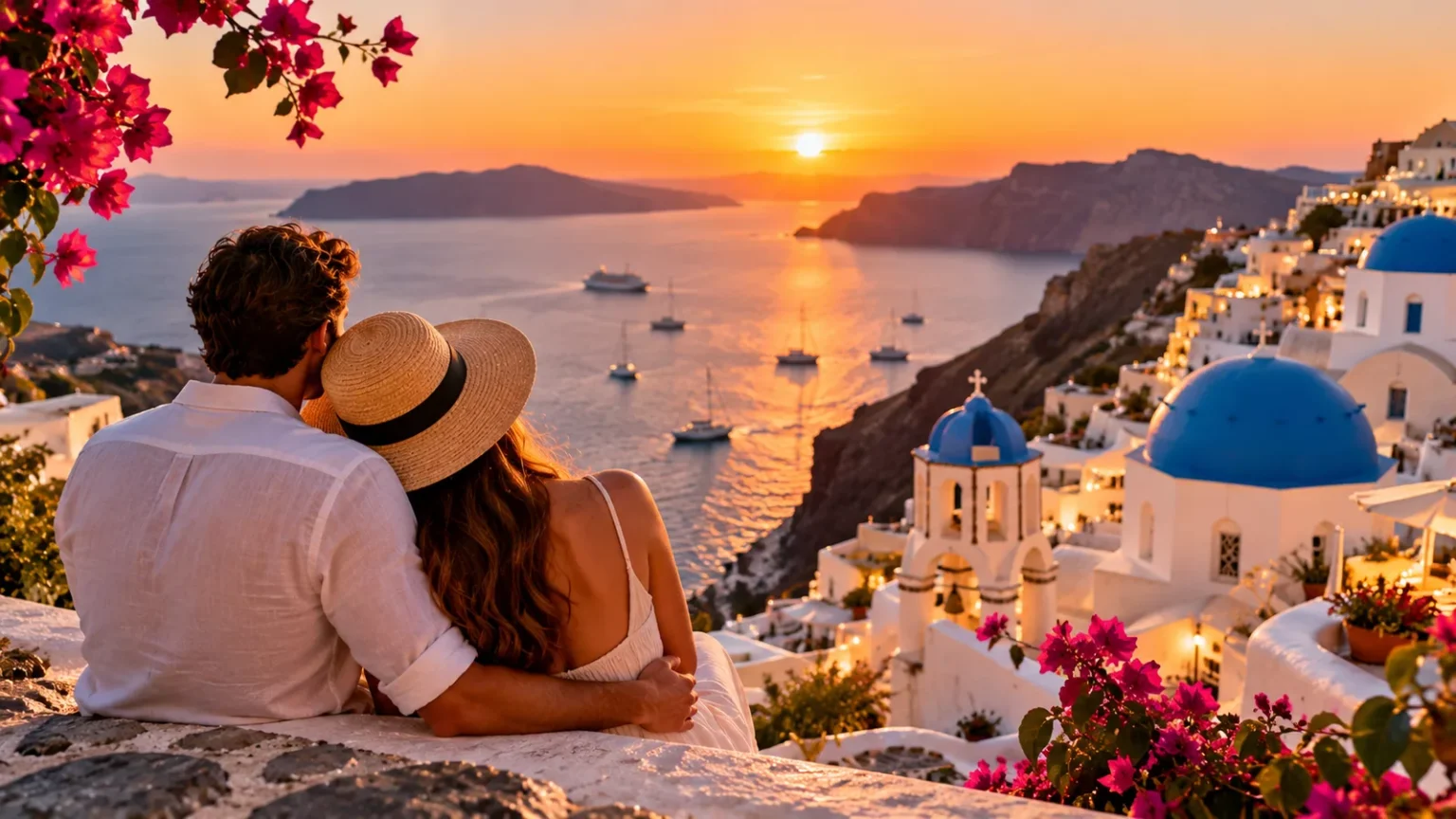
Santorini remains one of the world’s most recognizable romantic destinations because its caldera landscape is genuinely unusual. Whitewashed settlements above the sea, volcanic cliffs and sunset views create the kind of setting many couples specifically want for a honeymoon or milestone anniversary.
Two to four days are usually enough unless the objective is complete resort-style relaxation. Oia attracts enormous attention, but Fira, Imerovigli and other parts of the island can create different experiences. Choosing accommodation based on the desired atmosphere matters more than simply booking the most famous village name.
Late spring and early fall can provide a better balance than the height of summer for couples interested in walking and exploring as well as pool time. Peak periods bring higher demand and can make famous sunset locations far less intimate than promotional photographs imply.
What should couples skip in Santorini?
Do not build the entire trip around one Oia sunset. It is famous, but joining a large crowd in one viewpoint is not the only way to experience the caldera.
Book a room or dinner with a view if the budget allows, walk between settlements, or find a quieter evening setting. Santorini works best when the landscape is enjoyed repeatedly rather than reduced to one photograph.
Which Romantic City Should You Choose?
The most romantic city depends on what the two people traveling together actually enjoy. A couple that loves museums and classical music can have a far better trip in Vienna than Santorini, while people who want warm evenings and food may prefer Seville or Lisbon to Paris.
| If you want… | Choose… | Why it works |
|---|---|---|
| The classic first couples trip | Paris | Food, walks, art and iconic scenery |
| A two-night anniversary | Venice | Compact and atmospheric after dark |
| A honeymoon view | Santorini | Caldera scenery and romantic stays |
| Art plus food | Florence | Compact center and Tuscan cuisine |
| Traditional culture | Kyoto | Temples, gardens and seasonal beauty |
| A fairytale weekend | Prague | Historic skyline and easy walking |
| Sunsets on a smaller budget | Lisbon | Viewpoints and outdoor city life |
| Wine and a slow pace | Porto | Douro scenery and food |
| Music and elegance | Vienna | Concerts, cafés and imperial architecture |
| One romantic night | Bruges | Compact canal-side historic center |
| Dramatic walks | Edinburgh | Hills, medieval streets and views |
| Warm evenings | Seville | Plazas, courtyards and late dining |
| History plus food | Rome | Ancient sights and evening street life |
| Baths and night views | Budapest | Thermal culture and the Danube |
| Food and nightlife | Buenos Aires | Late dinners and neighborhood culture |
| Snowy winter atmosphere | Québec City | Historic streets and winter scenery |
| Nature plus city | Cape Town | Mountains, coast and vineyards |
You may also be interested in our article: 17 Things to Do in Geneva That Make 48 Hours Feel Like a Full Trip
This is why a universal ranking is less useful than matching the destination to the trip. The most romantic city is the one whose normal rhythm already resembles the holiday both people want.
Best Romantic Cities for a Honeymoon
A honeymoon usually benefits from a slower destination than a normal sightseeing break. Santorini, Kyoto, Florence, Cape Town and Venice work particularly well because memorable surroundings do not depend on visiting attractions from morning until night.
Santorini is the obvious choice for caldera views and hotel-centered relaxation. Kyoto suits couples who want culture and ritual, while Florence can lead naturally into Tuscany. Cape Town is stronger when nature, wine and road trips matter, and Venice is ideal for couples who prefer a shorter honeymoon stop inside a larger Italy itinerary.
For a longer honeymoon, combining destinations can work better than spending ten nights in one compact city. The key is limiting hotel changes – two bases over ten days generally feel more romantic than five cities in the same period.
Best Romantic Cities for an Anniversary
Anniversary trips often work best in destinations that can feel special over only two to four nights. Venice, Vienna, Paris, Porto and Bruges all fit that pattern because the experience begins almost immediately after arrival.
Venice is particularly strong for two or three nights, while Vienna gives couples more indoor options and formal evening experiences. Porto can feel less pressured and often suits couples who would rather spend money on food and wine than a long attraction list.
Paris remains the flexible option. It can be luxurious, food-focused, cultural or surprisingly simple depending on the neighborhood and itinerary.
Most Romantic Cities for Couples on a Budget
Romantic does not have to mean private boats and five-star hotels. Porto, Lisbon, Prague and Budapest can deliver viewpoints, historic streets, parks and long walks without requiring a paid experience every few hours.
Accommodation dates matter enormously. A supposedly affordable city during a major event or peak weekend can cost more than a traditionally expensive destination in its quieter season. Compare actual hotel prices for the intended dates before choosing based on reputation alone.
The best budget strategy is to spend selectively. Pay for one experience that matters, then build the rest of the day around neighborhoods, viewpoints, parks, markets and food rather than stacking admission tickets.
Most Romantic Cities for Food Lovers
Florence, Rome, Paris, Porto, Seville and Buenos Aires stand out when meals are a central part of the trip. Their appeal is not simply the number of famous dishes but the ease with which food can become part of the day’s rhythm rather than a separate attraction.
Food-focused couples should avoid overbooking afternoon attractions. A late lunch or long dinner loses much of its pleasure when both people are checking the time because another timed entry begins in 20 minutes.
A good food trip also needs neighborhood variety. Eating every meal within a few streets of the largest attraction rarely shows what makes a city’s food culture interesting.
Most Romantic Cities in Europe for a First Couples Trip
Paris, Venice, Florence, Prague and Lisbon are particularly easy choices for a first European couples trip because they combine famous sights with experiences that require little specialist planning. Each can fill three or four days, and all except Lisbon can be combined particularly easily with other major European destinations by rail.
Paris provides the broadest variety. Venice is the most unusual urban environment, Florence works for art and food, Prague provides a compact fairytale setting, and Lisbon adds warmer light, hills and a more relaxed outdoor rhythm.
First-time travelers should resist the temptation to combine all five. Two cities with enough time to enjoy them will usually produce a better romantic trip than four cities connected by constant packing.
3 Romantic Multi-City Routes That Actually Make Sense
The best multi-city romantic routes minimize transit and avoid changing hotels every night. Three combinations stand out because the destinations complement each other while remaining practical to connect.
Route 1 – Paris + Bruges for 5–7 Days
Give Paris four or five days, then finish with one or two nights in Bruges. The contrast works well: a major capital followed by a compact medieval canal city.
Do not treat Bruges only as a rushed day trip if romance is the purpose. Staying overnight is precisely what allows the atmosphere to change after the daytime crowds recede.
Route 2 – Venice + Florence + Rome for 9–12 Days
This is the classic Italian romantic route for good reason. Allocate roughly two or three nights to Venice, three to Florence and four to Rome, adjusting according to whether art, food or slower days matter most.
Travel by train between the cities rather than renting a car for the urban sections. Add Tuscany or the coast only if enough days remain to avoid turning the trip into constant movement.
Route 3 – Lisbon + Porto for 6–8 Days
Lisbon and Porto provide two different Portuguese city experiences without requiring a complicated itinerary. Give Lisbon three or four days and Porto two or three, adding another night where the couple’s interests are strongest.
Lisbon provides hills, neighborhoods and larger-city energy. Porto brings a more compact riverside setting, wine and viewpoints, making the sequence feel varied rather than repetitive.
When Should You Visit the Most Romantic Cities in the World?
There is no universal romantic season. Spring and early fall work well across many European destinations because they support long outdoor days, but specific cities have very different seasonal strengths.
Kyoto is particularly famous in spring and autumn, though those periods also bring significant visitor numbers. Québec City can become more appealing in winter rather than less, while Buenos Aires follows Southern Hemisphere seasons. Cape Town likewise requires travelers from Europe or North America to remember that local summer falls around the end and beginning of the calendar year.
The best approach is to decide what the trip is supposed to look like before choosing the month. If café terraces, long walks and outdoor dinners are essential, weather matters more than saving a small amount on accommodation.
How Many Days Do You Need for a Romantic City Break?
Three full days is a useful baseline for most romantic cities. It provides enough time for one or two major attractions each day while protecting evenings and meals from an exhausting schedule.
Compact destinations such as Bruges can work in one or two nights, while Paris, Rome, Kyoto, Buenos Aires and Cape Town deserve longer. Venice sits in the middle: two nights can be magical, but a rushed day trip rarely shows the city at its best.
Adding days is not always necessary. The more important rule is to stop scheduling every hour. Romance is difficult to manufacture when the itinerary leaves no room for a second coffee, unexpected viewpoint or dinner that lasts longer than planned.
How to Plan a Romantic Trip Without Turning It Into a Checklist
Start by asking each traveler for three priorities. If both lists include food, architecture and evening walks, the destination becomes easier to choose. If one person wants museums and the other wants beaches, Cape Town or a city-plus-coast route may work better than forcing either person into the wrong kind of holiday.
Then choose one major reservation per day, not four. Build neighborhoods around that reservation so the day moves logically instead of repeatedly crossing the city.
Finally, protect the evenings. A romantic trip needs time when nothing is due to start in 15 minutes. Sunset, dinner and a walk are experiences in their own right, not gaps between attractions.
9 Mistakes That Can Ruin a Romantic City Break
The most common mistakes are surprisingly practical. A beautiful destination cannot compensate for an itinerary that ignores weather, travel time, sleep or what the other person actually enjoys.
Avoid these problems:
- Choosing a city because social media calls it romantic. Match the destination to shared interests first.
- Changing hotels every night. Frequent packing destroys much of the benefit of a slow couples trip.
- Scheduling four major attractions every day. One or two priorities leave room for the city itself.
- Ignoring peak-season crowds. Venice and Kyoto can feel completely different outside their busiest hours.
- Booking every sunset. Leave at least one evening flexible for weather and spontaneous plans.
- Assuming expensive means romantic. A free viewpoint can be more memorable than an overpriced package.
- Ignoring walking distances and hills. Lisbon, Porto, Edinburgh and Rome can be physically demanding.
- Planning only for one person’s interests. The strongest romantic cities offer experiences both travelers actually want.
- Forgetting that meals need time. Food-focused destinations lose their appeal when dinner is squeezed between reservations.
The simplest solution is to remove one activity from each overloaded day. Most couples remember the hours they enjoyed, not the number of attractions completed.
How to Choose Between Paris, Venice and Rome
Paris is the strongest choice for variety. Choose it when museums, neighborhoods, food, gardens and long city walks all matter and the trip needs enough options to satisfy different interests.
Venice is the better choice for a short, intensely atmospheric escape. Its setting is unlike the other two, but it benefits enormously from staying overnight and accepting that the historic center can be crowded.
Rome is strongest when ancient history and food are as important as romance. It requires more energy than Venice and usually more time, but the range of experiences is much broader.
For a first couples trip of only three nights, Venice can feel the most immediately distinctive. For five nights, Paris or Rome has more room to unfold.
Are the World’s Famous Romantic Cities Overrated?
Some can feel overrated when visited in the wrong way. A midday crowd in Venice, a packed cherry blossom hotspot in Kyoto or a rushed Eiffel Tower itinerary in Paris can create a completely different experience from the romantic image that inspired the trip.
That does not make the cities themselves overrated. It means timing and itinerary design matter more in famous destinations because so many other visitors want the same experience.
Stay overnight in places dominated by day visitors, explore famous areas early, reserve only what genuinely requires advance booking and spend part of each day outside the most obvious tourist corridor. Those four changes can dramatically improve a couples trip without changing the destination.
FAQ About the Most Romantic Cities in the World
What are the most romantic cities in the world?
Paris, Venice, Florence, Kyoto, Prague, Lisbon, Porto, Vienna, Bruges, Edinburgh, Seville, Rome, Budapest, Buenos Aires, Québec City, Cape Town and Santorini all offer strong romantic-city experiences. They suit different couples, however, so the best choice depends on whether the trip prioritizes food, culture, scenery, nightlife, relaxation or outdoor experiences.
What is the most romantic city for a first couples trip?
Paris is one of the easiest choices for a first couples trip because it combines famous landmarks with neighborhoods, gardens, food, museums and evening experiences. Venice is better for a shorter and more atmospheric escape, while Lisbon suits couples who prioritize viewpoints, warmer conditions and a relaxed pace. The right choice depends more on shared interests than on a universal ranking.
What are the most romantic cities in Europe?
Paris, Venice, Florence, Prague, Lisbon, Porto, Vienna, Bruges, Edinburgh, Seville, Rome and Budapest are strong choices for romantic European city breaks. Some work best for two nights, while cities such as Paris and Rome reward four or five days. Combining two nearby destinations can also create a stronger trip than staying in one place for a full week.
Is Paris or Venice more romantic?
Paris offers more variety, while Venice delivers a more unusual and concentrated atmosphere. Paris suits couples who want museums, cafés, parks, neighborhoods and several different kinds of days. Venice is particularly strong for two or three nights when canals, historic streets and evenings without cars are the main attraction.
Which romantic city is best for a honeymoon?
Santorini, Kyoto, Florence, Cape Town and Venice are particularly suitable for honeymoons because each can combine memorable surroundings with slower days. Santorini emphasizes scenery and relaxation, Kyoto adds culture, Florence can lead into Tuscany, Cape Town combines nature and city life, and Venice works well as part of a longer Italian honeymoon.
Which romantic city is best for an anniversary?
Venice, Paris, Vienna, Porto and Bruges work particularly well for anniversaries. All can create a distinctive experience within two to four nights, which makes them practical for a shorter celebration. The best option depends on whether the couple prefers food, music, wine, canals or major cultural attractions.
What is the most romantic city for food lovers?
Florence, Rome, Paris, Porto, Seville and Buenos Aires are excellent romantic cities for couples who plan trips around food. Each supports long meals and neighborhood exploration rather than requiring every experience to happen at a formal attraction. Food-focused travelers should deliberately leave space in the itinerary for meals to run longer than expected.
What are the best romantic cities on a budget?
Porto, Lisbon, Prague and Budapest can work particularly well for budget-conscious couples because viewpoints, historic streets, parks and neighborhood walks provide substantial experiences without constant admission costs. Actual hotel prices vary by date, however, so comparing accommodation for the intended travel period is more useful than relying on a city’s general reputation.
What is the most romantic city in winter?
Québec City is particularly atmospheric for couples who actively want snow and cold-weather scenery. Vienna works well for winter culture, cafés and seasonal events, while Budapest adds thermal baths to a colder city break. Prague and Bruges can also be appealing when winter atmosphere matters more than long daylight hours.
What is the most romantic city in spring?
Kyoto is exceptional during cherry blossom season, although it is also particularly busy. Paris, Florence, Seville and Lisbon are strong spring choices for couples who want extensive outdoor sightseeing. Exact weather and flowering periods vary, so seasonal conditions should be checked before booking a trip around one short-lived natural event.
Which romantic city is best for three days?
Venice, Prague, Porto, Vienna, Edinburgh, Seville and Budapest all work particularly well for a three-day romantic break. They provide enough variety to fill the trip without requiring a week to understand the city. Paris, Rome and Kyoto can also be visited in three days, but additional time makes those destinations considerably less rushed.
Which romantic cities can be combined in one trip?
Venice, Florence and Rome form a practical Italian route, while Lisbon and Porto pair naturally in Portugal. Paris can be combined with Bruges for a city-plus-small-city contrast. Keep the number of bases limited, because spending every second day checking out, traveling and checking in makes a romantic trip considerably less relaxing.
Is Santorini worth visiting for couples?
Yes, particularly for couples who prioritize scenery, caldera views, distinctive accommodation and slower days. It is less suitable for travelers who want a dense city itinerary filled with museums and neighborhoods. Late spring and early fall can provide a useful alternative to the busiest summer period.
Is Kyoto a good romantic city?
Yes. Kyoto is particularly suitable for couples interested in temples, gardens, traditional streets, seasonal landscapes and quieter cultural experiences. Spring and autumn are visually spectacular but also busy, so early starts and careful area planning make a substantial difference.
How many days should a romantic city break last?
Three full days work well for many romantic cities, while larger destinations such as Paris, Rome, Kyoto, Buenos Aires and Cape Town benefit from four to six. Bruges can work with one overnight stay, and Venice is particularly effective over two or three nights. The itinerary should leave enough unscheduled time for meals, walks and spontaneous stops rather than using every available hour for sightseeing.
How do you make a city trip more romantic?
Choose a neighborhood that makes evening walks easy, schedule no more than one or two major attractions per day and leave at least one evening without a timed reservation. Add an experience both travelers genuinely enjoy rather than automatically booking stereotypically romantic activities. The strongest romantic trips usually combine one memorable planned experience with plenty of time that does not need to go according to plan.
Camping in Ontario Canada


Author of LitiTravels Portal


Articles by the author:
All articles by author


Haitian food goes far beyond fried pork and rice. These 18 dishes reveal the flavors worth knowing first, the combinations that belong together, what to order if you only get one meal, and how to build a Haitian food crawl with...
 October 3, 2026
 9
9
Geneva looks polished and compact, but trying to see everything in two days can waste more time than it saves. These 17 things to do in Geneva show what deserves priority, what can be skipped when time is tight, and how to turn...
October 2, 2026
15

A phone full of travel apps does not necessarily make a trip easier. These are the best travel apps in 2026 for the jobs that actually matter – from finding flights and building an itinerary to navigating offline, translating m...
October 1, 2026
18

Mountains, medieval streets, Roman ruins and Mediterranean beaches are all close enough to Barcelona for a day trip – but some are much easier than others. Compare 15 escapes by travel time, transport, cost and how much of your...
September 30, 2026
21
Subscribe to “lititravels” on Telegram for gaming intel.
No filler, no fuss—just your daily XP boost. Hop in and level up, squad!



Read also
Geneva looks polished and compact, but trying to see everything in two days can waste more time than it saves. These 17 things to do in Geneva show what deserves priority, what can be skipped when time is tight, and how to turn...
October 2, 2026
15

A cheap hotel does not guarantee a cheap family vacation. Flights, parking, meals, seat fees and daily activities can double the real cost. These 12 trip ideas show where families can save – and where “budget” vacations become ...
September 30, 2026
23
Cruise packing is different from packing for a hotel because your suitcase may disappear for hours after boarding and some everyday travel items are banned at sea. This checklist covers what you need, what belongs in your carry...
September 29, 2026
28
Scotland's busiest months are not automatically its best. May can beat midsummer for road trips, September brings a quieter Highlands experience, and winter has advantages of its own. Here's how to choose the right month for yo...
September 26, 2026
34
October is one of Latin America's most underrated travel months. Spring reaches the south, Caribbean Costa Rica catches a drier window, Patagonia wakes up and Oaxaca starts preparing for Día de Muertos. These 15 places make the...
September 23, 2026
139
Paris in October can give you golden gardens, sunny café afternoons and cold rain in the same trip. This 2026 guide shows what the weather actually feels like, what to pack and which October dates need extra planning.
September 22, 2026
58

Disney World can cost dramatically more depending on when you go. See which 2026–2027 travel windows offer the strongest chance of lower tickets and hotel rates, which cheap months come with weather trade-offs, and when paying ...
September 19, 2026
34

The Golden Circle is one of Iceland’s most iconic routes, offering a journey through some of the country’s most stunning landscapes and famous attractions. Whether you’re a first-time visitor or returning to explore more,...
April 12, 2025
448

The picturesque village of Roussillon is located in the heart of Provence, France. You won’t be disappointed, there’s several things to do in Roussillon. The ochre cliffs and the town’s charming streets have made it famou...
 March 17, 2025
351
March 17, 2025
351

Looking for a unique way to spend your vacation? A 14 day itinerary in New Zealand hits the mark. You’ll explore stunning spots like Queenstown, Rotorua, and Abel Tasman National Park. Visit famous beaches, geothermal wonders, ...
March 17, 2025
409

Cooperation
Looking to shine a spotlight on your project? LitiTravels has you covered! We offer article-based promotion, manage branded blogs on our platform, drive engagement through our social media channels, and create content that delivers real results. Get in touch today and let’s make your brand stand out!
Subscribe to the monthly news digest from LitiTravels
The main news and updates from the team about gadgets, sports, cars, health, and lifestyle.
