


Popular articles


25 Things to Do in Budapest That Deserve a Place on Your 2026 Trip
 Destinations25 Things to Do in Budapest That Deserve a Place on Your 2026 Trip
Destinations25 Things to Do in Budapest That Deserve a Place on Your 2026 Trip
25 Things to Do in Budapest That Deserve a Place on Your 2026 Trip
Article content

The best things to do in Budapest range from soaking in steaming thermal pools and walking across the Danube to exploring a castle district, eating inside a historic market hall and watching Parliament light up after dark. The Hungarian capital packs an unusual amount of architecture, history, nightlife and inexpensive sightseeing into a relatively compact centre. For a first visit, three full days provide enough time to see the major Budapest attractions without turning the trip into a race.
The difficulty is not finding what to do in Budapest. It is deciding which attractions deserve limited vacation time, because a search for Budapest highlights quickly produces dozens of churches, museums, viewpoints, baths, markets and cruises. Several famous places are also concentrated within walking distance of one another, so visiting them in the wrong order creates unnecessary journeys across the Danube.
A smarter Budapest itinerary is built geographically. Spend one block of time around Buda Castle and Castle Hill, another along the Pest riverfront and Parliament district, and another around the Jewish Quarter, City Park and central Pest. Thermal baths, evening Danube views and neighbourhood exploration can then fit around those clusters rather than competing with them.
This guide covers 25 things to do in Budapest, followed by practical routes for one, two and three days, free activities, rainy-day ideas, evening plans, costs, transport and first-timer mistakes. Opening arrangements and ticket prices can change, so timed attractions should always be checked shortly before the visit.
Best Things to Do in Budapest at a Glance
First-time visitors do not need to complete all 25 Budapest attractions. Parliament, the Danube riverfront, Castle Hill, Fisherman’s Bastion, one thermal bath and an evening view of the city create a strong core, while the remaining choices should reflect whether food, museums, nightlife or architecture matters most.
| Budapest attraction | Area | Allow | Cost level | First trip? |
|---|---|---|---|---|
| Hungarian Parliament | Pest riverfront | 1–1.5 hrs | ££ | Essential |
| Fisherman’s Bastion | Castle Hill | 45–90 min | Free–£ | Essential |
| Buda Castle district | Buda | 2–4 hrs | Free–££ | Essential |
| Széchenyi Thermal Bath | City Park | 2–4 hrs | £££ | Essential |
| Danube riverfront | Central Budapest | 1–2 hrs | Free | Essential |
| Shoes on the Danube Bank | Pest | 20–30 min | Free | Essential |
| St Stephen’s Basilica | Pest | 1 hr | £–££ | High |
| Chain Bridge | Buda/Pest | 20–40 min | Free | High |
| Great Market Hall | District IX | 1–1.5 hrs | Free–£ | High |
| Jewish Quarter | District VII | 2–4 hrs | Free–££ | High |
| Dohány Street Synagogue | District VII | 1–2 hrs | ££ | High |
| Gellért Hill | Buda | 1–2 hrs | Free | High |
| House of Terror | Andrássy Avenue | 1.5–2.5 hrs | ££ | Interest-dependent |
| Heroes’ Square | City Park | 30–45 min | Free | Easy add-on |
| Vajdahunyad Castle | City Park | 30–60 min | Free–£ | Easy add-on |
| Margaret Island | Danube | 2–4 hrs | Free–£ | Good in warm weather |
| New York Café | District VII | 1–2 hrs | £££ | Optional |
| Ruin bars | Jewish Quarter | 2+ hrs | £–££ | Nightlife |
| Danube cruise | River | 1–1.5 hrs | ££ | Strong evening option |
| Hungarian State Opera | Andrássy Avenue | 1–3 hrs | ££–£££ | Culture |
| Central Café culture | Pest | 1–2 hrs | ££ | Relaxed |
| Hospital in the Rock | Castle Hill | 1–1.5 hrs | ££ | History |
| Memento Park | Outer Buda | 2–3 hrs | ££ | Repeat/longer trip |
| Tram 2 | Pest riverfront | 30–60 min | £ | Easy city views |
| Andrássy Avenue | Pest | 1–2 hrs | Free | Combine with nearby sights |
If only one weekend is available, prioritize the attractions marked essential and high rather than trying to collect all 25. Budapest rewards lingering at viewpoints, baths and cafés much more than sprinting through another five entrances.
1. Tour the Hungarian Parliament Building
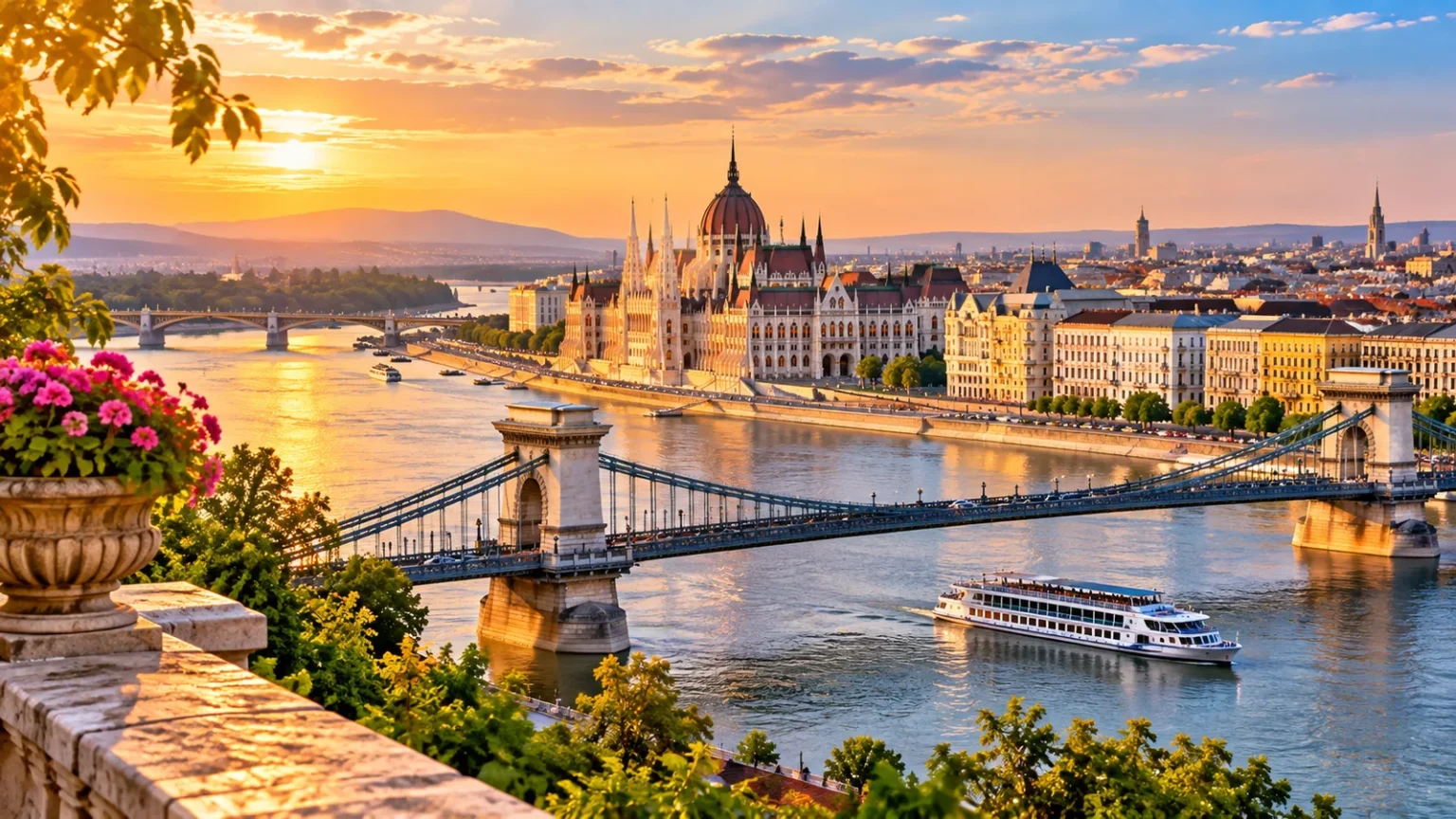
The Hungarian Parliament Building is one of the most important things to do in Budapest for a first visit because the architecture, political history and Danube setting all converge in one place. The enormous neo-Gothic building dominates the Pest bank of the river and is particularly striking from across the Danube in Buda.
Seeing the exterior is free, but visiting the interior requires an organized visit and advance planning is sensible. The tour provides access to spaces that cannot be appreciated from the riverfront alone, including grand ceremonial interiors and the area associated with Hungary’s Holy Crown.
Even visitors who skip the interior should walk around Kossuth Lajos Square and return to the area after dark. Parliament becomes one of Budapest’s defining nighttime views when illuminated beside the Danube.
Area: District V, Pest
Allow: 1–1.5 hours for an interior visit; longer with the riverfront.
Best for: First visits, architecture and Hungarian history.
2. See Parliament From Fisherman’s Bastion
Fisherman’s Bastion is one of the best places to visit in Budapest for the classic view across the Danube. Its terraces sit high above the river in the Castle District, with Parliament almost directly opposite on the Pest bank.
The attraction is more than one photograph. Walk between the neo-Romanesque towers, explore the surrounding Castle Hill streets and combine the stop with Matthias Church rather than travelling to Buda for the viewpoint alone. Some areas can be accessed freely, while particular upper sections may require a ticket depending on current arrangements and time of visit.
Early morning is particularly attractive because Castle Hill is calmer before the main sightseeing period. Evening offers a completely different reward when Parliament and the riverfront begin to glow.
Area: Castle District, Buda
Allow: 45–90 minutes.
Best for: Views, photography and first-time visitors.
3. Explore Buda Castle and Castle Hill Properly
Buda Castle should be treated as a district rather than one building to photograph and leave. Castle Hill contains courtyards, museums, historic streets, viewpoints, Matthias Church, Fisherman’s Bastion and several layers of Hungarian history within a compact area.
This is one of the Budapest attractions where route planning saves considerable time. Start at one end of the district and move through it on foot rather than repeatedly descending and climbing the hill. Allow at least half a day if museums and interiors are part of the plan.
Restoration work continues to reshape parts of the wider castle complex, so individual entrances, routes and accessible areas can change. Check the current status of the specific building or exhibition before planning the day around it. The Castle District also works well as the starting point for a wider European city trip.
Area: Castle District, Buda
Allow: 2–4 hours.
Best for: History, architecture and panoramic views.
4. Soak in Széchenyi Thermal Bath
A thermal bath belongs near the top of any list of things to do in Budapest because bathing culture is part of the city’s identity rather than a novelty created for visitors. Széchenyi is the most recognizable option, with large outdoor pools and an extensive indoor bathing complex in City Park.
Allow enough time to make the ticket worthwhile. Arriving, changing, finding the pools and actually relaxing can easily consume several hours. Visitors trying to squeeze the bath between two timed attractions often spend more time watching the clock than enjoying the water.
Bring or rent whatever the current bath rules require and check ticket types before arrival. Weekends and popular periods can be busy, so an early visit may provide a calmer experience.
Széchenyi is particularly convenient because Heroes’ Square and Vajdahunyad Castle are nearby. Combining all three creates one efficient City Park block.
Area: City Park.
Allow: 2–4 hours.
Best for: Thermal bathing, relaxation and first-time Budapest trips.
5. Walk the Danube Promenade
Walking beside the Danube is one of the best free things to do in Budapest because many of the city’s defining landmarks reveal their relationship to one another from the river. Parliament, Buda Castle, bridges and the hills of Buda all form part of the same panorama.
Do this walk at least twice if time allows – once during daylight and once after dark. Budapest’s illuminated riverfront changes the experience substantially, and some buildings are arguably more impressive from outside at night than during a rushed daytime visit.
The Pest side is particularly convenient for combining Parliament, Shoes on the Danube Bank and the Chain Bridge. Crossing into Buda then creates another perspective without needing public transport.
Area: Central Danube riverfront.
Allow: 1–2 hours.
Best for: Free sightseeing, photography and evening walks.
6. Stop at Shoes on the Danube Bank
Shoes on the Danube Bank is a Holocaust memorial and should be approached as a place of remembrance rather than another photo stop. The installation commemorates people murdered on the banks of the Danube during the Arrow Cross terror of 1944–45.
The memorial consists of iron shoes positioned along the riverbank near Parliament. Its simplicity is what makes the site powerful, particularly when the surrounding beauty of the Danube is contrasted with the history being remembered.
Allow time to stop rather than merely pass through on the way to another attraction. It fits naturally into a Parliament and riverfront walk, so no separate journey is required.
Area: Pest riverfront near Parliament.
Allow: 20–30 minutes.
Best for: Historical understanding and remembrance.
7. Cross the Chain Bridge on Foot
The Széchenyi Chain Bridge is one of Budapest’s most recognizable structures and one of the easiest ways to experience the relationship between Buda and Pest. Walking across provides views toward Castle Hill, Parliament and the Danube without an entrance ticket.
The bridge is especially useful as part of a route. Visit central Pest, cross toward Buda and continue uphill to the Castle District, or reverse the sequence and finish the afternoon around the Pest riverfront.
After dark, the surrounding river scenery makes the crossing even more memorable. Wind can make the bridge noticeably colder than nearby streets outside summer, so an extra layer is useful during cooler months.
Area: Central Budapest.
Allow: 20–40 minutes.
Best for: Views, free sightseeing and connecting Buda with Pest.
8. Go Inside St Stephen’s Basilica
St Stephen’s Basilica is one of the most significant religious buildings among Budapest attractions and an easy addition to a central Pest itinerary. Its monumental interior provides a sharp contrast with the streets and cafés surrounding the square outside.
The panoramic terrace is another reason to visit. Budapest is relatively flat on the Pest side, so an elevated central viewpoint helps explain the layout of the city and gives a different perspective from Castle Hill.
Concerts are also held in the basilica, making it possible to experience the building in a different context. Current admission categories, tower access and concert schedules should be checked before visiting.
The surrounding area is lively enough to continue directly into lunch, dinner or an evening walk. That makes the basilica particularly efficient for visitors with limited time.
Area: District V, Pest.
Allow: Around 1 hour.
Best for: Architecture, views and music.
9. Eat Your Way Through Great Market Hall
Great Market Hall is one of the most practical things to do in Budapest for travellers who want food and sightseeing to overlap. The vast indoor market combines produce, spices, meat, Hungarian ingredients, souvenirs and prepared food beneath a distinctive iron-and-glass structure.
Do not treat every product marketed to visitors as automatically traditional or good value. Walk through the food sections first, compare stalls and use the visit to understand ingredients such as paprika rather than rushing toward the first souvenir display.
The building’s location near Liberty Bridge makes it easy to combine with the Danube, central Pest or a walk toward Gellért Hill. Morning and lunchtime visits generally make more sense than arriving near closing time.
Area: District IX edge/central Pest.
Allow: 1–1.5 hours.
Best for: Food, markets and rainy-day sightseeing.
10. Explore the Jewish Quarter Beyond the Ruin Bars
Budapest’s Jewish Quarter is one of the city’s most layered neighbourhoods. Synagogues, memorials, restaurants, cafés, street art and nightlife occupy streets where Jewish history and contemporary Budapest coexist very closely.
The district should not be reduced to ruin bars. Spend part of the day exploring its historical sites, then return in the evening if nightlife is also important. This separation creates a much fuller understanding of the area.
Walking is the best way to experience the quarter because many worthwhile details sit between the headline attractions. It is also one of the easiest areas in Budapest to combine food, history and an evening out without repeatedly using public transport.
Area: District VII.
Allow: 2–4 hours.
Best for: History, food, neighbourhood exploration and nightlife.
11. Visit Dohány Street Synagogue
Dohány Street Synagogue is one of the most significant cultural and historical attractions in Budapest. The complex includes the synagogue itself and memorial spaces connected to the history of Budapest’s Jewish community and the Holocaust.
A visit adds essential context to time spent in the Jewish Quarter. It is worth allowing more than a quick exterior photograph because the significance of the site extends far beyond its architecture.
Opening times can be affected by religious observance, holidays and events. Check the current schedule before building a tightly timed itinerary around the visit, and dress appropriately for a religious site.
Area: Jewish Quarter.
Allow: 1–2 hours.
Best for: History, culture and architecture.
12. See Budapest From Gellért Hill
Gellért Hill provides one of the broadest views across Budapest, with the Danube, bridges, Pest and Castle Hill visible from elevated positions. The climb also creates a useful break from museums and interiors.
Access around the Citadella area has been affected by major redevelopment and restoration work, so visitors should check current routes and open areas before assuming an old guide or map remains accurate. The hill itself remains part of the wider Budapest landscape, but construction can change the precise experience.
Comfortable shoes make the climb much easier. In hot weather, carry water and avoid treating midday summer heat as the ideal moment for an exposed uphill walk.
Area: Buda.
Allow: 1–2 hours.
Best for: Panoramas, walking and sunset.
13. Understand Hungary’s 20th Century at the House of Terror
The House of Terror explores periods of fascist and communist dictatorship associated with the building at 60 Andrássy Avenue. It is one of the heavier things to do in Budapest and works best when visitors arrive prepared to engage with difficult historical material rather than treating it as casual entertainment.
Allow enough time for the exhibits. This is not an attraction that benefits from rushing through in 30 minutes before lunch, particularly for visitors trying to understand modern Hungarian history.
Its location on Andrássy Avenue makes it easy to combine with a walk toward Heroes’ Square and City Park. That creates an efficient route while allowing the atmosphere to change after the museum.
Area: Andrássy Avenue.
Allow: 1.5–2.5 hours.
Best for: Modern history.
14. Walk Through Heroes’ Square
Heroes’ Square is one of Budapest’s major monumental spaces and sits at the end of Andrássy Avenue beside City Park. The Millennium Monument and surrounding statues provide a visual introduction to figures and episodes from Hungarian history.
The square itself does not require hours. Its real value comes from combining it with nearby attractions such as Széchenyi Thermal Bath, Vajdahunyad Castle and City Park.
This makes Heroes’ Square a good example of smart Budapest planning. Rather than assigning every attraction its own journey, connect several places in one walkable district.
Area: City Park.
Allow: 30–45 minutes.
Best for: Architecture, history and an easy City Park stop.
15. Wander Around Vajdahunyad Castle
Vajdahunyad Castle looks much older than it actually is. The complex originated around Hungary’s 1896 millennial celebrations and brings together architectural styles inspired by buildings from different periods of Hungarian history.
The grounds make an easy addition to a City Park route. Visitors do not need to turn it into a major half-day attraction unless the museum or a particular exhibition is of interest.
Its romantic appearance makes it particularly photogenic in changing light and seasonal conditions. Winter, autumn foliage and summer greenery each give the complex a different atmosphere.
Area: City Park.
Allow: 30–60 minutes.
Best for: Architecture, photography and combining with Széchenyi.
16. Spend a Slow Afternoon on Margaret Island
Margaret Island sits in the Danube and offers one of the easiest escapes from dense sightseeing. Green space, walking and cycling routes make it particularly useful after a morning spent inside museums or historic buildings.
This is not necessarily an essential stop for a first 24-hour visit. With three or more days, however, it provides something many packed Budapest itineraries lack – several hours with no need to queue, book a timed entrance or process another monumental interior.
Warm weather makes the island considerably more appealing. Rent a bicycle or simply walk, then return to central Budapest when ready for dinner or an evening river view.
Area: Danube between Buda and Pest.
Allow: 2–4 hours.
Best for: Parks, cycling, families and slower travel.
17. Decide Whether New York Café Is Worth the Queue
New York Café is famous for its ornate interior, but it is also a good example of a Budapest attraction that needs realistic expectations. Visitors come primarily for the lavish historic setting rather than because it is the cheapest place in the city for coffee.
Queues and prices can change the experience considerably. Travellers who value historic cafés and interiors may consider the premium worthwhile, while someone interested primarily in Hungarian coffee culture has many alternatives.
This is therefore an optional rather than essential first-timer stop. If the wait is long and the schedule is short, Budapest has enough extraordinary architecture that skipping one famous café will not diminish the trip.
Area: District VII.
Allow: 1–2 hours depending on waiting.
Best for: Historic interiors and café culture.
18. Experience a Budapest Ruin Bar
Ruin bars transformed abandoned or neglected spaces in the Jewish Quarter into some of Budapest’s best-known nightlife venues. Szimpla Kert became the most internationally recognizable example, with mismatched furniture, art and a deliberately unconventional interior.
Go because the concept interests you, not because every Budapest visitor is required to spend a night drinking. The atmosphere can be busy and highly visitor-oriented, particularly at famous venues.
An earlier visit can be more comfortable for travellers who want to see the interior without the full late-night crowd. Those actively seeking nightlife can arrive later and explore several nearby venues on foot.
Area: Jewish Quarter.
Allow: 2+ hours.
Best for: Nightlife and first-time visitors curious about ruin-bar culture.
19. Take a Danube Cruise After Dark
An evening Danube cruise is one of the most visually rewarding things to do in Budapest because the city’s major riverside landmarks are illuminated after dark. Parliament, Buda Castle and the bridges become part of one continuous panorama rather than separate attractions.
Cruise products vary enormously. Some are basic sightseeing trips, while others include drinks, dinner or entertainment. Compare route, duration and inclusions rather than assuming a higher price automatically provides a better view.
The best time depends partly on season. Around sunset, a cruise can capture Budapest in daylight, twilight and darkness within one journey if the timing aligns.
Area: Danube.
Allow: 1–1.5 hours for many sightseeing cruises.
Best for: Couples, first visits and nighttime views.
20. See the Hungarian State Opera House
The Hungarian State Opera House on Andrássy Avenue is worth considering even when attending a full performance does not fit the itinerary. Its architecture and richly decorated interior make it one of the city’s important cultural landmarks.
A performance creates the fullest experience, but guided access can suit travellers who are more interested in the building than the programme. Ticket availability and visitor arrangements should be checked for the specific date.
Dress expectations depend on the event rather than one universal rule. For a formal performance, a little more effort may feel appropriate, while a daytime tour has a very different atmosphere.
Area: Andrássy Avenue.
Allow: 1 hour for a visit; several hours for a performance.
Best for: Architecture, music and evening culture.
21. Make Time for Budapest’s Café Culture
Budapest’s café tradition deserves more than one rushed espresso between attractions. Historic coffeehouses and modern specialty cafés provide different experiences, and sitting down for an hour can be one of the simplest ways to stop a busy Budapest itinerary from becoming exhausting.
Try Hungarian pastries or cakes rather than automatically ordering whatever would be familiar at home. Dobos cake, Esterházy cake and other Central European sweets can turn a coffee break into part of the cultural experience.
A café stop works particularly well during the middle of a long walking day or when weather changes. It is also an easy way to enjoy Budapest without purchasing another formal attraction ticket.
Area: Throughout central Pest and Buda.
Allow: 1–2 hours.
Best for: Food, slow travel and rainy weather.
22. Visit Hospital in the Rock
Hospital in the Rock occupies a network beneath Castle Hill and offers a very different historical experience from the palaces and viewpoints above it. The underground complex served as an emergency hospital during World War II and later had Cold War functions.
Because access is structured, this is an attraction to plan rather than casually wander into between viewpoints. Check current tour languages, schedules and ticket conditions before arrival.
It pairs naturally with the Castle District because no cross-city journey is necessary. Visitors particularly interested in 20th-century history can combine it with the House of Terror on another part of the trip without trying to absorb both on the same afternoon.
Area: Castle Hill.
Allow: Around 1–1.5 hours.
Best for: World War II and Cold War history.
23. Visit Memento Park If Communist-Era History Matters to You
Memento Park preserves monumental statues associated with Hungary’s communist period that were removed from public spaces after the political transition. Its location outside the central sightseeing zone makes it more deliberate than most Budapest attractions.
That distance is precisely why it should not automatically appear on every two-day itinerary. Visitors with a strong interest in political history can find it worthwhile, while first-timers with limited time may gain more from staying in central Budapest.
Allow for transport as well as the visit itself. Treating Memento Park as a quick 45-minute stop ignores the journey required to reach it.
Area: Outer Buda.
Allow: 2–3 hours including reasonable transport time.
Best for: Communist-era history and longer stays.
24. Ride Tram 2 for a Low-Cost Budapest Sightseeing Route
Tram 2 is useful because ordinary public transport can double as sightseeing. The route runs along part of the Pest side of the Danube, providing views toward Buda and passing close to major central landmarks.
It should not be treated as a formal guided tour. There is no narration explaining what is outside the window, but that is also the appeal – the journey costs normal public-transport fare and can connect places already on the itinerary.
Use it when tired legs need a break or when weather makes a long riverfront walk less attractive. Validate or activate the correct ticket according to current Budapest transport rules.
Area: Pest riverfront.
Allow: 30–60 minutes depending on route.
Best for: Budget sightseeing and transport.
25. Walk Andrássy Avenue Instead of Only Riding Beneath It
Andrássy Avenue connects central Pest with Heroes’ Square and passes several important Budapest attractions along the way. The Opera House, House of Terror, historic façades and side streets make the route more interesting on foot than simply travelling underneath it by metro.
Walking the entire avenue is not essential if time or mobility is limited. A practical approach is to explore a section, visit the attraction that matters most and use public transport for the remainder.
The avenue also helps explain Budapest’s urban scale. Moving from the dense central streets toward Heroes’ Square creates a natural transition into City Park and Széchenyi Thermal Bath.
Area: Pest.
Allow: 1–2 hours with stops.
Best for: Architecture, urban walks and linking central Pest to City Park.
Best Things to Do in Budapest for First-Time Visitors
For a first trip, the priority should be experiencing what makes Budapest distinct rather than visiting the maximum number of attractions. That means combining the Danube, Buda’s elevated historic district, monumental Pest and the city’s thermal-bath culture.
The essential first-timer shortlist is:
- Tour or see the Hungarian Parliament. It is the defining building on the Pest riverfront.
- Explore Castle Hill. Combine Buda Castle, Fisherman’s Bastion and Matthias Church in one block.
- Walk across the Chain Bridge. It physically connects the two sides of the classic sightseeing area.
- Visit a thermal bath. Széchenyi is the most obvious first-time choice.
- Walk the Danube. Include Shoes on the Danube Bank and nighttime views.
- Explore the Jewish Quarter. Give it daytime historical context as well as evening energy.
- See Budapest after dark. Walk the riverfront or take an evening cruise.
- Eat something Hungarian. Markets, bakeries, cafés and restaurants all provide opportunities beyond sightseeing.
Completing these eight experiences creates a much more representative first trip than visiting 20 interiors. Additional Budapest attractions should then be chosen according to personal interests.
Things to Do in Buda vs Pest
Budapest becomes much easier to understand once the city is mentally divided by the Danube. Buda is hillier, greener and dominated by Castle Hill and viewpoints; Pest is flatter, denser and contains Parliament, the Jewish Quarter, major boulevards, nightlife and much of the everyday central-city energy.
| Buda | Pest |
|---|---|
| Buda Castle | Parliament |
| Fisherman’s Bastion | St Stephen’s Basilica |
| Matthias Church | Jewish Quarter |
| Gellért Hill | Great Market Hall |
| Hospital in the Rock | House of Terror |
| Castle Hill streets | Andrássy Avenue |
| Panoramic viewpoints | Ruin bars |
| Quieter evening walks | Restaurants and nightlife |
You may also be interested in our article: 9 Best Bali Alternatives for 2027 if You Want Indonesia Without the Bali Crowds
Do not spend the trip constantly switching sides. Give Castle Hill and nearby Buda attractions one concentrated block, then spend another block moving through central Pest.
Free Things to Do in Budapest
Many of the best things to do in Budapest do not require an entrance ticket. Walking the Danube, crossing the Chain Bridge, exploring neighbourhoods and enjoying exterior views of major monuments can fill a substantial part of a first day.
Strong free options include:
- Walk along the Danube.
- Visit Shoes on the Danube Bank.
- Cross the Chain Bridge.
- Explore much of Castle Hill.
- See Parliament from outside.
- Walk through Heroes’ Square.
- Explore City Park.
- Walk Andrássy Avenue.
- Spend time on Margaret Island.
- Explore the Jewish Quarter streets.
- See the Great Market Hall interior without needing to buy anything.
- Walk up toward Budapest viewpoints where current access permits.
Free sightseeing also creates room in the budget for the experiences that genuinely justify paying, such as a thermal bath, Parliament interior, synagogue, museum or evening cruise.
Things to Do in Budapest at Night
Budapest is one of those cities where sightseeing should not end when attractions close. Parliament, Castle Hill and the bridges are illuminated, while the Jewish Quarter changes from a daytime historical district into one of the city’s major nightlife areas.
Good things to do in Budapest at night include:
- Walk the Danube riverfront.
- See Parliament illuminated from Buda.
- Take an evening Danube cruise.
- Visit a ruin bar.
- Attend an opera, concert or performance.
- Have dinner in the Jewish Quarter or central Pest.
- Cross the Chain Bridge after dark.
- Take an evening photography walk.
For a first night, the river is the easiest choice. Even travellers who dislike nightlife should see central Budapest after dark at least once.
Things to Do in Budapest When It Rains
Rain does not destroy a Budapest itinerary because several major attractions are indoors. The key is keeping thermal baths, museums, markets and historic interiors available as flexible options rather than scheduling every indoor attraction for the sunniest day.
Good rainy-day choices include:
- Hungarian Parliament interior.
- Széchenyi Thermal Bath.
- Great Market Hall.
- House of Terror.
- Dohány Street Synagogue.
- Hungarian State Opera House.
- Hospital in the Rock.
- Historic cafés.
- Hungarian National Gallery or another museum in the Castle District.
A thermal bath can be particularly atmospheric in poor weather, although outdoor movement between pools still needs to be considered in cold conditions. Severe weather is different from ordinary rain, so follow local warnings when conditions are genuinely hazardous.
What to Do in Budapest in One Day
With one day in Budapest, concentrate on the Danube and Castle District rather than travelling to every famous attraction. This route captures the city’s strongest visual identity and keeps transport time low.
Morning: Start around Parliament and Kossuth Lajos Square, then visit Shoes on the Danube Bank. Continue toward the Chain Bridge and cross into Buda.
Late morning and early afternoon: Explore Castle Hill, Fisherman’s Bastion, Matthias Church surroundings and Buda Castle. Stop for lunch in or around the district without rushing immediately back across the river.
Late afternoon: Return to Pest and visit St Stephen’s Basilica or walk central Pest. If thermal bathing matters more than another church or viewpoint, head to Széchenyi instead and give the bath several hours.
Evening: Finish beside the Danube. An evening cruise or riverfront walk provides the strongest ending because Budapest’s illuminated landmarks are a major part of the city’s appeal.
One day is enough to understand why Budapest is popular, but not enough to cover all its major attractions.
What to Do in Budapest in 2 Days
Two days allow the itinerary to expand beyond the Danube without becoming exhausting. Keep day one focused on the historic riverfront and Buda, then use day two for Pest, City Park and thermal bathing.
Day 1: Parliament → Shoes on the Danube → Chain Bridge → Castle Hill → Fisherman’s Bastion → Buda Castle → evening Danube views.
Day 2: St Stephen’s Basilica → Jewish Quarter → Dohány Street Synagogue → Andrássy Avenue → Heroes’ Square → Széchenyi Thermal Bath → ruin bar or relaxed dinner.
This sequence groups attractions geographically and leaves the bath toward the end of an active sightseeing day. It also avoids climbing Castle Hill and then travelling all the way to City Park only to return downtown again.
The Best 3-Day Budapest Itinerary
Three days is an excellent amount of time for a first Budapest itinerary. It provides enough space for the major attractions while allowing a thermal bath, neighbourhood time and a slower meal without sacrificing the landmarks.
| Day | Morning | Afternoon | Evening |
|---|---|---|---|
| Day 1 | Parliament + riverfront | Castle Hill + Fisherman’s Bastion | Danube at night |
| Day 2 | Jewish Quarter + synagogue | Andrássy + City Park | Széchenyi + nightlife |
| Day 3 | Great Market Hall | Gellért area or Margaret Island | Cruise, opera or café |
Day 1 – The Danube and Castle Hill
Start with Parliament and the Pest riverfront before crossing the Chain Bridge into Buda. Spend the main part of the day exploring Castle Hill, Fisherman’s Bastion and the Buda Castle area rather than treating each as a separate trip.
Stay near the river after sunset. Walk back across the bridge or position yourself on the Buda side for illuminated views toward Parliament.
Day 2 – Jewish Budapest, Andrássy Avenue and Thermal Baths
Begin in the Jewish Quarter while the focus can remain on history rather than nightlife. Visit Dohány Street Synagogue if it is part of the plan, explore the neighbourhood and then move toward Andrássy Avenue.
Continue toward Heroes’ Square and City Park. Finish with several hours at Széchenyi Thermal Bath rather than squeezing the bath into a rushed morning slot.
Day 3 – Food, Views and the Budapest You Nearly Missed
Start at Great Market Hall, then use the rest of the day for an experience that matches personal interests. Gellért Hill, Margaret Island, Hospital in the Rock, a museum or a long café break can all fill the afternoon.
Finish with whatever major Budapest experience remains – an evening cruise, Opera House performance or relaxed dinner. The third day should feel less scheduled than the first two.
How Much Do Budapest Attractions Cost?
Budapest can still be explored on a moderate budget because many headline views and public spaces are free. Costs rise quickly when a trip includes thermal baths, multiple museums, guided interiors, cruises and premium dining.
Instead of budgeting per attraction blindly, divide experiences into categories.
| Travel style | Attractions strategy | Daily sightseeing budget |
|---|---|---|
| Budget | Free walks + 1 paid highlight | Low |
| Moderate | 2–3 paid attractions + free sights | Medium |
| Experience-heavy | Baths + museums + cruise + interiors | Higher |
| Luxury | Private tours + premium dining + performances | High |
Exact ticket prices should be checked on official attraction websites for the travel date because rates and ticket categories change. Students, young travellers, EU residents and families may also encounter different eligibility rules depending on the attraction.
Do not buy every ticket simply because an attraction appears on a “must-see” list. Budapest’s free riverfront and viewpoints are among the city’s strongest experiences.
How to Get Around Budapest
Central Budapest is highly walkable, but public transport becomes useful when moving between the Castle District, City Park, outer attractions and accommodation. Metro, tram and bus services cover the city extensively.
Trams are particularly useful for visitors because they remain above ground and make the journey part of sightseeing. Tram 2 along the Pest riverfront is the obvious example, while other routes connect major districts efficiently.
Buy the appropriate Budapest transport ticket or pass for the itinerary and follow the current validation rules. Fare inspections are real, and misunderstanding how a ticket should be activated is not a useful vacation souvenir.
Walking remains the best option within individual clusters. Use public transport between neighbourhoods, then explore each neighbourhood on foot.
Where to Stay in Budapest for Sightseeing
For a first visit, central Pest is generally the easiest base because restaurants, transport, nightlife and many major Budapest attractions are close together. District V works particularly well for river access and major landmarks, while parts of District VI and VII provide easy access to dining, culture and evening activity.
Buda can feel quieter and offers atmospheric surroundings near Castle Hill, but travellers may cross the river more frequently for restaurants and nightlife. That is not necessarily a disadvantage for couples or visitors prioritizing a calmer evening base.
The best area depends on the trip rather than one universal “best district.” First-time visitors staying only two or three nights usually benefit from centrality more than from saving a small amount on accommodation far from the main sightseeing area.
Best Time to Visit Budapest
Spring and early autumn are among the easiest periods for sightseeing because temperatures are generally more comfortable for long walking days than during peak summer heat. The search data supplied for this topic also shows a seasonal lift around September, making late summer and early autumn particularly relevant for trip planning.
Summer provides long daylight and lively outdoor spaces but can bring heat and heavier visitor numbers. Winter is colder and darker, yet thermal baths, cafés, museums and seasonal events give Budapest a strong cold-weather identity.
December can be particularly atmospheric when festive events are operating, while January and February suit travellers who care more about indoor culture and baths than long evenings outdoors. Always check seasonal operating schedules for specific attractions.
How Many Days Do You Need in Budapest?
Three days is the strongest first-trip length for Budapest. Two days can cover the main landmarks, while four days allow more museums, neighbourhood exploration, Margaret Island or a day trip without making every morning start with a timetable.
One day works for a stopover but requires strict priorities. Focus on Parliament, the Danube and Castle Hill instead of attempting to reach City Park, several museums, a thermal bath and nightlife in the same compressed visit.
With three days, visitors can experience both sides of the Danube, spend meaningful time at a thermal bath and see Budapest after dark without sacrificing meals and breaks. Four or five days work especially well for slower travellers and visitors interested in Hungarian history.
Is Budapest Walkable?
Yes, central Budapest is very walkable when attractions are grouped by neighbourhood. The mistake is assuming every Budapest attraction sits within one compact old town.
Castle Hill involves elevation, City Park is farther from the riverfront and Margaret Island requires its own block of time. A full day can therefore become tiring if routes repeatedly cross the city.
Comfortable shoes are important because historic paving, hills and long riverside distances add up quickly. Public transport should be used strategically rather than treated as evidence that the city is not walkable.
What to Eat in Budapest
Budapest sightseeing becomes much more interesting when Hungarian food is treated as part of the itinerary. Goulash may be the most internationally familiar dish, but stopping there would leave a large part of the cuisine unexplored.
Look for dishes and foods such as:
- Gulyás. The Hungarian soup associated internationally with goulash.
- Lángos. Fried dough commonly served with savoury toppings.
- Chicken paprikash. A paprika-rich dish often served with dumplings.
- Pörkölt. A rich Hungarian stew distinct from gulyás.
- Dobos cake. Layered sponge and chocolate buttercream topped with caramel.
- Esterházy cake. A layered Central European cake associated with nut-based flavours.
- Kürtőskalács. Chimney cake, especially popular as a sweet snack.
- Hungarian paprika products. Great Market Hall provides an obvious place to compare varieties.
Central tourist zones contain both excellent restaurants and mediocre places relying heavily on location. Check the menu and prices before sitting down rather than assuming a traditional-looking façade guarantees a memorable meal.
Budapest Travel Mistakes First-Time Visitors Make
Most Budapest mistakes do not ruin a trip, but they waste the exact resource short city breaks lack – time. Poor geographical planning is the biggest problem.
Avoid these common mistakes:
- Crossing the Danube repeatedly. Group Buda and Pest attractions into logical blocks.
- Trying to visit every famous interior. Budapest’s streets, river and viewpoints are part of the experience.
- Giving a thermal bath only one hour. Changing and navigating the complex consume part of the visit.
- Ignoring advance tickets. Popular timed attractions can sell out or develop queues.
- Using outdated construction information. Castle and Citadella restoration can affect access.
- Skipping Budapest after dark. The illuminated riverfront is one of the city’s defining experiences.
- Treating the Jewish Quarter only as nightlife. Its history deserves daytime attention.
- Eating exclusively beside headline attractions. Walk a few streets farther before deciding.
- Misunderstanding transport tickets. Follow current validation requirements.
- Packing every hour. Leave room for cafés, markets and unexpected stops.
A strong Budapest itinerary should feel dense with experiences but not exhausting. If every attraction has an exact 45-minute slot, the schedule is probably too ambitious.
Budapest Is Better When You Stop Trying to See Everything
The best things to do in Budapest are not simply the 25 attractions that fit on the longest checklist. The city becomes much more memorable when Parliament, Castle Hill, thermal baths, food, history and the Danube are allowed enough time to feel different from one another.
For a first visit, three days is the sweet spot. Spend one around the Danube and Castle Hill, one around Pest and City Park, and keep the third flexible enough for markets, museums, Margaret Island, viewpoints or the parts of Budapest that looked interesting while walking past them.
Most importantly, organize Budapest by neighbourhood rather than fame. Parliament and Shoes on the Danube belong together; Fisherman’s Bastion and Buda Castle belong together; Heroes’ Square and Széchenyi belong together. That simple change cuts unnecessary transport and leaves more time for the moments that rarely appear on a checklist – a long café stop, another look across the Danube or an evening walk when Budapest is at its best.
Is Budapest Worth Visiting in 2026?
Budapest remains particularly compelling for travellers who want monumental European architecture, thermal bathing, nightlife, history and strong river scenery within the same city break. Few capitals combine a grand parliament building, hilltop castle district, historic baths and a major river so closely.
It also works for different budgets. Free viewpoints and walking routes can form much of the itinerary, while visitors who want premium experiences can add performances, cruises, elaborate cafés and guided tours.
The strongest reason to visit is the contrast between experiences. A morning can involve 20th-century history, the afternoon can be spent in thermal water and the evening can end beneath illuminated bridges beside the Danube. That variety makes Budapest suitable for both a first Central European city break and a return visit.
FAQ About Things to Do in Budapest
What are the best things to do in Budapest for first-time visitors?
The best things to do in Budapest for a first trip are visiting Parliament, exploring Castle Hill, seeing Fisherman’s Bastion, walking along the Danube, crossing the Chain Bridge, spending time in a thermal bath and exploring the Jewish Quarter. Seeing the illuminated riverfront after dark should also be treated as part of the core experience rather than an optional extra.
What are the top 5 things to do in Budapest?
For a very short trip, prioritize the Hungarian Parliament and riverfront, Buda Castle district, Fisherman’s Bastion, Széchenyi Thermal Bath and an evening Danube walk or cruise. These five experiences cover Budapest’s architecture, history, thermal culture and most recognizable city views.
How many days are enough for Budapest?
Three full days are ideal for most first-time visitors. Two days can cover the major Budapest attractions with careful planning, while four days provide time for additional museums, Margaret Island, slower neighbourhood exploration or a day trip.
What can you do in Budapest for free?
Free things to do in Budapest include walking along the Danube, visiting Shoes on the Danube Bank, crossing the Chain Bridge, exploring much of Castle Hill, seeing Parliament from outside, walking around Heroes’ Square and City Park, exploring the Jewish Quarter and spending time on Margaret Island.
What should you not miss in Budapest?
Do not miss the relationship between the city and the Danube. Parliament from Buda, Castle Hill from Pest, the bridges and the illuminated waterfront explain Budapest better than any single indoor attraction. A thermal bath is the other experience that distinguishes the city from many European weekend destinations.
What are the best things to do in Budapest at night?
The best things to do in Budapest at night include walking beside the Danube, seeing Parliament illuminated, taking a river cruise, visiting a ruin bar, attending an opera or concert and having dinner in central Pest or the Jewish Quarter.
What are the best things to do in Budapest when it rains?
Rainy-day options include Parliament, Széchenyi Thermal Bath, Great Market Hall, House of Terror, Dohány Street Synagogue, Hospital in the Rock, the Opera House and Budapest’s historic cafés. Keep several indoor attractions flexible rather than booking the entire trip around an optimistic weather forecast.
Is Budapest expensive for tourists?
Budapest can be explored relatively economically because many important sights and viewpoints are free. Costs increase with thermal baths, museums, river cruises, performances and premium restaurants, but budget travellers can still build a substantial itinerary around walking and public transport.
Is Budapest safe to walk around at night?
Central tourist areas are commonly active after dark, particularly around the riverfront, central Pest and nightlife districts. Normal city precautions still apply: pay attention to belongings, avoid poorly lit unfamiliar areas, use reputable transport and remain aware of surroundings, especially after drinking.
Is Budapest easy to get around without a car?
Yes. A car is unnecessary for a typical city break because Budapest has extensive metro, tram and bus services, while many central attractions are best explored on foot. Driving and parking can create more inconvenience than they solve for a visitor focused on the city centre.
Which side of Budapest is better for tourists – Buda or Pest?
Neither side replaces the other. Buda provides Castle Hill, viewpoints and a quieter historic atmosphere, while Pest contains Parliament, major boulevards, the Jewish Quarter, restaurants and much of the nightlife. First-time visitors should experience both but may find central Pest more convenient as an accommodation base.
What is Budapest most famous for?
Budapest is particularly famous for its thermal baths, Parliament Building, Danube setting, Buda Castle, Chain Bridge, ruin bars and grand Central European architecture. Its identity also reflects Roman, Ottoman, Habsburg, Jewish and 20th-century history.
What is the best thermal bath in Budapest for first-time visitors?
Széchenyi is the most recognizable first-time option because of its scale, historic architecture and outdoor pools. Other Budapest baths provide different atmospheres, so travellers interested primarily in bathing culture rather than checking off the most famous attraction may want to compare several before booking.
Is the Budapest Parliament worth going inside?
The Parliament interior is worthwhile for visitors interested in architecture and Hungarian history, particularly because much of the building cannot be appreciated from outside. Travellers with only a few hours in Budapest can still enjoy the exterior and riverfront without sacrificing the rest of the city to a timed visit.
Is Fisherman’s Bastion free?
Parts of Fisherman’s Bastion can be explored without charge, while particular upper terraces may operate with paid access depending on current arrangements and time. Check current conditions before visiting, especially if a specific terrace or viewpoint is important.
What is the best area to stay in Budapest for first-time visitors?
Central Pest is usually the most convenient area for a short first visit because major attractions, restaurants and transport are readily accessible. District V provides excellent river and landmark access, while central parts of District VI and VII work well for dining, culture and nightlife.
What is the best month to visit Budapest?
May, June, September and early autumn can provide a good balance between comfortable walking weather and active city life. Summer brings longer days but more heat, while winter suits travellers interested in thermal baths, cafés, museums and seasonal atmosphere.
Can you see Budapest in 2 days?
Yes, but the itinerary needs geographical discipline. Use one day for Parliament, the Danube and Castle Hill, then spend the second around central Pest, the Jewish Quarter, City Park and a thermal bath. Avoid adding distant attractions that require large transport detours.


Author of LitiTravels Portal


Articles by the author:
All articles by author


The best travel backpack is not necessarily the biggest or most expensive. These 2026 picks cover budget city breaks, European low-cost flights, week-long trips and premium one-bag travel, with practical sizes and prices to hel...
 October 9, 2026
 9
9

Bali is still worth visiting, but it is no longer the only answer for an Indonesian island escape. These Bali alternatives offer quieter beaches, volcanic landscapes, diving, surf, local culture and adventures that can feel far...
October 9, 2026
9

An eSIM can get you online before you leave the airport, while a local physical SIM may offer better value or a real local number. This eSIM vs physical SIM travel guide explains which option wins for short trips, long stays an...
October 8, 2026
9
London makes it easy to plan a memorable date – and surprisingly easy to overcomplicate one. These 27 date ideas cover free afternoons, first meetings, rainy days, big anniversaries and unusual nights, with practical ways to ch...
October 8, 2026
17
Subscribe to “lititravels” on Telegram for gaming intel.
No filler, no fuss—just your daily XP boost. Hop in and level up, squad!



Read also
Bali is still worth visiting, but it is no longer the only answer for an Indonesian island escape. These Bali alternatives offer quieter beaches, volcanic landscapes, diving, surf, local culture and adventures that can feel far...
October 9, 2026
9

Jamaica’s famous rainforest bobsled runs for 3,280 feet through Mystic Mountain above Ocho Rios – but the ride is only one part of the visit. Here is how to choose tickets, avoid timing mistakes and decide whether it belongs in...
October 7, 2026
21

Jamaica does not have to mean expensive waterfall tours, private drivers and resort excursions. Many of the island’s best experiences cost little or nothing, from long beach walks and mountain views to local markets, street foo...
October 7, 2026
17

Steaming outdoor pools, snowy Alpine peaks, historic bathhouses and geothermal lagoons make winter one of the best times for a European spa trip. These are the best thermal baths in Europe, with practical advice on cost, atmosp...
October 6, 2026
20
Many of the best things to do in Prague cost nothing. This practical guide combines famous landmarks with free viewpoints, historic streets, parks and neighborhoods, plus a walkable itinerary that keeps unnecessary ticket spend...
October 6, 2026
24
Where is hot in Europe in October when summer has already disappeared farther north? These 12 destinations still offer warm days, swimmable seas, outdoor dining, and enough sunshine for a convincing late-season escape.
October 5, 2026
48

Ontario camping ranges from easy lakeside weekends to remote canoe routes where the next campsite is hours away. These 15 places show where to camp in Ontario, what each park does best, when to go and what to know before booking.
October 5, 2026
34

Mountains, medieval streets, Roman ruins and Mediterranean beaches are all close enough to Barcelona for a day trip – but some are much easier than others. Compare 15 escapes by travel time, transport, cost and how much of your...
September 30, 2026
34

Bolivia's Uyuni Salt Flats can look like an endless white desert or the world's largest natural mirror depending on when you arrive. This guide explains the science, history and practical choices that determine what your trip w...
September 27, 2026
51
Romania looks compact on a map, but castles, medieval cities, mountain roads and the Danube Delta can turn poor planning into hours of backtracking. These 17 places show what is truly worth seeing and how to connect them into a...
September 25, 2026
49

Cooperation
Looking to shine a spotlight on your project? LitiTravels has you covered! We offer article-based promotion, manage branded blogs on our platform, drive engagement through our social media channels, and create content that delivers real results. Get in touch today and let’s make your brand stand out!
Subscribe to the monthly news digest from LitiTravels
The main news and updates from the team about gadgets, sports, cars, health, and lifestyle.
