


Popular articles


10 Maui Hikes Worth the Early Start in 2026
 Destinations10 Maui Hikes Worth the Early Start in 2026
Destinations10 Maui Hikes Worth the Early Start in 2026
10 Maui Hikes Worth the Early Start in 2026
Article content

The best hikes in Maui are remarkably different from one another. One morning can put you above the clouds on Haleakalā, while another leads through dripping bamboo forest near Kīpahulu or along a windswept lava coast beside the Pacific. That variety is Maui hiking’s biggest strength, but it is also what makes choosing the right trail harder than simply picking the most photographed route.
Distance alone is a poor way to judge hiking trails in Maui. A four-mile rainforest trail can become slippery after heavy rain, a short ridge walk can feel much harder in humidity, and a volcanic descent at nearly 10,000 feet demands more energy on the return climb than the mileage suggests. Trailheads are also spread across different parts of the island, so driving time, reservations and access conditions matter almost as much as fitness.
For most visitors, the smartest plan is one significant Maui hike per day rather than trying to collect several famous trails. Pīpīwai belongs to a Kīpahulu or Road to Hāna day. Waiheʻe Ridge deserves an early West Maui Mountains morning. Haleakalā summit hiking needs its own weather and altitude plan.
This guide compares the best hikes in Maui by difficulty, landscape, time commitment and logistics so you can choose the trail that actually fits your trip.
Best Hikes in Maui at a Glance
The best Maui hike depends less on which trail ranks first and more on what kind of day you want. Pīpīwai is the strongest rainforest option, Waiheʻe Ridge delivers classic green mountain views, while Haleakalā offers terrain found nowhere else on the island.
| Maui hike | Approx. distance | Difficulty | Allow | Best for | Reservation or access note |
|---|---|---|---|---|---|
| Pīpīwai Trail | 4 mi round trip | Moderate | 2–3 hours | Bamboo and waterfalls | Haleakalā National Park entry |
| Waiheʻe Ridge Trail | About 5 mi round trip | Moderate to hard | 3–4 hours | Mountain and valley views | Check current Nā Ala Hele access |
| Sliding Sands short hike | Flexible | Moderate | 1–3 hours | Volcanic scenery | Haleakalā National Park entry |
| Haleakalā crater thru-hike | About 11.2 mi | Very hard | Full day | Experienced hikers | Transport between trailheads needed |
| ʻĪao Needle Lookout Trail | 0.6 mi | Easy | 30–60 min | Short scenic walk | Non-residents need reservation |
| Kapalua Coastal Trail | About 3.5 mi round trip | Easy | 1.5–2 hours | Ocean views | Sunrise to sunset |
| Kūloa Point Trail | 0.5 mi | Easy | 30–60 min | Coastal scenery | Kīpahulu district |
| Waiʻānapanapa coastal trail | Variable | Moderate | 1–3 hours | Black lava coast | Advance reservation required |
| Polipoli trail network | Variable | Moderate | 1.5–4 hours | Cool upland forest | Check road and park status |
| Haleakalā Ridge Trail | 1.6 mi | Moderate | 1–2 hours | Upcountry forest and views | Check current state access |
If this is your first Maui hiking trip, Pīpīwai, Waiheʻe Ridge and one Haleakalā summit trail provide the strongest contrast. Add an easy coastal or valley walk if you want another outing without turning the entire vacation into a hiking schedule.
1. Pīpīwai Trail Is the Best Maui Hike for Rainforest Scenery
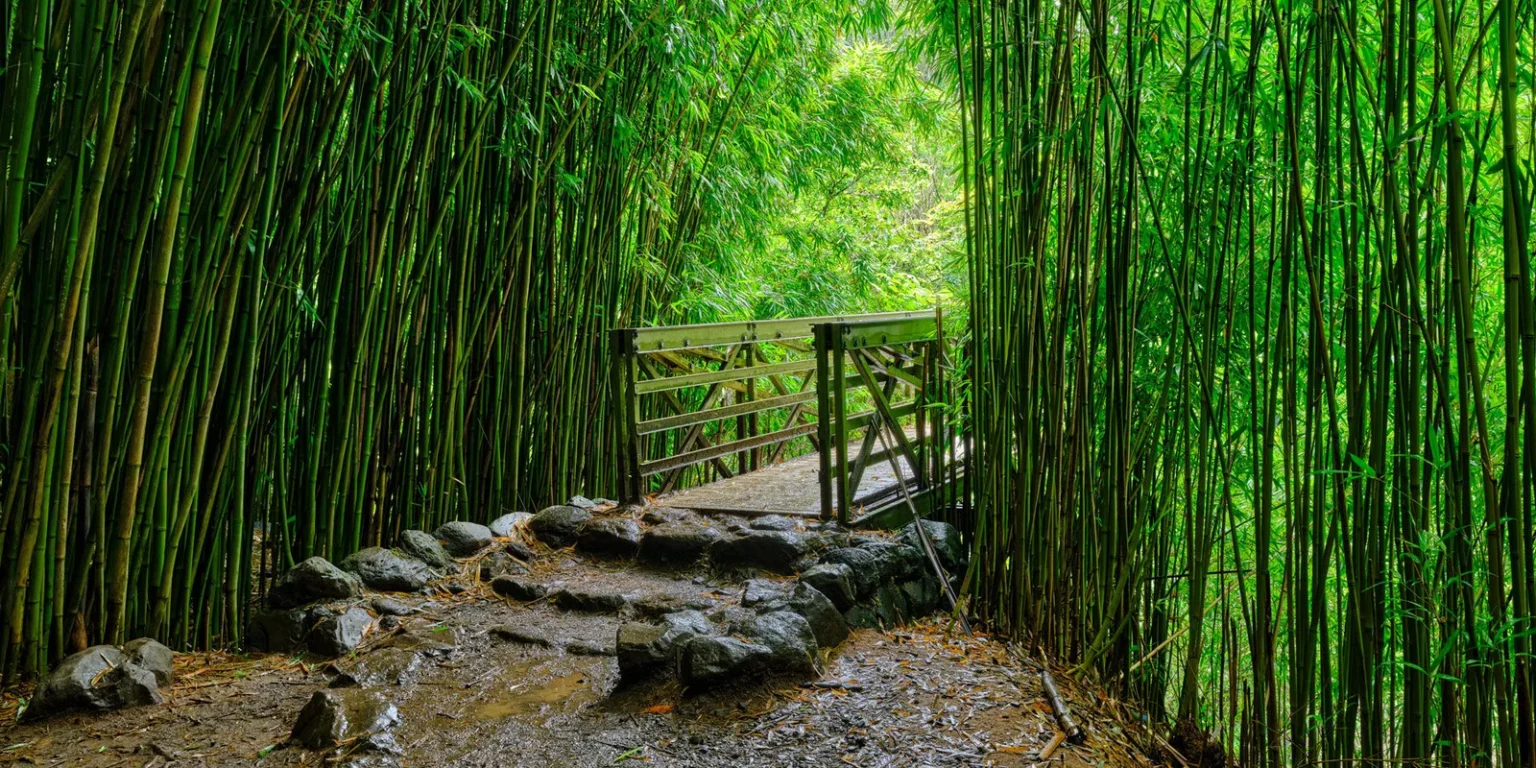
Pīpīwai Trail is one of the best hikes in Maui for travelers who want the combination most people picture when imagining tropical hiking: dense forest, running water, bamboo and waterfalls. The trail starts in the Kīpahulu District of Haleakalā National Park and climbs approximately two miles toward the Waimoku Falls viewing area before returning the same way.
The complete hike is about 4 miles round trip with roughly 800 feet of elevation gain. Along the route, Makahiku Falls appears near the first half-mile, while the famous bamboo forest begins roughly a mile from the trailhead. Boardwalks and footbridges make parts of the trail easier to cross, but wet conditions can still make roots, rocks and muddy ground slippery.
Pīpīwai is rated moderately strenuous rather than technically difficult. Most reasonably active visitors can complete it, but heat, humidity and rain can make the hike feel harder than the statistics suggest. Allow two to three hours rather than rushing toward the waterfall and immediately turning around.
Do not continue beyond official barriers or marked viewing areas near waterfalls. Rockfall, flash flooding and unstable terrain are serious hazards in this landscape, and off-trail travel inside the national park is prohibited.
When to Hike Pīpīwai Trail
Morning is usually the most practical time for Pīpīwai Trail, especially if you are driving the Road to Hāna. Starting earlier leaves more daylight for the long drive and gives you greater flexibility if weather changes.
The trail is open year-round when conditions allow. Rain is part of the Kīpahulu environment, so bring footwear with grip rather than expecting completely dry conditions.
Avoid treating Pīpīwai as something to squeeze into the end of a long sightseeing day. The drive to Kīpahulu is part of the time commitment, and fatigue behind the wheel after hiking deserves as much consideration as fatigue on the trail.
2. Waiheʻe Ridge Trail Has Some of Maui’s Best Mountain Views
Waiheʻe Ridge Trail is one of the best hikes in Maui when the priority is high mountain scenery rather than rainforest waterfalls. The route climbs into the West Maui Mountains, opening views into Waiheʻe Gorge, Makamakaʻole Gulch and across Central Maui when the weather cooperates.
The official route is approximately 2.5 miles to the upper point, making the return hike around five miles. It climbs roughly 1,560 feet, and much of that elevation arrives steadily rather than through one short steep section.
The trail can become muddy and slippery because moisture collects on the windward side of the mountains. Clouds can also arrive quickly and erase a panoramic view that was perfectly clear half an hour earlier. That does not necessarily ruin the hike, but it changes the experience significantly.
An early start improves the odds of clearer conditions and makes the climb more comfortable before the warmest part of the day. Bring water because none is available along the trail.
Waiheʻe Ridge is a moderate hike on paper but can feel hard when the trail is wet, humid or exposed to strong sun.
3. Sliding Sands Is Maui’s Most Otherworldly Hike
Keoneheʻeheʻe Trail, commonly known as Sliding Sands, is the best Maui hiking choice for volcanic scenery. Instead of bamboo, waterfalls or tropical vegetation, the route descends into Haleakalā’s enormous summit wilderness through red, brown and charcoal-colored cinder landscapes.
The important detail is that this Maui hike begins high. The trailhead near Haleakalā Visitor Center sits at roughly 9,740 feet, where lower oxygen levels, sun exposure and rapid weather changes can affect hikers who felt perfectly comfortable at sea level that morning.
You do not need to hike all the way across the crater to experience Sliding Sands. The National Park Service describes a short descent to viewpoints as a practical moderate option, and hikers can choose a turnaround point that matches their fitness.
The trap is the direction of travel. The beginning feels relatively easy because you are walking downhill. Every foot of descent must be regained on the return, and the climb back at high elevation can take much longer than expected.
Turn around while you still feel strong rather than when you first feel tired.
4. The Haleakalā Crater Thru-Hike Is for Experienced Hikers
The full Haleakalā crater crossing is one of the best hikes in Maui for experienced hikers, but it should not be treated as the longer version of an ordinary tourist walk. The National Park Service describes the route as extremely strenuous.
The classic route starts on Keoneheʻeheʻe Trail near the summit, crosses the wilderness floor and exits by Halemauʻu Trail. The journey is approximately 11.2 miles through rugged terrain with several thousand feet of cumulative elevation change.
The trail is not a loop. The finishing trailhead sits several miles from the starting point, and Haleakalā National Park does not provide a hiker shuttle. Transportation therefore needs to be solved before beginning the hike rather than after an exhausted group reaches the second trailhead.
Weather also behaves differently at this altitude. Cool mornings can become warm under intense sun, clouds may reduce visibility and winter brings a greater chance of wet conditions. Carry both sun and rain protection plus additional layers.
This is not the Maui hike to choose because an 11-mile day sounds manageable at home. Experience with long mountain hikes, high elevation and self-sufficient travel matters.
5. ʻĪao Needle Lookout Trail Is the Best Easy Valley Walk
ʻĪao Valley is one of the easiest places to experience Maui’s dramatic green mountains without committing to a strenuous hike. The ʻĪao Needle Lookout Trail and Ethnobotanical Loop cover approximately 0.6 miles with around 200 feet of elevation gain.
The path includes paved sections and climbs to views of Kukaʻemoku, commonly called ʻĪao Needle, which rises sharply above the valley. The surrounding landscape is wet, dense and much greener than the dry resort zones of South and West Maui.
Most visits take around 30 to 60 minutes, making this a useful option for families, mixed-fitness groups or anyone who wants an easy Maui hiking experience between more demanding days.
The logistics are more important than the difficulty. Out-of-state visitors need advance reservations for entry, and drivers also need parking reservations. Time slots can sell out, so do not simply arrive expecting to purchase admission at the gate.
This is a short walk rather than a wilderness trek, but it delivers a strong scenic payoff for very little physical effort.
6. Kapalua Coastal Trail Is the Best Easy Ocean Hike
Kapalua Coastal Trail is one of the best easy hikes in Maui for travelers who want ocean views without a major climb. The route follows the northwest coast between Kapalua Bay and D.T. Fleming Beach, passing lava formations, beaches, resort areas and exposed coastal sections.
A full out-and-back walk is roughly 3.5 miles. The surfaces vary between pavement, wooden boardwalk, sand, rock and natural trail, so it feels more varied than a standard beachfront promenade.
Sunrise and early morning are especially good times to walk. Temperatures are lower, the light is softer and the trail is less exposed to the strongest midday sun.
Because the path runs close to the shoreline, keep distance from wet rocks and breaking surf. A coastal trail does not make the ocean predictable, and large waves can reach places that appear dry between sets.
Kapalua works particularly well as a lighter day after Waiheʻe Ridge or Haleakalā.
7. Kūloa Point Trail Packs a Lot Into Half a Mile
Kūloa Point Trail is a short alternative for travelers reaching the Kīpahulu District who do not want to tackle the full Pīpīwai Trail. The loop is approximately 0.5 miles and gains only around 80 feet.
The trail passes cultural sites and reaches viewpoints around the mouth of ʻOheʻo Gulch, with coastal scenery and waterfalls nearby. Its short length makes it suitable for many visitors who would not choose a two- or three-hour rainforest hike.
The biggest safety issue is water rather than terrain. Flash flooding can occur quickly in East Maui streams, and the National Park Service may close access to water areas when conditions become dangerous.
Swimming in ʻOheʻo Gulch is not something to assume will be available. Obey closure signs even when the water looks calm from where you are standing.
For visitors already driving to Kīpahulu, combining Kūloa Point with Pīpīwai can add another landscape without another long journey.
8. Waiʻānapanapa Gives You a Wild Lava-Coast Hike
Waiʻānapanapa State Park offers one of the most distinctive coastal hiking environments on Maui. Instead of a manicured beachfront path, expect black volcanic rock, coastal vegetation, sea stacks, arches, blowholes and sections of an ancient Hawaiian route.
The park’s Ke Ala Loa O Maui / Piʻilani Trail allows hikers to experience the coastline beyond the famous black-sand beach. Conditions can feel hot and exposed because there is limited shade across portions of the volcanic terrain.
Sturdy footwear matters. Rough lava is far less forgiving than a packed dirt path, and wet rock near the ocean can be extremely slippery.
Planning is mandatory for non-residents. Waiʻānapanapa requires advance entry and parking reservations, and same-day reservations are not available. Reservations are released in timed slots, so your hiking schedule needs to fit the period you actually booked.
Visitors building a trip around scenic coastal walks may also find useful planning ideas in LitiTravels’ Cabot Trail guide, where hiking is similarly combined with a longer scenic driving route.
9. Polipoli Offers a Completely Different Side of Maui Hiking
Polipoli Spring State Recreation Area is one of the most unusual places for Maui hiking because the environment feels far removed from tropical beaches. At high elevation on Haleakalā’s slopes, the trail network moves through planted pine, cypress, cedar, eucalyptus and sections of native vegetation.
The individual Polipoli Trail is short, but it connects with Redwood, Plum and Haleakalā Ridge trails to create longer loops. One commonly described combination forms a circuit of roughly 3.5 miles.
Road access is another reason to research this hike immediately before departure. The approach climbs steeply through Upcountry Maui, and weather, road conditions or park notices can affect practical access even when a trail appears simple on a map.
Check the latest Hawaiʻi State Parks and Nā Ala Hele information before making the drive.
10. Haleakalā Ridge Trail Is a Shorter Upcountry Challenge
Haleakalā Ridge Trail in the Polipoli area provides a useful middle ground between an easy walk and a full summit wilderness day. The state trail is about 1.6 miles long with approximately 850 feet of elevation change.
The route crosses rough cinders, scrub, grassy sections and planted forest, producing a surprising amount of landscape variety over a relatively short distance. Clear conditions can also bring wide views from the slopes of Haleakalā.
The elevation gain makes the hike more demanding than its mileage suggests. A 1.6-mile mountain trail with 850 feet of change is very different from walking the same distance along the coast.
Treat the Polipoli network as mountain terrain. Carry layers, water and rain protection, and confirm current park and access-road conditions before leaving.
For travelers fascinated by volcanic landscapes, LitiTravels’ guide to Auckland’s first-time attractions also covers short walks around the volcanic terrain of New Zealand’s largest city.
Which Maui Hike Should You Choose?
The easiest way to choose among the best hikes in Maui is to decide which landscape matters most. There is little reason to choose a difficult ridge climb if the experience you really want is bamboo forest or lava coastline.
| You want… | Best Maui hike |
|---|---|
| Bamboo forest and waterfalls | Pīpīwai Trail |
| Green mountain views | Waiheʻe Ridge Trail |
| Volcanic crater scenery | Sliding Sands |
| A serious full-day challenge | Haleakalā crater thru-hike |
| An easy mountain-valley walk | ʻĪao Needle Lookout |
| An easy coastal walk | Kapalua Coastal Trail |
| A short East Maui trail | Kūloa Point Trail |
| Rugged black-lava coastline | Waiʻānapanapa |
| Cool high-elevation forest | Polipoli trail network |
| Short but steeper Upcountry hiking | Haleakalā Ridge Trail |
There is no single trail that delivers every version of Maui. For a first trip, combine different environments rather than choosing three hikes that all offer similar scenery.
Best Easy Hikes in Maui
The best easy hikes in Maui give you strong scenery without requiring a major elevation gain or several hours on the trail. They are especially useful for families, casual walkers or recovery days between harder adventures.
Three options stand out:
- ʻĪao Needle Lookout Trail. Choose it for a short, lush valley walk and dramatic mountain scenery.
- Kapalua Coastal Trail. Choose it for ocean views and flexible turnaround points.
- Kūloa Point Trail. Choose it for a short coastal walk while visiting Kīpahulu.
Easy does not mean risk-free. Maui’s strongest sun, sudden rain, slippery surfaces and exposed coastal water can matter even on short hiking trails.
Best Moderate Hikes in Maui
Moderate Maui hikes are the sweet spot for active travelers who want several hours outdoors without committing to an all-day wilderness route. Pīpīwai and Waiheʻe Ridge are the strongest options, but they challenge hikers in different ways.
Pīpīwai gains roughly 800 feet over a four-mile round trip and adds humidity, roots and wet surfaces. Waiheʻe Ridge climbs much more aggressively, gaining roughly 1,560 feet on the journey toward the ridge summit.
Sliding Sands can also fit into the moderate category if you deliberately choose a shorter turnaround point. The difficulty increases quickly as you descend farther into Haleakalā because every downward step adds to the climb required to return.
For most first-time hikers, Pīpīwai is the most balanced moderate trail, while Waiheʻe Ridge provides the stronger workout.
Hardest Maui Hikes for Experienced Hikers
Maui’s hardest hiking is not difficult only because of mileage. Elevation, heat, mud, remoteness and transportation logistics can turn a route into a significantly more serious undertaking.
The Haleakalā crater crossing is the clearest example. It covers around 11 miles in remote high-elevation wilderness and ends at a different trailhead from where it begins.
Longer routes around the Polipoli and state trail systems can also create substantial days, particularly when several trails are combined. Conditions should always be confirmed through official state sources because access can change.
Experienced hikers should resist relying entirely on crowdsourced trail apps. Hawaiʻi specifically asks hikers to use official managed trails and avoid unofficial routes, which may cross private property, damage sensitive habitat or enter dangerous terrain.
Best Time of Year for Hiking in Maui
Maui hiking is possible throughout the year, but no season guarantees perfect conditions across the entire island. Elevation and exposure often matter more than the month shown on the calendar.
Winter is generally wetter, particularly on windward slopes and in rainforest environments. Summer can bring hotter and drier conditions to exposed coastal and leeward trails. Haleakalā’s summit remains cool enough that warm layers can be useful even when beach temperatures are high.
October can be an especially practical shoulder-season month, but conditions still vary dramatically by region. A sunny resort morning in Wailea tells you very little about cloud cover on Waiheʻe Ridge or rain around Kīpahulu.
Check the forecast for the actual trail region, not simply “Maui weather.” The island contains several very different microclimates.
What Time Should You Start Maui Hikes?
Early morning is the best starting point for many of the best hikes in Maui. It reduces heat exposure, leaves more daylight for unexpected delays and often improves the chance of clear mountain views before clouds build.
Waiheʻe Ridge particularly rewards an early start because cloud cover commonly increases around the mountains. Pīpīwai benefits from early timing because of the long Kīpahulu drive. Exposed lava and coastal trails become significantly hotter toward midday.
Haleakalā requires a different calculation. Summit temperatures can be cold early, and hikers need enough daylight for the distance they plan to cover.
Start times should therefore be based on weather, drive time and trail character, not an arbitrary rule that every Maui hike must begin at sunrise.
Maui Hiking Reservations You Need to Know About
Not every hiking trail in Maui requires a reservation, but several popular locations now use controlled entry. Missing this step can ruin an otherwise well-planned day.
| Location | Reservation situation |
|---|---|
| ʻĪao Valley State Monument | Advance entry required for non-residents; parking reservation required if driving |
| Waiʻānapanapa State Park | Advance entry and parking reservations required for non-residents |
| Haleakalā sunrise | Separate reservation required to enter the summit district during restricted sunrise hours |
| General Haleakalā hiking later in day | Park entrance fee applies; check current NPS rules |
| Waiheʻe Ridge | No standard tourist entry reservation listed, but verify official trail status |
| Kapalua Coastal Trail | No hiking reservation normally required |
You may also be interested in our article: 12 Nashville Foods Worth Trying at Least Once
Reservations and rules can change. Check the official park website again shortly before the visit rather than relying on a screenshot taken months earlier.
The Maui Hiking Mistake Most Visitors Make
The biggest planning mistake is grouping trails because they look close on an island map. Maui driving does not work that way.
Pīpīwai lies beyond Hāna in the remote Kīpahulu District. Haleakalā’s summit sits high above Upcountry. Waiheʻe Ridge begins in a different mountain system altogether. A day that attempts to connect all three would spend far more time in the vehicle than enjoying the trails.
A much better structure is one region per hiking day:
- East Maui: Pīpīwai, Kūloa Point and Road to Hāna stops.
- Haleakalā summit: Sliding Sands or the crater wilderness.
- Central and West Maui Mountains: Waiheʻe Ridge or ʻĪao Valley.
- Northwest Maui: Kapalua Coastal Trail.
- Upcountry: Polipoli and state forest trails.
This approach also creates room for weather changes. If Waiheʻe is buried in cloud, you are not simultaneously sacrificing a prepaid reservation on the opposite side of Maui.
Travelers planning hiking as part of a larger driving holiday can find a similar route-first approach in LitiTravels’ guide to road trips across Canada.
What to Pack for Maui Hiking
What you carry should change with the trail. The kit for an hour beside the coast is not the same as the kit for a high-altitude Haleakalā hike.
For most Maui hikes, start with the following essentials:
- Water. Carry enough for the full route, especially on exposed trails where none is available.
- Shoes with good traction. Mud, wet roots, loose cinder and lava all punish smooth soles.
- Sun protection. Use sunscreen, sunglasses and a hat on exposed terrain.
- Rain protection. Lightweight waterproof protection is useful in wet mountain and rainforest areas.
- Warm layer. Bring one for Haleakalā and higher Upcountry routes.
- Food or energy snacks. Longer trails may have no services anywhere near the route.
- Charged phone. Download directions before leaving areas with reliable service.
- Basic first-aid supplies. Small cuts and blisters are easier to handle when prepared.
- Offline map. Do not assume mountain or East Maui cell coverage will remain reliable.
- Extra time. Turning a hike into a race is one of the easiest ways to make poor decisions.
The longer and more remote the hike becomes, the less appropriate a beach-day packing list becomes.
Maui Hiking Safety Rules That Matter
Most hiking problems can be reduced through a small number of decisions made before stepping onto the trail. Hawaiʻi’s environment changes quickly, and rescue access may be slow in remote areas.
Keep these rules in mind:
- Stay on official marked trails. Unofficial routes can cross private property or sensitive natural areas.
- Check current trail status. Storms, fire, erosion and maintenance can cause temporary closures.
- Check weather for the trail location. Maui has highly varied microclimates.
- Never cross floodwater. Stream conditions can change rapidly upstream even if rain is not falling where you stand.
- Turn around before exhaustion. A summit is optional; getting back safely is not.
- Respect ocean warnings. Waves and wet coastal rock can be dangerous even on an easy walk.
- Tell someone your hiking plan. Include the trail and expected return time on longer routes.
- Carry more water than a normal city walk requires. Heat and elevation can increase demand quickly.
- Do not rely on cell service. Download navigation before leaving.
- Obey closures and barriers. They exist for conditions you may not be able to see.
Good preparation should make Maui hiking feel more relaxed, not more intimidating. Once the essential risks are accounted for, the focus can return to the landscape.
Hiking Haleakalā Requires Different Preparation
Hiking at Haleakalā summit is fundamentally different from hiking near Maui’s beaches. The trailhead for Sliding Sands sits close to 10,000 feet above sea level, where thinner air and intense sun can affect people regardless of general fitness.
Give yourself time to adjust after arriving at elevation. Headache, dizziness, unusual shortness of breath or nausea should not be ignored simply because you had planned a long hike.
Temperature is another surprise. Visitors may leave a hot hotel area wearing shorts and discover that the summit feels cold and windy. Layers solve that problem far better than assuming tropical island weather applies everywhere.
Most importantly, remember that the hardest part of Sliding Sands often comes last. You descend into the crater first and climb back toward the vehicle later. Plan distance around the return effort.
Hiking the Road to Hāna Needs Its Own Day
Pīpīwai and Waiʻānapanapa are sometimes placed on generic Maui hike lists as though they were quick stops near the main resort districts. They are not.
East Maui roads are slow, winding and filled with sightseeing stops. Combining a serious hike with every waterfall, beach and viewpoint along the Road to Hāna creates an unrealistic day.
Choose the priority before leaving. If Pīpīwai is the main goal, give yourself enough time to reach Kīpahulu, hike without rushing and complete the return drive safely.
If Waiʻānapanapa is the priority, build the day around the reservation slot. Missing the booked window because too many earlier stops seemed interesting can mean losing access to the park.
Road to Hāna hiking works best when the hike determines the schedule, not when the trail becomes one more item squeezed into an already full road trip.
Can Beginners Hike in Maui?
Yes. Beginners have several scenic hiking trails in Maui that do not require mountain experience. ʻĪao Needle, Kapalua Coastal Trail and Kūloa Point are good examples.
The next step up is Pīpīwai. Its four-mile distance is manageable for many active beginners, but wet surfaces, humidity and elevation gain make it more demanding than a flat four-mile walk.
Waiheʻe Ridge is better approached after you know you are comfortable with sustained climbing. Sliding Sands can be beginner-friendly only when kept short – descending deep into the crater turns it into a much more serious outing.
Start below your maximum ability. Maui scenery does not become less impressive simply because the trail is easier.
Are Maui Hikes Good for Families?
Several Maui hikes work well for families, but age, heat tolerance and comfort around uneven surfaces matter more than a generic family-friendly label.
ʻĪao Valley is one of the easiest choices because the official trail is short and the visit can be completed without committing to hours outdoors. Kapalua also allows families to turn around whenever children have had enough.
Pīpīwai can work for older children accustomed to hiking, but four miles in humid conditions is still a real outing. Adults should not assume that a bamboo forest automatically makes the route easy.
Haleakalā crater hiking deserves more caution because of altitude, exposure and the deceptive downhill start.
Are Maui Trails Free?
Some are, while others sit inside parks that charge entry or parking fees. The answer depends on who manages the land.
Kapalua Coastal Trail and many Nā Ala Hele-managed hiking routes do not function like ticketed attractions. ʻĪao Valley and Waiʻānapanapa charge non-resident fees and require reservations. Pīpīwai and Sliding Sands are inside Haleakalā National Park, so normal national park entrance rules apply.
Parking can also be separate from entry, particularly at state parks.
Budgeting a small amount for trail access is therefore sensible even on a trip focused on outdoor activities.
Are There Dangerous Hiking Trails in Maui?
Any Maui trail can become dangerous when hikers ignore weather, closure signs or their own ability. The island does not need an unofficial cliff route to create serious conditions.
Flash floods are among the most important hazards in wet valleys and stream corridors. Loose volcanic terrain, strong sun and high altitude matter on Haleakalā. Mud and steep slopes affect mountain trails, while surf and wet lava create hazards on the coast.
One of the safest decisions is simply refusing to continue when conditions differ from what you planned for.
A trail being popular on social media is not evidence that it is appropriate in today’s weather.
Best Maui Hiking Plan for a 5-Day Trip
A five-day Maui trip should not contain five major hikes. Two substantial hikes and one easy walk create a much more balanced itinerary.
| Day | Hiking plan | Why it works |
|---|---|---|
| Day 1 | Kapalua Coastal Trail | Easy introduction after arrival |
| Day 2 | Waiheʻe Ridge | Significant mountain hike |
| Day 3 | Beach or sightseeing day | Recovery and weather buffer |
| Day 4 | Road to Hāna and Pīpīwai | Full East Maui day |
| Day 5 | Short Sliding Sands hike | Completely different volcanic scenery |
The recovery day can move wherever the weather requires. If Waiheʻe is cloudy on Day 2 but Haleakalā is clear, swap the hiking days instead of following the itinerary blindly.
Which Maui Hikes Are Worth Prioritizing?
For a first visit, three Maui hikes stand above the rest because each represents a completely different environment.
Choose Pīpīwai Trail for bamboo forest, waterfalls and tropical East Maui. Choose Waiheʻe Ridge for green mountain ridges and valley views. Choose Sliding Sands for volcanic Haleakalā scenery that feels unlike almost anywhere else on the island.
Visitors who prefer easier walks can replace Waiheʻe with ʻĪao Valley and keep Sliding Sands to a short descent. Experienced hikers can do the opposite and turn Haleakalā into the full crater crossing.
That flexibility is the real strength of hiking in Maui. The island does not have one trail everyone needs to conquer. It has several landscapes worth choosing carefully.
The Best Hikes in Maui Reward Planning More Than Speed
The best hikes in Maui are memorable because they compress an unusual amount of terrain into one island. Bamboo forest, black lava, volcanic desert, wet mountain ridge and Pacific coastline can all appear within the same vacation.
That variety also means Maui hiking needs more preparation than its tropical setting suggests. A reservation can determine whether you enter a state park. Cloud can erase a ridge view. High elevation can turn an easy descent into a difficult return climb, while rain many miles upstream can change stream conditions.
Choose one hiking region at a time, check official conditions before leaving and build enough flexibility into the trip to change plans when the island tells you to.
Do that, and the best hikes in Maui become more than boxes on an itinerary. They become some of the clearest ways to understand how dramatically the island changes from coast to forest to summit.
FAQ
What are the best hikes in Maui?
Pīpīwai Trail, Waiheʻe Ridge and Sliding Sands are three of the best hikes in Maui for first-time visitors because they offer completely different rainforest, mountain and volcanic landscapes.
What is the most beautiful hike in Maui?
The answer depends on the scenery you prefer. Waiheʻe Ridge is one of the strongest choices for green mountain views, Pīpīwai for bamboo and waterfalls, and Sliding Sands for volcanic scenery.
What is the best easy hike in Maui?
ʻĪao Needle Lookout Trail is one of the best easy hikes in Maui. It is approximately 0.6 miles and offers dramatic valley views without requiring a long climb.
What is the best waterfall hike in Maui?
Pīpīwai Trail is one of the best-known waterfall hikes in Maui. The route passes Makahiku Falls and continues through bamboo forest toward the Waimoku Falls viewing area.
How long is Pīpīwai Trail?
Pīpīwai Trail is approximately four miles round trip with about 800 feet of elevation gain. Most visitors should allow around two to three hours.
How hard is Waiheʻe Ridge Trail?
Waiheʻe Ridge is generally considered moderate but can feel difficult because it gains roughly 1,560 feet and may become muddy, slippery or humid.
Do you need reservations for hiking in Maui?
Some locations require them. Non-residents need reservations for ʻĪao Valley State Monument and Waiʻānapanapa State Park. Haleakalā also has specific reservation rules for summit access during sunrise hours.
Do you need a reservation for Pīpīwai Trail?
Pīpīwai is inside Haleakalā National Park’s Kīpahulu District. Standard park entry requirements apply, but visitors should check current National Park Service rules and alerts before traveling.
Can beginners hike Sliding Sands Trail?
Beginners can walk a short distance down Sliding Sands and return, but should not underestimate the high altitude or the uphill return. A full crater crossing is a strenuous hike for experienced and well-prepared hikers.
Is Waiheʻe Ridge muddy?
It can be. The windward West Maui Mountains receive significant moisture, and the trail can become muddy and slippery after rain.
What should you wear hiking in Maui?
Wear sturdy shoes with good grip and lightweight clothing appropriate for the trail. Carry sun protection and rain protection, and bring warm layers for high-elevation Haleakalā hiking.
Is hiking in Maui safe?
Maui hiking is generally manageable when visitors stay on legal trails, check official conditions, carry enough water and respond conservatively to rain, flooding, surf and high-altitude conditions.
What time should you start hiking in Maui?
Early morning works best for many Maui hikes because temperatures are lower and mountain visibility can be better. Exact timing should depend on the region, driving time and weather.
Can you hike in Maui in October?
Yes. Maui hiking is possible in October, but trail conditions vary by elevation and region. Check forecasts and official closure information immediately before hiking.
What is the hardest hike in Maui?
The Haleakalā crater thru-hike is among the most demanding established Maui hikes commonly attempted by visitors. It covers about 11.2 miles through remote high-elevation terrain with several thousand feet of elevation change.
Is hiking Haleakalā worth it?
Yes, especially for visitors who want scenery completely different from Maui’s tropical coast. Even a short walk on Sliding Sands provides close views of Haleakalā’s volcanic landscape without requiring the full crater crossing.
Can you hike Maui without a car?
A few trails can be reached through tours or limited transport options, but a car makes hiking much easier because many trailheads are far from resort areas and public transportation does not efficiently serve all hiking regions.
What are the best Maui hikes for families?
ʻĪao Needle Lookout, Kapalua Coastal Trail and Kūloa Point are among the more practical options for families because they are relatively short and allow flexible pacing.
Swiss food


Author of LitiTravels Portal


Articles by the author:
All articles by author


Nashville food starts with fiery hot chicken, but stopping there means missing half the city. From meat-and-three lunches and biscuits to barbecue, banana pudding and Goo Goo Clusters, here is what to eat and how to order it.
 September 20, 2026
 3
3
Puerto Rico is more than beaches and Old San Juan. These 21 fact-checked Puerto Rico facts explain the glowing water, rainforest, music, food, history and everyday details you can actually notice on a trip – plus the myths wort...
September 20, 2026
3
The Dominican Republic is much bigger than a resort strip. These 13 places show where to go for beaches, history, whales, waterfalls and mountains – plus how long each stop actually deserves on a first trip.
September 19, 2026
5

Disney World can cost dramatically more depending on when you go. See which 2026–2027 travel windows offer the strongest chance of lower tickets and hotel rates, which cheap months come with weather trade-offs, and when paying ...
September 19, 2026
6
Subscribe to “lititravels” on Telegram for gaming intel.
No filler, no fuss—just your daily XP boost. Hop in and level up, squad!



Read also
Nashville food starts with fiery hot chicken, but stopping there means missing half the city. From meat-and-three lunches and biscuits to barbecue, banana pudding and Goo Goo Clusters, here is what to eat and how to order it.
September 20, 2026
3
The Dominican Republic is much bigger than a resort strip. These 13 places show where to go for beaches, history, whales, waterfalls and mountains – plus how long each stop actually deserves on a first trip.
September 19, 2026
5
St. Thomas can give you a calm family beach, a reef a few kicks from shore or an almost-empty Caribbean cove – but rarely in the same place. These nine beaches make it easier to choose the right stretch of sand for the day you ...
September 18, 2026
8

Search for the 8 wonders of the world and the answer quickly becomes complicated. There is no universally recognized list of eight – but there is a fascinating reason travelers keep finding one. Here are the places, myths and s...
September 18, 2026
13

Glasgow is a city worth planning around food. This 2026 guide reveals where to eat from the city centre to the West End, what to order, how much to budget and how to turn the best restaurants in Glasgow into a food crawl that a...
September 17, 2026
10
Valladolid is easy to mistake for a quick stop on the way to Chichén Itzá. Stay a little longer and the picture changes: colorful streets, swimmable cenotes, Yucatecan food and major Maya sites all fit into a surprisingly simpl...
September 17, 2026
11
Iceland is known for its natural beauty, and one of the best ways to experience it is by taking a trip from Reykjavik to the Golden Circle. This popular route takes you through some of Iceland’s most famous sites, from powerful...
 June 17, 2026
366
June 17, 2026
366

Broken Hill is one of those singular places out in the Aussie outback, oozing with history, ripe with artistic expression, and raw, rough appeal. Whether your interest is in mine museums, absorbing local culture, or wide-open s...
May 28, 2025
392

Travellers who are planning to visit a popular cruise port in the Western Caribbean have a lot of locations to add to their list of things to do in Costa Maya. From viewing ancient Mayan ruins to diving into the turquoise Carib...
May 24, 2025
452

Choosing the best country to go in Europe is a difficult task due to the large variety of its landscapes, the diversity of its climates, and its history. The European continent has more than 50 countries and it is not easy to m...
April 18, 2025
405

Cooperation
Looking to shine a spotlight on your project? LitiTravels has you covered! We offer article-based promotion, manage branded blogs on our platform, drive engagement through our social media channels, and create content that delivers real results. Get in touch today and let’s make your brand stand out!
Subscribe to the monthly news digest from LitiTravels
The main news and updates from the team about gadgets, sports, cars, health, and lifestyle.
