Home Destinations23 Free and Cheap Things to Do in Berlin That Make Every Euro Count
Destinations23 Free and Cheap Things to Do in Berlin That Make Every Euro Count
Some of the best things to do in Berlin cost absolutely nothing. The Brandenburg Gate, East Side Gallery, Berlin Wall Memorial, historic neighborhoods, and several excellent museums are free to explore. Even the glass dome of the Reichstag building offers free admission if visitors register in advance.
Berlin is particularly rewarding for travelers who would rather spend money on food, experiences, and comfortable accommodation than expensive sightseeing tickets. Its defining landmarks are spread across walkable neighborhoods, while an extensive public transportation network makes longer journeys manageable.
The challenge is choosing what deserves time. Berlin is a large city, and attempting to visit every famous attraction in two days can leave a trip feeling like an endless series of train rides. Grouping activities by neighborhood makes it possible to see more without rushing or spending unnecessarily.
This guide covers 23 free and cheap things to do in Berlin, including the most important attractions for first-time visitors, lesser-known places, genuinely free museums, realistic expenses, and one-, two-, and three-day itineraries.
The best budget attractions in Berlin combine historic landmarks, cultural experiences, and green spaces. Most of the following places require no admission ticket, and several are located close enough to explore during the same walk.
The table highlights the strongest options for a first visit, including how much time to allow and any conditions that could affect the itinerary.
|
Attraction |
Area |
Admission |
Suggested time |
Important detail |
|
Brandenburg Gate |
Mitte |
Free |
20–30 min |
Best early or after dark |
|
Reichstag dome |
Government Quarter |
Free |
45–75 min |
Advance registration required |
|
Holocaust Memorial |
Mitte |
Free |
30–60 min |
Underground information center also free |
|
Topography of Terror |
Kreuzberg/Mitte |
Free |
60–90 min |
Major historical exhibition |
|
Museum Island |
Mitte |
Free outdoors |
30–60 min |
Most museum interiors cost extra |
|
Berlin Wall Memorial |
Bernauer Street |
Free |
60–90 min |
Includes a historic border section |
|
East Side Gallery |
Friedrichshain |
Free |
45–75 min |
Open-air art along the Berlin Wall |
|
Mauerpark |
Prenzlauer Berg |
Free |
60–120 min |
Sunday flea market |
|
Futurium |
Government Quarter |
Free |
60–90 min |
Rooftop access is seasonal |
|
Jewish Museum Berlin |
Kreuzberg |
Free core exhibition |
90–120 min |
Some temporary exhibitions cost extra |
|
Tempelhof Field |
Tempelhof |
Free |
60–120 min |
Seasonal opening hours |
|
Urban Nation Museum |
Schöneberg |
Free |
45–75 min |
Closed Mondays |
|
Wannsee public ferry |
Wannsee |
Included with valid AB transit ticket |
20 min each way |
Regular transit, not a sightseeing cruise |
For a first visit, prioritize Brandenburg Gate, the Reichstag, the Berlin Wall Memorial, the East Side Gallery, and at least one free museum. These experiences reveal very different sides of Berlin without requiring a large sightseeing budget.
Berlin's historic center contains many of the city's most recognizable attractions, and exploring their outdoor areas costs nothing. The biggest advantage is proximity: several major landmarks can be combined into one substantial walking route.
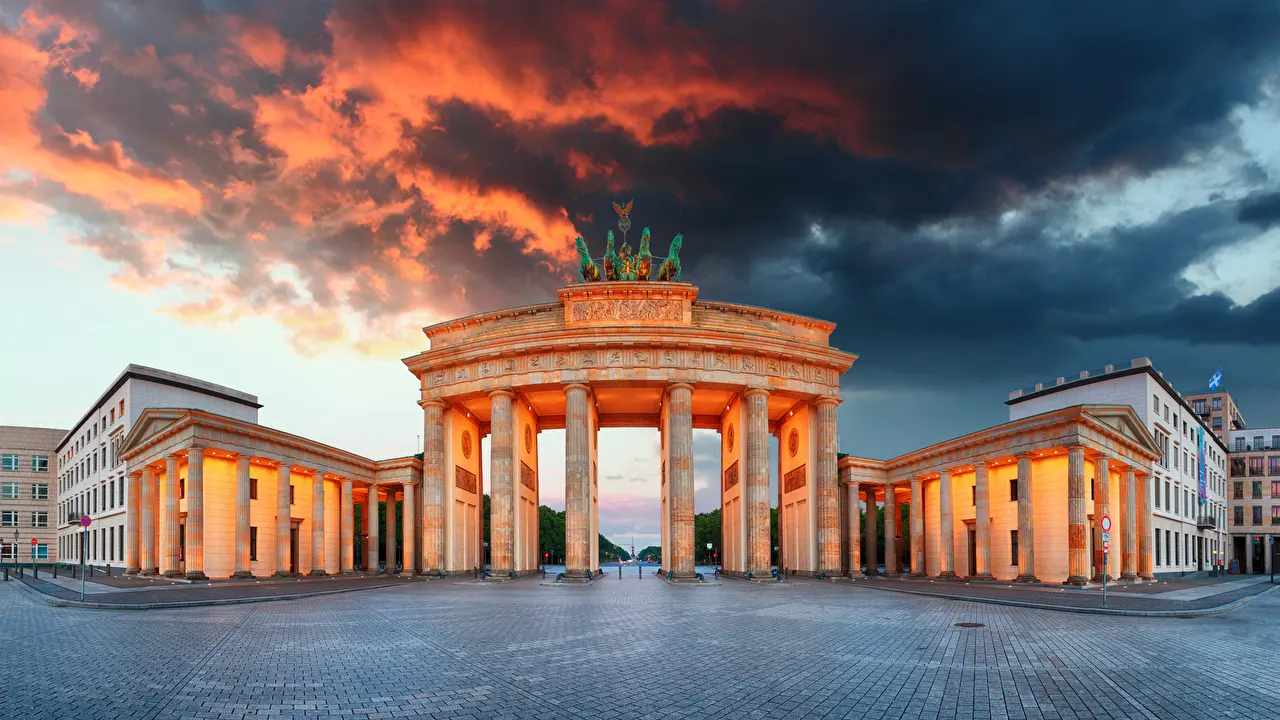
Brandenburg Gate is free to visit and remains one of the essential things to do in Berlin for first-time travelers. The monumental gateway stands at Pariser Platz, where the boulevard Unter den Linden meets the western edge of the historic center.
Completed in the late 18th century, the gate became an important symbol of German division during the Cold War. Following the fall of the Berlin Wall, it came to represent reunification and the opening of the city.
There is no ticket office or admission charge to walk through the gateway. Visiting early in the morning offers better opportunities for photographs, while the illuminated monument creates a different atmosphere after sunset.
Budget tip: Combine Brandenburg Gate with the Reichstag building and Holocaust Memorial. All three are within a short walk, so separate public transportation journeys are unnecessary.
The glass dome of the Reichstag building is one of Berlin's most valuable free attractions because it combines architecture, parliamentary history, and panoramic city views. Visitors can follow the spiral walkway inside the dome and look across the government district.
Designed by architect Norman Foster, the modern glass structure sits above Germany's historic parliament building. Its design allows visitors to look down toward the parliamentary chamber when visibility and access conditions permit.
Admission is completely free, but advance registration is required. Visitors must provide their full names and dates of birth, and identification may be checked on arrival.
Reservations are available through the German Bundestag's official visitor registration page. The dome and roof terrace may close for parliamentary, security, or maintenance reasons, so availability should be checked before building the itinerary around a particular time.
Allow approximately one hour, including security procedures. Late afternoon is particularly appealing when an available reservation overlaps with sunset.
The Memorial to the Murdered Jews of Europe is free to enter and provides one of Berlin's most significant historical experiences. Its outdoor field contains 2,711 concrete slabs arranged across an uneven surface near Brandenburg Gate.
Visitors can walk between the slabs, experiencing the changing scale and perspective of the memorial. The site commemorates the Jewish victims of the Holocaust and deserves a quiet, respectful visit rather than a brief photography stop.
The underground Information Center provides historical material, personal accounts, and information about persecution and murder under Nazi rule. Admission is free, although opening hours differ from access to the outdoor memorial.
Set aside at least 30 minutes for the outdoor site, or longer if visiting the exhibition. The material can be emotionally demanding, especially for children and visitors unfamiliar with this period of European history.
Tiergarten offers free walking paths, lakes, tree-lined avenues, and peaceful places to rest near central Berlin. The extensive park stretches west of Brandenburg Gate and provides a useful change of pace between historical attractions.
Instead of treating Tiergarten as another landmark to finish quickly, choose a shorter route and enjoy the surroundings. The paths around the Victory Column provide a different view of Berlin's urban landscape, while quieter sections feel removed from the busy streets nearby.
The park is especially pleasant in spring and early autumn. Winter visits are still worthwhile, although colder weather and shorter daylight hours make extended walks less comfortable.
Budget tip: Buy lunch from a supermarket or bakery and eat in the park when weather permits. A picnic can cost considerably less than a sit-down meal close to major tourist landmarks.
The Topography of Terror is one of the most informative free museums in Berlin. Its exhibitions examine the institutions responsible for Nazi persecution and mass violence, on the grounds where the Gestapo and SS leadership once operated.
The documentation center uses photographs, historical records, and explanatory displays to show how the Nazi regime organized repression and terror. Outside, visitors can explore the historical grounds and see a remaining section of the Berlin Wall.
Admission is free, and no reservation is necessary for an ordinary individual visit. The exhibitions generally open daily from 10 a.m. to 8 p.m., with outdoor areas closing earlier when daylight is limited.
Allow 60–90 minutes for a meaningful visit, or longer for a detailed examination of the exhibitions. The museum is particularly useful on rainy days because its main exhibition is indoors.
Checkpoint Charlie is free to see from the street and is worth a short stop when exploring Cold War history in central Berlin. The former crossing point became internationally known during the division between East and West Berlin.
Today, visitors encounter a reconstructed guardhouse, historical displays, and a busy crossroads. The modern surroundings are heavily commercialized, so the experience is less atmospheric than some photographs suggest.
The outdoor crossing point is free, but nearby private museums charge admission. Visitors primarily interested in understanding how the Berlin Wall operated may find the free Berlin Wall Memorial more informative.
Allow approximately 15–20 minutes and combine the stop with the Topography of Terror. Traveling across Berlin solely to photograph Checkpoint Charlie is rarely necessary.
Gendarmenmarkt is one of Berlin's most impressive architectural squares and is completely free to explore. Its grand setting brings together the German Cathedral, French Cathedral, and Berlin Concert Hall.
The square is especially attractive to travelers interested in architecture and photography. Walking around the buildings reveals details that can be difficult to appreciate from a single viewpoint.
The German Cathedral also houses a free exhibition about Germany's parliamentary history, although access depends on its opening schedule. Other interiors, performances, and special events may require tickets.
Gendarmenmarkt fits naturally into a central walking route between Museum Island, Checkpoint Charlie, and Brandenburg Gate. Allow around 20–40 minutes for the square itself.
Museum Island is one of the best things to do in Berlin for architecture lovers, even without purchasing museum tickets. The UNESCO-listed complex contains monumental buildings, colonnades, and riverside spaces that can be appreciated from outside.
Walk around the historic museum buildings, admire the Berlin Cathedral from the surrounding public spaces, and continue along the Spree River. The Lustgarten provides a convenient place to pause and take photographs.
The outdoor spaces are free, but the main museum collections generally require admission. The distinction matters for travelers who want to admire the buildings without spending money on exhibitions.
The Pergamon Museum is also undergoing major renovation and is scheduled for a partial reopening on June 4, 2027. It should not be treated as an available museum visit during a 2026 trip.
Allow 30–60 minutes for the exterior architecture and riverfront. Longer visits are appropriate if combining the area with nearby historic streets.
Hackesche Höfe is a collection of interconnected historic courtyards near Hackescher Markt that can generally be explored without an admission ticket during public access hours. The complex offers a different architectural experience from Berlin's monumental government buildings.
The courtyards contain restaurants, shops, galleries, and examples of decorative early-20th-century design. Visitors can walk between the buildings, examine the façades, and discover small passages without purchasing anything.
Access to individual businesses and certain spaces may vary, especially late in the evening. Shopping and dining are optional rather than necessary parts of the experience.
Combine Hackesche Höfe with Museum Island and the surrounding streets of Mitte. Around 30 minutes is enough for a relaxed visit without stopping for a meal.
The Palace of Tears is a free museum beside Friedrichstraße railway station, housed in a former border crossing facility. It explains how travelers experienced separation, inspections, and family farewells during Germany's division.
The exhibition brings Cold War history into a more personal context through historical objects, documents, and accounts of everyday experiences. It is particularly meaningful after seeing the surviving sections of the Berlin Wall.
Admission is free, and the museum normally opens Tuesday through Sunday. Visitors should allow around 45–75 minutes, depending on their interest in the displays.
The Palace of Tears is easy to include between Museum Island and the government district. It is also a practical indoor stop during cold or rainy weather.
Futurium is a free interactive museum near Berlin Central Station that explores possible futures for technology, society, and the environment. It provides a refreshing contrast to Berlin's many historical attractions.
The exhibitions encourage visitors to consider questions about sustainable living, artificial intelligence, scientific innovation, and how cities might change. The interactive approach can make Futurium particularly appealing to families and travelers who prefer hands-on displays.
General admission is free, although some workshops and special events have separate charges. The museum is normally closed on Tuesdays.
The rooftop Skywalk is seasonal and is closed from November 1, 2026, until approximately March 2027. The indoor exhibitions remain a strong alternative during winter.
Allow at least 60–90 minutes. Futurium is an easy addition to a visit to the Reichstag or the main railway station.
Berlin's former division shaped neighborhoods that now contain some of its most interesting public art, historical sites, and cultural spaces. Visiting these areas reveals a side of the city that cannot be understood from its most photographed central monuments alone.
The Berlin Wall Memorial is one of the most important free historical attractions in Berlin. It preserves the memory of the former border and explains how the barrier separated streets, families, and neighborhoods.
The memorial stretches along Bernauer Street, where an outdoor exhibition describes escapes, border fortifications, and daily life in a divided city. A preserved section helps visitors understand the physical structure of the border, including the area between its barriers.
The outdoor exhibition is accessible daily, while the visitor and documentation centers have shorter opening hours. Admission is free throughout the main memorial.
Allow 60–90 minutes, particularly if entering the documentation center. For understanding the history of the Berlin Wall, this is a stronger starting point than Checkpoint Charlie.
Mauerpark is one of the best free things to do in Berlin on a Sunday. Its popular flea market brings together secondhand clothing, records, vintage objects, handmade products, and small food stalls.
Browsing the market costs nothing, making it enjoyable even without a shopping budget. The surrounding park attracts street performers, local residents, and groups meeting outdoors.
In suitable weather, the park is also known for open-air karaoke, where spectators gather around an amphitheater. Performances are weather-dependent and should not be treated as guaranteed, particularly in winter.
The flea market generally operates on Sundays from 10 a.m. to 6 p.m. Allow one or two hours if the market is a priority, or combine it with the nearby Berlin Wall Memorial.
The Museum in the Kulturbrauerei offers free exhibitions about everyday life in former East Germany. It occupies part of a large historic brewery complex in Prenzlauer Berg.
Rather than focusing only on major political events, the permanent exhibition explores ordinary experiences such as work, education, consumer goods, and family life. It provides useful context for understanding the social history behind Berlin's division.
Admission is free, and the museum usually opens Tuesday through Sunday. Parts of the permanent exhibition are affected by renovation work until early December 2026, so visitors during this period should check which areas are accessible.
Allow about an hour for the museum. Its location also makes it convenient to combine with Mauerpark and the cafés of Prenzlauer Berg.
The East Side Gallery is a free outdoor art gallery painted on approximately 1.3 kilometers of the surviving Berlin Wall. It is one of Berlin's most recognizable cultural landmarks and an essential stop for visitors interested in art and modern history.
Following the fall of the Wall, international artists transformed this section into a public gallery expressing ideas about freedom, reunification, and political change. The paintings remain part of a protected historical monument.
Visitors can walk the entire length without purchasing tickets, and the outdoor gallery is accessible around the clock. Nearby information displays help explain the historical significance of the site.
Allow 45–75 minutes to explore without rushing. Early morning usually provides better opportunities to appreciate the artwork before the busiest visiting periods.
Oberbaum Bridge is free to cross and offers one of Berlin's most recognizable urban views. The distinctive bridge connects Friedrichshain and Kreuzberg across the Spree River.
Its red-brick towers, railway tracks, and riverfront setting create a particularly photogenic scene. During the Cold War, the bridge served as a border crossing between the divided parts of the city.
The bridge is an easy continuation of the East Side Gallery walk. Cross toward Kreuzberg, pause for views across the river, and explore the streets around Schlesisches Tor.
Allow 15–30 minutes for photographs and the crossing. No sightseeing ticket is needed.
Kreuzberg is one of the best areas to explore Berlin's street art and alternative culture without spending money. The neighborhood combines murals, independent businesses, historic streets, and a wide variety of inexpensive food options.
Start around Oranienstraße and Mariannenplatz, where painted walls and changing public artworks are part of the urban landscape. The area is not a formal outdoor gallery, so some murals may disappear or be replaced over time.
The experience works best as an unhurried neighborhood walk rather than a search for one particular photograph. Visitors can also explore parts of the Landwehr Canal, where bridges and waterside paths provide quieter surroundings.
You may also be interested in our article: What Is Iftar in Dubai – and Can Tourists Join the Ramadan Tradition?
Allow one or two hours, excluding meals. Comfortable shoes and an offline map are more useful than a paid walking tour for travelers who simply want to experience the streets independently.
Some of Berlin's most rewarding budget experiences are outside the traditional sightseeing center. These attractions are especially worthwhile on a second or third day, when there is enough time to explore a neighborhood without repeatedly crossing the city.
The Jewish Museum Berlin offers free admission to its core exhibition, making it one of the city's strongest cultural experiences for budget travelers. The museum examines Jewish history, culture, and life in Germany across different historical periods.
Its architecture, including the striking building designed by Daniel Libeskind, is part of the experience. Visitors encounter historical materials, personal stories, and spaces designed to encourage reflection.
The core exhibition is free, but certain temporary exhibitions require paid tickets. Visitors can reserve an admission slot online or arrange entry through the museum, subject to availability.
The museum normally opens Tuesday through Sunday. Allow at least 90 minutes, or longer for a more detailed visit.
For travelers visiting with young children, the museum's children's world, ANOHA, is another option, although advance booking arrangements and fees should be checked separately.
Urban Nation is a free museum dedicated to street art, graffiti, and contemporary urban artistic expression. Located on Bülowstraße in Schöneberg, it provides a different perspective on Berlin's creative culture.
The museum presents works by artists from different backgrounds and explores how urban art interacts with public spaces, politics, and communities. Its displays change, so repeat visitors may encounter different exhibitions.
General admission is free, with donations welcomed. The museum is normally closed on Mondays.
Allow around 45–75 minutes, especially if combining the visit with a street-art walk through Schöneberg. It is an excellent indoor alternative when wet weather makes outdoor sightseeing less appealing.
Tempelhof Field is one of Berlin's most unusual free attractions: an enormous public recreational space occupying the grounds of a former airport. Visitors can walk, cycle, skate, or simply relax on areas that once served aviation.
The open runways create a sense of space that is difficult to find in most major European cities. On suitable days, residents gather for sports, picnics, and kite flying.
Entry is free, although renting bicycles or equipment costs extra. The site has seasonal opening hours rather than unrestricted 24-hour access.
For example, the park opens from 7 a.m. to 6 p.m. in November and closes even earlier in December. Summer opening hours are considerably longer.
Allow at least an hour to explore, but two hours is more suitable for a longer walk or picnic. Bring water and weather-appropriate clothing because much of the open field has limited shelter.
Viktoriapark offers one of Berlin's most appealing free viewpoints from the Kreuzberg hill. The park combines elevated paths, greenery, a national monument, and a waterfall that operates seasonally.
Climbing toward the monument rewards visitors with views across surrounding neighborhoods and parts of the Berlin skyline. It is a useful alternative to paying for admission to an observation tower.
The waterfall is a major attraction during operating periods, but visitors should not expect running water throughout the winter. The elevated park remains worth exploring even when the waterfall is switched off.
Allow 45–60 minutes, or longer for a picnic and a relaxed walk. Viktoriapark can be combined with Kreuzberg's food streets and nearby neighborhoods.
Treptower Park is a large riverside green space that contains the monumental Soviet War Memorial. Visiting the park and memorial costs nothing.
The memorial commemorates Soviet soldiers who died during the Second World War and provides insight into how Berlin's wartime history is remembered through public monuments. Its scale, sculptures, and formal layout make it a substantial historical site.
The surrounding park has paths, lawns, and peaceful areas near the Spree River. Visitors should approach the memorial respectfully, particularly because it includes burial grounds.
Allow 60–90 minutes for a park walk and memorial visit. Treptower Park works best as a separate outing rather than a rushed addition to a crowded central sightseeing schedule.
A public ferry crossing between Wannsee and Kladow offers a low-cost way to see Berlin from the water. The F10 ferry is part of the city's public transportation network, not a private sightseeing cruise.
The crossing takes approximately 20 minutes each way and provides views across the lake and surrounding wooded shoreline. On the Kladow side, travelers can spend time walking around the lakeside area before returning.
The ferry operates within Berlin's AB fare zone, meaning a valid AB public transportation ticket can cover the crossing. A standard single ticket is another option, although separate journeys and return-ticket rules must be respected.
This is particularly good value when a valid day ticket has already been purchased. It allows travelers to enjoy a boat journey without paying the usual price of a dedicated sightseeing cruise.
Allow at least two to three hours for the complete outing from central Berlin, including train connections and time at the waterfront.
The most practical Berlin itinerary groups attractions geographically rather than trying to visit every landmark in numerical order. Public transportation is useful for connecting distant neighborhoods, but central sightseeing is often easier on foot.
Before setting out, download an offline city map and identify nearby subway or train stations. Choosing a small number of dependable travel apps for navigation and trip planning can make spontaneous route changes easier without repeatedly searching for directions.
One day in Berlin is enough to experience several major historic landmarks, but not enough to explore every neighborhood. Focus on central Mitte and book the Reichstag dome in advance if possible.
This route prioritizes historic sites that connect naturally on foot:
This is a full sightseeing day, particularly if spending substantial time inside the exhibitions. The route involves several kilometers of walking, so breaks should be included.
If only four or five hours are available, remove Checkpoint Charlie and limit museum visits to one. The quality of the experience matters more than the total number of attractions visited.
Two days in Berlin provide enough time to cover the historic center and explore the city's former division through its preserved border sites and neighborhoods. This is a better balance for first-time visitors than attempting every major attraction in one day.
Use the first day for the central walking itinerary. On the second day, focus on the northern and eastern neighborhoods:
This itinerary requires a public transportation connection between Prenzlauer Berg and the East Side Gallery. Avoid treating that journey as another walking segment unless a long city hike is intentional.
If the trip falls on a weekday, Mauerpark remains pleasant, but the Sunday flea market and associated activity will not be present.
Three days in Berlin allow visitors to explore major attractions while choosing experiences that fit personal interests. After the historic center and Berlin Wall neighborhoods, the third day can be adjusted around weather and energy levels.
The most useful options are:
The best third day should feel different from the first two. A single substantial museum visit followed by a neighborhood walk often provides a better experience than several rushed stops.
A budget sightseeing day in Berlin can cost approximately €25–€50 per person excluding accommodation, depending mainly on food and transportation choices. Many major attractions are free, so the day's cost does not have to increase with every new landmark.
The following example assumes an adult traveling independently, visiting free attractions, buying inexpensive meals, and using an AB public transportation day ticket.
|
Expense |
Example budget |
Money-saving approach |
|
Free attractions and museums |
€0 |
Choose permanent free exhibitions |
|
Bakery breakfast |
€5 |
Avoid hotel breakfast surcharges |
|
Inexpensive lunch |
€9 |
Look for kebab shops or casual lunch specials |
|
Budget dinner |
€12 |
Compare local menus before ordering |
|
Snacks and drinks |
€4 |
Carry a refillable water bottle |
|
Berlin AB 24-hour ticket |
€11.20 |
Use only if enough rides are planned |
|
Total |
€41.20 |
Excludes accommodation and travel to Berlin |
Food allowances are illustrative planning figures rather than guaranteed restaurant prices. Costs vary by neighborhood, dietary needs, and the type of restaurant selected.
Travelers who walk most of the day and avoid buying unnecessary transport tickets can reduce the example total. Paid museums, nightlife, guided tours, and alcoholic drinks can increase it substantially.
Berlin can be relatively affordable for sightseeing because many historically important experiences are free. However, accommodation, restaurants, and transport are not automatically cheap simply because the city's public attractions have no admission fees.
The largest savings generally come from choosing accommodation near convenient transportation, avoiding unnecessary paid tours, and combining nearby landmarks into walking routes. Booking during major trade fairs, festivals, or holiday periods can make hotel prices much higher.
For travelers who are flexible about travel dates, accommodation costs may have a greater effect on the overall budget than attraction tickets.
Berlin's buses, trams, underground trains, and suburban rail services make it possible to explore neighborhoods without renting a car. Most central attractions fall within fare zones A and B, while Berlin Brandenburg Airport requires zone C coverage.
The main ticket choices for 2026 are:
|
Ticket type |
Berlin AB |
Berlin ABC |
Best use |
|
Single ticket |
€4.00 |
€5.00 |
Occasional one-way journeys |
|
Short-trip ticket |
€2.80 |
Depends on applicable fare |
Very short eligible journeys |
|
24-hour individual ticket |
€11.20 |
€12.90 |
Several trips in 24 hours |
|
24-hour small-group ticket |
€35.30 |
€37.70 |
Up to five people traveling together |
These are standard adult fares published for 2026. Reduced fares and other ticket types may apply to children and eligible travelers.
A 24-hour AB ticket is worth considering when at least three separate standard single-ticket journeys would otherwise be necessary. Three €4 single tickets cost €12, compared with €11.20 for the day ticket.
However, the four-trip ticket product can offer better per-ride value for travelers spreading a small number of journeys over several days. Short-trip tickets may also be cheaper when the journey meets the applicable stop limits.
For groups of four or five adults traveling together, the 24-hour small-group ticket may be more economical than buying separate day passes. Families should also check the child-travel benefits included with eligible tickets.
Do not purchase an ABC ticket for ordinary central sightseeing unless the journey actually reaches zone C. The airport and Potsdam require broader coverage, but the main Berlin city attractions generally do not.
Regular Berlin buses can provide an inexpensive alternative to private sightseeing buses when a valid transportation ticket is already available. Routes such as bus 100 pass prominent areas of central Berlin.
Unlike a dedicated sightseeing bus, a public service does not provide a guided commentary or guaranteed views. Seating, traffic, route changes, and crowding can affect the experience.
The benefit is flexibility. Travelers can get off near an attraction, explore on foot, and continue using public transportation within the ticket's validity rules.
Travelers must hold the correct valid ticket for the zones and journey being taken. Some tickets require validation before travel, while digital tickets have their own activation procedures.
A ticket that has been purchased but not correctly activated or validated may not meet the travel requirements. Checking the rules before boarding is particularly important when switching between paper tickets and mobile applications.
Reliable mobile data can also help with navigation and ticket management. Comparing eSIM and physical SIM options for international travel makes it easier to choose connectivity without unnecessarily expensive roaming charges.
Budget-friendly eating in Berlin is possible without relying exclusively on fast food. The city has bakeries, Turkish food shops, Vietnamese restaurants, casual lunch counters, and supermarkets across many neighborhoods.
Rather than choosing restaurants immediately beside major landmarks, compare menus a few streets away. Central tourist locations can charge noticeably more for ordinary food and drinks.
Some of Berlin's most practical low-cost meals are also associated with its multicultural food scene. Prices vary widely, but the following choices are useful starting points.
A practical food budget is around €20–€35 per person per day for simple meals and snacks, although it can be lower or significantly higher depending on individual preferences.
Kreuzberg, Neukölln, Friedrichshain, and parts of Wedding provide numerous casual dining options away from the most heavily visited central squares. However, prices vary considerably even within these neighborhoods.
Look for clearly displayed menus, lunch specials, and places with regular local customers. Check the total price before ordering extras, drinks, or side dishes.
Markets can be enjoyable places to explore, but trendy food halls and specialty street-food events are not necessarily cheaper than neighborhood restaurants.
Spring and early autumn offer a particularly good balance for free sightseeing because the weather is usually more comfortable for walking. Longer daylight hours also make outdoor attractions easier to combine without rushing.
Berlin remains worth visiting throughout the year, but the ideal activities change with the season.
Warmer months are particularly suitable for Tempelhof Field, Tiergarten, street-art walks, and riverside exploration. Longer evenings provide more flexibility for visitors who want to avoid crowded sightseeing hours.
Outdoor performances and seasonal events may add free entertainment, although schedules vary. Summer can also bring higher accommodation prices during busy periods.
Early autumn is a good time for combining free museums with neighborhood exploration. Parks become colorful, and the cooler weather is often comfortable for longer walks.
By November, daylight is limited and temperatures can be cold. Prioritize outdoor landmarks earlier in the day, keeping museums for afternoons or poor weather.
Winter visitors can focus on Futurium, the Jewish Museum Berlin, the Topography of Terror, and other indoor exhibitions. Several of the city's important cultural experiences remain accessible without admission charges.
Christmas markets also create seasonal opportunities for sightseeing without purchasing an entrance ticket at markets that offer free access. Food, drinks, rides, and special events generally cost extra, while some markets may charge entry.
Check seasonal closures before traveling. Tempelhof Field closes earlier in winter, Futurium's rooftop Skywalk is seasonal, and some outdoor attractions are less enjoyable during extended periods of rain or freezing weather.
The most common budget mistakes in Berlin involve unnecessary transportation, poorly planned sightseeing, and assumptions about which attractions are free. Avoiding them can save money without reducing the quality of the trip.
Several practical adjustments make a noticeable difference:
A budget-friendly Berlin trip works best when the itinerary leaves room for flexibility. Some of the most memorable experiences are neighborhood walks and unexpected discoveries that do not require a reservation.
The strongest free experiences in Berlin depend on whether the trip is focused on history, culture, photography, or simply enjoying the city's atmosphere. Not every popular attraction deserves equal time.
For a first-time visitor interested in history, the Berlin Wall Memorial, Reichstag dome, Topography of Terror, and Holocaust Memorial provide a substantial introduction to the city.
For travelers interested in contemporary culture, East Side Gallery, Kreuzberg, Mauerpark, and Urban Nation reveal a different side of Berlin. Families may prefer a balance of Futurium, parks, and shorter historical visits.
The best approach is to choose five or six major experiences per day, then leave space for a meal, neighborhood walk, or spontaneous stop. Berlin rewards curiosity more than a crowded checklist.
For a longer Central European trip, travelers can also explore the best free things to do in Prague, where many major historic landmarks can similarly be enjoyed without paying admission.
The best free things to do in Berlin include Brandenburg Gate, the Reichstag dome, the Holocaust Memorial, Berlin Wall Memorial, East Side Gallery, and Topography of Terror. These attractions cover much of the city's most important history without requiring paid admission.
Yes. Admission to the Reichstag dome and roof terrace is free, but visitors must register in advance. Bookings require personal information, and identification may be checked. Availability depends on security arrangements, parliamentary activities, and scheduled closures.
Yes. Berlin has several free museums, including Futurium, Urban Nation, and the Topography of Terror. The Jewish Museum Berlin also offers free admission to its core exhibition. However, not every museum is free, and some temporary exhibitions require payment.
Walking around the illuminated Brandenburg Gate, exploring public squares, and enjoying accessible riverside areas are inexpensive evening options. Some museums also offer later opening hours on selected days, while bars, clubs, and performances generally have additional costs.
Yes. Families can explore Tiergarten, Tempelhof Field, outdoor artworks, and interactive exhibitions at Futurium. The Reichstag dome is another option with advance registration. Some historical museums contain disturbing material and may be better suited to older children.
A traveler focusing on free attractions and inexpensive meals can plan approximately €25–€50 per day excluding accommodation. The total depends on restaurant choices, public transportation, paid activities, and additional purchases. Hotel costs and transportation to Berlin must be budgeted separately.
Central Berlin is walkable, especially around Museum Island, Brandenburg Gate, and the government district. However, the city is geographically extensive, so public transportation is useful for reaching the East Side Gallery, Tempelhof Field, and more distant neighborhoods.
Yes. The East Side Gallery and Berlin Wall Memorial are free to visit. Both preserve important sections of the former border, but they offer different experiences: the East Side Gallery focuses on outdoor art, while the memorial explains the history and structure of the border.
Two or three days are enough to experience Berlin's major free landmarks, several museums, and distinctive neighborhoods. A one-day trip can cover the historic center, but additional days allow more time for the Berlin Wall, street art, parks, and affordable local food.
No. The citywide Museum Sunday initiative ended after its final event on December 1, 2024. Some individual museums continue to offer permanently free admission or free entry at specific times, so their separate policies are worth checking.
Futurium, Urban Nation Museum, the Topography of Terror, the Palace of Tears, and the Jewish Museum Berlin's core exhibition are strong indoor options. Their normal admission is free, although opening hours, special exhibitions, and temporary closures can vary.






The biggest first-trip mistakes happen before the suitcase comes out. This practical checklist puts passport and entry rules first, then walks through booking, budgeting, insurance, airport procedures, and the first hour after ...
 November 4, 2026
 0
As the sun sets over Dubai, dates and water appear on tables, families gather, and the evening call to prayer marks the end of the daily fast. Tourists can share this tradition without being Muslim or fasting. Here's how to fin...
November 3, 20261
Finding halal food in South Korea gets more complicated once you leave Seoul. But a little preparation opens the door to Korean barbecue, local specialties, and memorable food experiences. Discover where to eat, which labels to...
November 3, 20261
Your phone can work without extra roaming fees across France, Italy, and Germany, then trigger unexpected charges after crossing into Switzerland. European roaming rules are not universal. This guide explains which countries ar...
November 3, 20261As the sun sets over Dubai, dates and water appear on tables, families gather, and the evening call to prayer marks the end of the daily fast. Tourists can share this tradition without being Muslim or fasting. Here's how to fin...
November 3, 20261
January in Dubai can mean comfortable all-day sightseeing and surprisingly cool swimming water. By April, the sea feels warmer, but midday heat can change your plans. Discover when to visit for beaches, desert adventures, famil...
November 1, 20260
Amsterdam's canals become an open-air light art exhibition from November 26 to January 17. Discover how to see the installations for free, when a paid walking map makes sense, which boat cruise to choose, and how to plan a comf...
October 31, 20261
Just 35 minutes from Seattle, Bainbridge Island offers more than waterfront shops and ferry views. Explore 13 worthwhile stops, including free museums, quiet forest trails, gardens, and beaches, with practical itineraries for t...
October 30, 20260
Copenhagen has more to offer than colorful harbor houses and famous landmarks. This guide shows which attractions deserve your time, what they cost, and how to explore the city in one, two, or three days without unnecessary det...
October 29, 20260
The Canary Islands stay pleasantly warm in November, but choosing the wrong coast can mean clouds instead of beach weather. Compare all seven main islands, discover where swimming and hiking are best, and find the right resort,...
October 28, 20260
Vienna's Christmas markets begin opening November 6, 2026, but not every market deserves equal time. Compare palace settings, traditional craft stalls, family activities, quieter neighborhoods, and costs, then plan a route that...
October 27, 20261
Athens does not have to be an expensive sightseeing city. Many of its best views, ancient landmarks, neighborhoods and local experiences are completely free. Here are 25 things to do in Athens for free or very little, plus a wa...
October 10, 202664
Budapest can swallow a weekend if every famous sight becomes a separate mission. These 25 things to do combine thermal baths, Danube views, grand architecture, food and neighbourhoods into a route that leaves time to enjoy the ...
October 10, 202693
Bali is still worth visiting, but it is no longer the only answer for an Indonesian island escape. These Bali alternatives offer quieter beaches, volcanic landscapes, diving, surf, local culture and adventures that can feel far...
October 9, 202680
Looking to shine a spotlight on your project? LitiTravels has you covered! We offer article-based promotion, manage branded blogs on our platform, drive engagement through our social media channels, and create content that delivers real results. Get in touch today and let’s make your brand stand out!
The best travel guides, trip planning tips and cultural discoveries from the LitiTravels team — once a month, straight to your inbox.