Home DestinationsWhat Is Iftar in Dubai – and Can Tourists Join the Ramadan Tradition?
DestinationsWhat Is Iftar in Dubai – and Can Tourists Join the Ramadan Tradition?
Just before sunset in Dubai during Ramadan, something changes. Tables begin filling with dates, water, soup, and carefully prepared dishes. Families gather, restaurant staff finish their preparations, and people who have spent the day fasting prepare for their first meal since dawn.
When the evening call to prayer begins, the fast is broken. Some people start with a few dates and water before pausing for prayer. Others gather around a long table, passing dishes between family members and friends. Across the city, the moment connects private homes, neighborhood restaurants, cultural centers, and elaborate hotel dining spaces.
Tourists can join a Ramadan iftar in Dubai, including visitors who are not Muslim and have not fasted. Restaurants welcome international guests, cultural centers organize experiences specifically designed for visitors, and private invitations offer opportunities to encounter Emirati hospitality more personally.
What matters is understanding the difference between a commercial dinner and a religious or community gathering. Iftar is not simply another restaurant promotion. It is the meal that ends a day of fasting during Islam's holiest month, with traditions that carry meaning beyond the food.
For travelers visiting Dubai during Ramadan, learning how to participate respectfully can turn an ordinary evening into one of the most memorable cultural experiences of the trip.
Yes. Non-Muslim tourists are welcome at public restaurant iftars, hotel Ramadan tents, and cultural programs that accept visitors. Participating does not require fasting, adopting religious practices, or receiving a personal invitation, provided the event is open to the public.
Dubai is a multicultural city where Ramadan is observed alongside an active tourism industry. During the holy month, restaurants and hotels prepare special sunset meals for residents and visitors from many different backgrounds.
However, not every iftar gathering operates under the same rules.
A hotel buffet is a commercial dining experience that can usually be booked by anyone. A cultural iftar may include explanations of religious traditions and opportunities to speak with Emirati hosts. A family gathering, by contrast, is a private event that requires an invitation.
Community and charitable iftars may also have specific participation arrangements. Some welcome a broad range of guests, while others primarily serve people who are fasting or need a free meal.
The easiest approach for a first-time visitor is to book a public cultural program or restaurant iftar. These formats provide a welcoming introduction without the uncertainty of arriving at a private or community gathering.
No. Non-Muslims are not required to fast during Ramadan, and participating in an iftar meal does not mean they must abstain from food or water earlier in the day.
Visitors can eat breakfast and lunch normally, then join a sunset meal alongside people who have been fasting. There is no expectation that a tourist should experience physical hunger to make the dinner culturally meaningful.
Some travelers voluntarily choose to fast for a day to better understand the experience. That is a personal decision, not a requirement for attending an iftar, and it may be inappropriate for people with certain health conditions or medical needs.
The most important expectation is respect for the people observing the fast, rather than attempting to imitate every part of the religious practice.
Yes. Women and solo travelers can attend public iftar events in Dubai, including restaurant meals and organized cultural experiences. There is no general requirement for a woman to be accompanied by a man.
Seating arrangements vary. Restaurants usually operate with conventional tables, while some traditional cultural programs use floor cushions, shared serving areas, or family-style seating.
Solo travelers may find a hosted cultural iftar particularly comfortable because the program creates opportunities for conversation. The atmosphere is generally more interactive than a conventional restaurant reservation.
Visitors who have accessibility needs, prefer chair seating, or have other specific requirements should check the arrangement before booking.
Iftar is the evening meal that breaks the daily fast during Ramadan. Muslims who observe the fast abstain from food and drink from dawn until sunset, and iftar begins when the sun sets and the Maghrib prayer time arrives.
Ramadan is the ninth month of the Islamic calendar. It is a period associated with fasting, prayer, reflection, generosity, and stronger connections with family and community.
In Dubai, these traditions are visible throughout the city. Special meals, illuminated public spaces, charitable activities, and late-evening gatherings become important parts of daily life.
Iftar carries both religious and social meaning. Breaking the fast is an important moment for worshippers, while sharing food creates opportunities for hospitality and togetherness.
The meal also reflects the diversity of Dubai. Traditional Emirati dishes may appear beside foods from other Arab countries, South Asia, and the wider international community.
A traditional iftar often begins with dates and water, followed by an opportunity for the Maghrib prayer before a larger meal. The precise sequence depends on the household, venue, and individual religious practices.
For a visitor attending a hosted cultural experience, the evening may unfold as follows:
There is no universal schedule followed by every restaurant. At a hotel buffet, service may begin as soon as the fast is broken, while a cultural program may build prayer, conversation, and heritage activities into the experience.
Visitors should follow the host's guidance instead of assuming the entire dinner begins immediately when they arrive.
Iftar is the sunset meal that ends the day's fast, while suhoor is the meal eaten before dawn ahead of the next fasting day. Both are important during Ramadan, but they take place at different times and create different dining experiences.
Iftar is typically the more accessible introduction for tourists. It takes place around sunset and can resemble an early dinner, although the religious context makes the timing significant.
Suhoor is associated with the period before the dawn fast begins. Dubai restaurants and Ramadan tents may offer late-night suhoor experiences, which can extend into the early morning.
Travelers interested in local nightlife and food culture may enjoy both, but they should not confuse a late-night suhoor reservation with a sunset iftar.
Ramadan in the United Arab Emirates is expected to begin on February 8, 2027, with Eid al-Fitr projected for March 9 or 10. These are astronomical forecasts, not final religious calendar dates, because the beginning and end of Ramadan depend on official moon-sighting confirmation.
The Islamic calendar is lunar, and Ramadan moves approximately 10–12 days earlier each Gregorian year. This means the season changes over time, affecting the climate and daylight hours experienced by people fasting.
For visitors planning a 2027 trip, the expected dates fall during Dubai's relatively comfortable winter-to-early-spring period. Outdoor meals, historic neighborhood walks, and evening cultural programs can therefore be especially appealing.
The following dates are useful for preliminary travel planning.
|
Event |
Expected date |
What tourists should know |
|
Ramadan begins |
February 8, 2027 |
Subject to official moon sighting |
|
First iftar |
Sunset on the first confirmed fasting day |
Exact time follows Maghrib |
|
Ramadan period |
29 or 30 days |
Public iftars and special menus operate during the month |
|
Eid al-Fitr begins |
March 9 or 10, 2027 |
Depends on confirmation of the new lunar month |
Do not treat projected dates as guaranteed when booking nonrefundable Ramadan experiences. Restaurants and cultural organizers may publish provisional programs before official confirmation, then adjust their schedules.
Iftar begins at sunset, at the time of the Maghrib prayer. There is no single fixed iftar time that applies throughout Ramadan.
Sunset changes gradually from day to day, so the meal begins slightly later as the month progresses during February and March. The precise time should be checked against an official Dubai prayer timetable for the date of the visit.
A restaurant may request that guests arrive 20–45 minutes before sunset to settle in before the fast is broken. Other venues may simply provide a reservation time near sunset.
Travelers should distinguish the reservation arrival time from the actual moment of iftar.
For example, a booking listed for 5:45 PM does not necessarily mean food service begins at that time. The restaurant may be asking guests to arrive early so everyone is seated before the evening call to prayer.
Yes. Dubai maintains the tradition of firing a Ramadan cannon at sunset to mark the end of the daily fast. The practice forms part of the city's cultural heritage and remains a recognizable Ramadan custom.
Historically, cannon firing helped announce the moment of iftar before modern communication systems became widespread.
Visitors may be able to observe the tradition at designated public locations. These locations and viewing arrangements can change between Ramadan seasons, so they should be verified through the announced city program.
The cannon is a cultural signal, not a replacement for checking accurate prayer times.
The strongest options for tourists are hosted Emirati cultural meals, traditional restaurants, Ramadan tents, and invited family gatherings. The right choice depends on whether the priority is understanding local traditions, trying regional food, or enjoying a special evening atmosphere.
A luxury buffet can be enjoyable without necessarily offering much cultural explanation. Conversely, a smaller hosted meal may be more meaningful for someone interested in learning about Ramadan.
These are the main formats worth considering.
|
Iftar experience |
Best for |
Booking approach |
What to expect |
|
Emirati cultural iftar |
First-time visitors and cultural travelers |
Advance ticket or reservation |
Traditional food, host explanations, cultural activities |
|
Traditional Emirati restaurant |
Travelers focused on local cuisine |
Restaurant reservation |
Regional dishes and a casual dining setting |
|
Hotel Ramadan buffet |
Couples, families, and larger groups |
Advance table booking |
Large buffet, varied cuisine, formal service |
|
Luxury Ramadan tent |
Special occasions and atmosphere |
Reservation, sometimes with prepayment |
Elaborate décor, generous menus, shared celebration |
|
Private family iftar |
Personal cultural exchange |
Invitation from a host |
Home-cooked food and family traditions |
|
Community or charitable iftar |
Community participation where visitors are welcome |
Confirm directly with organizers |
Shared meals organized around charity and hospitality |
Not every venue will operate during every Ramadan season. The format, dates, menu, and admission policy should be confirmed before making travel plans.
The Sheikh Mohammed bin Rashid Al Maktoum Centre for Cultural Understanding is one of the most suitable places for tourists who want an introduction to Ramadan rather than simply a buffet dinner.
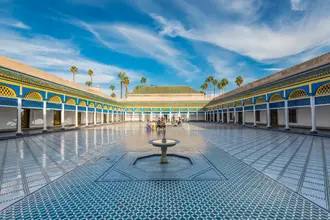
Located in the Al Fahidi Historical Neighborhood in Bur Dubai, the center organizes cultural experiences designed to help visitors understand Emirati customs and daily life.
Its Ramadan iftar program has welcomed international participants into a traditional heritage setting. The experience includes Emirati-style food, conversation about local traditions, and cultural activities, with a guided mosque visit included in the published program.
A central feature is the opportunity to ask questions. Visitors can learn why Muslims fast, what Ramadan means to local families, and how particular customs developed.
The setting also adds depth to the experience. Al Fahidi's traditional architecture, narrow lanes, and historic wind-tower houses offer a contrast to Dubai's contemporary skyscrapers.
Location: House 26, Al Fahidi Historical Neighborhood, Bur Dubai.
The center's published Ramadan program has listed an adult ticket price of AED 180, but that is a previous-season reference, not a confirmed 2027 rate. The organization indicates that its Ramadan program will return, although new-season dates, prices, and availability need to be confirmed.
Advance booking is advisable. Same-day online bookings are not guaranteed, and the program is not equivalent to walking into a restaurant and requesting an ordinary table.
For travelers interested in cultural discoveries and local traditions, a hosted iftar can offer more personal insight than visiting a landmark without a guide.
Traditional Emirati restaurants are a good choice for tourists who want to explore local food without committing to a formal cultural program. Many restaurants offer special Ramadan menus, but the exact dishes and service arrangements vary.
A local restaurant may serve familiar Emirati staples such as harees, machboos, thareed, and traditional desserts. Other establishments combine Emirati food with a wider Middle Eastern menu.
The most useful questions when choosing a restaurant are whether it offers a dedicated iftar menu, whether guests are seated before sunset, and whether the experience is a fixed set meal or a conventional à la carte dinner.
A smaller restaurant can be preferable to an elaborate buffet when the main interest is the food itself. The atmosphere may be less ceremonial, but the meal can still provide a meaningful introduction to local culinary traditions.
For visitors who prefer a quiet dinner, ask whether the restaurant is busiest immediately after sunset. Some establishments fill quickly as families and friends gather to break the fast.
Ramadan tents are seasonal dining spaces associated with the holy month, often featuring decorative lanterns, traditional textiles, majlis-style seating, and large iftar or suhoor menus. Many are operated by hotels and hospitality venues.
Despite the name, not every Ramadan tent resembles a simple temporary canvas shelter. Some are elaborate, air-conditioned dining spaces created specifically for the season.
One established example is the Asateer Tent at Atlantis, The Palm, which has hosted themed Ramadan dining experiences featuring Arabic and regional cuisine.
These large-scale iftars generally emphasize atmosphere, extensive food selections, and hospitality. They can be appealing for families, couples celebrating an occasion, and travelers interested in seeing how contemporary Dubai interprets traditional Ramadan gatherings.
However, the higher price does not automatically mean a more authentic cultural experience.
A hotel Ramadan tent is often best understood as a commercial dining experience inspired by Ramadan traditions. Visitors seeking a detailed explanation of the religious and cultural significance may be better served by a hosted educational program.
Yes, if they are personally invited. An iftar invitation from an Emirati family or another Muslim household is an opportunity to experience Ramadan hospitality in a private setting.
Family gatherings differ from commercial dining because the hosts are welcoming guests into an important personal and religious occasion.
It is appropriate to accept a genuine invitation when circumstances allow, but visitors should not assume that private household gatherings are open to the public.
A small gift is a thoughtful gesture. A box of good-quality dates or another suitable food gift is often appreciated, although the host may suggest that bringing anything is unnecessary.
The most important courtesy is to respect the household's customs. Follow the host's lead on shoes, seating, food service, photography, and whether guests are expected to pause while family members pray.
Iftar in Dubai can range from inexpensive casual dining to premium hotel experiences costing several hundred dirhams per person. A cultural program generally sits between these extremes, depending on what is included.
The price of an iftar should be evaluated by its format. A hotel buffet may charge substantially more than a neighborhood restaurant, while a guided cultural dinner includes educational activities that an ordinary meal does not.
Published 2026 Ramadan offers provide useful examples of the range travelers may encounter:
These are historical examples, not verified prices for Ramadan 2027. Menus, promotions, children’s discounts, service arrangements, and seasonal offers may change.
For budgeting, travelers should compare a full experience rather than assuming every advertised iftar includes the same benefits.
A buffet can be worthwhile for travelers who want to sample several regional dishes in one sitting, especially when visiting with family or a group. It is less compelling when the priority is a quiet meal or direct cultural interaction.
The most expensive option is not necessarily the most interesting. A culturally hosted dinner with fewer dishes may provide stronger insight into Emirati life than an elaborate international buffet.
Before paying for a buffet, check whether the price includes water, juices, hot drinks, desserts, and any additional service charges.
Some venues charge separately for specialty drinks or offer different packages for adults and children.
Free communal iftar meals exist in Dubai, often organized by mosques, charities, businesses, and community groups. However, they should not automatically be treated as free tourist dining attractions.
Some initiatives primarily support people who are fasting, workers, or individuals who need assistance. Others may welcome a wider community.
Tourists should confirm that visitors are welcome before attending a charitable iftar. Arriving solely to obtain a free dinner can be inappropriate if the event has been organized for people in need.
Travelers who want to support Ramadan charity activities can instead look for approved volunteering opportunities or contributions through licensed organizations.
Participating respectfully in a community initiative requires more than finding an event with no admission fee.
Book a public iftar by choosing the type of experience, confirming its actual sunset schedule, checking the menu, and reserving directly through the venue's official booking process. Popular cultural programs and large Ramadan tents may have limited availability on specific dates.
The process is straightforward, but a few details are easy to overlook.
Start by deciding what the evening should provide. A first-time visitor interested in Emirati traditions may prefer a hosted cultural meal, while a family with children may be more comfortable at a hotel buffet.
A traditional restaurant can be a good option when food matters more than ceremony. Large Ramadan tents may suit travelers who want decorative surroundings and a special-occasion atmosphere.
The choice should reflect the actual trip rather than simply the most recognizable hotel name.
Verify that the intended booking date falls within the officially confirmed Ramadan period. If planning far ahead, recognize that projected Islamic calendar dates can change after moon-sighting announcements.
Next, check the venue's arrival time. Guests may need to arrive before the actual start of iftar, especially at organized cultural programs.
Ask whether the evening has a fixed duration or whether diners can remain after the main meal.
Read the booking terms carefully. A fixed iftar menu, buffet, and ordinary dinner reservation can involve different pricing and service arrangements.
Check the total cost per person, any children's rates, and whether drinks are included. Travelers with dietary restrictions should ask about vegetarian options, allergies, and ingredient preparation.
A restaurant serving halal meat is not automatically suitable for every other dietary requirement. For example, a dish without meat may still contain dairy, while a buffet can create cross-contact risks.
The dress code depends on the venue. A cultural center or mosque-related program may expect more conservative clothing than a conventional restaurant.
Some heritage experiences include low seating or floor cushions. This arrangement can be enjoyable, but visitors with mobility limitations may need an alternative.
Confirm these details before paying, particularly if the program has strict cancellation conditions.
Allow enough time to reach the venue before sunset. Traffic and transportation demand can increase around the end of the fasting day, and arriving late may mean missing the opening ritual.
You may also be interested in our article: Dubai in Winter or Spring? The Weather Difference That Changes Your Trip
Keep the reservation confirmation accessible on the phone, ideally downloaded for offline use. The venue's full address and contact details should also be saved.
For a trip involving several bookings, travel apps that organize reservations and navigation can help keep the evening manageable without repeatedly searching through messages.
A relaxed schedule is particularly important when the iftar includes prayer, cultural conversation, or a guided visit.
Modest, comfortable clothing is generally appropriate for a Ramadan iftar in Dubai. Visitors do not need to wear traditional Emirati clothing, but covering the shoulders and knees is a sensible choice for cultural programs and religiously significant settings.
Different establishments may have their own requirements. A luxury hotel may use a smart-casual dress code, while a mosque visit requires more specific modest clothing.
The most useful approach is to dress for the most conservative part of the evening.
Women can wear ordinary modest clothing such as a long dress, loose trousers with a blouse, or a skirt and top that provide appropriate coverage. Traditional local clothing is welcome but not mandatory.
A headscarf is not generally required simply to eat at an iftar or walk through Dubai during Ramadan.
However, women may be required to cover their hair when entering a mosque, depending on the mosque's visitor rules. A cultural program that includes a guided mosque visit may therefore require suitable clothing or provide instructions before arrival.
Carrying a lightweight scarf is a practical precaution when the evening includes religious or heritage sites.
Men can generally wear long trousers and a shirt or other neat, modest clothing. A collared shirt and comfortable trousers are suitable for most restaurant and cultural settings.
Shorts may be acceptable at some casual restaurants, but they can be inappropriate for a formal cultural program or mosque visit.
There is no requirement for male tourists to wear a kandura, the traditional Emirati garment.
Clothing should be comfortable enough for the venue's seating arrangements and local weather.
No. Tourists are not generally required to cover their hair in Dubai simply because it is Ramadan.
The distinction is between ordinary public spaces and specific religious locations. Mosques may have clothing requirements that do not apply to hotels, restaurants, beaches, or shopping centers.
Visitors should follow the published instructions for any mosque tour or religious venue rather than assuming all Ramadan activities share one dress code.
The most important rule is to respect the significance of the meal for those who have been fasting. Arrive on time, follow the host's instructions, avoid interrupting prayer, and treat the gathering as more than an opportunity to photograph food.
Most etiquette questions can be resolved through observation and polite communication. Cultural organizers generally understand that international visitors may not know every custom.
At a hosted cultural gathering, wait for the host to indicate when food service begins. This is particularly important when participants have been fasting and are observing the sunset prayer time.
In a restaurant, staff will usually explain the service arrangements. There is no need to perform a religious ritual personally if the visitor is not Muslim.
A respectful guest can simply sit quietly while others begin breaking their fast or pause for prayer.
Some participants may leave the table briefly for the Maghrib prayer. At certain cultural programs, the prayer and related customs form part of the educational experience.
Visitors should allow people to pray without interruption. If the program includes an opportunity to observe, follow the organizer's instructions.
Do not assume photography or video recording is permitted during religious activities. Ask before taking photographs, especially when people are praying.
Two common greetings are Ramadan Mubarak and Ramadan Kareem. Both are widely used to express good wishes during the holy month.
Tourists can use these greetings naturally when meeting hosts, restaurant staff, or people observing Ramadan.
A greeting is welcome, but it does not require a lengthy conversation about religion. Simple courtesy is sufficient, and guests should respect anyone who prefers not to discuss personal beliefs.
Food photography may be acceptable at restaurants, but photographing people requires greater care. Families, children, and worshippers should not be treated as part of a tourist display.
Request permission before photographing individuals or filming a hosted gathering. Private homes and mosque-related programs may have additional restrictions.
If the host asks guests not to take pictures, respect that request even when the setting looks particularly photogenic.
Tourists who are not fasting may eat during the day, but it is respectful to wait for the appropriate time when attending a shared iftar gathering.
This does not mean a non-Muslim visitor is required to fast. It means the purpose of that particular meal is to share the moment when fasting participants break their fast.
If water or refreshments are needed for health reasons, ask the organizer discreetly about an appropriate arrangement. Personal well-being should not be compromised to imitate a religious practice.
A small gift is thoughtful when attending a private household gathering, but it is not necessary for a commercial restaurant reservation.
Dates, traditional sweets, or another suitable food gift can be appropriate for a host. Avoid assuming that alcohol would be welcome, particularly in a religious family setting.
For a ticketed cultural program, the admission fee generally covers participation. Guests do not need to bring gifts unless the organizer suggests otherwise.
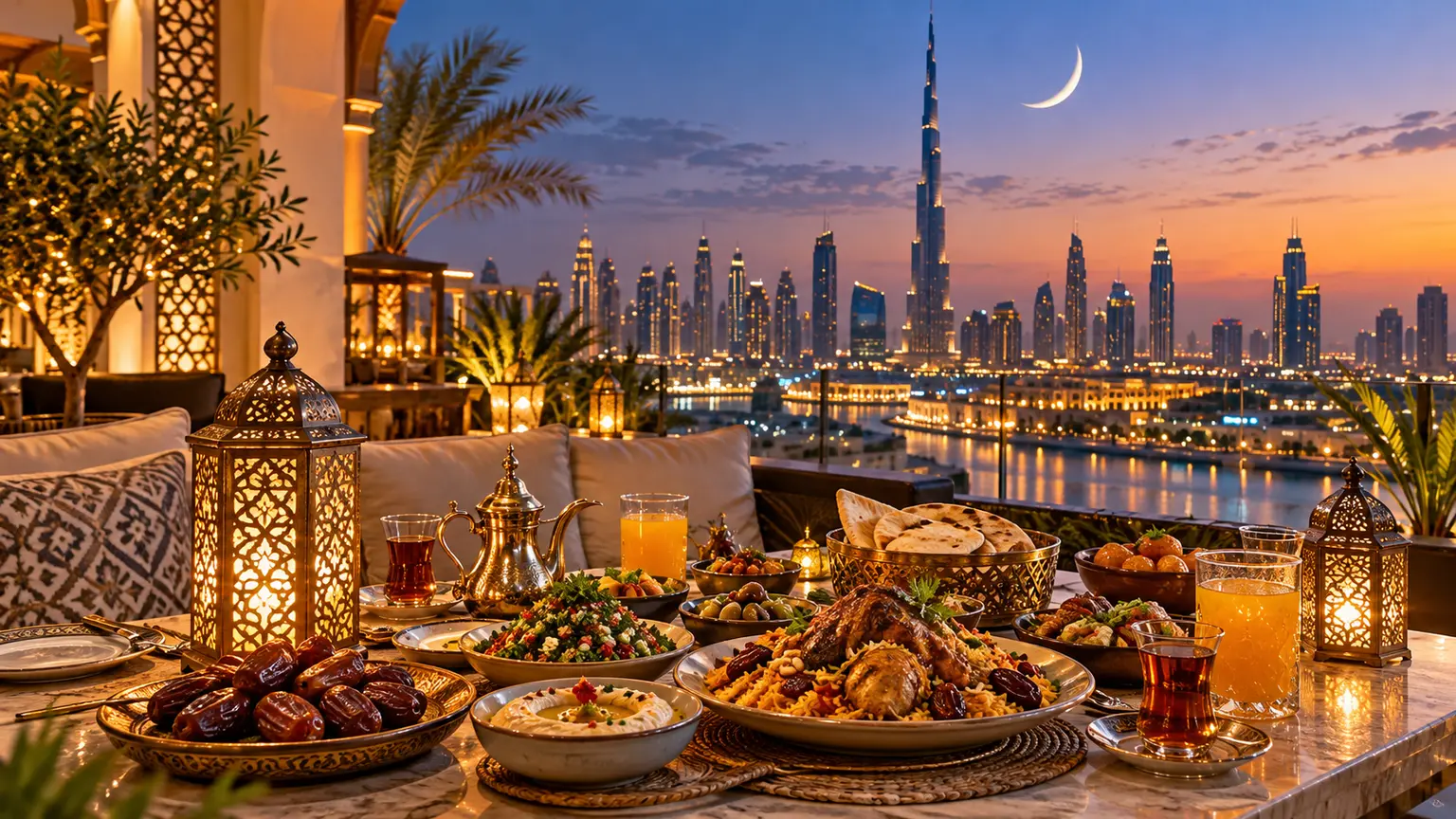
Traditional Ramadan iftar meals in Dubai often begin with dates and water before moving to soups, rice dishes, meat, vegetables, and desserts. Emirati cooking is an important part of the experience, although actual menus vary widely between households and restaurants.
Dubai's international character means an iftar buffet may also include Lebanese, Turkish, Indian, Pakistani, and other regional dishes. For visitors specifically interested in Emirati food, choosing a traditional restaurant or cultural meal can be more informative than selecting the largest possible buffet.
Several dishes are particularly worth recognizing.
Dates and water are commonly used to break the fast. This custom reflects an established Islamic tradition and provides a simple beginning before the larger meal.
A host may serve dates immediately when the Maghrib prayer time arrives. Arabic coffee or other drinks may appear later, depending on the household or venue.
For visitors, the moment is worth appreciating without turning it into a performance. Its significance comes from ending the day's fast, not from the complexity of the food.
Harees is a soft, savory preparation made from wheat and meat, cooked until the ingredients develop a smooth, porridge-like consistency. It is especially associated with Ramadan and other important family occasions.
The flavor is generally mild and comforting, making it different from heavily spiced rice dishes. Some preparations are finished with ghee for richness.
Harees is an excellent dish for visitors who want to taste something closely connected to traditional Emirati home cooking.
Thareed is a traditional dish made with slow-cooked meat, vegetables, and broth served over thin bread. The bread absorbs the liquid, creating a satisfying and flavorful meal.
It is strongly associated with Ramadan meals in the Gulf, although recipes vary between families and regions.
The dish illustrates how Emirati cooking often emphasizes sharing, slow preparation, and combinations designed for a family table.
Machboos is a spiced rice dish commonly prepared with chicken, lamb, or fish. It is a familiar part of Gulf cuisine and can appear at family celebrations and large shared meals.
The rice is flavored with aromatic spices, and the dish is often served as a substantial main course.
For international visitors, machboos provides an accessible introduction to Emirati flavors while still feeling different from everyday restaurant rice dishes.
Luqaimat are small fried dough balls with a crisp exterior and soft center, commonly served with date syrup or another sweet topping. They are among the most recognizable traditional Emirati desserts.
Their rich sweetness makes them a natural addition to a celebratory meal. They may appear alongside other desserts, fruit, tea, and Arabic coffee.
The selection varies by venue, so travelers particularly interested in a specific traditional dish should confirm that it is included before booking.
Yes. Many Ramadan dining experiences offer vegetarian dishes, but options vary considerably between venues. Travelers with food allergies or strict dietary restrictions should confirm individual ingredients and preparation methods before booking.
Large buffets often provide salads, lentil soups, vegetable dishes, rice, and desserts. However, these foods are not automatically vegetarian or vegan simply because they do not visibly contain meat.
Broths, ghee, dairy products, and other ingredients may be included in otherwise vegetable-based dishes.
For example, traditional harees usually contains meat, and a vegetable preparation may use meat stock. Desserts can contain dairy, eggs, nuts, or other allergens.
A fixed-menu cultural program may have less flexibility than a large restaurant. Notify the organizer well in advance and request confirmation of what can be provided.
For families, ask about children's meals and portion arrangements at the same time. An iftar advertised as family-friendly does not necessarily offer a separate children's menu.
Yes. Non-Muslim visitors in Dubai can eat and drink during Ramadan, and restaurants, hotel dining venues, and many food courts continue operating during the day. Visitors are not legally required to observe the fast.
Dubai's current official public guidance distinguishes between permission to eat and respectful behavior during the holy month.
It remains considerate to avoid conspicuous eating, drinking, or smoking around people who are fasting, particularly in traditional public settings. Restaurants provide a straightforward place to eat during the day.
Dubai should not be described as a city where tourists are categorically forbidden from eating in public during Ramadan. That is an outdated oversimplification.
Businesses may adjust operating hours, but the city continues welcoming visitors and maintaining its tourism services.
Yes. Many restaurants remain open for breakfast and lunch, particularly in hotels, shopping malls, and popular visitor areas.
Some establishments modify their hours or offer special menus, while others operate normally. Family-owned businesses and restaurants focused on evening iftar service may follow different schedules.
Travelers should check opening hours individually rather than assuming a restaurant will be closed until sunset.
Yes. Beaches, swimming pools, and many visitor attractions remain accessible during Ramadan. Tourists can continue enjoying ordinary vacation activities.
Standard beachwear is appropriate in designated beach and pool areas, but more modest clothing should be worn when leaving those spaces for public streets, restaurants, or cultural sites.
For visitors combining a beach vacation with evening cultural activities, the seasonal weather is often favorable. Ramadan 2027 is expected to fall mainly in February and early March, when outdoor conditions are generally more comfortable than during Dubai's hottest months.
Alcohol may remain available at licensed venues, but service arrangements can differ during Ramadan. Individual hotels, restaurants, and licensed establishments determine their operating practices within applicable regulations.
Tourists should not assume that alcohol will be served at an iftar. Traditional cultural meals and religiously oriented gatherings are generally alcohol-free.
It is inappropriate to bring alcoholic beverages to a private iftar or cultural program unless explicitly permitted, which should not be assumed.
Dubai's laws concerning public intoxication and disorderly behavior continue to apply during Ramadan.
Yes, particularly for visitors interested in local culture, evening food experiences, and a different side of the city. Ramadan changes Dubai's daily rhythm, but it does not bring tourism to a halt.
The streets can feel quieter during parts of the day, while restaurants, public spaces, and shopping areas become livelier after sunset.
For travelers whose main interest is heritage, food traditions, and cultural experiences, Ramadan can be a rewarding period.
The February and early March timing expected for 2027 also brings a weather advantage. Outdoor dining and evening walks are generally more comfortable than during the hotter summer months.
However, not every visitor will prefer the seasonal atmosphere. Travelers seeking conventional nightlife or rigid daytime activity schedules may need more flexibility.
The main changes involve meal times, social routines, some business schedules, and the importance of evening gatherings. Many attractions continue operating, although individual hours should be checked.
Government and business working hours may be adjusted, and some services can become busier at particular times of day.
Traffic may also be heavier shortly before sunset as residents travel to evening meals. Visitors should allow extra time when traveling to an iftar reservation.
Restaurants may offer special Ramadan menus in addition to, or instead of, their regular dinner selections.
The overall effect is not that Dubai closes, but that parts of daily life reorganize around fasting and evening activities.
Yes. The Al Fahidi Historical Neighborhood and surrounding heritage areas are particularly suitable for combining sightseeing with a cultural iftar. An afternoon exploring traditional architecture can provide helpful context before the evening meal.
A practical itinerary begins with a relaxed visit to the historic district rather than an exhausting series of attractions.
Visitors can explore nearby streets, learn about traditional buildings, and then arrive at a booked cultural experience before sunset.
This approach helps connect the meal with the history and everyday life of the emirate.
It is also useful for travelers who prefer a meaningful evening activity over another visit to a shopping mall or observation deck.
A well-planned iftar evening leaves time for travel, arrival before sunset, the meal itself, and any cultural activities afterward. Trying to fit the experience into a tightly scheduled sightseeing day can make the occasion feel rushed.
For a first-time visitor, a heritage-focused evening provides a particularly natural introduction.
The following schedule is flexible because sunset changes throughout Ramadan. Exact arrival and meal times should always follow the booked program.
|
Stage |
Suggested activity |
Practical advice |
|
Late afternoon |
Explore Al Fahidi Historical Neighborhood |
Wear comfortable, modest clothing |
|
Before sunset |
Arrive at the booked cultural venue |
Allow extra travel time |
|
Sunset |
Experience the beginning of iftar |
Follow the host's instructions |
|
After sunset |
Enjoy the main meal and conversation |
Respect prayer and photography rules |
|
Later evening |
Take a relaxed walk or return to the hotel |
Check transportation arrangements |
This itinerary works especially well for visitors staying in or near Bur Dubai, but the principle applies elsewhere in the city.
A restaurant near the accommodation can also be a better choice than traveling a long distance for a more expensive venue.
For international visitors, reliable mobile navigation is particularly valuable when traveling between neighborhoods after dark. Arranging an eSIM or physical SIM for travel abroad before arrival can simplify transportation, restaurant bookings, and communication with hosts.
A Ramadan night market can be a pleasant addition to the evening, particularly for travelers interested in local products, food stalls, decorations, and seasonal activities. Dubai has hosted Ramadan markets and cultural events in different parts of the city.
These markets are not identical every year. Locations, operating dates, entry conditions, and activities depend on the announced program.
Visiting after a booked iftar can work well if the market is nearby and the evening schedule remains flexible.
It is better to choose one interesting market than spend much of the night traveling between unrelated events.
Most problems arise from misunderstanding the timing, confusing different types of gatherings, or treating a religiously meaningful meal as an ordinary buffet. A little preparation prevents these situations.
The most common mistakes include arriving at the wrong time, failing to confirm the booking, or assuming every iftar is a public event.
Before attending, avoid the following:
Avoiding these mistakes makes the experience more comfortable for both visitors and hosts.
The central principle is simple: attend as a respectful guest, not merely as a customer expecting an ordinary restaurant service.
First-time visitors should choose an organized public event, verify the date and price, wear suitable clothing, and arrive before sunset. A hosted cultural program is particularly helpful because it provides explanations that an ordinary restaurant dinner may not offer.
There is no need to memorize religious terminology or imitate unfamiliar customs. Listening, asking considerate questions, and following the host's lead are usually sufficient.
Travelers should also ensure the broader trip is properly organized before making nonrefundable reservations. Passport validity and entry requirements can vary by nationality, visa category, and travel circumstances.
For anyone planning an international visit, understanding the passport 6-month rule and destination-specific requirements is a useful part of preparing for Dubai.
An iftar can be booked after the travel dates are secured, preferably once the relevant Ramadan schedule is available.
Yes. Tourists can book public restaurant iftars, hotel Ramadan tents, and cultural programs. Private family gatherings generally require an invitation, while community events may have specific participation rules.
Yes. Non-Muslims are welcome at many public iftar experiences, including programs designed to introduce visitors to Emirati traditions. Religious participation is not required.
No. Tourists do not need to fast during the day to attend an iftar. They should simply respect the traditions of the people breaking their fast.
Iftar begins at sunset, at the Maghrib prayer time. The exact clock time changes throughout Ramadan, so visitors should check the timetable for their specific date.
Ramadan is expected to begin on February 8, 2027, and last 29 or 30 days. The official dates depend on the UAE's moon-sighting confirmation.
Prices vary widely. Published 2026 offers included restaurant meals around AED 149, cultural experiences around AED 180, and luxury hotel iftars above AED 290. Confirm current prices before booking.
The Sheikh Mohammed Centre for Cultural Understanding in Al Fahidi has organized traditional Emirati iftar programs for international visitors. Advance booking and seasonal availability should be confirmed.
Modest clothing is recommended, particularly at cultural and religious venues. Covering the shoulders and knees is a sensible choice, while mosque visits may require additional clothing arrangements.
No. Women do not generally need to cover their hair at a restaurant or public iftar. A head covering may be required when entering a mosque.
Common foods include dates, water, soups, harees, thareed, machboos, rice, meat dishes, and desserts such as luqaimat. Menus vary between households and commercial venues.
Yes. Non-Muslim tourists can eat and drink during the day, and many restaurants remain open. Discretion and respect for people who are fasting are encouraged.
Many are. Hotels and cultural programs may welcome children, although prices, seating arrangements, and activity formats vary. Families should confirm suitability and any children's rates before booking.
Yes. Vegetarian options are available at many restaurants and buffets, but traditional dishes may contain meat stock, ghee, or other animal-derived ingredients. Confirm dietary arrangements in advance.
Some charitable and community iftars provide free meals. Their purpose and admission arrangements vary, so tourists should confirm whether visitors are welcome rather than assuming every free meal is a public attraction.
Photography may be allowed, especially in restaurants, but permission should be obtained before photographing people. Religious activities, private homes, and some cultural programs may have restrictions.
Iftar is the sunset meal that breaks the fast. A Ramadan tent is a seasonal venue that may serve iftar, suhoor, or both, often with special décor and organized dining arrangements.
Yes, especially for travelers interested in cultural traditions, local food, and evening activities. Restaurants and attractions continue operating, although some schedules and social routines change during the holy month.





Finding halal food in South Korea gets more complicated once you leave Seoul. But a little preparation opens the door to Korean barbecue, local specialties, and memorable food experiences. Discover where to eat, which labels to...
 November 3, 2026
 1

Your phone can work without extra roaming fees across France, Italy, and Germany, then trigger unexpected charges after crossing into Switzerland. European roaming rules are not universal. This guide explains which countries ar...
November 3, 20261
A shared vacation can turn expensive when friends disagree about rooms, restaurants, or who owes what. Learn 10 money rules to settle before booking, compare fair ways to divide expenses, and use real calculations and a simple ...
November 2, 20260
Peru's food culture goes far beyond seafood and Lima's famous restaurants. Discover what to order in Cusco, Arequipa, the northern coast, and the Amazon, including regional specialties, vegetarian options, realistic food budget...
November 2, 20261
January in Dubai can mean comfortable all-day sightseeing and surprisingly cool swimming water. By April, the sea feels warmer, but midday heat can change your plans. Discover when to visit for beaches, desert adventures, famil...
November 1, 20260
Amsterdam's canals become an open-air light art exhibition from November 26 to January 17. Discover how to see the installations for free, when a paid walking map makes sense, which boat cruise to choose, and how to plan a comf...
October 31, 20261
Just 35 minutes from Seattle, Bainbridge Island offers more than waterfront shops and ferry views. Explore 13 worthwhile stops, including free museums, quiet forest trails, gardens, and beaches, with practical itineraries for t...
October 30, 20260
Copenhagen has more to offer than colorful harbor houses and famous landmarks. This guide shows which attractions deserve your time, what they cost, and how to explore the city in one, two, or three days without unnecessary det...
October 29, 20260
The Canary Islands stay pleasantly warm in November, but choosing the wrong coast can mean clouds instead of beach weather. Compare all seven main islands, discover where swimming and hiking are best, and find the right resort,...
October 28, 20260
Vienna's Christmas markets begin opening November 6, 2026, but not every market deserves equal time. Compare palace settings, traditional craft stalls, family activities, quieter neighborhoods, and costs, then plan a route that...
October 27, 20261
Athens does not have to be an expensive sightseeing city. Many of its best views, ancient landmarks, neighborhoods and local experiences are completely free. Here are 25 things to do in Athens for free or very little, plus a wa...
October 10, 202664
Budapest can swallow a weekend if every famous sight becomes a separate mission. These 25 things to do combine thermal baths, Danube views, grand architecture, food and neighbourhoods into a route that leaves time to enjoy the ...
October 10, 202693
Bali is still worth visiting, but it is no longer the only answer for an Indonesian island escape. These Bali alternatives offer quieter beaches, volcanic landscapes, diving, surf, local culture and adventures that can feel far...
October 9, 202680
Jamaica’s famous rainforest bobsled runs for 3,280 feet through Mystic Mountain above Ocho Rios – but the ride is only one part of the visit. Here is how to choose tickets, avoid timing mistakes and decide whether it belongs in...
October 7, 202670
Looking to shine a spotlight on your project? LitiTravels has you covered! We offer article-based promotion, manage branded blogs on our platform, drive engagement through our social media channels, and create content that delivers real results. Get in touch today and let’s make your brand stand out!
The best travel guides, trip planning tips and cultural discoveries from the LitiTravels team — once a month, straight to your inbox.