
Home Travel PlanningYour First International Trip: The Checklist That Starts Before Packing
Travel PlanningYour First International Trip: The Checklist That Starts Before Packing
Your first international trip starts with a few decisions that are much more important than choosing what to put in a suitcase. A passport with insufficient validity, a missing travel authorization, or a connection that requires an unexpected transit visa can prevent a traveler from boarding, even when flights and accommodations have already been paid for.
Fortunately, most first-time travel problems are preventable. The essential preparation follows a clear order: confirm that entry is possible, book an itinerary that fits the budget, arrange health and financial protection, and organize everything needed to travel from the departure airport to the accommodation.
There is no single set of entry requirements that applies to every international traveler. Passport validity, visa rules, vaccination requirements, and immigration procedures depend on nationality, residence status, destination, and sometimes the countries visited during a connection.
This first international trip checklist covers the entire process, including what to arrange months in advance, what to check the week before departure, how to navigate an international airport, and what to do immediately after landing. It also explains common mistakes involving passports, travel insurance, foreign payments, luggage, and digital travel documents.
The best way to prepare for a first international trip is to complete tasks in the order that could affect whether the journey is possible. Passport and entry requirements come first, while packing and ordinary travel accessories can usually wait until much closer to departure.
Some trips require months of preparation because of visa processing, passport renewal, or vaccination schedules. Others can be organized in a few weeks when the necessary documents are already valid.
The timeline below provides a practical starting point rather than a guarantee that every visa or passport application can be completed within the suggested period.
|
When |
Priority tasks |
Why it matters |
|
3–6+ months before departure |
Check passport validity, visas, entry conditions, and travel advisories |
Some applications and renewals take months |
|
8–12 weeks before departure |
Confirm destination, flights, accommodations, and overall budget |
Reduces booking mistakes and financial surprises |
|
4–8 weeks before departure |
Review vaccinations, medications, insurance, and activities |
Health preparations may require several weeks |
|
2–4 weeks before departure |
Arrange payment methods, international phone service, and airport transfers |
Allows time to solve technical or financial problems |
|
7 days before departure |
Recheck entry requirements, bookings, baggage limits, and travel documents |
Rules and schedules can change |
|
24–48 hours before departure |
Check in when available, monitor flight status, and prepare carry-on essentials |
Prevents last-minute airport confusion |
|
Departure day |
Arrive within the airline's recommended time and complete airport procedures |
Check-in, security, and immigration can take time |
|
After landing |
Complete border procedures, collect baggage, and use verified transportation |
Avoids problems during the first hours abroad |
The most important distinction is between tasks that can stop the trip and tasks that merely affect comfort. Missing entry permission can prevent travel; forgetting an extra sweater usually cannot.
Your passport should be checked before purchasing nonrefundable international flights or accommodations. The expiration date alone does not determine whether the document satisfies the destination's entry rules.
A passport may remain valid throughout the vacation and still be unacceptable for entry. Some countries require additional validity after departure, while others apply different rules based on nationality or travel-document type.
Not always. Many countries require passports to remain valid for six months beyond a particular travel date, but the requirement is not universal.
For example, travelers entering the Schengen Area under the standard rules for non-EU nationals generally need a passport that:
Other destinations use different validity periods, and exemptions can apply depending on nationality or residence status.
Renewing a passport early is sensible when validity is limited, but the actual legal requirement must be checked for the countries involved.
Also inspect the passport for physical damage and confirm that it has enough blank pages if the destination requires them.
Yes, the passenger's booking details should correspond to the passport used for international travel. Significant differences can delay check-in or require an airline correction.
The safest approach is to enter the traveler's name exactly as required by the airline using the passport's identity information. This is especially important after marriage, divorce, or another legal name change.
Some reservation systems join names, remove punctuation, or handle middle names differently. Such formatting does not always mean the booking is incorrect.
If a mistake appears on a reservation, consult the guide to fixing a name on a plane ticket before requesting changes or purchasing another flight. Corrections and full passenger transfers are not treated the same way by every airline.
Before booking, confirm whether your nationality requires a visa, an electronic travel authorization, or another form of entry permission. A destination described as visa-free may still require online authorization before departure.
Requirements also depend on the purpose and duration of the visit. Permission for a short vacation does not automatically allow paid work, extended residence, or study.
A complete entry check should establish:
Entry regulations should be verified through the destination government's immigration authorities or its embassy or consulate. Airline document-checking systems are useful secondary checks, but they do not replace official immigration requirements.
The United Kingdom's ETA, Europe's ETIAS, and the European Entry/Exit System are three different systems. Confusing them can lead travelers to apply for unnecessary documents or arrive without a required authorization.
For trips being organized in October 2026, the distinctions are important.
United Kingdom ETA
The UK Electronic Travel Authorisation is required for many visa-exempt visitors, depending on nationality and immigration status. The application fee is £20, and an approved ETA normally permits eligible visits of up to six months.
An ETA is linked to the traveler's passport and does not guarantee admission. Travelers who already have qualifying UK immigration permission or another exemption may not need one.
European ETIAS
The European Travel Information and Authorisation System is intended for eligible visa-exempt travelers visiting participating European countries.
As of October 2026, ETIAS is not operational and applications are not being accepted. The European Union plans to announce the launch date before the system becomes active.
Travelers planning a later trip should check whether the system has launched before departure. There is no legitimate reason to pay an intermediary for an ETIAS authorization while official applications remain unavailable.
European Entry/Exit System
The Entry/Exit System, known as EES, is a border registration system for certain non-EU travelers making short stays in 29 participating European countries.
It became fully operational on April 10, 2026. Eligible travelers may have their facial image and fingerprints collected at external border crossings, with entry and exit information recorded electronically.
EES is not a visa or travel authorization that ordinary travelers purchase before a trip. It is part of the border-control process.
These differences matter because Europe and the United Kingdom do not follow one unified system for every visitor. Travelers should check their nationality-specific requirements for each destination separately.
Sometimes. A connecting flight can require a transit visa or permission to enter the transit country, even when the final destination does not require a visa.
The answer depends on nationality, airport, terminal arrangements, and whether the traveler must pass immigration.
A connection may become more complicated when the itinerary includes separate tickets, an overnight stop, a terminal change requiring border control, or checked baggage that must be collected and checked in again.
For example, the United Kingdom's ETA rules can apply to eligible travelers passing through immigration during a landside connection. Travelers remaining in an approved airside transit arrangement may be treated differently, while other nationalities can be subject to separate transit visa requirements.
Do not assume that staying at an airport automatically removes visa requirements. Check the specific transit route before booking.
Choose flights and accommodations that provide a realistic, affordable route from home to the destination, including connections and ground transportation. The cheapest advertised airfare is not necessarily the lowest total travel cost.
For a first international trip, a direct flight or a straightforward connection can be worth paying more for. A complicated itinerary with separate tickets may create a significant financial risk if one flight is delayed.
A connecting flight is reasonable when the itinerary provides enough transfer time and the traveler understands the airport procedures. The main concern is not the connection itself but what must happen during it.
Compare the following factors before booking:
A 60-minute connection can be sufficient for some protected itineraries but unrealistic for others. There is no universal minimum connection time that applies to every international airport.
Separate tickets carry additional risk. If the first flight is delayed, the next airline may not have an obligation to rebook the traveler without additional payment.
The most important accommodation details are the location, final price, cancellation policy, and check-in arrangements. A low nightly rate can lose its advantage when airport transportation, mandatory fees, or late-arrival complications are added.
Check whether the quoted amount includes applicable taxes and required charges. Some destinations also collect tourist or accommodation taxes separately.
For the first night abroad, confirm that the accommodation can accept the traveler at the expected arrival time. Overnight flights, immigration delays, and transportation problems can make late check-in particularly important.
Keep the hotel's complete address, telephone number, and booking confirmation accessible without internet access. Border officials may also ask where the traveler intends to stay.
A first international trip budget should include transportation, accommodations, food, activities, entry-related fees, insurance, and a reserve for unexpected expenses. Budgeting only for flights and hotel nights leaves several predictable costs unaccounted for.
The amount required varies enormously by destination, season, travel style, and currency. Rather than relying on one supposedly universal daily budget, estimate each major expense using the actual itinerary.
Start with the known costs, estimate daily expenses, and add a contingency reserve. A buffer of approximately 10–20% is a practical planning choice, not a legal or universal requirement.
The following example uses U.S. dollars for an illustrative eight-day trip with seven hotel nights. It is a sample calculation, not a price estimate for a particular country.
|
Expense |
Example calculation |
Cost |
|
Round-trip flights |
Estimated fare |
$500 |
|
Accommodation |
7 nights × $85 |
$595 |
|
Food |
8 days × $30 |
$240 |
|
Local transportation |
8 days × $10 |
$80 |
|
Attractions and activities |
Estimated total |
$150 |
|
Airport transfers |
Estimated total |
$50 |
|
Travel insurance |
Illustrative quote |
$55 |
|
Base trip budget |
All estimated expenses |
$1,670 |
|
Contingency reserve |
Approximately 15% |
$250 |
|
Total planning budget |
|
$1,920 |
The same itinerary could cost substantially more in an expensive destination or less in a country with lower accommodation and dining prices.
Visa charges, vaccination costs, baggage fees, and other destination-specific expenses should be added whenever applicable.
Use a reliable primary payment card, carry a backup payment method, and keep enough local currency for situations where cards are not accepted. The best combination depends on local infrastructure and payment practices.
Before departure, check the card's foreign transaction fees, withdrawal charges, daily limits, and fraud-notification settings.
When a foreign ATM or payment terminal offers to convert the purchase into the traveler's home currency, paying in the local currency often avoids the additional exchange-rate markup associated with dynamic currency conversion. The card issuer's own fees may still apply.
Do not carry the entire travel budget as cash. Keep essential funds accessible through more than one method, and store backup cards separately from the main wallet.
Check whether the bank requires travel notifications and confirm that international card transactions and withdrawals are enabled. Many banks no longer require formal travel notices, but account restrictions and fraud-monitoring procedures vary.
Also verify that the banking app works abroad and that important authentication messages can still be received.
If the usual authentication method depends on SMS, make sure the home phone number remains usable or set up an approved alternative before departure.
Travel insurance is worth arranging as soon as substantial nonrefundable costs have been booked. At minimum, travelers should review whether they need emergency medical coverage, medical evacuation protection, trip cancellation coverage, and protection against interruptions or delays.
Ordinary domestic health insurance may not cover overseas treatment. Even when some international coverage exists, the reimbursement limits and exclusions may be inadequate.
Some destinations also require travelers to hold specific insurance coverage as part of their entry conditions.
A suitable policy should match the destination, trip length, planned activities, medical needs, and potential financial losses. Cheap coverage is not automatically good value if its exclusions affect the activities planned for the vacation.
Before purchasing, compare:
You may also be interested in our article: How Much Cash Should You Carry Internationally? A Practical Guide
For example, a policy that excludes high-altitude trekking is a poor match for a trip built around mountain hiking, even if it otherwise includes medical coverage.
Trip cancellation insurance is also different from cancel-for-any-reason coverage, which may be unavailable in certain markets or subject to significant restrictions.
Keep the insurer's emergency assistance number accessible offline. In a serious medical situation, contacting the assistance provider promptly may be important for arranging approved treatment or evacuation.
Travel health preparation should begin several weeks before departure, particularly for destinations where vaccinations, malaria prevention, or other specialized precautions may be recommended. Some requirements depend on both the destination and countries visited recently.
The U.S. Centers for Disease Control and Prevention recommends arranging a travel health consultation at least 4–6 weeks before departure. Certain vaccination schedules require additional time, so earlier preparation can be beneficial.
Routine vaccinations should also be reviewed, not just vaccines associated with tropical destinations.
Usually, but medication permitted in the home country may be restricted or prohibited at the destination. Some countries impose strict controls on medications containing stimulants, opioids, sedatives, or other regulated substances.
Check the destination's regulations for each medication rather than assuming an ordinary prescription is sufficient.
Useful preparations include keeping medicines in their original labeled packaging, carrying a copy of the prescription, and obtaining a medical letter when required.
Essential medication belongs in carry-on baggage when permitted by aviation-security rules, since checked luggage can be delayed or lost.
Liquid medication and medical equipment may qualify for special screening arrangements. However, the exemptions and documentation requirements vary between countries and airports.
A first international trip is much easier when the phone can access maps, reservations, translation tools, and payment services immediately after arrival. Waiting until landing to solve connectivity problems can make even a short airport transfer difficult.
There are three common mobile-data options: international roaming through the home carrier, a travel eSIM, or a local physical SIM.
A short vacation may favor an eSIM when the device is compatible and unlocked. Longer stays can make local mobile plans more economical.
The full eSIM vs physical SIM travel comparison explains how to choose based on trip length, device compatibility, network coverage, and the need for a local number.
Install one reliable app for each essential function rather than filling the phone with overlapping services. Offline access matters as much as the app's features.
The most useful categories are navigation, translation, flight management, accommodation reservations, public transportation, and currency conversion.
Download maps and relevant language data before departure where the applications support offline use. Store important addresses in both English and the destination's local language or writing system when practical.
The guide to useful travel apps covers options for offline navigation, translation, itinerary management, and everyday travel organization.
Check phone compatibility, roaming settings, charging requirements, and access to essential accounts before departure. A working mobile-data plan does not automatically guarantee that bank verification, voice calls, or text messages will function normally.
If using a second SIM or eSIM for data, check whether the home line could generate roaming charges.
Also bring a charging cable and the correct travel plug adapter. The plug shape and voltage standard vary by destination, and a plug adapter does not convert voltage.
Many modern phone chargers support a broad voltage range, but the input specifications printed on the actual charger should be checked rather than assumed.
Keep the documents required to board and enter the destination in one accessible place, with secure digital and separate physical backups. Losing access to a phone or email account should not make it impossible to identify the hotel or retrieve flight details.
A practical document folder contains:
Not every traveler needs all these documents. The goal is to identify what applies to the route rather than carry unnecessary paperwork.
Save secure offline copies on the phone and consider keeping a separate backup in encrypted storage. A trusted contact at home can also retain the itinerary and emergency contact information.
Sensitive documents should not be left in unsecured public folders or shared unnecessarily.
Sometimes. Children generally need their own valid travel documents, and additional consent or custody evidence may be required when they are traveling with one parent, a guardian, or another adult.
Requirements vary by country and can apply at departure, transit, or arrival.
A birth certificate, parental consent letter, or custody documentation may be useful or required depending on the circumstances. Check the applicable rules well before travel, especially when parents and children have different surnames.
Pack essential travel documents, medication, valuables, and the items needed for the first day in carry-on baggage. Clothing and less urgent belongings can go in checked baggage when the fare includes it.
The airline's actual cabin baggage allowance determines the permitted dimensions, weight, and number of bags. A carry-on permitted by one airline may be too large or heavy for another.
A carry-on should contain everything that would be difficult to replace immediately after landing. It should also remain manageable if the airline requires a smaller personal item.
Essential items include:
Power banks and spare lithium batteries belong in carry-on baggage, not checked luggage. Battery capacity, quantity limits, and onboard use restrictions must comply with aviation regulations and the operating airline's rules.
Security liquid limits vary between airports. Many checkpoints use 100 mL container restrictions for ordinary liquids, but approved airports may permit larger containers.
Before packing toiletries, electronics, or unfamiliar items, check the guide to what you cannot bring on a plane. It explains common differences between carry-on and checked baggage restrictions.
Leave behind items that duplicate accommodation amenities or can be purchased easily at the destination. Overpacking makes airport transfers, public transportation, and moving between hotels more difficult.
Extra shoes, oversized toiletry containers, unnecessary electronics, and clothing for unlikely situations are common sources of additional weight.
Choose clothing according to the forecast, planned activities, and local cultural expectations rather than packing an entire wardrobe for every possibility.
A compact first-aid kit can be useful, but it should not replace important prescription medications or destination-specific health preparations.
One week before departure, recheck every item that could disrupt the itinerary: travel permission, airline reservations, accommodation details, and transportation arrangements. The original booking confirmation should not be treated as proof that schedules or entry rules have remained unchanged.
Check for airline schedule changes, destination advisories, severe weather, strikes, and other disruptions.
Also confirm the baggage allowances on every flight, particularly if different airlines operate portions of the itinerary.
Review payment cards, travel insurance, mobile connectivity, and access to important accounts. Testing these while still at home is considerably easier than resolving them at an unfamiliar airport.
The final two days should focus on verification rather than major planning decisions. Most documents and reservations should already be arranged.
Complete these last checks:
Once these tasks are finished, repeated checking rarely adds much value unless a disruption or rule change occurs.
The usual international departure process involves airline check-in, baggage drop when needed, security screening, possible exit immigration, and boarding. The exact order and procedures vary by country and airport.
For first-time international flyers, arriving approximately three hours before departure is a common planning starting point, but it is not a universal requirement. Follow the airline's recommended arrival time and its specific check-in and baggage-drop deadlines.
Some airports and routes require additional processing, while others can be completed more quickly.
Start by confirming the terminal and airline operating the flight. The carrier printed prominently on the ticket may not be the airline physically operating the aircraft.
Airport departure screens display the flight number, check-in area, gate information when available, and scheduled departure time.
If online check-in is unavailable, the airline counter may need to examine the passport or visa before issuing a boarding pass.
At the counter or baggage-drop area, airline staff may check the passport, visa or travel authorization, and onward travel details.
Checked luggage must comply with the ticket's weight and size allowance. Additional charges can apply when the permitted limit is exceeded.
Keep the baggage receipt until the suitcase has been collected at the destination. Verify the airport code printed on the luggage tag, particularly when connecting through another airport.
Security screening checks passengers and baggage for prohibited or restricted items. Instructions vary depending on the airport and screening technology.
Liquids, electronics, jackets, and other belongings may need to be handled differently at different checkpoints. Follow the instructions displayed locally rather than assuming the same procedure applies worldwide.
Allow extra time if carrying medical supplies, unusual equipment, or items that may require additional examination.
Some countries conduct formal exit immigration checks before international departure. Others use different arrangements or do not require passengers to pass through a conventional exit passport-control booth.
Keep the passport and boarding information accessible until all necessary procedures are complete.
Do not photograph restricted security or immigration areas unless explicitly permitted.
After security and any required immigration procedures, locate the assigned boarding gate. Gate information can change, so check the airport screens rather than relying exclusively on an earlier boarding pass.
Boarding usually begins before the scheduled departure time and ends before the aircraft leaves.
Be at the gate by the airline's stated deadline. Reaching the terminal before departure is not sufficient if boarding has already closed.
International arrival usually involves passport control, baggage collection, customs, and transportation away from the airport. The order can vary, especially when travelers arrive on connecting flights or use automated border systems.
Following the signs for Arrivals, Immigration, Passport Control, and Baggage Claim is normally enough to reach the correct areas.
Border officers may ask about the purpose of the visit, intended length of stay, accommodation, onward travel, or available funds. These are normal checks used to establish whether the traveler satisfies the conditions of entry.
Answers should be truthful, concise, and consistent with the travel documents.
Useful details to have accessible include the hotel address, arrival and departure dates, return ticket, and travel purpose.
An approved visa or electronic authorization does not guarantee admission. The relevant border authority makes the final entry decision under the country's immigration rules.
After immigration, follow the signs for Baggage Claim and locate the carousel assigned to the arriving flight. Check the suitcase identification before leaving the area, especially when many bags look similar.
If the suitcase does not arrive, contact the airline's baggage service desk before leaving the airport and obtain a reference number for the report.
For connecting journeys, baggage collection may take place at an intermediate airport rather than the final destination. This depends on the route, ticket arrangement, and local customs requirements.
Declare goods that exceed applicable allowances or fall into categories requiring disclosure. Rules may cover food, agricultural products, alcohol, tobacco, large cash amounts, commercial goods, and other restricted items.
A product permitted through airport security is not necessarily permitted through customs.
Fresh produce, meat, dairy products, and plant materials can face particularly strict import controls in countries with strong agricultural biosecurity systems.
Check the destination's declaration requirements before flying and answer customs questions accurately.
The first hour after arrival should be spent completing border procedures, confirming connectivity, securing baggage, and reaching the accommodation safely. There is no need to begin sightseeing immediately after leaving the terminal.
A reliable sequence is:
Avoid relying on unsolicited transportation offers from strangers inside or outside the arrivals area.
Having the first transfer planned before departure is one of the simplest ways to make an unfamiliar airport less stressful.
Most serious first-time travel mistakes involve assumptions about rules rather than forgetting ordinary personal items. Travelers may expect visa-free entry to mean no paperwork, assume all baggage transfers automatically, or discover that their banking authentication no longer works abroad.
Several precautions address these problems directly.
Booking before checking entry permission can create expensive cancellation problems. Determine whether the destination is legally accessible before committing to nonrefundable arrangements.
Assuming every passport needs six months of validity can also create confusion. Check the actual destination-specific rule rather than relying on a generic travel tip.
Buying separate flights without understanding transfer requirements may expose travelers to missed connections and unexpected costs.
Depending on only one bank card or payment method creates problems if a transaction is declined or a card is lost.
Keeping every document exclusively on a phone makes a dead battery, lost device, or failed internet connection disproportionately disruptive.
Assuming ordinary health insurance provides international coverage can lead to substantial medical expenses.
Leaving the first airport transfer unplanned can result in avoidable costs, particularly after a late-night arrival.
None of these problems requires complicated preparation to prevent. They simply need to be addressed before departure rather than when the traveler encounters them abroad.
If travel plans go wrong, identify the immediate problem and contact the organization responsible for resolving it. Airlines handle flight disruptions and baggage reports, insurers handle covered emergencies and claims, and consular authorities can assist with certain passport or serious welfare problems.
A missed flight, lost passport, and unexpected medical problem require different responses.
Report the loss as required by local authorities and contact the embassy or consulate of the country that issued the passport. Emergency travel documents may be available, depending on nationality and the circumstances.
Stored copies can help establish identity but generally do not replace an actual passport for international border crossings.
Travelers should also contact their insurer when relevant, especially if the loss creates covered travel disruptions.
Contact the operating airline or booking provider and review the available rebooking, refund, or assistance options. Passenger rights depend on the airline, route, applicable regulations, and cause of the disruption.
European air passenger rights, for example, apply to certain flights under defined conditions, while other countries use different consumer-protection systems.
Keep receipts for necessary expenses, retain written communications, and review any insurance coverage before booking expensive alternatives independently.
Try the backup card or another legitimate payment method, then contact the bank through its official app or customer-support channel. Do not disclose account credentials or verification codes to unsolicited callers.
Using secure communication channels and maintaining access to account authentication can make the problem easier to resolve.
A small emergency cash reserve is useful, but the amount should reflect the destination's payment practices and personal security considerations.
A final international travel checklist should be short enough to review without repeating the entire planning process. These are the essential items to confirm once reservations and preparations have been completed.
Use the list below shortly before departure:
The strongest first international trip preparation is not a perfectly filled suitcase. It is having the documents, resources, and practical information needed to keep the journey moving when something unexpected happens.
A first international trip raises questions about documents, timing, money, and unfamiliar airport procedures. The answers below address common concerns that can affect planning or departure.
A valid travel document, any required visa or travel authorization, transportation and accommodation arrangements, sufficient funds, and relevant health documents are the main requirements. Insurance and backup payment methods are also strongly advisable.
Start several months ahead when passport renewal or a visa may be necessary. For simpler visa-free trips with valid documents, a shorter planning period may be sufficient, depending on availability and costs.
It depends on nationality, destination, trip purpose, and length of stay. Some visitors can enter visa-free, while others need a visa or electronic travel authorization before departure.
Not universally. Some destinations require six months of additional validity, while others apply different rules. Check the official requirements for the exact nationality and destination.
Calculate flights, accommodations, food, transportation, activities, insurance, and entry fees, then add an emergency reserve. A contingency of approximately 10–20% is a useful planning allowance.
Insurance may be mandatory for some destinations or visa categories. Even where it is optional, emergency medical and evacuation coverage can protect against substantial unexpected costs.
Approximately three hours before departure is a common starting point, but airline and airport requirements vary. Always follow the specific carrier's check-in, baggage-drop, and boarding deadlines.
Border officials verify travel documents and entry eligibility. They may ask about the purpose of the visit, accommodation, length of stay, onward travel, or available funds.
Yes. Many travelers navigate international trips using translated booking details, offline maps, translation apps, and basic destination-specific phrases. Entry documents and safety information should remain accessible without relying entirely on translation software.
Keep the passport, essential documents, medication, valuables, phone, approved power bank, payment methods, and basic first-day necessities in cabin baggage. Check the operating airline's size and security restrictions.
A small amount of destination currency can be helpful when arriving, but advance exchange is not always necessary. Compare card access, ATM availability, fees, and local cash requirements before deciding.
Often, provided the card and bank support international transactions. Foreign transaction fees, withdrawal limits, ATM charges, and fraud controls may apply, so verify the conditions before travel.
No. International roaming, a local physical SIM, or a travel eSIM can provide connectivity. The best option depends on phone compatibility, destination, trip length, and existing carrier benefits.
Contact the airline or booking provider immediately. Rebooking rights and additional charges depend on whether the flights are on one protected ticket or separate reservations, as well as the reason for the missed connection.
Confirming passport validity and legal entry permission is the highest priority. A traveler without the required documentation may be unable to board, regardless of how carefully the rest of the vacation has been organized.






Berlin's best experiences don't have to come with expensive tickets. Explore 23 free and budget-friendly attractions, from the Reichstag dome and Berlin Wall to street art, hidden courtyards, and local parks - plus realistic da...
 November 4, 2026
 0

As the sun sets over Dubai, dates and water appear on tables, families gather, and the evening call to prayer marks the end of the daily fast. Tourists can share this tradition without being Muslim or fasting. Here's how to fin...
November 3, 20261
Finding halal food in South Korea gets more complicated once you leave Seoul. But a little preparation opens the door to Korean barbecue, local specialties, and memorable food experiences. Discover where to eat, which labels to...
November 3, 20261
Your phone can work without extra roaming fees across France, Italy, and Germany, then trigger unexpected charges after crossing into Switzerland. European roaming rules are not universal. This guide explains which countries ar...
November 3, 20261
Too little cash can leave you stranded at a taxi stand or market. Too much creates a security problem. Learn how to calculate a realistic arrival amount, balance cash with cards, avoid conversion fees, and check customs rules a...
October 30, 20260
An airport Wi-Fi outage or a dead roaming connection should not leave your reservation details out of reach. This international travel documents checklist explains exactly which files to download, which originals to carry, and ...
October 29, 20262
Pack a small paper activity folder for a family trip: coloring stories, mazes, counting games and a simple travel journal, with free printable examples.
October 27, 20260
A passport can still be legally valid and still get you denied boarding. The passport 6-month rule varies by destination, and some countries require three months, 30 days or only enough validity for your stay. Here is how to ch...
October 15, 202670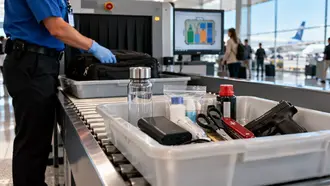
A power bank belongs in your carry-on, a pocket knife does not, and peanut butter counts as a liquid at TSA security. Before closing your suitcase, check 25 items travelers still pack in the wrong bag and what to do with them i...
October 14, 202657
The best honeymoon destinations in the world are not simply the places with the prettiest beaches. This 2026/27 shortlist compares 15 romantic trips by season, budget, privacy, travel time and what couples can realistically do ...
October 13, 202668
A canceled flight can turn an airport into chaos within minutes, but the longest customer-service line is not always the best place to start. This step-by-step guide explains how to get rebooked faster, protect your refund righ...
October 12, 202677
The best travel backpack is not necessarily the biggest or most expensive. These 2026 picks cover budget city breaks, European low-cost flights, week-long trips and premium one-bag travel, with practical sizes and prices to hel...
October 9, 2026123
A wrong name does not always mean buying another flight. Learn when you can change the name on a plane ticket, why a typo differs from transferring a ticket, how the U.S. 24-hour rule can help and what to do before contacting t...
October 7, 202663
Paris and Venice deserve their reputations, but they are not automatically the right romantic city for every couple. These 17 destinations reveal where to go for food, sunsets, culture, quiet streets, a honeymoon or an unforget...
October 4, 202698
Looking to shine a spotlight on your project? LitiTravels has you covered! We offer article-based promotion, manage branded blogs on our platform, drive engagement through our social media channels, and create content that delivers real results. Get in touch today and let’s make your brand stand out!
The best travel guides, trip planning tips and cultural discoveries from the LitiTravels team — once a month, straight to your inbox.