Home Destinations17 Things to Do in Copenhagen: A First-Timer’s Guide to the City
Destinations17 Things to Do in Copenhagen: A First-Timer’s Guide to the City
The best things to do in Copenhagen combine historic castles, waterfront neighborhoods, Danish food, modern design, and experiences that cost nothing at all. Nyhavn, Tivoli Gardens, and Rosenborg Castle deserve a place on a first visit, but spending the entire trip moving between famous photo spots misses much of what makes Denmark's capital interesting.
Copenhagen rewards a different approach: explore one area at a time, leave room for neighborhood walks, and choose paid attractions selectively. The historic center is compact enough for an enjoyable day on foot, while Christianshavn, Nørrebro, and Vesterbro reveal different sides of the city without requiring complicated transportation.
Two full days are enough for Copenhagen's essential attractions. Three days provide a more balanced introduction, with time for canals, museums, local food, and neighborhoods beyond the main sightseeing circuit.
This Copenhagen travel guide covers 17 worthwhile experiences, realistic visiting times, admission costs, walking routes, free alternatives, and practical decisions that help first-time visitors get more from their stay.
The best Copenhagen attractions are concentrated around the historic center, Christianshavn, and several neighborhoods just beyond the old town. Grouping nearby places together reduces unnecessary transportation and makes it easier to decide which experiences deserve paid admission.
The following comparison includes approximate time requirements and adult admission prices in Danish kroner (DKK). Prices reflect published 2026 information where available and may change with the date, season, or ticket type.
|
Copenhagen attraction |
Time to allow |
Admission or typical cost |
Best itinerary |
|
Rosenborg Castle |
60–90 minutes |
DKK 140 online, adult |
Day 1 |
|
The King's Garden |
20–45 minutes |
Free |
Day 1 |
|
Amalienborg Palace Square |
20–40 minutes |
Free outside; museum extra |
Day 1 |
|
Nyhavn waterfront |
20–45 minutes |
Free |
Day 1 |
|
Christiansborg Palace |
45–90 minutes |
Free tower; palace interiors paid |
Day 1 |
|
Tivoli Gardens |
2–4 hours |
Paid entry, date-dependent; rides extra |
Day 1 |
|
Round Tower |
30–60 minutes |
DKK 60, adult |
Day 1 or 3 |
|
Torvehallerne Market |
45–75 minutes |
Free entry; food extra |
Day 1 or 3 |
|
Christianshavn canals |
45–75 minutes |
Free |
Day 2 |
|
Church of Our Saviour Tower |
30–60 minutes |
DKK 70, adult |
Day 2 |
|
Freetown Christiania |
45–90 minutes |
Free public areas |
Day 2 |
|
Copenhagen canal tour |
60–75 minutes |
From roughly DKK 135–170 for selected departures |
Day 2 |
|
Reffen Street Food |
60–120 minutes |
Free entry; food extra |
Day 2 |
|
Nørrebro and Superkilen |
2–3 hours |
Free to explore |
Day 3 |
|
Vesterbro and the Meatpacking District |
2–3 hours |
Free to explore |
Day 3 |
|
Ny Carlsberg Glyptotek |
90–120 minutes |
Around DKK 150, adult |
Day 3 alternative |
|
The Little Mermaid |
10–20 minutes at the statue |
Free |
Optional |
The most important decision is whether to prioritize museums, neighborhoods, or both. Visiting every paid attraction in three days is neither necessary nor particularly enjoyable. Choose a few meaningful indoor experiences and use the remaining time for the waterfront, streets, and public spaces that give Copenhagen its character.
The first day should focus on royal landmarks, the old town, and the famous waterfront. This area provides the strongest introduction to Copenhagen's history, architecture, and atmosphere without requiring a citywide sightseeing tour.
A realistic first-day route starts near Rosenborg Castle, continues toward Amalienborg and Nyhavn, and finishes around Christiansborg or Tivoli Gardens. The exact order can be adjusted to fit museum reservations and the Changing of the Guard.
Rosenborg Castle is one of the most worthwhile Copenhagen attractions for visitors interested in Danish history. Built in the early 17th century for King Christian IV, the Renaissance castle contains royal interiors, historical collections, and the Danish Crown Jewels.
Unlike palaces that serve mainly as impressive exterior landmarks, Rosenborg offers a substantial indoor experience. Visitors can explore decorated rooms, historical furnishings, royal portraits, and the treasury beneath the castle.
Allow approximately 60–90 minutes inside, particularly if the Crown Jewels are a priority. The adult ticket costs DKK 140 when purchased online or DKK 150 at the entrance under the published 2026 pricing.
Rosenborg uses timed admission, and popular slots can sell out during busy periods. Booking in advance is sensible when the castle is central to the itinerary.
The historic building has narrow stairs and limited accessibility, so visitors with mobility requirements should check the entry arrangements before purchasing tickets.
The King's Garden is one of the easiest free things to do in Copenhagen, particularly when visiting Rosenborg Castle. The formal garden provides green space, historical surroundings, and attractive views of the castle without an admission charge.
It is worth arriving before the castle opens to explore the paths and photograph the building from outside. The gardens also offer a welcome pause between museum visits and busy streets.
Allow 20–45 minutes for a casual walk. Families can spend longer enjoying the open space, while travelers on a tighter schedule can see the main garden paths before continuing toward the royal district.
The Changing of the Guard at Amalienborg is one of Copenhagen's best free royal experiences. The ceremony takes place around noon at the palace square, although its scale and ceremonial details depend on royal activities.
Amalienborg consists of four Rococo palaces surrounding an elegant octagonal square. It remains an important residence of the Danish royal family, and its architecture alone makes the area worth visiting.
The Royal Danish Guard traditionally departs from the Rosenborg area at approximately 11:30 a.m. and proceeds toward Amalienborg for the noon change.
Visitors should stand clear of the guards' route and follow any instructions or barriers in place. Watching from the public square is free, while the Amalienborg Museum requires separate admission.
For a first visit, the square and ceremony are generally enough unless royal history is a particular interest. The nearby Marble Church and waterfront provide additional places to explore without committing to another museum.
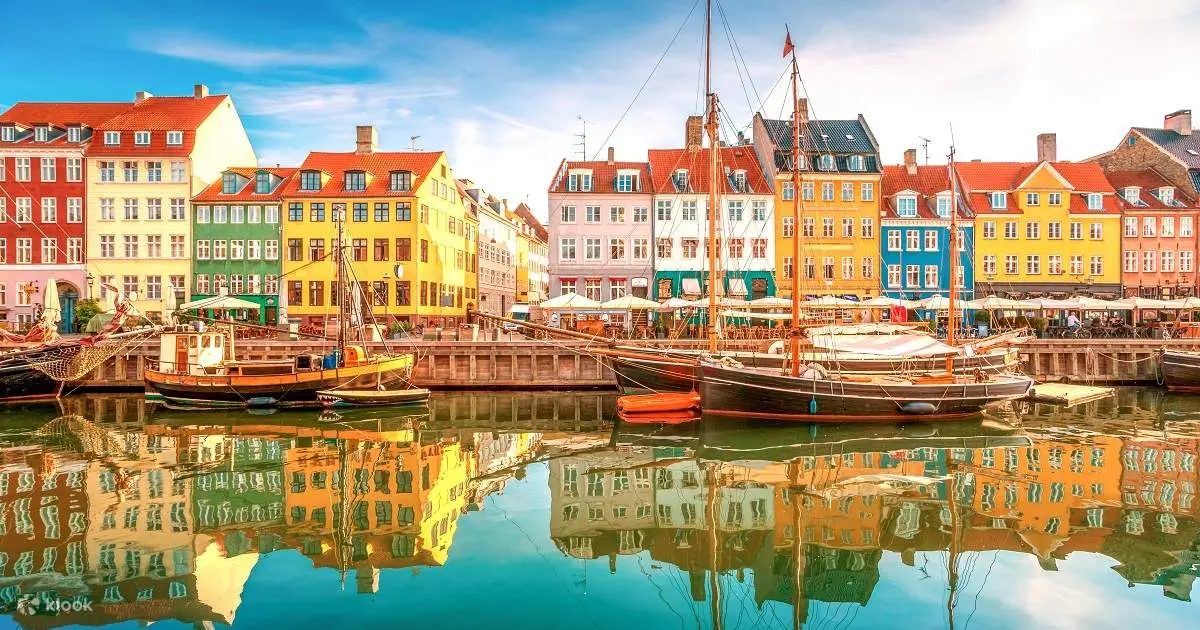
Nyhavn is Copenhagen's most recognizable waterfront and one of the most rewarding short stops in the historic center. Colorful townhouses, old ships, cafés, and the canal create the classic view associated with Denmark's capital.
The area originally developed as a commercial harbor and later became one of the city's busiest visitor destinations. Hans Christian Andersen lived at several addresses along the canal, giving the waterfront a connection to Denmark's literary history.
Walking along Nyhavn is free. The most familiar photographs can be taken from the bridges and public quays, without purchasing a restaurant meal or joining a guided tour.
The common mistake is treating Nyhavn as a half-day attraction. Most visitors can appreciate the waterfront in 20–45 minutes, then continue to nearby streets or the harbor.
Restaurants directly beside the canal benefit from a highly desirable location, and their prices may reflect it. Eating there can be enjoyable, but travelers looking for better value should compare posted menus with restaurants a few streets away.
For photography, early morning often offers quieter views than the middle of the day.
Christiansborg Palace is one of Copenhagen's most important historical and political buildings. It houses key Danish state institutions while also containing royal ceremonial rooms and other visitor attractions.
The palace stands on Slotsholmen, an island in the historic center surrounded by canals and important public buildings. Its unusual combination of government functions and royal history makes it different from a conventional palace museum.
Visitors interested in interiors can purchase admission to the Royal Reception Rooms and other publicly accessible sections. Those with limited time can enjoy the exterior, surrounding courtyards, and nearby waterfront without buying a full palace ticket.
Christiansborg Tower offers one of Copenhagen's highest viewpoints and is generally free to visit when public access is available. Opening arrangements, security requirements, and temporary restrictions should be checked before planning around it.
Allow approximately 30–45 minutes for the exterior and tower, or 60–90 minutes when visiting paid sections.
A useful nearby alternative is the Garden of the Royal Library, a quiet public space between Christiansborg and the Royal Library. It provides a less crowded setting just a short walk from some of the busiest historic streets.
Tivoli Gardens is among the most distinctive things to do in Copenhagen, especially when it is open after dark. Founded in 1843, the amusement park combines historic gardens, rides, restaurants, performances, and elaborate seasonal decorations.
Its atmosphere differs considerably from a conventional modern theme park. Visitors can enjoy the illuminated gardens and architecture without necessarily spending the evening on rides.
Tivoli operates seasonally, including its main summer period and special Halloween and Christmas openings. The park closes between some operating periods, so it should never be assumed to be open simply because a traveler is visiting Copenhagen.
Entrance and unlimited rides are separate purchases. Standard admission allows access to the gardens and applicable entertainment, while a Ride Pass or individual ride tickets may be needed for attractions. Adult entrance prices vary by date and sometimes by entry time.
Families planning several rides should compare the combined entrance-and-ride package with separate tickets. Travelers interested mainly in the gardens can often save money by purchasing admission only.
Tivoli is next to Copenhagen Central Station, making it convenient for an evening after sightseeing.
Allow two hours for a walk through the gardens and dinner, or three to four hours when rides and performances are part of the plan. If Tivoli is closed, an evening in Vesterbro or a museum visit earlier in the day provides a practical alternative.
The second day should explore Copenhagen from the water and through the historic canals of Christianshavn. The neighborhood's houseboats, bridges, churches, and former industrial waterfront provide a different experience from the royal landmarks of the first day.
Begin with a canal tour if the weather and departure schedule suit the itinerary, then cross into Christianshavn. Continue toward Christiania and Refshaleøen, returning to the center by public transportation or the harbor bus.
A canal tour is one of the easiest ways to understand Copenhagen's waterfront geography. A standard sightseeing cruise takes approximately one hour and passes a mixture of historic waterways and contemporary architecture.
Routes commonly include views of Christiansborg Palace, Amalienborg, the Copenhagen Opera House, and the Black Diamond, a striking modern extension of the Royal Danish Library.
Typical departure points include Nyhavn and Ved Stranden. Operators offer different routes, commentary formats, and ticket types, so two cruises with similar descriptions may not provide identical experiences.
Prices vary, but selected online bookings for classic one-hour tours have been offered from approximately DKK 135, while other departures cost more. Longer harbor routes generally carry higher fares.
A canal tour can also be a sensible alternative to walking the full distance to certain waterfront attractions. For example, passengers may see the Little Mermaid from the water without making a separate journey to the statue.
Check the departure point before buying a ticket, particularly when combining a cruise with other attractions or a Copenhagen Card. Some included tours require departure from a specified location.
Christianshavn is one of Copenhagen's most attractive neighborhoods for a relaxed waterfront walk. Its narrow streets, canal-side houses, houseboats, and small bridges give the area a character distinct from the old town.
The neighborhood lies just across the harbor from central Copenhagen and is easy to reach on foot or by metro. Start near Christianshavn Station and follow the canals toward Overgaden and the waterfront.
Allow approximately 45–75 minutes without planning an exact route through every street. Much of the appeal lies in observing the buildings, boats, and quieter corners rather than visiting a specific ticketed attraction.
The canal banks are also useful places for short breaks between activities. Travelers interested in photography may prefer the smaller bridges and residential stretches to the busiest harbor viewpoints.
The Church of Our Saviour offers one of Copenhagen's most memorable panoramic views. Its famous spiral staircase winds around the outside of the tower, providing an unusually exposed perspective over Christianshavn and the harbor.
The climb involves approximately 400 steps, including narrow interior staircases and the exterior ascent near the top. It is not suitable for every visitor, especially those who struggle with steep stairs, confined spaces, or significant heights.
Adult admission to the tower is listed at DKK 70 for 2026, with reduced rates for eligible visitors. Advance reservations are recommended because capacity is limited.
Weather is another important factor. Rain, snow, or strong winds can lead to temporary closures, and the tower is normally closed during January.
The church itself has separate visiting arrangements and remains an active religious building. Travelers who do not want to climb can still appreciate its architecture from the surrounding streets.
Allow approximately 30–60 minutes for the tower experience, including arrival and waiting time.
Freetown Christiania is an alternative residential community known for its distinctive buildings, creative spaces, and unconventional history. Founded in 1971, it occupies part of a former military area close to Christianshavn's canals.
The attraction is not a conventional open-air museum. People live and work there, and visiting responsibly means recognizing the community as a neighborhood rather than treating every street or building as a tourist display.
Publicly accessible paths, green areas, cafés, and creative venues can make an interesting stop. However, visitors should follow local signs, respect photography restrictions, avoid looking into homes, and never assume private areas are open for exploration.
Cannabis purchases are illegal in Denmark, including within Christiania. The area's historical reputation does not override national law.
Allow 45–90 minutes for a respectful walk and an optional café stop. Travelers who dislike loosely structured visits may prefer spending additional time along Christianshavn's canals instead.
Reffen is a large waterfront street-food market in the former industrial district of Refshaleøen. The area combines food stalls, creative workshops, events, and views of Copenhagen's harbor.
It offers a striking contrast with the polished historic center. Reused industrial spaces and shipping containers preserve much of the neighborhood's former shipyard character, while the food vendors serve a wide range of international cuisines.
Entry is generally free, with visitors paying for individual meals and drinks. A meal here is not necessarily cheaper than one in the city center, but the shared seating and variety make it particularly convenient for groups with different food preferences.
Reffen's outdoor market operates seasonally, although individual indoor venues and events may follow different schedules. Always confirm which food stalls and facilities are operating before traveling to the site.
Allow 60–120 minutes for lunch or an informal evening. Public transportation, including selected harbor bus connections, can make the area easier to reach than walking the entire distance from the historic center.
In warmer weather, an alternative is to spend time near one of Copenhagen's designated harbor swimming areas. Swimming should take place only where explicitly permitted, with attention to local safety notices and water conditions.
The third day is best spent exploring Copenhagen's residential neighborhoods, independent businesses, food scene, and contemporary urban spaces. Nørrebro and Vesterbro provide an especially useful contrast to the historic center.
This day can be adjusted for interests. Travelers who prefer art can replace one neighborhood walk with a museum, while those interested in architecture can explore additional waterfront developments.
You may also be interested in our article: Canary Islands in November: Which Island Is Best for Warm Weather, Beaches, and Hiking?
Nørrebro is one of Copenhagen's most culturally diverse neighborhoods, known for independent shops, cafés, restaurants, and active street life. A walk here provides a clearer impression of everyday Copenhagen than another circuit of central souvenir streets.
A natural starting point is Queen Louise's Bridge, which crosses the Lakes between the central city and Nørrebro. Continue along Nørrebrogade and explore the smaller streets rather than staying entirely on the main road.
Jægersborggade is a worthwhile stop for independent shops, bakeries, cafés, and small specialty businesses. It is popular rather than undiscovered, but its scale and atmosphere differ from the waterfront tourist district.
Allow approximately 90 minutes for a neighborhood walk with a coffee or bakery stop. Food lovers may want to reserve additional time for lunch.
Assistens Cemetery is both a historic burial ground and an important green space in Nørrebro. It contains the graves of notable Danish cultural figures, including writer Hans Christian Andersen and philosopher Søren Kierkegaard.
The cemetery has long been part of the neighborhood's public landscape, but it remains a functioning burial site. Visitors should keep noise low, respect mourners, and stay within publicly accessible areas.
A quiet walk through its established paths offers an unusual combination of cultural history and greenery. It also pairs naturally with nearby Jægersborggade.
Allow approximately 30–45 minutes, longer if exploring the historical background of individual graves.
Superkilen is a distinctive urban park in Nørrebro, designed around the neighborhood's international character. Its colorful public spaces, graphic surfaces, and unusual objects create a different impression from Copenhagen's historic gardens.
The park is divided into contrasting areas, including the Red Square, Black Square, and a greener recreational section. Objects and design references from different parts of the world reflect the diversity of the surrounding community.
Unlike a formal attraction, Superkilen is an everyday public space used for walking, recreation, and social activities. Its condition and atmosphere can vary, and visitors should not expect every section to resemble carefully staged promotional photographs.
Entry is free. Allow approximately 30–60 minutes, especially if architecture, urban planning, or photography is a major interest.
Vesterbro is one of the best neighborhoods in Copenhagen for casual restaurants, nightlife, independent shops, and urban atmosphere. Located west of Copenhagen Central Station, it is easy to reach by metro, train, or a short walk from Tivoli Gardens.
The Meatpacking District, commonly called Kødbyen, contains former industrial buildings that now accommodate restaurants, bars, galleries, and cultural venues. The contrast between functional architecture and contemporary businesses is part of its appeal.
During the day, Vesterbro can be explored through its shopping streets, cafés, and residential areas. In the evening, the Meatpacking District becomes a useful destination for dinner or drinks.
There is no admission charge to explore the neighborhood itself. Restaurant and entertainment prices vary substantially, so checking menus before choosing a venue helps prevent budget surprises.
Allow two or three hours if combining a neighborhood walk with a meal.
Ny Carlsberg Glyptotek is one of Copenhagen's strongest indoor alternatives when the weather makes extended walking less appealing. The museum combines ancient sculpture, European art, and an impressive indoor Winter Garden.
Located near Tivoli Gardens, it can be incorporated into a Vesterbro or central Copenhagen itinerary without a major detour. Its collections and architecture make it suitable for travelers who want more than a quick gallery visit.
Adult admission is approximately DKK 150 under published pricing, with free admission for children under 18 and inclusion in relevant Copenhagen Card products.
Allow 90–120 minutes for a meaningful visit. Visitors particularly interested in ancient civilizations or European painting can spend longer.
Another option is the National Gallery of Denmark, also known internationally as SMK, which is close to Rosenborg Castle and the King's Garden. It is especially convenient for an art-focused itinerary in the northern part of the center.
The Little Mermaid is one of Copenhagen's most famous landmarks, but it works best as a brief stop rather than the centerpiece of a sightseeing day. The bronze sculpture sits beside the waterfront at Langelinie and was created by Edvard Eriksen in 1913.
The statue is relatively small, and the surrounding promenade may be crowded with sightseeing groups. Many visitors find the walk along the harbor more rewarding than the few minutes spent directly in front of the sculpture.
Visiting is free, with approximately 10–20 minutes needed at the statue itself. The additional journey from the historic center can take considerably longer.
A more satisfying route combines the Little Mermaid with Kastellet, the historic star-shaped fortress, and a walk through the nearby waterfront parkland.
For travelers with only one day, skipping the statue is a reasonable decision unless seeing Copenhagen's most recognizable symbol is particularly important.
A good Copenhagen itinerary depends on available time rather than the number of attractions that can be squeezed onto a map. The following plans prioritize walkable areas and leave enough room for meals, transportation, and ordinary delays.
With one day in Copenhagen, focus on the historic center and select one major paid attraction. Trying to include every palace, museum, and neighborhood generally results in more walking and less time to enjoy the places themselves.
A realistic route could follow this schedule:
This schedule assumes an energetic walking day and favorable opening arrangements. Families with younger children, visitors with mobility needs, or travelers arriving later should reduce the number of stops.
Two days allow the first-day historic route to be combined with Christianshavn and the harbor. This provides a stronger sense of Copenhagen's different neighborhoods than spending both days inside the old town.
Use the first day for Rosenborg, Amalienborg, Nyhavn, Christiansborg, and possibly Tivoli. Spend the second day on a canal cruise, Church of Our Saviour, Christianshavn's streets, and an optional visit to Christiania or Refshaleøen.
There is no need to add every Copenhagen attraction to this schedule. An unplanned hour beside a canal or a relaxed lunch can be more enjoyable than reaching another museum just before closing.
Three days provide enough time for Copenhagen's classic sights, waterfront experiences, and neighborhoods beyond the tourist center. A third day also creates flexibility if rain or limited opening hours disrupt the original plan.
A balanced schedule looks like this:
Day 1: Rosenborg Castle, the King's Garden, Amalienborg, Nyhavn, Christiansborg, and Tivoli if open.
Day 2: Canal tour, Christianshavn, Church of Our Saviour, Christiania, and Refshaleøen.
Day 3: Nørrebro, Assistens Cemetery, Superkilen, and Vesterbro, with an optional museum replacing part of the route.
For travelers combining Copenhagen with other European destinations, the same principle of limiting long cross-city transfers applies to planning a three-week Europe itinerary. Grouping sights by location leaves more time for actual experiences, particularly when several cities are involved.
Some of the most enjoyable things to do in Copenhagen are completely free. The city's waterfront, gardens, public squares, and neighborhoods offer enough variety to fill a sightseeing day without paying for multiple attractions.
The most practical free experiences include:
These attractions are particularly useful when traveling with a family or trying to keep a city break affordable. A day based around free sights can still cover royal architecture, public art, historic streets, and contemporary neighborhoods.
Copenhagen's museum system also includes selected free-admission days and other concessions, but these vary by institution. Always verify the applicable date rather than assuming that a museum is free every week.
The same approach to keeping sightseeing costs under control works in other European capitals. Travelers planning more than one city can find comparable ideas among the free and low-cost things to do in Athens, where neighborhood walks and carefully selected paid attractions help control expenses.
Copenhagen can be an expensive destination, especially for restaurants, accommodation, and multiple paid attractions. However, the final cost of sightseeing depends heavily on whether the itinerary emphasizes free neighborhoods or ticketed experiences.
For practical budgeting, the Danish krone is more useful than continually converting prices into dollars or euros. Exchange rates change, while local admission and transportation costs are published in DKK.
For one adult, a combination of several well-known attractions and a 48-hour transportation pass can produce the following illustrative budget. This assumes separate admission tickets, selected available prices, and no special discounts.
|
Expense |
Example cost |
|
Rosenborg Castle, online admission |
DKK 140 |
|
Round Tower |
DKK 60 |
|
Church of Our Saviour Tower |
DKK 70 |
|
Tivoli Gardens, example entrance ticket |
DKK 200 |
|
One-hour canal tour, example ticket |
DKK 150 |
|
City Pass Small, 48 hours |
DKK 160 |
|
Total |
DKK 780 |
This DKK 780 example covers the listed admissions and transportation, not accommodation, meals, Tivoli rides, or additional activities. Actual ticket prices and availability can differ, especially for Tivoli and canal tours.
The calculation illustrates an important point: a visitor can experience several major Copenhagen attractions without paying for every palace interior or purchasing a premium sightseeing package.
The Copenhagen Card can save money when the itinerary includes several paid attractions and frequent public transportation. Its value depends on the specific places visited, the duration of the trip, and whether the card includes those attractions.
The DISCOVER version includes admission to more than 80 participating attractions and public transportation throughout the Capital Region, including trips between Copenhagen Airport and the city.
Published adult prices include approximately DKK 589 for 24 hours, DKK 859 for 48 hours, and DKK 1,039 for 72 hours.
Rosenborg Castle, Tivoli Gardens entrance, and numerous museums are included among participating attractions. Tivoli rides are not included in ordinary garden admission, and the Round Tower is not included in the Copenhagen Card.
Certain attractions require advance reservations even when admission is covered by the card. A sightseeing pass is not necessarily a way to bypass entry restrictions or queues.
A traveler visiting only Rosenborg Castle and otherwise exploring free sights may spend less by purchasing an individual castle ticket. Someone visiting several major museums, taking an included canal cruise, and using transportation frequently may receive greater value from the card.
Before purchasing, add together the individual admission costs for attractions that will realistically be visited during the card's validity period. Compare that total with the relevant Copenhagen Card option, checking which activities are actually included.
A casual meal in Copenhagen commonly costs around DKK 140–160 at an inexpensive restaurant, while a cappuccino may cost around DKK 45–55. Three-course dining at a mid-range restaurant can cost approximately DKK 350–450 per person before drinks.
These are broad planning figures rather than fixed prices. Bakeries, supermarkets, simple takeout meals, and food markets provide additional options, although specialty markets are not automatically inexpensive.
Traditional Danish smørrebrød, or open-faced sandwiches, is worth trying at least once. Bakery pastries and rye bread are other accessible ways to experience local food without arranging an elaborate restaurant meal.
Tap water is safe to drink in Copenhagen, and public drinking fountains can help reduce the cost of bottled water. Tipping is optional rather than a mandatory addition to restaurant bills.
The easiest ways to get around Copenhagen are walking and public transportation. The historic center is compact, while the metro, trains, buses, and harbor buses connect the surrounding neighborhoods.
For first-time visitors, walking is often preferable when attractions are close together. A bicycle can be useful for longer distances, but Copenhagen's busy cycling network requires attention and confidence.
Copenhagen Airport is connected to the central city by metro and train. Both options generally take around 15 minutes to reach major central stations, making public transportation a practical alternative to taxis.
The M2 metro connects the airport with stations including Christianshavn, Kongens Nytorv, and Nørreport. Trains are useful when traveling directly toward Copenhagen Central Station and Vesterbro.
The airport is in public transport zone 4, so an appropriate ticket is required. A typical adult airport-to-center fare is approximately DKK 30, while taxis can cost several hundred kroner depending on the destination and traffic.
Travelers should select the route based on their hotel rather than automatically taking the metro. A direct train may be easier when staying near Copenhagen Central Station.
Yes. Copenhagen's automated metro operates around the clock and connects major sightseeing areas with surrounding neighborhoods.
The network uses a zone-based fare system. Tickets can be purchased through supported travel apps and station ticket machines, while certain travel passes provide unlimited journeys during their validity.
The City Pass Small covers zones 1–4, including the airport, and has published adult fares of DKK 100 for 24 hours, DKK 160 for 48 hours, and DKK 220 for 72 hours.
Single fares can be cheaper when making only occasional journeys. Visitors who walk most of the day should calculate how many trips they will actually take before purchasing a transport pass.
Metro, buses, trains, and harbor buses can share ticket validity when the fare product covers the necessary zones and time period. Tickets must be valid before boarding, and inspections can result in fines for passengers without proper fares.
Cycling is an enjoyable way to explore Copenhagen for travelers comfortable with busy urban bicycle traffic. The city has extensive cycling infrastructure, but that does not mean every route is appropriate for someone who has rarely ridden in traffic.
Visitors should use designated cycle lanes, follow traffic signals, signal turns, and remain aware of faster commuters. Rental bicycles should have functioning lights when riding in darkness.
The busiest commuting periods can be challenging for inexperienced cyclists. Walking or taking the metro is often a more relaxing choice for first-time visitors who mainly want to see central landmarks.
Rental bikes are available through shops, some hotels, and app-based services. Before relying on a rental app, confirm payment requirements, parking rules, and coverage areas.
Travelers planning to use navigation while moving between neighborhoods can prepare with the best travel apps for maps, transport, and international trips. Downloading an offline map is useful when mobile reception or roaming access becomes unreliable.
The best area to stay in Copenhagen depends on the balance between central attractions, budget, nightlife, and transportation convenience. First-time visitors generally benefit from staying near a metro station or within walking distance of the historic center.
For most short visits, the difference between neighborhoods is more important than selecting a hotel immediately beside Nyhavn.
Indre By, Copenhagen's historic center, is the most convenient location for visitors who want to walk to major attractions. Nyhavn, Rosenborg Castle, the Round Tower, and Christiansborg are relatively accessible from different parts of the district.
The main disadvantage is accommodation cost, especially near famous squares and waterfront streets. Not every central property represents good value for a traveler who plans to spend most of the day outside.
Vesterbro is a strong choice for travelers who want convenient transportation, restaurants, and nightlife. The area around Copenhagen Central Station is especially useful for airport train connections and early departures.
Hotels close to the station provide convenient access to Tivoli and the historic center. Staying farther into Vesterbro can offer a more residential atmosphere while remaining reasonably connected.
Nørrebro is worth considering for travelers interested in neighborhood life, diverse dining, and independent businesses. It is less centered on conventional sightseeing than Indre By but provides an engaging base for longer visits.
A property near a convenient metro station is particularly useful because some attractions will require a longer walk or public transportation journey.
For a first visit lasting only one night, the historic center or Central Station area may be more convenient. For three or four days, Nørrebro can provide a more varied experience.
The biggest planning mistake in Copenhagen is spending too much time or money on attractions that offer little beyond a famous photograph. Many classic landmarks are worthwhile, but their value changes significantly with the amount of time allocated.
The following decisions make a practical difference.
Nyhavn is worth seeing, but it does not need an entire afternoon. The colorful buildings and historic canal are best appreciated during a short waterfront walk.
The main expense comes from choosing a restaurant solely for its location. Compare menus and consider dining elsewhere if the priority is food quality or value rather than a canal-side table.
The Little Mermaid is worth a short stop if it fits a waterfront walk, but the statue itself is not a major half-day attraction. Visitors with limited time may get more enjoyment from Kastellet, the harbor promenade, or a canal tour.
Expect a modestly sized sculpture rather than a large monument. Combining it with nearby attractions makes the trip more worthwhile.
Yes. Tivoli's gardens, architecture, decorations, food venues, and entertainment can make admission worthwhile even without a Ride Pass.
However, travelers interested mainly in rides should calculate the full package price before booking. Those visiting during a period when Tivoli is closed need an alternative evening plan.
No. Choosing one or two museums that match specific interests is usually more rewarding than visiting several simply because they appear in a sightseeing list.
For Danish monarchy and historical interiors, Rosenborg Castle is a strong choice. For fine art and sculpture, Glyptoteket or the National Gallery of Denmark may be more appropriate.
The time spent inside a museum should reflect genuine interest, not a perceived obligation to collect attractions.
Late spring through early fall generally provides comfortable conditions for exploring Copenhagen outdoors. Longer daylight hours, waterfront activities, and opportunities for café seating make these months appealing.
However, Copenhagen remains a worthwhile city-break destination outside the warmest months, particularly for visitors interested in museums, architecture, food, and seasonal events.
Summer is particularly attractive for cycling, harbor walks, outdoor dining, and extended sightseeing days. Designated swimming areas may also be available, depending on conditions and seasonal operation.
Popular attractions can be busier, and accommodation rates may rise during periods of strong demand. Reserving limited-capacity attractions in advance can help avoid disappointment.
Winter sightseeing is best built around museums, cafés, cultural venues, and shorter outdoor walks. Tivoli's Christmas season can be a major attraction when it is operating, but the park is not continuously open throughout winter.
Cold weather, wind, and shorter daylight hours make outdoor-heavy itineraries less comfortable. Combining one indoor attraction with one neighborhood walk is often more practical than following a summer schedule unchanged.
The Round Tower, Rosenborg Castle, major art museums, and food halls provide useful indoor options, subject to their opening calendars.
Rainy-day alternatives include Glyptoteket, the National Gallery of Denmark, the National Museum, and Designmuseum Danmark. These provide substantial indoor experiences without requiring long transfers between neighborhoods.
A canal cruise may still operate in rain, depending on the operator and conditions, but visibility and comfort vary. The outdoor spiral staircase at the Church of Our Saviour may close for safety during poor weather.
Plan one indoor alternative for each sightseeing day rather than abandoning the itinerary entirely when the forecast changes.
Yes. Three days provide a realistic balance between famous landmarks and the everyday experiences that distinguish Copenhagen from other European capitals.
The strongest itinerary is not necessarily the one containing the most attractions. A first visit is more rewarding when each day has a clear geographical focus: royal landmarks in the historic center, canals and waterfront culture in Christianshavn, and neighborhood life in Nørrebro or Vesterbro.
Visitors should prioritize two or three paid experiences that match their interests, then fill the remaining time with free walks, local food, and public spaces. That approach keeps transportation manageable, reduces unnecessary spending, and allows Copenhagen to feel like a city rather than a checklist.
The five essential experiences for many first-time visitors are Nyhavn, Rosenborg Castle, Tivoli Gardens when open, Amalienborg Palace Square, and a canal tour. Christianshavn is a strong alternative for travelers who prefer neighborhood exploration.
Do not miss the historic waterfront, at least one royal landmark, and a neighborhood beyond the main tourist center. Nyhavn, Rosenborg, and Christianshavn provide a varied introduction to the city.
One day is enough to see several major landmarks in central Copenhagen, especially on foot. However, it leaves limited time for neighborhoods, museums, and relaxed exploration. Two or three days are preferable.
Two days are sufficient for the central highlights and part of Christianshavn. Three days are more comfortable, while four or five days allow additional museums, neighborhood experiences, and day trips.
The best free experiences include Nyhavn, the King's Garden, Amalienborg's guard ceremony, Christianshavn's canals, Superkilen, Kastellet, and the Little Mermaid. Certain museums and viewpoints also offer free admission.
Yes, particularly for accommodation, restaurants, and multiple paid attractions. However, walking, public transportation, free public spaces, and selective museum visits can keep a short trip considerably more affordable.
Yes. Many major attractions in the historic center are within reasonable walking distance. Public transportation is useful for reaching Nørrebro, Refshaleøen, the airport, and other areas farther from the old town.
Yes. A car is unnecessary for most city visitors because Copenhagen has extensive metro, train, bus, and cycling infrastructure. Driving and parking can add expenses without providing meaningful advantages for central sightseeing.
Yes. Tivoli Gardens, parks, playgrounds, harbor areas, and family-oriented museums provide plenty of options. Families should allow more time between activities and compare attraction discounts and child ticket rules before purchasing passes.
Popular viewpoints include the Round Tower, Church of Our Saviour, and Christiansborg Tower when accessible. The best choice depends on admission costs, opening times, physical accessibility, and weather.
It can be worthwhile when visiting multiple paid attractions and using public transportation frequently. Travelers planning mostly free walks and one or two museums may save money by purchasing individual tickets instead.
Tivoli Gardens is a popular evening option when open. Other possibilities include restaurants in Vesterbro, waterfront walks, cultural performances, and exploring the Meatpacking District. Opening hours and venue schedules vary.
The Little Mermaid is one of Copenhagen's most internationally recognizable landmarks, while Nyhavn is among its most photographed locations. Tivoli Gardens is another major attraction associated with the city.
A weekend is enough for a memorable introduction, particularly with two full sightseeing days. A longer stay makes it easier to explore neighborhoods, visit several museums, and add trips to destinations elsewhere in Denmark.






A homemade sandwich can usually pass airport security, but a jar of peanut butter or a frozen drink might not. Food rules also change between countries and airports. Find out what belongs in your carry-on, what needs special sc...
 October 28, 2026
 1

The Canary Islands stay pleasantly warm in November, but choosing the wrong coast can mean clouds instead of beach weather. Compare all seven main islands, discover where swimming and hiking are best, and find the right resort,...
October 28, 20260
Pack a small paper activity folder for a family trip: coloring stories, mazes, counting games and a simple travel journal, with free printable examples.
October 27, 20260
Vienna's Christmas markets begin opening November 6, 2026, but not every market deserves equal time. Compare palace settings, traditional craft stalls, family activities, quieter neighborhoods, and costs, then plan a route that...
October 27, 20261The Canary Islands stay pleasantly warm in November, but choosing the wrong coast can mean clouds instead of beach weather. Compare all seven main islands, discover where swimming and hiking are best, and find the right resort,...
October 28, 20260Vienna's Christmas markets begin opening November 6, 2026, but not every market deserves equal time. Compare palace settings, traditional craft stalls, family activities, quieter neighborhoods, and costs, then plan a route that...
October 27, 20261
Athens does not have to be an expensive sightseeing city. Many of its best views, ancient landmarks, neighborhoods and local experiences are completely free. Here are 25 things to do in Athens for free or very little, plus a wa...
October 10, 202664
Budapest can swallow a weekend if every famous sight becomes a separate mission. These 25 things to do combine thermal baths, Danube views, grand architecture, food and neighbourhoods into a route that leaves time to enjoy the ...
October 10, 202691
Bali is still worth visiting, but it is no longer the only answer for an Indonesian island escape. These Bali alternatives offer quieter beaches, volcanic landscapes, diving, surf, local culture and adventures that can feel far...
October 9, 202678
Jamaica’s famous rainforest bobsled runs for 3,280 feet through Mystic Mountain above Ocho Rios – but the ride is only one part of the visit. Here is how to choose tickets, avoid timing mistakes and decide whether it belongs in...
October 7, 202669
Jamaica does not have to mean expensive waterfall tours, private drivers and resort excursions. Many of the island’s best experiences cost little or nothing, from long beach walks and mountain views to local markets, street foo...
October 7, 202664
Steaming outdoor pools, snowy Alpine peaks, historic bathhouses and geothermal lagoons make winter one of the best times for a European spa trip. These are the best thermal baths in Europe, with practical advice on cost, atmosp...
October 6, 202692
Many of the best things to do in Prague cost nothing. This practical guide combines famous landmarks with free viewpoints, historic streets, parks and neighborhoods, plus a walkable itinerary that keeps unnecessary ticket spend...
October 6, 202669
Where is hot in Europe in October when summer has already disappeared farther north? These 12 destinations still offer warm days, swimmable seas, outdoor dining, and enough sunshine for a convincing late-season escape.
October 5, 2026121
Looking to shine a spotlight on your project? LitiTravels has you covered! We offer article-based promotion, manage branded blogs on our platform, drive engagement through our social media channels, and create content that delivers real results. Get in touch today and let’s make your brand stand out!
The best travel guides, trip planning tips and cultural discoveries from the LitiTravels team — once a month, straight to your inbox.