Home Tips & GuidesCan You Bring Food on a Plane? What to Pack, What to Avoid, and Where the Rules Change
Tips & GuidesCan You Bring Food on a Plane? What to Pack, What to Avoid, and Where the Rules Change
Yes, you can bring food on a plane. Most solid snacks, sandwiches, baked goods, and homemade meals are permitted in carry-on luggage. The complications begin with foods that can be poured, spread, squeezed, or eaten with a spoon, along with fresh produce and animal products carried across international borders.
A sandwich packed at home may pass through security without a problem, while a large container of hummus could be rejected at the same checkpoint. Even if both items make it onto the aircraft, the sandwich's meat or the fresh fruit packed alongside it might be restricted when entering another country.
There is another complication: airport liquid limits are no longer identical everywhere. Some airports allow containers up to 2 liters, while others still enforce the familiar 100 mL rule. Connecting flights can expose passengers to both systems during a single trip.
The safest approach is to separate three questions: what passes airport security, what the airline permits onboard, and what the destination country allows through customs.
Yes. Solid food is generally allowed in carry-on baggage, including sandwiches, cookies, crackers, fruit, nuts, and many cooked meals. Restrictions primarily affect liquids and spreadable foods, although security officers may inspect any item more closely.
In the United States, the Transportation Security Administration (TSA) permits solid foods in both carry-on and checked bags. Similar rules apply in Canada, much of Europe, Australia, and New Zealand, with important differences for liquids, frozen products, and certain food categories.
Bringing food through airport security is not the same as receiving permission to import it. A banana packed for a domestic flight may be perfectly acceptable, but carrying that same banana through an international arrival checkpoint could violate agricultural restrictions.
Three separate authorities can affect the journey:
For travelers carrying anything beyond ordinary snacks, the guide to items you cannot bring on a plane also explains restrictions involving sharp objects, liquids, and other potentially prohibited belongings.
Most solid foods pass through airport security, while liquid, creamy, or spreadable foods are subject to the departure airport's liquid restrictions. Packaging matters less than the food's consistency and the applicable screening rules.
The following examples describe common screening outcomes. The standard 100 mL limit is used for restricted foods unless the departing airport permits larger liquid containers or a specific exemption applies.
|
Food |
Carry-on security |
Important detail |
|
Sandwiches and wraps |
Generally allowed |
Meat and dairy ingredients may face customs restrictions. |
|
Cookies, crackers, and chips |
Generally allowed |
Keep packages closed or easy to inspect. |
|
Bread, muffins, and pastries |
Generally allowed |
Separate sauces or creamy toppings may be restricted. |
|
Pizza |
Generally allowed |
Pack slices securely to prevent spills. |
|
Fresh fruit and vegetables |
Generally allowed |
Agricultural import rules can prohibit them at the destination. |
|
Nuts, granola, and trail mix |
Generally allowed |
Check cabin allergy instructions and destination rules. |
|
Hard cheese |
Generally allowed |
Customs may restrict dairy products. |
|
Peanut butter, hummus, and dips |
Liquid limits apply |
Usually restricted to 100 mL or equivalent under standard rules. |
|
Yogurt and pudding |
Liquid limits apply |
Larger containers need an airport-specific exemption. |
|
Jam, honey, and syrup |
Liquid limits apply |
Sealed jars are not automatically exempt. |
|
Soup, gravy, and sauces |
Liquid limits apply |
Large containers usually belong in checked baggage. |
|
Cakes and solid pies |
Generally allowed |
Separate creamy fillings or sauces can complicate screening. |
|
Canned food |
Depends on contents |
Liquid-packed foods may require additional screening or be rejected. |
|
Baby formula and puréed baby food |
Special exemptions |
Larger quantities may be allowed with separate screening. |
The distinction is straightforward for bread or crackers but less obvious for mixed dishes. A cooked rice bowl may qualify as solid food, while a stew with substantial broth could be treated as a liquid or liquid-solid mixture.
Yes. Homemade sandwiches, baked goods, cooked rice, pasta, and many other prepared meals can travel in carry-on baggage when they comply with security and destination requirements. Homemade food does not automatically require commercial packaging.
A homemade chicken sandwich, for example, is generally acceptable at a U.S. security checkpoint. A container of chicken soup is different because the broth is subject to liquid restrictions.
Homemade dishes can also be harder to classify than individually packaged snacks. Foods with substantial sauce, gravy, or creamy fillings may require extra screening, and an officer can make a different determination based on the item's consistency.
For international journeys, homemade meat or dairy dishes deserve additional attention. Security clearance does not override the importing country's restrictions on animal products.
Yes, but these foods usually count as liquids, gels, or pastes at airport security. Under the standard U.S. rule, each non-exempt container must hold no more than 3.4 fluid ounces (100 mL) and fit with other liquids in one quart-sized bag.
Peanut butter is a particularly common source of confusion because it looks like a solid food product in a jar. Security authorities classify it by its spreadable consistency, not by the aisle where it was purchased.
The same problem can affect:
A thin layer of spread inside a sandwich is generally less problematic than carrying a separate large container. Nevertheless, unusually wet or sauce-heavy meals can still attract scrutiny.
Do not assume a half-empty large jar satisfies the liquid rule. At airports enforcing 100 mL restrictions, the container's maximum capacity matters, not merely how much remains inside it.
There is generally no universal numerical limit on ordinary solid snacks carried for personal consumption. The practical limits come from airline baggage allowances, security screening, food safety, and the destination country's import regulations.
A few granola bars and sandwiches rarely create a baggage problem. Carrying several large boxes of food is more complicated because they must fit within the airline's permitted cabin baggage dimensions and weight.
Food carried in a separate shopping bag may also count toward an airline's cabin baggage allowance. Some airlines permit additional airport purchases, while others apply their normal carry-on rules.
Large quantities can raise questions about whether the food is intended for personal consumption or commercial purposes. Different import regulations may apply to commercial goods, even when the food itself is ordinarily permitted.
For a trip involving only hand luggage, a compact meal container is generally more practical than several loose packages.
Yes, but international travel adds customs and agricultural import restrictions that do not apply in the same way to ordinary domestic flights. Food can pass airport security and still be prohibited when entering another country.
This distinction matters most for fresh fruit, vegetables, meat, dairy products, eggs, seeds, and certain homemade foods. Countries regulate these products to reduce the risk of introducing pests and animal diseases.
Consider a traveler flying from the United States to Europe with a turkey sandwich. The sandwich may pass through U.S. airport security without difficulty. However, meat and dairy products from most non-EU countries are generally prohibited from being brought into the European Union, subject to specific exceptions.
The practical solution is to eat such food before arrival or dispose of it properly rather than attempting to import it.
Declaration requirements depend on the destination country, but agricultural products often need to be declared even when commercially packaged or intended for personal consumption. Declaring an item does not guarantee entry, but failing to declare it can result in penalties.
Some of the most useful country-specific rules include:
United States
Travelers entering the United States must declare food and agricultural products. Fresh fruit, vegetables, meat, and certain animal products can be restricted or prohibited depending on their origin.
The official U.S. Customs and Border Protection food guidance explains that agricultural products are subject to inspection.
European Union
Travelers arriving from most non-EU countries generally cannot bring meat or dairy products into the EU. Rules for fish, certain processed products, infant food, and other categories include specific exceptions and quantity limits.
The European Union's guidance on carrying food and animal products distinguishes travel within the EU from entry from outside it.
United Kingdom
Great Britain applies its own food import restrictions, including controls affecting meat and dairy products. The rules can depend on the product, country of origin, and temporary animal-health measures.
Passengers should check the current rules for the specific food before departure, rather than assuming EU requirements apply unchanged.
Australia
Australia applies strict biosecurity controls to arriving travelers. Certain foods, plant materials, and animal products must be declared, and border officers determine whether they can enter.
The Australian Department of Agriculture's traveler guidance explains declaration and inspection requirements.
New Zealand
New Zealand requires arriving passengers to declare food, including cooked, dried, commercially packaged, and homemade products. Some items may be permitted after inspection, but clearance is not guaranteed.
Its official biosecurity guidance specifically warns travelers to check for forgotten snacks before leaving the aircraft.
The central rule for international flights is simple: food allowed through security is not necessarily food allowed through customs. This applies to checked luggage as well as carry-on baggage.
Food and drink restrictions depend on the airport where security screening takes place. Many airports enforce a 100 mL container limit for ordinary liquids, but some upgraded airports permit containers up to 2 liters.
This difference has become particularly important for travelers connecting through several countries. A liquid food item accepted at the departure airport may be too large to pass another security checkpoint.
The following comparison reflects official national and airport guidance.
|
Departure airport or region |
Standard liquid rule |
What travelers should know |
|
United States
|
100 mL / 3.4 fl oz |
TSA 3-1-1 rule applies to ordinary liquids, gels, and pastes. |
|
Canada |
100 mL / 100 g |
Non-solid foods must generally fit within the permitted 1 L liquids bag. |
|
European Union |
Usually 100 mL |
Approved screening systems allow higher limits at certain airports. |
|
United Kingdom |
Airport-dependent |
Many airports use 100 mL; some permit containers up to 2 L. |
|
London Heathrow Airport |
Up to 2 L |
Applies to departing passengers at Terminals 2, 3, 4, and 5. |
|
Dublin Airport |
Up to 2 L |
The previous 100 mL restriction has been removed. |
|
Australia, international flights |
100 mL |
Additional screening restrictions apply to certain powders. |
|
New Zealand, international flights |
100 mL |
Liquid and gel restrictions apply; domestic flights follow different rules. |
The higher limits at London Heathrow Airport and Dublin Airport are confirmed by their official airport security guidance. Other airports may operate different systems, so the airport of departure and any transfer checkpoint should always be checked separately.
Yes. Most solid food can pass through European airport security, while liquid and semi-liquid products must comply with the screening rules used at the departure airport.
The European Commission's aviation security guidance describes the standard 100 mL system and exemptions for essential medicines, baby food, and certain other necessary liquids.
However, some European airports have introduced approved screening technology that permits larger containers. The presence of modern scanners alone does not guarantee a higher liquid allowance.
Travelers should check the airport's published rules rather than relying on information from a different airport in the same country.
Yes, but food and drinks may undergo another security inspection during a connection. Whether that happens depends on the airport, the route, and whether passengers remain inside a recognized secure transfer area.
For example, a traveler might purchase a large jar of honey after security at one airport and carry it onto the first flight. If the connection requires another checkpoint enforcing the 100 mL rule, the jar may not be permitted through.
Duty-free liquids can qualify for special treatment when they remain in an approved sealed security bag with proof of purchase. Ordinary food purchases should not automatically be assumed to receive the same protection.
For multi-airport itineraries, pack according to the strictest checkpoint where the food may need to be screened again. This reduces the chance of having to discard expensive purchases during a connection.
Yes. Baby food, formula, breast milk, and toddler drinks often qualify for exemptions from ordinary liquid limits. The exact screening procedures and quantities vary by country.
Under TSA rules in the United States, formula, breast milk, toddler drinks, and baby or toddler food, including purée pouches, may be carried in quantities greater than 100 mL. They do not need to fit inside the usual quart-sized liquids bag.
Passengers should inform security officers about these items before screening and keep them accessible. Additional inspection or testing may be necessary.
Yes, in the United States and the United Kingdom, breast milk can be carried in hand luggage even when the child is not traveling. However, the two countries apply different rules to frozen breast milk.
TSA permits breast milk and related cooling accessories under its special screening procedures. The child does not need to be present, and cooling accessories may qualify for exemptions even without breast milk in the bag.
In the UK, breast milk may be carried in individual containers holding up to 2,000 mL, including when the baby is not traveling. Frozen breast milk is not permitted in UK hand luggage, although it may be transported in checked baggage under the applicable rules.
Parents and caregivers should check both departure and connecting airports before packing frozen supplies.
Yes. Medically necessary liquids and foods for special dietary requirements may qualify for exceptions, although documentation and screening conditions vary by airport and country.
In the United States, medically necessary liquids can exceed the standard 100 mL limit when screened under the relevant TSA procedures. European rules also recognize essential medicines and certain special dietary requirements.
Travelers who rely on liquid nutritional products, therapeutic formulas, or medically necessary meal replacements should keep them accessible and check the destination airport's requirements.
For international flights, a medical exemption at security does not necessarily remove customs requirements for imported food products.
Sometimes. Frozen food and cooling packs are treated differently across countries, and freezing a liquid does not automatically make it acceptable for carry-on security.
At U.S. TSA checkpoints, frozen liquid items and gel packs can generally pass when they are completely frozen solid. If they are partially melted, slushy, or contain liquid, ordinary liquid restrictions may apply unless a relevant exemption covers them.
Canada takes a different approach. The Canadian Air Transport Security Authority (CATSA) does not generally accept oversized liquid or gel foods merely because they have been frozen. Such items must be solid at room temperature to qualify as ordinary solid food.
New Zealand also applies liquid restrictions to frozen products that would normally be liquids or spreadable foods at room temperature. UK rules generally prohibit frozen liquids in hand luggage, with specific exemptions for certain necessary items.
That means a frozen smoothie might be accepted at one checkpoint and rejected at another.
For international journeys, do not rely on freezing as a workaround for liquid restrictions.
Use an insulated container with cooling accessories permitted by the relevant security authority. Food that requires refrigeration must remain at a safe temperature throughout the journey.
For U.S. departures, a completely frozen gel pack may pass TSA screening. Medical or infant-feeding exemptions can allow different screening arrangements, but travelers should verify the specific requirements.
Dry ice introduces additional aviation dangerous-goods rules and may require airline approval, appropriate packaging, and quantity limits. It should not be treated as an ordinary ice pack.
Perishable food also creates a separate food-safety problem. FoodSafety.gov advises that perishable food should not remain unrefrigerated for more than 2 hours, or more than 1 hour when temperatures exceed 90°F (32°C).
Time spent traveling to the airport, checking in, waiting at the gate, and collecting baggage all counts. A long flight is not a reason to assume refrigerated food will remain safe without reliable cooling.
Yes. Food purchased after airport security is generally allowed onboard, including sandwiches, hot meals, snacks, and drinks. The usual pre-security liquid restrictions do not normally apply to purchases made inside the secure departure area.
A bottle of water purchased after screening can usually be carried onto the aircraft, even at an airport where the standard 100 mL rule applies to liquids brought from outside.
However, two limitations remain.
First, the airline may impose cabin baggage or boarding restrictions. Second, connecting passengers may encounter another security checkpoint where oversized liquids are restricted.
There can also be additional security procedures for particular routes, including screening at the boarding gate.
Yes. Most takeout meals are permitted when properly packed and accepted by the airline. A burger, sandwich, or slice of pizza is usually easier to transport than soup or a meal with several open containers of sauce.
Food purchased before security still has to satisfy the checkpoint's rules. Buying a large smoothie or bowl of soup outside the terminal does not exempt it from liquid restrictions.
For foods purchased after security, the main concerns become spills, strong odors, packaging, and whether the meal can be eaten comfortably without disturbing nearby passengers.
A securely wrapped sandwich is usually a better cabin choice than a heavily sauced meal carried in a loosely closed takeout box.
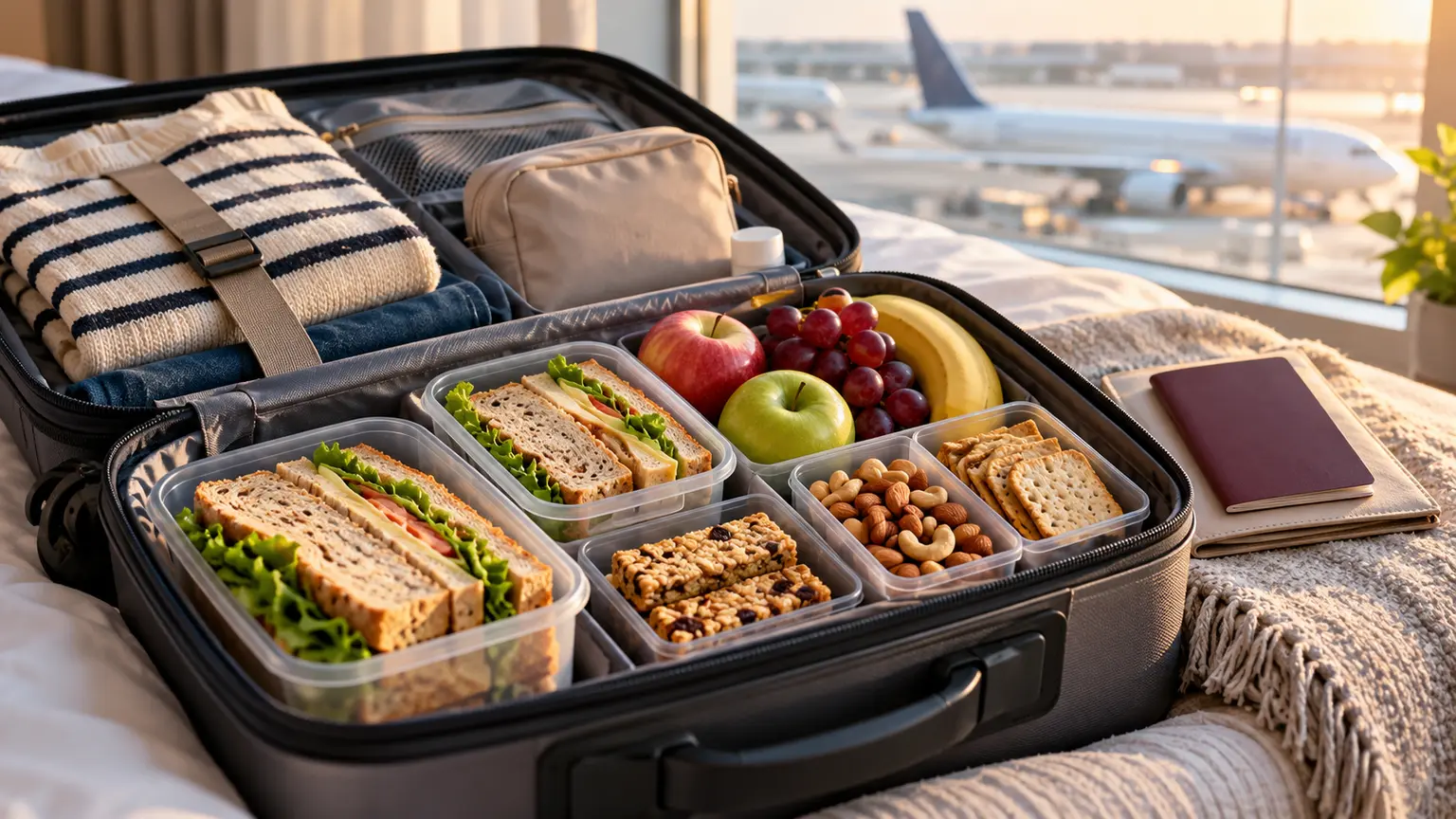
Pack food in compact, leakproof containers, separate liquids from solids, and keep items that may need inspection easy to reach. Good organization reduces mess and makes security checks easier to manage.
A practical packing routine is:
A compact container should fit comfortably inside the permitted cabin bag without making it difficult to access travel documents or other essentials. The guide to travel backpacks can help with choosing a bag that accommodates food alongside ordinary travel equipment.
The most practical airplane foods are easy to carry, relatively tidy, and safe to store for the expected journey. Shelf-stable snacks are usually simpler than meals that require refrigeration.
Good options include:
For a long international flight, commercially packaged shelf-stable products can be easier to manage than homemade meals containing meat, dairy, or eggs. They are not automatically exempt from customs controls, but they generally create fewer storage problems.
Some airlines also restrict the serving or consumption of particular foods for operational or allergy-related reasons. Follow cabin crew instructions if such a restriction is announced.
Carry-on baggage is generally better for food that will be eaten during the journey. Checked luggage may be more suitable for larger permitted containers, but it does not eliminate customs restrictions or food-safety risks.
The best choice depends on how the food will be used:
A checked suitcase can experience long periods without reliable temperature control. Large containers of liquid food may also leak because of handling or imperfect seals.
The most frequent errors involve misunderstanding liquid classifications, assuming airport rules are universal, and forgetting customs restrictions. These mistakes can affect even experienced travelers.
One problem is treating every food as a solid. Peanut butter, yogurt, jam, and hummus may be ordinary groceries, but security authorities often classify them as restricted liquids or pastes.
Another is assuming that new airport screening technology has removed liquid limits everywhere. London Heathrow Airport and Dublin Airport permit larger containers, but that does not mean a connecting or return airport will do the same.
A third mistake is forgetting food at the international border. An apple bought for the flight can become a prohibited agricultural import if it remains in a bag upon arrival.
Food can also trigger additional screening without being prohibited. Officers may inspect dense packages, powders, or containers that interfere with clear baggage scans. Passengers who are separately selected for enhanced checks may face a different process, as explained in the guide to SSSS on a boarding pass.
Finally, food safety is easy to overlook when flights are delayed. A meal that was safe when packed may no longer be safe after several hours without refrigeration.
The most reliable packing decision is to prioritize simple, solid snacks and verify anything liquid, perishable, or intended to cross an international border.
For most travelers, the answer to whether food is allowed on a plane is reassuring: ordinary solid snacks and meals are usually permitted. The main precautions concern food consistency, departure-airport liquid limits, and restrictions on importing agricultural products.
A homemade sandwich, a packet of crackers, and a few shelf-stable snacks will generally create fewer problems than soup, yogurt, large jars of spreads, or meals requiring refrigeration. On international trips, food should also be checked against the destination's customs rules before it is packed.
The final preflight check should cover every airport where security screening may occur, the operating airline's cabin baggage policy, and the destination country's food import regulations. Those three checks resolve most uncertainties before they become problems at the airport.
Yes, most solid foods can be carried onto an aircraft, but specific ingredients, liquid restrictions, and international customs rules may change what is permitted. These answers cover some of the most common individual food questions.
Yes. Crackers, cookies, chips, granola bars, and most other solid snacks are generally allowed through airport security. International agricultural restrictions may still apply to uneaten products.
Yes. Homemade and store-bought sandwiches are normally permitted in carry-on baggage. Meat, dairy, and fresh vegetable fillings may be restricted when entering another country.
Yes, fresh fruit is generally allowed through security on many domestic flights. However, international customs and agricultural regulations may prohibit certain fruits or require declaration and inspection.
Yes, but yogurt is generally treated as a liquid or gel. At checkpoints enforcing standard liquid limits, non-exempt containers usually cannot exceed 100 mL.
Yes, in quantities that comply with the applicable liquids rules. Under the standard TSA system, a large jar is not permitted through carry-on security, even when only partly full.
Yes, cooked solid meat can generally pass airport security when properly packed. It must be kept at a safe temperature, and international destinations may prohibit its importation.
Yes. TSA permits pizza, cakes, and pies as solid foods. Oversized packaging, liquid accompaniments, or fragile decorations may require additional attention.
Yes. An empty reusable bottle can generally pass through security and be filled afterward. Bottled water purchased after screening is normally permitted onboard, while liquid limits for water carried through security depend on the airport.
Yes, if it complies with the departure airport's liquid rules or qualifies for an applicable exemption. At standard 100 mL checkpoints, a large container of soup will not normally pass carry-on screening.
Yes, many foods can travel in checked baggage, including larger permitted containers of sauces and spreads. Customs restrictions, dangerous-goods rules, packaging requirements, and food safety still apply.
Yes. Baby formula, breast milk, and baby food often qualify for exemptions from ordinary liquid limits. Quantities, documentation, and screening procedures vary between countries.
It depends on the destination, but many countries require declarations for agricultural and food products. The United States and New Zealand have broad food declaration requirements, and Australia imposes strict biosecurity controls.
Yes. Security officers can reject food that violates liquid limits, poses a security concern, or cannot be cleared through screening. A food item being commercially packaged does not guarantee that it will pass.
Yes. Passengers can generally eat their own permitted food onboard, subject to airline policies and crew instructions. Foods with strong odors, complicated packaging, or significant spill risks are less suitable for a shared cabin.






The Canary Islands stay pleasantly warm in November, but choosing the wrong coast can mean clouds instead of beach weather. Compare all seven main islands, discover where swimming and hiking are best, and find the right resort,...
 October 28, 2026
 0
Pack a small paper activity folder for a family trip: coloring stories, mazes, counting games and a simple travel journal, with free printable examples.
October 27, 20260
Vienna's Christmas markets begin opening November 6, 2026, but not every market deserves equal time. Compare palace settings, traditional craft stalls, family activities, quieter neighborhoods, and costs, then plan a route that...
October 27, 20261
Bluetooth headphones usually work perfectly well on a plane, including after airplane mode is switched on. The less obvious problem is connecting them to seatback entertainment. Here is what works, what may not, and what to pac...
October 17, 2026100Bluetooth headphones usually work perfectly well on a plane, including after airplane mode is switched on. The less obvious problem is connecting them to seatback entertainment. Here is what works, what may not, and what to pac...
October 17, 2026100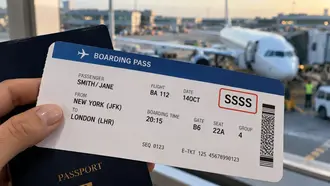
Four letters on a boarding pass can change the airport routine. This guide explains the SSSS boarding pass meaning, what secondary screening may involve, whether TSA PreCheck helps, how early to arrive and what to do if SSSS fo...
October 16, 202652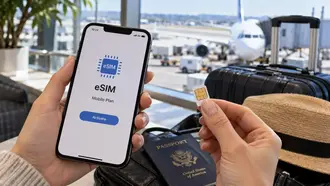
An eSIM can get you online before you leave the airport, while a local physical SIM may offer better value or a real local number. This eSIM vs physical SIM travel guide explains which option wins for short trips, long stays an...
October 8, 202661
London makes it easy to plan a memorable date – and surprisingly easy to overcomplicate one. These 27 date ideas cover free afternoons, first meetings, rainy days, big anniversaries and unusual nights, with practical ways to ch...
October 8, 202675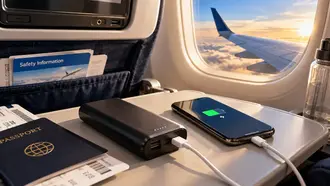
Taking a power bank on a plane is still allowed in 2026, but the rules have changed. A new two-power-bank limit, strict carry-on requirements and airline-specific restrictions mean travelers should check more than the mAh numbe...
October 6, 202675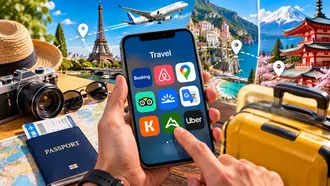
A phone full of travel apps does not necessarily make a trip easier. These are the best travel apps in 2026 for the jobs that actually matter – from finding flights and building an itinerary to navigating offline, translating m...
October 1, 2026129
The wrong London hotel can add an hour of Tube travel to every day. This guide compares 10 areas that actually work for visitors, from walkable Covent Garden to museum-friendly South Kensington and Heathrow-ready Paddington.
September 22, 2026214
Chicago has enough great coffee to turn café-hopping into a full day out. These 12 Chicago coffee shops range from pioneering specialty roasters to tiny neighborhood favorites – plus there is a realistic route for tasting them ...
September 22, 202679
Swiss food is much bigger than fondue and chocolate. Travel from Zurich to Valais and Ticino and the menu changes completely. These 15 dishes show what to order, where each specialty makes sense and which famous foods are actua...
September 21, 2026115
Glasgow food is much bigger than haggis. The city mixes old-school Scottish comfort dishes, legendary breakfast rolls, chippy culture, South Asian flavours and ambitious modern cooking. Start with these 15 foods and the neighbo...
September 19, 202687
Looking to shine a spotlight on your project? LitiTravels has you covered! We offer article-based promotion, manage branded blogs on our platform, drive engagement through our social media channels, and create content that delivers real results. Get in touch today and let’s make your brand stand out!
The best travel guides, trip planning tips and cultural discoveries from the LitiTravels team — once a month, straight to your inbox.