Home Travel PlanningHow Much Cash Should You Carry Internationally? A Practical Guide
Travel PlanningHow Much Cash Should You Carry Internationally? A Practical Guide
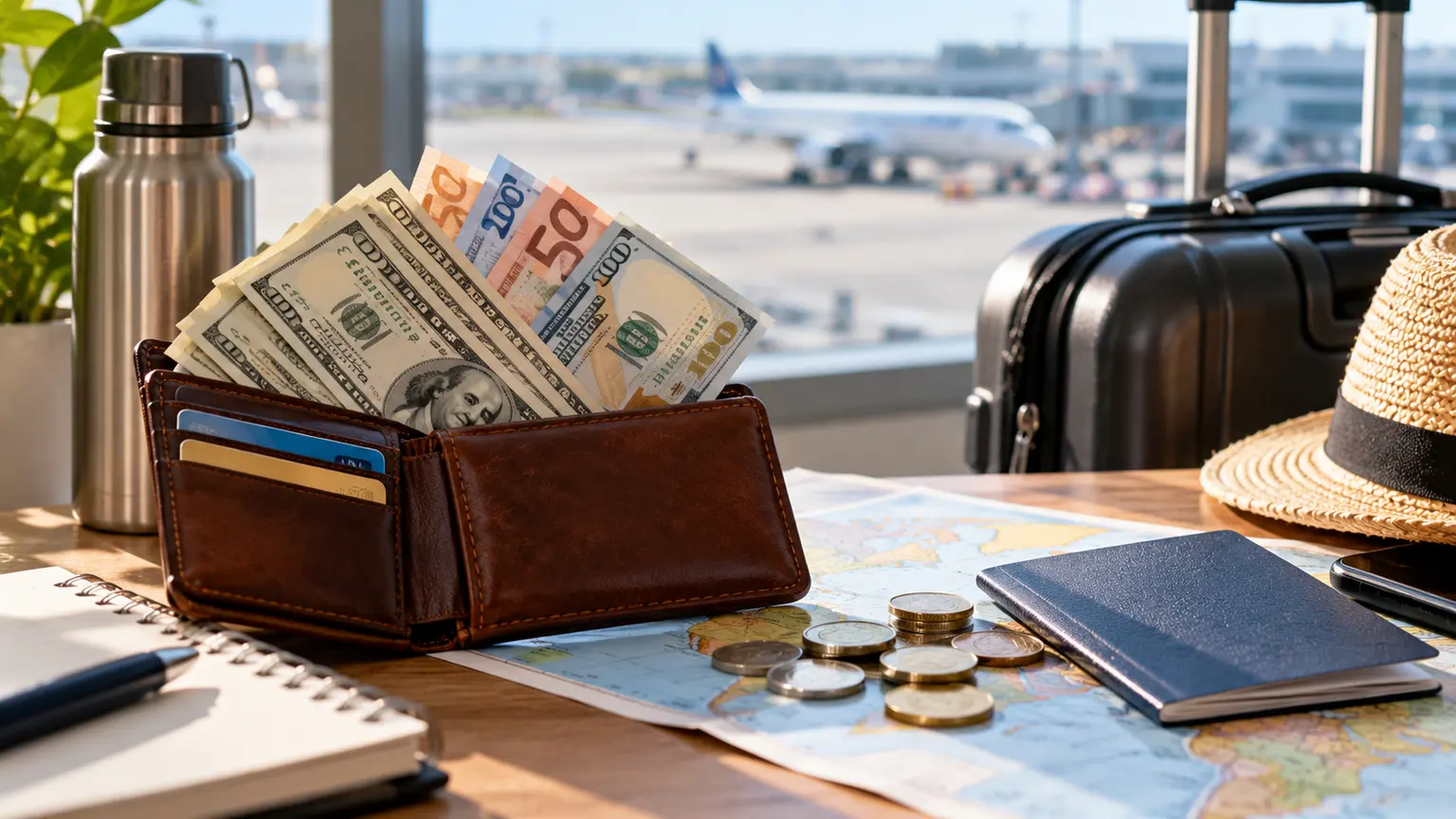
For most international trips, the safest approach is to carry enough cash for the first one or two days, keep a separate emergency reserve, and use cards or ATMs for the remaining expenses. In a destination where electronic payments are common, that might mean the equivalent of US$50–150. In a cash-dependent destination, several hundred dollars' worth of local currency may be more practical.
The exact amount matters less than what the money needs to cover. A traveler arriving at a major European airport with a prepaid hotel and reliable transportation has different cash requirements from someone heading to a remote village where ATMs are scarce.
There is also a legal distinction that travelers sometimes miss. The amount worth carrying for everyday expenses has little to do with the amount that triggers a customs declaration. Understanding both can prevent expensive mistakes before a trip even begins.
The starting point is enough cash for immediate expenses, expected cash-only purchases, and a modest emergency. There is no universal daily allowance because payment habits, local prices, and access to banking services differ substantially between destinations.
For many travelers, carrying the equivalent of US$50–200 in local currency at the beginning of a trip provides reasonable flexibility. That is an illustrative planning range, not an official recommendation or a guarantee that the amount will cover every destination.
A city with contactless transit, widespread card acceptance, and accessible ATMs may require very little physical money. A rural destination, an organized tour with cash-paid extras, or a journey through multiple smaller towns may require considerably more.
The most useful question is not simply how much money the vacation costs. It is which expenses cannot reliably be paid by card, and how long the traveler might need to manage without another withdrawal.
A practical cash allowance depends on the destination's payment infrastructure and the activities planned. The ranges below show possible starting amounts for one adult, expressed in US-dollar equivalents for comparison rather than as a recommendation to carry U.S. banknotes.
|
Travel situation |
Illustrative starting cash |
What it may cover |
|
Card-friendly city break |
US$50–150 equivalent |
Small purchases, tips where customary, unexpected transport expenses. |
|
Mixed cash-and-card destination |
US$100–250 equivalent |
Markets, local transportation, small restaurants, and an emergency reserve. |
|
Rural or cash-dependent trip |
US$200–400+ equivalent |
Several days of cash-only expenses when ATM access is uncertain. |
|
All-inclusive resort |
US$30–100 equivalent |
Cash-only extras, local tips where appropriate, and small purchases outside the property. |
|
Multi-country journey |
Enough for the first destination |
Arrival expenses and the first reliable opportunity to obtain another currency. |
These examples assume that major expenses such as airfare and accommodation have already been paid or can be settled electronically. A traveler paying a guesthouse, guide, or driver in cash needs to add those confirmed charges separately.
Carrying more money is not automatically safer. If an ATM is easily accessible, replenishing a smaller cash supply can reduce the amount exposed to theft or loss. When withdrawals are difficult or costly, bringing more cash may be justified.
Enough to reach the accommodation, buy essential food or water, and manage an unexpected delay is a sensible first-day allowance. The amount should be based on actual arrival arrangements rather than an arbitrary fixed sum.
Consider a traveler landing late at night. Even if the destination normally accepts cards, the airport ATM might be unavailable, a driver might request cash, or the hotel might not provide meals after a certain hour.
Before departure, identify the likely cost of transportation from the airport, the availability of food nearby, and whether the hotel accepts the intended payment card. The first night's cash requirements may be higher than those of an ordinary sightseeing day.
A separate reserve should cover at least one realistic disruption, such as transportation to a safe place and basic expenses until another payment method becomes available. Its value should reflect local costs, particularly when a long taxi ride or overnight delay would be expensive.
For a card-friendly urban trip, a reserve equivalent to US$50–100 may be a useful planning example. In remote areas, the reserve may need to cover considerably more, especially if accommodation, fuel, or onward transport cannot be paid electronically.
Emergency cash is not intended to replace a properly funded bank account, an available backup card, or travel insurance. It provides temporary access to essential services when another payment method fails.
The most reliable calculation separates cash-only expenses from the rest of the travel budget. It also accounts for how frequently money can be withdrawn safely.
A useful formula is:
Starting cash = Arrival expenses + (Daily cash-only spending × Days until the next reliable withdrawal) + Emergency reserve.
Consider a seven-day international city trip with the following hypothetical expenses:
The calculation is US$30 + (US$20 × 2) + US$70 = US$140.
This traveler could reasonably start with approximately US$140 worth of local currency, assuming the remainder of the trip can be financed through cards and later withdrawals.
Now consider a five-day rural journey where daily cash expenses are estimated at US$45, arrival transport costs US$35, and a US$100 emergency reserve is appropriate. If no reliable ATM is available during the journey, the estimated cash requirement becomes US$35 + (US$45 × 5) + US$100 = US$360.
These are budgeting examples rather than destination price estimates. The calculation changes substantially when accommodation or organized activities must also be paid in cash.
Usually not. When cards and banking services are dependable, most travelers can leave the greater part of their spending money in their accounts rather than physically carrying it.
Before calculating cash requirements, separate expenses into three groups: prepaid costs, card-payable costs, and costs that genuinely require banknotes or coins.
The distinction becomes especially useful for families because accommodation, transfers, dining, and attractions can create a much larger total than expected. A broader look at the real cost of affordable family vacations shows why the final travel budget needs to include more than hotel prices and airfare.
Cash planning should come after these expenses have been identified. Otherwise, travelers risk carrying money they will never need or overlooking important payments that cannot be made by card.
Exchanging a modest amount before departure can be convenient, but it is not always the least expensive option. The better choice depends on local ATM access, exchange rates, transaction fees, and when the money will first be needed.
Some travelers prefer to arrive with enough local currency for transportation and essential purchases. Others withdraw their initial cash from an airport ATM, particularly when a suitable bank-operated machine is available and their debit card has favorable international terms.
A home-country bank or established currency provider may offer more predictable pricing than an airport exchange counter. However, the final cost must include the quoted exchange rate, service charges, delivery fees, and any minimum order requirement.
Airport exchange counters can be useful when there is no practical alternative, but convenience sometimes comes with a less favorable exchange rate. Compare the actual amount of foreign currency received rather than relying on advertisements for commission-free exchange.
An airport ATM can offer another option, provided the card works internationally and the total withdrawal cost is reasonable. In all cases, having a plan for the first few hours is more important than finding a theoretically perfect exchange rate.
Local currency is generally the more dependable choice for everyday spending. U.S. dollars are accepted in some destinations, but that does not make them a universal international payment method.
A vendor who accepts foreign banknotes may apply an unfavorable exchange rate or return change in local currency. Other businesses may refuse foreign money entirely, even in tourist areas.
There are exceptions, including destinations that officially use the U.S. dollar and locations where another currency is widely accepted in practice. Travelers should verify local payment arrangements rather than assuming that dollars, euros, or British pounds can be spent everywhere.
Also consider denomination size. Smaller local banknotes are more convenient for taxis, markets, public restrooms, and minor purchases where merchants may not have change for a large bill.
There is no single worldwide limit on carrying cash across international borders. Many countries require travelers to declare cash or specified monetary instruments once their combined value reaches a reporting threshold.
A declaration threshold is not necessarily a maximum permitted amount. In several countries, travelers may legally transport more money if they complete the required declaration and comply with other applicable laws.
The thresholds also differ in important ways. Some apply when an amount reaches a stated figure, while others apply only when it exceeds that figure.
The following table summarizes selected official requirements.
|
Country or region |
Declaration threshold |
Important detail |
|
United States |
More than US$10,000 |
Applies to cash and covered monetary instruments entering or leaving the country, including applicable family or group totals. |
|
European Union |
€10,000 or more |
Applies when entering or leaving the EU, including qualifying equivalents in other currencies and specified assets. |
|
Great Britain |
£10,000 or more |
Applies when carrying cash between England, Scotland, or Wales and a country outside the UK. |
|
Canada |
C$10,000 or more |
Applies to Canadian or foreign currency and covered monetary instruments entering or leaving Canada. |
|
Australia |
A$10,000 or more |
Applies to the combined value of covered monetary instruments entering or leaving Australia.
|
|
Japan |
More than ¥1 million |
Applies to cash and other covered means of payment entering or leaving Japan. |
Important: Northern Ireland has separate cash declaration arrangements, including a €10,000 threshold for certain movements. Travel between EU countries can also be subject to national reporting requirements even when the EU's external-border declaration rules do not apply.
Furthermore, the legal definition of cash may extend beyond ordinary banknotes and coins. Certain checks, bearer instruments, and even specified gold assets can count toward a reportable total, depending on the jurisdiction.
For travel involving several countries, check the rules at departure, arrival, and any intermediate border crossing where customs requirements apply. The rules of the final destination are not the only ones that matter.
In the United States, covered monetary instruments carried by a family or group traveling together can be counted collectively for reporting purposes. Dividing a reportable amount among travelers does not automatically eliminate the declaration requirement.
Australia also prohibits arrangements designed to avoid reporting obligations by splitting money among travelers or across multiple journeys.
Rules for individual travelers and groups are not identical worldwide. It is important to check the specific reporting system rather than assuming every country uses a per-person allowance.
Failing to declare a reportable amount can lead to delays, penalties, seizure of funds, or further investigation. The consequences depend on local law and the circumstances involved.
A traveler may also be asked about the origin, ownership, and intended use of substantial funds. Where significant cash transportation is necessary, supporting records can help explain a legitimate transaction, although documentation does not replace a required declaration.
These rules are separate from immigration requirements to demonstrate sufficient funds for a visit. A country may ask for evidence of financial resources without requiring the traveler to carry that amount in physical cash.
A combination is usually more flexible than relying exclusively on either payment method. Cards are often more convenient for major purchases, while cash remains valuable for smaller transactions and situations where electronic payments are unavailable.
A debit card, a credit card, and a modest cash supply serve different purposes. They should be treated as complementary tools rather than interchangeable options.
Cash is particularly useful where card acceptance is limited or unreliable. It can also provide a practical backup during temporary network failures.
Situations worth checking before departure include:
Not every destination requires cash for these expenses. In some places, public transportation, parking, and even market purchases are increasingly electronic.
The objective is to identify the exceptions for the particular journey, not assume that every international trip requires a large cash budget.
Cards are particularly convenient for hotels, flights, car rentals, major purchases, and businesses with reliable payment terminals. They also reduce the need to transport large amounts of money and can offer protections unavailable with physical cash.
However, card acceptance should be confirmed for essential reservations. Some hotels and rental-car companies require a qualifying credit card and may place a temporary authorization hold on available credit.
A debit card may not be accepted under the same conditions. A card that is suitable for restaurant purchases may therefore be insufficient for checking into a hotel or collecting a rental vehicle.
Travelers should also compare foreign transaction charges and confirm that their cards are supported in the destination country.
Bank-operated ATMs are often a practical way to obtain local currency after arrival. However, withdrawal fees, issuer charges, conversion markups, and transaction limits can affect the final cost.
A card advertised as having no foreign transaction fees does not necessarily provide free cash withdrawals. The ATM operator may charge a separate fee, and the bank may apply its own withdrawal conditions.
Choose the local currency and normally decline an ATM's offer to perform currency conversion. This allows the card issuer or payment network to process the conversion instead of accepting the ATM operator's quoted rate.
The alternative is called dynamic currency conversion. It may appear as a request to charge the withdrawal in the currency of the cardholder's home country.
Visa explains that these offers can include additional charges or exchange-rate markups, as detailed in its guidance on dynamic currency conversion.
For example, someone withdrawing Japanese yen with a euro-denominated card may be asked whether to complete the transaction in euros or yen. Choosing yen generally avoids the ATM operator's conversion offer, although normal issuer fees may still apply.
The same principle applies when a restaurant or store offers to charge a purchase in the visitor's home currency.
A larger withdrawal can reduce the impact of a fixed fee, but only if the extra cash will actually be used. The calculation must balance transaction costs against the risks of carrying money unnecessarily.
Suppose an ATM charges a hypothetical fixed fee of US$5 equivalent. On a US$50 withdrawal, that fee represents 10% of the amount received. On a US$200 withdrawal, it represents 2.5%, excluding any other charges.
The second transaction is more efficient on a percentage basis. Nevertheless, withdrawing US$200 would make little sense if the traveler expects to spend only US$40 in cash before leaving the country.
Checking the withdrawal limits and fee structure before departure can prevent unnecessary repeat transactions.
A credit card cash advance is generally better reserved for situations where other options are unavailable. It may incur an advance fee, an ATM charge, and interest that begins immediately.
The U.S. Consumer Financial Protection Bureau explains that credit card cash advances can involve higher interest costs than ordinary purchases.
A debit card connected to an adequately funded account is often the more appropriate tool for routine ATM withdrawals, provided its international fees and access conditions are acceptable.
Trip length matters less than the expected cash spending between withdrawals. A two-week vacation in a card-friendly city may require less cash at any one time than a three-day journey through an area without banking services.
For a seven-day trip, calculate the cash required until the next reliable ATM stop rather than multiplying every day's full travel budget by seven.
For a two-week trip, the same approach works if cash can be replenished safely. If the itinerary includes several remote days, calculate those separately and withdraw or exchange enough money before leaving an area with reliable financial services.
The distinction is especially important for expensive destinations. A traveler researching the cost of a trip to New Zealand may discover that accommodation, transportation, and activities account for most of the budget. That does not mean the equivalent amount must be carried as banknotes.
The share that needs to be physical cash depends on how those services will actually be paid.
For multi-country itineraries, avoid accumulating large balances of currencies that will be difficult to spend elsewhere. Local ATM withdrawals can be more practical than obtaining the entire journey's cash supply in advance, assuming the relevant cards work in each destination.
The safest arrangement is to limit daily cash exposure and keep backup funds separate from the primary wallet. Carrying a large amount in one place creates an unnecessary single point of failure.
The Federal Deposit Insurance Corporation's travel guidance also advises against traveling with excessive cash and recommends preparing backup payment options.
Keep the amount needed for routine purchases in a secure, easily accessible place. Store additional money separately where it is reasonably protected from theft, loss, and unauthorized access.
The following precautions can reduce avoidable risks:
These measures cannot eliminate theft or loss, but they reduce the likelihood that one incident will leave a traveler without usable funds.
Traveling with only one payment card creates an avoidable vulnerability. A damaged, stolen, blocked, or incompatible card can become a serious problem when immediate expenses need to be paid.
Where possible, use backup cards from different issuers or accounts, and consider different payment networks. Store them separately and confirm that at least one alternative is usable at the destination.
Mobile wallets are convenient but should not be the sole fallback. A phone can be lost, run out of power, or encounter a payment terminal that does not support contactless transactions.
First, identify whether the issue is a lack of physical cash or a broader inability to access funds. The solution depends on whether bank cards, accounts, and communications services are still functioning.
If the primary ATM refuses a withdrawal, check the card's international settings, available balance, transaction limits, and any error message before repeatedly trying new machines.
A different bank-operated ATM may work, but repeated declined withdrawals can sometimes trigger additional security measures. Contact the card issuer through an official channel if access remains blocked.
If cards have been lost or stolen, freeze or report them promptly and investigate the issuer's emergency replacement or cash-assistance options. An established money transfer service may be another possibility, subject to identification requirements and local availability.
Travelers who depend on mobile banking should also consider connectivity. A suitable travel eSIM, offline navigation, and the most useful travel apps for international trips can simplify access to banking information and help locate services when plans change.
Some banks require app-based authentication or an SMS verification code, so account access should be tested before departure. If urgent financial access is unavailable, contacting a trusted person, financial institution, or appropriate consular service may help identify possible next steps.
The most expensive cash-related travel problems often come from assumptions rather than complicated financial decisions. A small amount of preparation can prevent many of them.
The mistakes worth avoiding include:
A successful payment plan does not depend on predicting every expense precisely. It provides enough flexibility to handle ordinary spending and a realistic disruption without exposing the full travel budget.
A final financial check should cover both access to money and the circumstances in which cash will be necessary. This takes much less effort than resolving a payment problem after arriving abroad.
Before leaving, confirm the following:
The central principle is straightforward: carry enough cash to stay flexible, but not so much that losing it would threaten the entire trip.
For a card-friendly destination, starting with the equivalent of US$50–200 may be sufficient, depending on arrival expenses and expected cash purchases. Bring more when accommodation, transportation, or activities require cash and ATM access is limited.
US$500 equivalent can cover substantial small expenses in many destinations, but it is not a universal travel budget. Whether it is sufficient depends on local prices, prepaid reservations, trip length, and the availability of cards and ATMs.
Yes, some countries permit travelers to carry more than US$10,000 or its equivalent, provided applicable reporting requirements are met. Thresholds and restrictions differ by country, so both departure and destination rules must be checked.
Yes, visiting a destination with widespread electronic payments may be possible without physical cash. However, a modest reserve is useful when payment terminals fail, a card is rejected, or an unexpected expense cannot be paid electronically.
Withdrawing local currency abroad can be convenient when reliable ATMs and favorable banking terms are available. Bringing some currency in advance is helpful when immediate arrival expenses cannot be paid by card or ATM access is uncertain.
Generally, yes. Customs systems commonly calculate the combined value of covered currencies and monetary instruments using the applicable local-currency equivalent. The exact definitions and conversion rules depend on the jurisdiction.
Splitting spending money across secure locations can reduce the financial impact of losing one wallet. However, splitting cash among travelers must not be used to evade reporting obligations, and some countries aggregate amounts carried by traveling families or groups.
A small emergency amount may be enough, and some trips can be completed without cash at all. Confirm whether public transportation, accommodation, local businesses, and emergency services accept the payment methods available.
Convert larger unused balances when the exchange cost is reasonable and the currency is unlikely to be needed again. Small remaining amounts may be spent on legitimate final purchases or kept for a future visit, provided local export rules allow it.
Not necessarily. Some destinations require visitors to demonstrate sufficient financial resources, but acceptable evidence may include bank statements, payment cards, sponsorship documents, or other records. The immigration requirement is separate from customs cash declaration rules and must be checked for the specific destination and visa category.
Neither method is universally safer. Cash works without a payment network but is difficult to recover if lost or stolen, while cards may offer security controls and dispute procedures but can be blocked or rejected. Combining a limited cash reserve with reliable payment cards provides greater flexibility.





An airport Wi-Fi outage or a dead roaming connection should not leave your reservation details out of reach. This international travel documents checklist explains exactly which files to download, which originals to carry, and ...
 October 29, 2026
 1

Copenhagen has more to offer than colorful harbor houses and famous landmarks. This guide shows which attractions deserve your time, what they cost, and how to explore the city in one, two, or three days without unnecessary det...
October 29, 20260
A homemade sandwich can usually pass airport security, but a jar of peanut butter or a frozen drink might not. Food rules also change between countries and airports. Find out what belongs in your carry-on, what needs special sc...
October 28, 20261
The Canary Islands stay pleasantly warm in November, but choosing the wrong coast can mean clouds instead of beach weather. Compare all seven main islands, discover where swimming and hiking are best, and find the right resort,...
October 28, 20260An airport Wi-Fi outage or a dead roaming connection should not leave your reservation details out of reach. This international travel documents checklist explains exactly which files to download, which originals to carry, and ...
October 29, 20261
Pack a small paper activity folder for a family trip: coloring stories, mazes, counting games and a simple travel journal, with free printable examples.
October 27, 20260
A passport can still be legally valid and still get you denied boarding. The passport 6-month rule varies by destination, and some countries require three months, 30 days or only enough validity for your stay. Here is how to ch...
October 15, 202669
A power bank belongs in your carry-on, a pocket knife does not, and peanut butter counts as a liquid at TSA security. Before closing your suitcase, check 25 items travelers still pack in the wrong bag and what to do with them i...
October 14, 202657
The best honeymoon destinations in the world are not simply the places with the prettiest beaches. This 2026/27 shortlist compares 15 romantic trips by season, budget, privacy, travel time and what couples can realistically do ...
October 13, 202665
A canceled flight can turn an airport into chaos within minutes, but the longest customer-service line is not always the best place to start. This step-by-step guide explains how to get rebooked faster, protect your refund righ...
October 12, 202675
The best travel backpack is not necessarily the biggest or most expensive. These 2026 picks cover budget city breaks, European low-cost flights, week-long trips and premium one-bag travel, with practical sizes and prices to hel...
October 9, 2026119
A wrong name does not always mean buying another flight. Learn when you can change the name on a plane ticket, why a typo differs from transferring a ticket, how the U.S. 24-hour rule can help and what to do before contacting t...
October 7, 202662
Paris and Venice deserve their reputations, but they are not automatically the right romantic city for every couple. These 17 destinations reveal where to go for food, sunsets, culture, quiet streets, a honeymoon or an unforget...
October 4, 202693
Geneva looks polished and compact, but trying to see everything in two days can waste more time than it saves. These 17 things to do in Geneva show what deserves priority, what can be skipped when time is tight, and how to turn...
October 2, 202660
Looking to shine a spotlight on your project? LitiTravels has you covered! We offer article-based promotion, manage branded blogs on our platform, drive engagement through our social media channels, and create content that delivers real results. Get in touch today and let’s make your brand stand out!
The best travel guides, trip planning tips and cultural discoveries from the LitiTravels team — once a month, straight to your inbox.