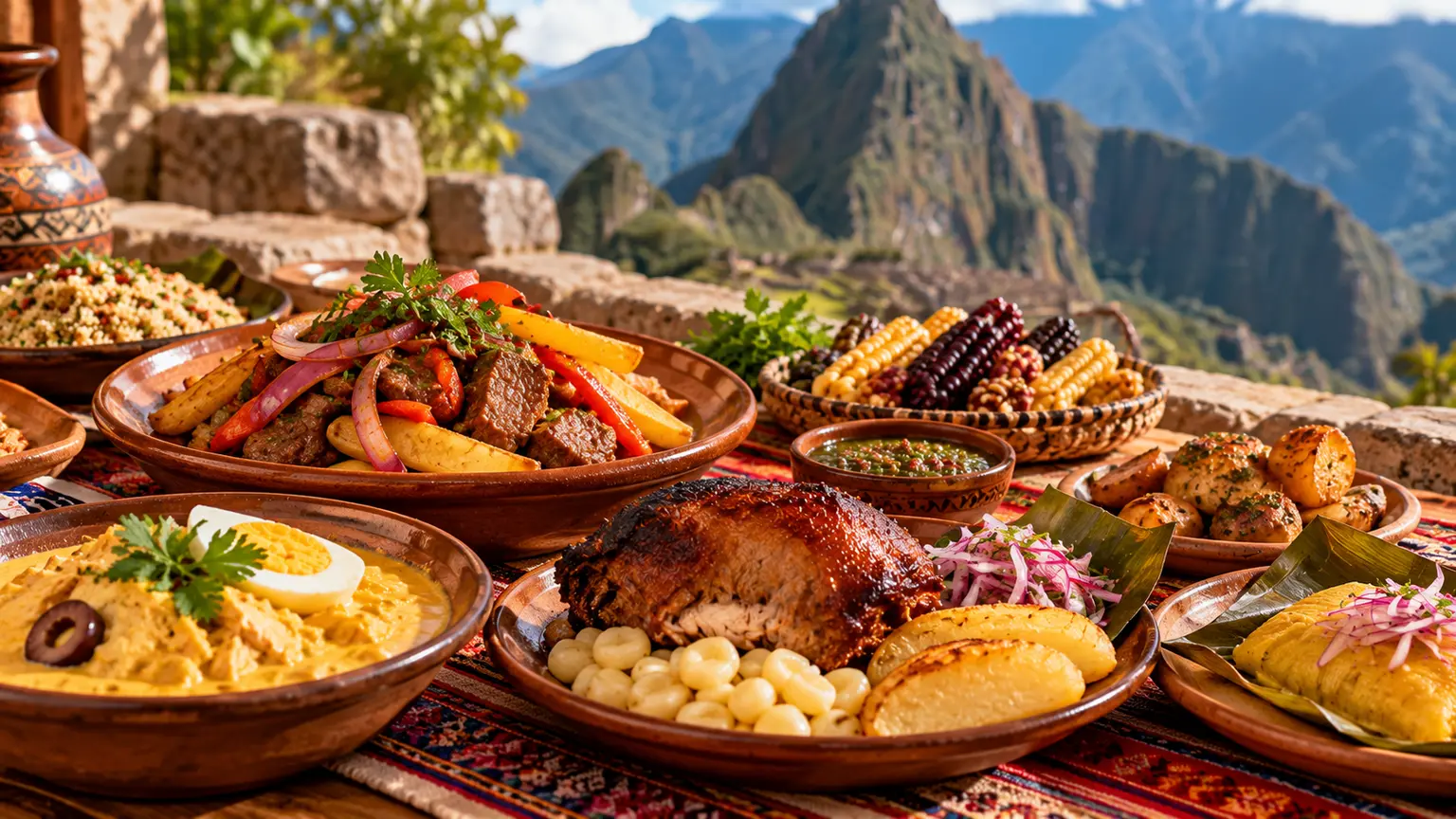
Home Cultural DiscoveriesPeruvian Food Beyond Ceviche: Regional Dishes Worth Traveling For
Cultural DiscoveriesPeruvian Food Beyond Ceviche: Regional Dishes Worth Traveling For
Peruvian food is much more than ceviche. In Lima, beef sizzles in a hot wok for lomo saltado, while street vendors grill anticuchos over charcoal. In the Andes, families prepare pachamanca beneath heated stones, and in the Amazon, fragrant rice and chicken arrive wrapped in broad green leaves.
These dishes reflect a country with remarkably different food traditions. The Pacific coast, high-altitude valleys, southern mountains, and tropical rainforest each have their own ingredients, cooking techniques, and specialties. Chinese, Japanese, Spanish, and African influences have also shaped Peruvian cooking, often blending with Indigenous ingredients rather than replacing them.
For travelers, the difference is immediately practical. Ordering the same familiar dishes in every city means missing regional foods that may be difficult to find elsewhere. A meal in a traditional Arequipa picantería offers a very different experience from lunch at a Lima chifa restaurant or a market in Cusco.
This guide covers the traditional foods in Peru worth trying beyond ceviche, where to find them, what to expect from their flavors, and how to build regional food experiences into an actual trip.
The best way to explore traditional Peruvian food is by region. Coastal cooking features seafood, rice, and complex sauces, while the Andes emphasize potatoes, corn, grains, and slow-cooked meats. Amazonian dishes rely heavily on plantains, river fish, cassava, tropical herbs, and leaf-wrapped preparations.
Lima brings many of these traditions together, but regional specialties often have their strongest cultural context in the places where they developed.
The following comparison provides a quick introduction to the dishes worth looking for along a typical Peru itinerary.
|
Traditional dish |
Main ingredients |
Best region to try it |
What to expect |
|
Lomo saltado |
Beef, onions, tomatoes, soy sauce, potatoes |
Lima |
Savory stir-fry with fries and rice |
|
Ají de gallina |
Shredded chicken, yellow chili, creamy sauce |
Lima |
Mild to moderately spicy, rich and creamy |
|
Causa limeña |
Seasoned mashed potatoes, avocado, filling |
Lima |
Chilled, tangy, soft and creamy |
|
Anticuchos |
Marinated beef heart |
Lima |
Smoky grilled skewers |
|
Tacu tacu |
Rice, beans, seasonings |
Lima and the coast |
Crisp outside, soft inside |
|
Arroz chaufa |
Fried rice, egg, soy sauce, meat or vegetables |
Lima and nationwide |
Chinese-Peruvian comfort food |
|
Arroz con pato |
Duck, rice, cilantro, local seasonings |
Chiclayo and Lambayeque |
Aromatic rice with tender duck |
|
Seco de cabrito |
Goat, cilantro, fermented corn drink |
Northern coast |
Rich, slow-cooked stew |
|
Shámbar |
Wheat, legumes, pork or other meats |
Trujillo |
Thick, hearty soup |
|
Rocoto relleno |
Stuffed rocoto pepper, meat, cheese |
Arequipa |
Rich, potentially very spicy |
|
Chupe de camarones |
River shrimp, potatoes, milk, vegetables |
Arequipa |
Substantial seafood soup |
|
Ocopa arequipeña |
Potatoes, cheese, herbs, peanuts |
Arequipa |
Creamy, herbaceous appetizer |
|
Pachamanca |
Meats, potatoes, corn, herbs |
Central and southern Andes |
Earthy, slow-cooked feast |
|
Cuy |
Roasted or fried guinea pig |
Cusco and the Andes |
Crisp skin and delicate meat |
|
Choclo con queso |
Large-kernel corn, fresh cheese |
Andean highlands |
Simple, filling snack |
|
Chiri uchu |
Guinea pig, chicken, corn, other ingredients |
Cusco |
Traditional cold festival dish |
|
Juane |
Seasoned rice, chicken, egg, leaves |
Peruvian Amazon |
Aromatic, portable rice meal |
|
Tacacho con cecina |
Mashed plantains, smoked pork |
Peruvian Amazon |
Smoky, salty and filling |
|
Patarashca |
Seasoned river fish wrapped in leaves |
Peruvian Amazon |
Moist, herb-scented fish |
|
Inchicapi |
Chicken, peanuts, cassava, cilantro |
Peruvian Amazon |
Rich, nutty soup |
Lima is the easiest starting point for a food-focused trip, but Arequipa and the Amazon offer some of the most distinctive regional experiences. Travelers with limited time should prioritize places already included in their itinerary rather than making long detours solely for one dish.
Lima is one of the best places to discover Peruvian food beyond ceviche because its restaurants combine coastal recipes with culinary traditions from across the country. A traveler can try historic home-style dishes, Chinese-Peruvian cooking, grilled street food, and contemporary interpretations within the same city.
For a first visit, the most useful approach is to eat at several types of establishments rather than choosing only internationally known restaurants.
Lomo saltado is a stir-fried beef dish prepared with onions, tomatoes, chili peppers, and soy sauce, typically served with rice and French fries. It is one of the easiest traditional Peruvian foods for international visitors to enjoy because the ingredients are familiar, even though the combination is distinctive.
The technique reflects Chinese influence on Peruvian cooking. Beef and vegetables are quickly cooked over high heat, creating a savory sauce while retaining some texture in the onions and tomatoes.
The pairing of rice and fries may seem unusual at first, but both have become central to the dish. The fries can be mixed into the sauce or served separately, depending on the restaurant.
Where to try it: Traditional restaurants in Lima, neighborhood lunch spots, and chifa restaurants across Peru.
Ordering tip: Ask whether the kitchen prepares it with freshly cooked beef and vegetables rather than reheating a large batch. The contrast between tender meat, lightly cooked vegetables, and crisp potatoes is part of its appeal.
Ají de gallina is shredded chicken served in a thick sauce made with ají amarillo, bread, milk, and other ingredients. It is generally accompanied by boiled potatoes, white rice, olives, and hard-boiled egg.
Despite its yellow chili base, the dish is not necessarily very hot. The creamy ingredients soften the heat, leaving a rich sauce with a recognizable pepper flavor.
Recipes differ between households and restaurants. Some use nuts, cheese, or additional seasonings, so visitors with food allergies should never assume the sauce contains only chicken and chili.
Where to try it: Traditional Lima restaurants and lunch menus throughout Peru.
Ordering tip: This is a useful introduction to Peruvian comfort food for travelers who prefer cooked dishes to raw seafood. Ask about the spice level if sensitive to chili.
Causa limeña is a layered dish made from seasoned mashed yellow potatoes, usually mixed with lime juice and ají amarillo. The filling may contain chicken, tuna, avocado, vegetables, mayonnaise, or other ingredients.
Unlike most potato-based dishes, causa is served cold. Its bright color, smooth texture, and tangy flavor make it a popular appetizer, particularly in Lima.
The filling changes its dietary suitability considerably. Some versions contain seafood, eggs, or dairy, while others can be prepared without meat.
Where to try it: Restaurants specializing in traditional Peruvian cuisine, seafood restaurants, and selected market food counters.
Ordering tip: Ask what the causa is filled with before ordering. A vegetable-filled version is not automatically vegan because mayonnaise or dairy products may still be present.
Anticuchos are skewers of marinated meat traditionally associated with beef heart, grilled over charcoal and commonly served with potatoes or corn. Their smoky flavor and tender texture make them a notable part of Peru's street-food culture.
The dish reflects African influence on Lima's culinary history, particularly the use of organ meats. Over time, anticuchos became an established part of Peruvian cooking rather than a specialty limited to particular communities.
The marinade commonly includes ají panca, vinegar, garlic, and spices. Beef heart may sound unfamiliar to some travelers, but properly prepared anticuchos are not inherently tougher than conventional cuts of beef.
Where to try it: Anticuchería restaurants and established evening food vendors in Lima.
Ordering tip: Confirm the type of meat. Restaurants may sell chicken or other skewers alongside traditional beef-heart anticuchos.
Tacu tacu combines cooked rice and beans into a seasoned mixture that is shaped and browned until the exterior develops a crust. It may be served alone or topped with meat, seafood, or an egg.
The dish is associated with Afro-Peruvian cooking and the practical use of previously prepared ingredients. Its appeal lies in the contrast between the browned exterior and the softer rice-and-bean center.
Some restaurants shape it into a compact oval, while others serve a larger portion beneath a sauce or protein.
Where to try it: Traditional restaurants in Lima, particularly those offering criollo or Afro-Peruvian dishes.
Ordering tip: For a vegetarian meal, ask what is used to season the rice and beans and whether the accompanying sauce contains meat stock.
Arroz chaufa is Peruvian fried rice commonly prepared with egg, green onions, soy sauce, and chicken, pork, beef, seafood, or vegetables. It is a central dish in chifa, the Chinese-Peruvian restaurant tradition.
Chifa developed through the interaction of Chinese immigrant cooking practices and Peruvian ingredients. Its dishes have become an ordinary part of eating in Peru, not simply a special-occasion fusion cuisine.
Arroz chaufa is a convenient choice for groups because it is widely available and can often be prepared with different proteins.
Where to try it: Chifa restaurants across Lima and other Peruvian cities.
Ordering tip: Portions can be generous. Ask whether a plate is intended for one person or suitable for sharing, and check whether a vegetable version contains oyster sauce or another animal-derived seasoning.
Northern Peru has a culinary identity distinct from Lima, with particularly strong traditions in Lambayeque, Piura, and La Libertad. Duck, goat, cilantro, locally grown squash, corn-based drinks, and substantial soups are important parts of its cooking.
The north is especially rewarding for travelers visiting Chiclayo or Trujillo, where regional dishes are easier to find in their traditional context.
Arroz con pato combines duck with rice colored and flavored by cilantro and other seasonings. It is especially associated with Lambayeque and the area around Chiclayo.
The duck is cooked with a mixture of aromatic ingredients, and some recipes incorporate dark beer or chicha de jora. The result is a deeply flavored rice dish that differs considerably from ordinary roasted duck served with plain rice.
The rice is an important part of the experience rather than a neutral side dish. Its color, seasoning, and texture reflect the preparation of the meat.
Where to try it: Traditional restaurants in Chiclayo and Lambayeque.
Ordering tip: This is a substantial main course and often a better lunch choice than a late-night meal for travelers planning a full day of sightseeing.
Seco de cabrito is a slow-cooked goat stew commonly flavored with cilantro, ají peppers, and chicha de jora. It is associated with northern Peru, particularly the coastal regions where raising goats has long been part of local agriculture.
The meat is simmered until tender, producing a concentrated sauce with herbal and savory flavors. Rice, beans, or cassava may accompany the stew.
Despite the Spanish word seco, meaning dry, the finished dish is not necessarily dry. The name refers to a culinary tradition rather than the absence of sauce.
Where to try it: Traditional restaurants and family-run eateries in Chiclayo, Lambayeque, and Piura.
Ordering tip: If goat is unfamiliar, this is a good dish to try in a restaurant specializing in northern cuisine rather than choosing it from a generic tourist menu.
Shámbar is a thick soup made with wheat, legumes, and various meats, traditionally associated with Trujillo. Its ingredients may include beans, chickpeas, fava beans, pork, and other meats.
The dish has a strong connection to the beginning of the working week. Serving shámbar on Mondays remains a recognizable northern food tradition, although it can be available on other days.
It is closer to a complete meal than a light starter. The grains and legumes give it substantial texture, while the meat and seasonings add richness.
Where to try it: Traditional restaurants and neighborhood lunch spots in Trujillo.
Ordering tip: Choose shámbar for lunch when it is freshly prepared. Travelers with gluten intolerance should note that wheat is a defining ingredient.
Andean food reflects the ingredients and cooking methods developed in Peru's mountainous regions. Native potatoes, large-kernel corn, quinoa, fava beans, herbs, and meats are central to many dishes, while soups and stews are especially important in colder high-altitude areas.
Cusco and the Sacred Valley offer convenient introductions, although the same dish may have different regional versions in Junín, Ayacucho, Puno, and other Andean destinations.
Pachamanca is a meal of marinated meats, potatoes, corn, beans, and other ingredients cooked using heated stones in an earth oven. It is one of the most distinctive traditional foods in Peru because the preparation is inseparable from its cultural setting.
The cooking process begins with stones heated by fire. Meat and vegetables are placed among them, covered with leaves and earth, and left to cook slowly.
The exact ingredients vary by region. Pork, chicken, lamb, beef, and guinea pig may appear, alongside potatoes, sweet potatoes, corn, and fava beans.
Pachamanca is associated with communal gatherings, celebrations, and connections between food, agriculture, and the land. Watching the preparation can be as interesting as eating the finished meal.
Where to try it: Traditional cooking experiences in the central Andes and selected rural communities around Cusco and the Sacred Valley.
Ordering tip: Look for an experience where the food is actually prepared using traditional heated stones. Some restaurants serve pachamanca-inspired dishes made in conventional kitchens, which can be enjoyable but provide a different experience.
Cuy is guinea pig prepared as a traditional meat dish in parts of the Peruvian Andes. It is commonly roasted or fried and served with potatoes, corn, and chili-based sauces.
Guinea pigs have a long history as domesticated animals and food sources in Andean communities. The dish is culturally significant and should be understood within that context rather than presented merely as an unusual challenge for tourists.
Preparation varies. In Cusco, roasted cuy is common, while cuy chactado, a flattened and fried version, is particularly associated with southern Andean cooking.
The flavor is often compared with poultry or other mild meats, although texture and preparation make a substantial difference.
Where to try it: Traditional restaurants in Cusco, the Sacred Valley, and Arequipa.
Ordering tip: Ask whether the dish is served whole or portioned. Some restaurants present the entire animal, which may surprise visitors unfamiliar with the preparation.
Choclo con queso is large-kernel Andean corn served with fresh cheese. It is one of the simplest regional foods in Peru and a useful introduction to ingredients that appear throughout highland cooking.
The kernels are noticeably larger and often less sweet than the corn familiar to many international visitors. The cheese adds saltiness and a creamy contrast.
The dish is commonly eaten as a snack rather than a full restaurant meal. Its simplicity makes the quality of the corn and cheese particularly noticeable.
Where to try it: Markets and established food stalls around Cusco and the Sacred Valley.
Ordering tip: Eat corn that has been freshly cooked and served hot. Travelers avoiding dairy can order the corn without cheese, provided no other toppings are added.
Chiri uchu is a cold dish associated with Cusco's religious and cultural celebrations, particularly Corpus Christi. It combines ingredients that can include guinea pig, chicken, dried fish, cheese, roasted corn, and other regional foods.
Its distinctive character comes from bringing several ingredients together rather than cooking them into one stew. The combination reflects the agricultural and cultural diversity of the Cusco region.
Chiri uchu is not necessarily an everyday restaurant dish. It becomes especially prominent during festivals and celebrations.
Where to try it: Cusco during the Corpus Christi period or at restaurants that specifically prepare traditional regional specialties.
Ordering tip: Ask about the ingredients before purchasing because it can contain several types of meat, fish, dairy, and eggs.
Arequipa has one of Peru's most recognizable regional food traditions. Its picanterías are restaurants associated with wood-fired cooking, local ingredients, substantial portions, and recipes passed through generations.
A meal in an Arequipa picantería can provide a more distinctive culinary experience than ordering an internationally familiar Peruvian dish from a general restaurant.
Rocoto relleno is a large rocoto chili pepper stuffed with seasoned meat and other ingredients, typically topped with melted cheese. It is one of Arequipa's signature dishes and is often served with pastel de papa, a layered potato preparation.
Rocoto resembles a small bell pepper but belongs to a much hotter pepper variety. Traditional preparation techniques can reduce some of its heat, although the final result depends on the recipe.
Fillings commonly include ground meat, onions, spices, and sometimes peanuts, raisins, olives, or eggs.
Where to try it: Traditional picanterías in Arequipa.
Ordering tip: Rocoto can be considerably hotter than it looks. Ask about the heat level and consider sharing a portion if unfamiliar with the pepper.
Chupe de camarones is a substantial soup made with freshwater shrimp, potatoes, corn, vegetables, milk, cheese, and seasonings. It is strongly associated with Arequipa and the surrounding region.
Unlike a light seafood broth, chupe de camarones can be rich enough to serve as a main course. The dairy ingredients give the soup a creamy character, while vegetables and starches add body.
Some preparations also include egg or rice. Ingredient proportions and presentation differ between restaurants.
Where to try it: Traditional Arequipa restaurants and picanterías.
Ordering tip: Ask about shrimp availability and the restaurant's current preparation. Seasonal supply and fishing restrictions can affect whether fresh local shrimp are offered.
Ocopa arequipeña consists of boiled potatoes covered with a creamy sauce commonly made with ají peppers, huacatay, cheese, milk, and peanuts. It is traditionally served as an appetizer.
Huacatay, an aromatic Andean herb often called black mint, gives ocopa a recognizable flavor that differs from other Peruvian potato sauces.
The sauce may be garnished with boiled egg, olives, or other ingredients. Although it can look like a simple vegetarian dish, recipes sometimes incorporate shrimp or seafood-based ingredients.
Where to try it: Picanterías and traditional restaurants in Arequipa.
Ordering tip: Visitors with peanut, dairy, or seafood allergies should confirm the complete sauce ingredients rather than relying on the menu description.
Adobo arequipeño is a pork stew cooked with chili peppers, onions, spices, and chicha de jora. It is particularly associated with Sunday mornings in Arequipa.
The dish is slow-cooked until the meat becomes tender and the sauce develops a concentrated flavor. Bread is a common accompaniment, making it a substantial breakfast or early lunch.
You may also be interested in our article: What to Eat at a Korean Convenience Store When You Don’t Speak Korean
Traditional picanterías and specialist establishments may prepare adobo according to family recipes. The use of fermented corn drink contributes to the dish's characteristic flavor.
Where to try it: Traditional Arequipa restaurants, particularly those specializing in Sunday adobo.
Ordering tip: Check the restaurant's serving schedule. A venue known for Sunday morning adobo may not offer the same dish throughout the week.
Amazonian cooking differs markedly from the food of Lima and the highlands. Plantains, cassava, river fish, tropical herbs, peanuts, and large leaves used for cooking or wrapping food are among its defining ingredients.
Iquitos, Tarapoto, and Puerto Maldonado are useful gateways for travelers interested in the region's culinary traditions. Each area has its own specialties, so the Amazon should not be treated as one completely uniform food culture.
Juane is a seasoned rice preparation commonly containing chicken or hen, hard-boiled egg, and sometimes olives, wrapped in bijao leaves. The package is cooked and served as a compact meal.
The leaves give juane its recognizable appearance and help contain the ingredients during cooking. They also contribute aroma, although the leaves themselves are generally unwrapped rather than eaten.
Juane is strongly associated with the Feast of San Juan on June 24, an important celebration in the Peruvian Amazon. However, it is also available outside the festival period.
Different varieties use other meats, fish, or alternative ingredients.
Where to try it: Local restaurants and food markets in Iquitos, Tarapoto, and other Amazonian cities.
Ordering tip: The wrapped portion may be more filling than it first appears. Ask which protein is inside because varieties differ.
Tacacho con cecina combines mashed roasted or fried green plantains with seasoned pork, usually served alongside smoked or dried pork meat. It is one of the most recognizable everyday dishes of the Peruvian Amazon.
The plantain is mashed into a dense ball, sometimes mixed with pork fat or cracklings. Cecina adds a salty, smoky contrast.
Regional versions may be served with local chorizo, onions, or chili sauces. The dish is filling and can work as breakfast, lunch, or dinner depending on the establishment.
Where to try it: Traditional restaurants in Iquitos, Tarapoto, and Puerto Maldonado.
Ordering tip: Tacacho is not automatically vegetarian simply because its main ingredient is plantain. Ask whether pork fat or cracklings are mixed into it.
Patarashca is river fish seasoned with regional herbs, onions, chili peppers, and other ingredients, then wrapped in leaves and cooked over heat. It is an excellent example of how Amazonian cooking uses plants as part of the preparation process.
The leaf wrapping helps retain moisture and aromas while protecting the fish during cooking. The result is often tender, fragrant fish without a heavy sauce.
Fish species vary according to location and availability. Some preparations use locally caught species such as doncella or paiche.
Where to try it: Established Amazonian restaurants serving regional fish dishes.
Ordering tip: Ask which fish is being used, whether it comes from a legal and responsible source, and whether it is fully cooked. Travelers should avoid endangered or illegally traded wildlife products.
Inchicapi is a thick soup commonly made with chicken, peanuts, cassava, cilantro, and regional seasonings. It is especially associated with the Peruvian Amazon.
The ground peanuts create a substantial texture, while cassava and herbs give the soup its characteristic flavor. It is a different experience from the creamy dairy-based soups found in some southern Peruvian regions.
Inchicapi is usually served warm and is particularly satisfying as a full meal.
Where to try it: Regional restaurants in Iquitos, Tarapoto, and other Amazonian destinations.
Ordering tip: Peanuts are a defining ingredient in many versions, making this dish unsuitable for travelers with peanut allergies unless a restaurant can reliably prepare a safe alternative.
Peruvian desserts combine ingredients and techniques from several culinary traditions. Fruit, purple corn, cane sugar syrup, milk, and locally grown squash or sweet potatoes appear in many familiar sweets.
Some desserts are associated with specific cities, while others are widely available across the country.
Picarones are ring-shaped fried pastries traditionally made with sweet potato and squash, served with a sweet syrup often prepared from chancaca, a type of unrefined cane sugar.
They resemble doughnuts in shape but have a different flavor and texture. Cinnamon, cloves, and other spices may be used in the syrup.
Picarones are especially enjoyable when freshly fried, with a crisp exterior and soft center.
Where to try them: Established dessert stalls and traditional restaurants in Lima and other major cities.
Mazamorra morada is a thick dessert made with purple corn, fruit, spices, and starch. It has a deep purple color and a flavor that combines sweetness with aromatic spices.
It is often served alongside arroz con leche, creating a popular dessert combination known as combinado.
The dessert illustrates how an Indigenous ingredient can become part of a widely enjoyed contemporary sweet.
Where to try it: Traditional dessert shops, neighborhood restaurants, and established market food counters.
Suspiro a la limeña is a rich dessert associated with Lima, made with a sweet milk-based custard and a meringue topping. It is commonly flavored with cinnamon and, in some recipes, wine.
The dessert is intensely sweet, so smaller portions are often sufficient. It is particularly suitable for travelers interested in the Spanish influence on Peru's dessert traditions.
Where to try it: Traditional Lima restaurants and dessert-focused cafés.
Queso helado is a traditional frozen dessert associated with Arequipa. Despite its name, which translates literally as frozen cheese, it does not normally contain cheese.
The dessert is typically made with milk, coconut, cinnamon, and other aromatic ingredients. Its texture is somewhere between a frozen milk preparation and ice cream, depending on the recipe.
It is commonly served in small portions and sprinkled with cinnamon.
Where to try it: Traditional dessert vendors and restaurants in Arequipa.
Traditional drinks are an important part of Peru's food culture. Some are made from corn, others from regional fruits, and several are closely connected to specific areas or celebrations.
The following options are worth recognizing on a menu.
Chicha morada is generally a nonalcoholic drink prepared from purple corn, commonly flavored with fruit and spices. It is widely available in restaurants and pairs well with many savory Peruvian dishes.
Homemade versions vary in sweetness, so travelers can ask whether sugar is added.
Chicha de jora is a fermented corn beverage associated with Andean and northern Peruvian traditions. It may be served as a drink or used in cooking, including dishes such as adobo and seco de cabrito.
Unlike chicha morada, chicha de jora contains alcohol. Its strength can vary depending on the preparation.
Pisco sour is a cocktail typically prepared with pisco, citrus juice, sugar syrup, egg white, and bitters. Pisco is a grape-based spirit with an established place in Peruvian food and drink culture.
Travelers avoiding raw egg should check the preparation, while those who do not drink alcohol can explore nonalcoholic alternatives.
The Peruvian Amazon offers drinks made from fruits such as aguaje, cocona, and camu camu. These can provide a refreshing introduction to ingredients less familiar outside tropical South America.
Fresh juices should be prepared using safe drinking water and hygienic equipment. A fruit drink is not automatically safe simply because the fruit itself is fresh.
The most rewarding traditional food experiences are often found in establishments that specialize in a region or cooking style. Peru's dining culture includes formal restaurants, market food counters, family-run eateries, picanterías, chifas, and simple lunch establishments.
Price alone is not a reliable indicator of authenticity or quality. A modest restaurant can serve excellent regional food, while a more expensive establishment may offer better service, hygiene controls, or a distinctive interpretation.
A huarique is generally a small, informal establishment known for a particular dish or style of cooking. Some attract customers almost entirely through local reputation.
These places can be especially useful for trying specialties such as anticuchos, tacu tacu, or regional stews. However, standards vary, and being described as a huarique does not automatically guarantee food quality or hygiene.
Choose establishments that handle ingredients properly and serve freshly prepared food.
A picantería is a traditional restaurant closely associated with the culinary heritage of Arequipa and parts of southern Peru. Many specialize in substantial regional dishes prepared using established techniques.
The experience is often centered on lunch rather than elaborate evening dining. Some establishments use wood-fired cooking and preserve recipes associated with local families and communities.
A traditional picantería is particularly worthwhile in Arequipa because the meal provides cultural context as well as regional food.
Yes. Food markets are among the best places to understand the ingredients behind traditional Peruvian dishes, from native potatoes and Andean corn to tropical fruit and regional herbs.
San Pedro Market in Cusco is a useful example. It is a functioning market where visitors can encounter local produce, traditional breads, cheeses, grains, and prepared dishes.
In Lima, established markets in districts such as Surquillo provide another perspective on everyday food culture. Exploring a market does not require buying a complete meal, and even a short visit can help travelers recognize ingredients later encountered in restaurants.
Travelers unfamiliar with Spanish menus can prepare translations and offline maps before visiting. The best travel apps for international trips include tools for translation, navigation, and organizing unfamiliar destinations, which can make independent food exploration considerably easier.
A market visit is often most useful earlier in the day when produce is fresh and the stalls are active. Prepared-food counters should still be evaluated individually for cleanliness and safe food handling.
Traditional food in Peru can be affordable, particularly when eating at neighborhood restaurants and choosing daily lunch menus. However, prices vary considerably between Lima's tourist-oriented districts, smaller cities, markets, and high-end restaurants.
The Peruvian sol (PEN), normally written S/, is the local currency. Budgeting in soles is more practical than relying on fixed dollar conversions because exchange rates change.
The following are broad planning ranges based on 2026 examples, particularly from Lima. They are not fixed national prices or guaranteed rates for a future trip.
|
Food experience |
Approximate price per person |
|
Small traditional snack or dessert |
S/5–15 |
|
Neighborhood set lunch |
S/12–25 |
|
Market food counter meal |
S/15–35 |
|
Casual restaurant main course |
S/25–60 |
|
Mid-range restaurant meal |
S/40–100+ |
|
High-end dining experience |
Substantially higher; check the current menu |
These ranges overlap because restaurant location, ingredients, portion size, and service style matter. A seafood dish made with expensive ingredients may cost more than a simple beef or chicken dish in the same establishment.
For budget travelers, the menú del día is often one of the most useful ways to eat traditional Peruvian food affordably.
A menú del día is a fixed-price daily lunch offered by many neighborhood restaurants. It commonly includes a soup or starter, a main course selected from a short list, and sometimes a drink.
The main dishes often include familiar home-style preparations such as ají de gallina, lomo saltado, chicken stew, or rice-based meals.
Before ordering, confirm what the stated price includes and whether a beverage or starter is part of the offer. A restaurant's daily lunch may be considerably cheaper than choosing several separate dishes from the full menu.
Carry some Peruvian soles in small denominations when visiting markets and informal food establishments. Cards are commonly accepted at many established restaurants, particularly in visitor-oriented areas, but smaller stalls may prefer cash or local digital payments.
Do not assume that an international card will work with every local payment application. Confirm accepted methods before ordering, especially when dining outside major cities.
Tipping is generally discretionary rather than compulsory. At sit-down restaurants, around 10% may be a reference for good service when an additional service charge has not already been included.
Check the bill before leaving an extra amount. Informal food counters and market stalls do not necessarily follow the same tipping practices as full-service restaurants.
Peruvian food can be spicy, but many traditional dishes are mild or moderately hot. The important distinction is between the chili used for flavor and the additional hot sauces served at the table.
Ají amarillo often contributes fruity, aromatic flavor without making every dish extremely hot. Rocoto can be much stronger, even when incorporated into a cooked preparation.
Some restaurants serve spicy sauces separately, allowing diners to control the heat.
Useful phrases include:
These phrases help communicate preferences, but they do not guarantee that every dish can be modified. Some preparations use chili within the base sauce or marinade.
Yes, but vegetarian travelers should check ingredients carefully because several dishes that appear vegetable-based contain meat stock, dairy, eggs, or animal fat.
Peru has many useful plant-based ingredients, including potatoes, corn, quinoa, beans, squash, and tropical fruits. However, the traditional preparation of a particular dish may involve ingredients that are not obvious from its appearance.
Choclo con queso is suitable for many lacto-vegetarians, while vegetable causa can be an option if the filling and sauce are appropriate. Some quinoa soups may be vegetarian, but others use chicken stock.
The following distinctions are particularly important.
|
Dish |
Ingredient to check |
|
Causa |
Tuna, chicken, mayonnaise, eggs |
|
Tacu tacu |
Meat stock, lard, meat toppings |
|
Ocopa |
Cheese, milk, peanuts, shrimp |
|
Papa a la huancaína |
Cheese, milk, egg |
|
Quinoa soup |
Chicken or meat stock |
|
Tacacho |
Pork fat or cracklings |
|
Arroz chaufa |
Meat, egg, oyster sauce |
|
Ají de gallina |
Dairy, bread, nuts |
|
Chupe de camarones |
Shellfish, milk, cheese |
|
Picarones |
Wheat flour and other recipe-specific ingredients |
For serious allergies, a translated written explanation is more reliable than simply asking whether a dish contains an ingredient. Cross-contact in kitchens and at market counters may still occur, so travelers with severe allergies should choose establishments that can clearly explain their preparation and handling procedures.
Most travelers can navigate a Peruvian menu with a few basic phrases. The most useful terms relate to preparation, portion size, ingredients, and the style of restaurant.
Some menus include English translations in tourist districts, but smaller establishments may list dishes only in Spanish.
The following phrases are useful when ordering:
For allergies, it is especially important to explain severity rather than relying on a single ingredient question. Knowing what is in a dish and knowing whether a kitchen can safely prepare it are two different matters.
Food safety is an important part of exploring Peruvian cuisine, particularly when eating raw seafood, drinking untreated water, or purchasing food from informal vendors.
The U.S. Centers for Disease Control and Prevention advises travelers to Peru to avoid untreated water and higher-risk uncooked foods. Citrus juice does not reliably make raw seafood safe, and apparently fresh produce can still cause illness if washed or handled with contaminated water.
Visitors who prefer not to take those risks can experience a broad range of traditional Peruvian foods without eating anything raw.
The following precautions are useful:
These precautions do not mean avoiding traditional markets or small restaurants entirely. They mean making food choices based on preparation, hygiene, and individual health needs rather than assuming that popularity guarantees safety.
It is sensible to keep meals manageable while adjusting to Cusco's high altitude. The city sits at approximately 3,400 meters (11,150 feet), where travelers arriving directly from sea level may experience altitude-related symptoms.
Food does not prevent or cure altitude sickness. Gradual acclimatization, appropriate hydration, and avoiding excessive exertion are more important than choosing a particular dish.
Large meals and alcohol may be less appealing when feeling unwell. Soups, thoroughly cooked foods, and moderate portions can be more comfortable options during the first day or two.
Severe headache, worsening breathlessness, confusion, or difficulty walking at altitude requires urgent medical attention. These symptoms should not be dismissed as an ordinary reaction to unfamiliar food.
The most practical culinary itinerary follows a logical travel route and uses regional meals to complement sightseeing. It is unnecessary to cross the country solely to collect individual dishes, particularly when some are available in major cities.
For a first trip, Lima, Cusco, and Arequipa provide a strong introduction to coastal and Andean food. Adding the Amazon creates a much broader culinary experience but also requires additional transportation.
Seven days are enough to experience several major Peruvian food traditions without rushing through too many regions. The strongest plan combines two days in Lima with time in Cusco and the Sacred Valley.
A practical outline looks like this:
This schedule is designed around food, not as a complete sightseeing itinerary. Travelers visiting Machu Picchu need to allocate sufficient time for transportation, timed admission, and the site's specific access rules.
A longer itinerary can add Arequipa for picantería cooking and an Amazonian destination for rainforest ingredients. The journey becomes more rewarding when each region receives enough time to explore beyond a single restaurant.
An example route is:
The Amazon section requires particular planning because flights, accommodation locations, and rainforest excursions can limit opportunities to eat independently. Confirm whether a lodge or tour provides local cuisine or serves a fixed international menu.
The route also needs enough time for transfers and altitude adjustment. A ten-day journey covering all four regions will feel considerably faster than one lasting two weeks.
Travelers comparing seasons and destinations can use the broader guide to places to visit in Latin America in October to understand how Peru's coastal and mountain conditions fit into regional trip planning. Food experiences remain available throughout the year, but weather and transport can change which areas are most practical to include.
Yes, particularly when exploring the southern Andes and considering an onward journey to Bolivia. However, crossing into another country adds travel time, immigration requirements, and altitude considerations.
Puno and Lake Titicaca provide a logical geographical connection between southern Peru and Bolivia, though actual transport routes and operating conditions must be checked.
For travelers extending the journey deeper into the Altiplano, the Uyuni Salt Flats travel guide explains the additional planning required for one of Bolivia's best-known landscapes. Such an extension is more suitable for a longer South America itinerary than a short food-focused vacation.
The principal reason to allow extra time is not the number of destinations. It is the combination of high elevation, remote transportation, and the need to travel at a manageable pace.
The biggest mistake is assuming that Peru has one national restaurant menu rather than several distinct regional food traditions. Some famous dishes are available everywhere, but their prevalence does not make them representative of every destination.
Other avoidable mistakes include:
The most useful approach is to select a few dishes that belong to each destination, then remain open to local recommendations. A short conversation about a restaurant's specialty can lead to a more memorable meal than simply ordering the first familiar item.
For a first visit, begin with dishes that demonstrate Peru's range without requiring an unusually adventurous palate. Lomo saltado, ají de gallina, causa, and arroz chaufa provide an accessible introduction in Lima.
In the Andes, try pachamanca when a traditional preparation is available, along with local corn, potatoes, and regional soups. Arequipa deserves a proper picantería meal, while the Amazon is particularly rewarding for juane and tacacho con cecina.
Travelers interested in more distinctive ingredients can expand toward anticuchos, cuy, rocoto relleno, and regional fish dishes. Desserts such as picarones and queso helado provide another dimension to the experience.
The appeal of traditional food in Peru lies in this regional variety. The most memorable meals are not necessarily the most expensive or famous. They are often the dishes that explain something about the place where they are prepared.
Traditional Peruvian foods beyond ceviche include lomo saltado, ají de gallina, causa, anticuchos, pachamanca, cuy, rocoto relleno, arroz con pato, juane, and tacacho con cecina. Each reflects different regional ingredients and cooking traditions.
Lomo saltado is among Peru's most recognizable and widely available dishes. However, popularity varies by region, and foods such as pachamanca, rocoto relleno, and juane have particularly strong local cultural importance.
Start with lomo saltado, ají de gallina, causa limeña, anticuchos, tacu tacu, and arroz chaufa. Picarones and mazamorra morada are useful introductions to traditional desserts.
Cusco specialties include cuy, pachamanca, choclo con queso, chiri uchu during festivals, regional soups, and dishes made from native potatoes and quinoa. San Pedro Market provides access to many traditional ingredients.
Arequipa is particularly famous for rocoto relleno, chupe de camarones, ocopa arequipeña, and adobo. Its traditional picanterías are an important part of the region's culinary identity.
The Peruvian Amazon is known for juane, tacacho con cecina, patarashca, and inchicapi. Plantains, cassava, river fish, peanuts, and tropical herbs feature prominently in regional preparations.
Pachamanca is a traditional Andean meal in which meats, potatoes, corn, and other ingredients are cooked using heated stones in an earth oven. It is associated with communal cooking and celebrations.
Yes. Cuy is guinea pig, traditionally roasted or fried in parts of the Peruvian Andes. It has a long culinary history and is particularly associated with highland communities.
Not always. Many dishes are mild or moderately spicy, and hot sauces are often served separately. Rocoto-based preparations can be significantly hotter, so sensitive diners should ask before ordering.
Peru offers many plant-based ingredients and adaptable dishes, including corn, potatoes, beans, and quinoa. However, some traditional preparations contain hidden animal ingredients, making confirmation essential.
A neighborhood set lunch may cost approximately S/12–25, while restaurant mains and tourist-area meals can cost substantially more. Prices vary by city, restaurant, ingredients, and service style.
Anticuchos, tamales, choclo con queso, and picarones are among the best-known street and market foods. Choose freshly cooked items from establishments with appropriate hygiene and safe food handling.
Chifa refers to Chinese-Peruvian cooking, including dishes such as arroz chaufa. Nikkei cooking reflects Japanese-Peruvian influences, often combining Japanese techniques with Peruvian ingredients and flavors.
Picarones are a particularly good introduction because they combine squash, sweet potato, and spiced cane sugar syrup. Mazamorra morada, suspiro a la limeña, and queso helado are also worthwhile.
Yes. Some restaurants in Lima specialize in Amazonian cuisine, including juane, tacacho con cecina, and regional fish dishes. Availability depends on the restaurant and access to particular ingredients.
Safety depends on preparation, storage, water quality, and hygiene. Choose food served thoroughly cooked and hot, use safe drinking water, and be particularly cautious with raw seafood and unrefrigerated products.
There is no objective winner. Lima offers exceptional variety and culinary fusion, Arequipa is known for traditional picanterías, the northern coast for duck and goat dishes, the Andes for ancestral cooking, and the Amazon for distinctive tropical ingredients.





A Korean convenience store can serve a surprisingly good meal for a few thousand won, even if you cannot read the packaging. Learn which rice balls, noodles, lunch boxes, and snacks to buy, how to heat them safely, and what Kor...
 November 1, 2026
 0

January in Dubai can mean comfortable all-day sightseeing and surprisingly cool swimming water. By April, the sea feels warmer, but midday heat can change your plans. Discover when to visit for beaches, desert adventures, famil...
November 1, 20260
Amsterdam's canals become an open-air light art exhibition from November 26 to January 17. Discover how to see the installations for free, when a paid walking map makes sense, which boat cruise to choose, and how to plan a comf...
October 31, 20261
A beautiful Parisian restaurant doesn't have to come with an expensive tasting menu. Discover ten places where a modest budget buys more than a meal - century-old interiors, a recreated Tokyo alley, former railway buildings, ge...
October 31, 20261A Korean convenience store can serve a surprisingly good meal for a few thousand won, even if you cannot read the packaging. Learn which rice balls, noodles, lunch boxes, and snacks to buy, how to heat them safely, and what Kor...
November 1, 20260A beautiful Parisian restaurant doesn't have to come with an expensive tasting menu. Discover ten places where a modest budget buys more than a meal - century-old interiors, a recreated Tokyo alley, former railway buildings, ge...
October 31, 20261
The best Chicago foodie spots go far beyond deep-dish pizza. Find iconic sandwiches, neighborhood taquerias, Michelin-recognized restaurants and global food districts, with what to order, what meals cost and a practical food ro...
October 11, 202673
Haitian food goes far beyond fried pork and rice. These 18 dishes reveal the flavors worth knowing first, the combinations that belong together, what to order if you only get one meal, and how to build a Haitian food crawl with...
October 3, 2026125
Australian food is much more than Vegemite and barbecue. From bakery meat pies and barramundi to lamingtons, flat whites and Indigenous ingredients, these are the foods that reveal what Australia actually tastes like.
September 28, 202679
London has enough museums to fill an entire trip, and many of the biggest cost nothing to enter. This 2026 guide shows which museums deserve your limited time, what to see first and how to avoid spending a day wandering galleri...
September 24, 2026109
Thailand's best meals do not always come with reservations. They arrive sizzling from a wok, smoking over charcoal or packed into a paper tray. These 18 Thai street foods are the ones worth knowing before your first market visit.
September 23, 2026129
Karnak is overwhelming, Philae sits on an island and Abu Simbel was moved piece by piece. These nine Egyptian temples make far more sense once you know what to look for – and which ones actually fit the same trip.
September 21, 2026153
Puerto Rico is more than beaches and Old San Juan. These 21 fact-checked Puerto Rico facts explain the glowing water, rainforest, music, food, history and everyday details you can actually notice on a trip – plus the myths wort...
September 20, 202674
The historic Parisian quarter of Montmartre is associated with a strong affinity for art and cultural backgrounds. This is the area where famous artists such as Picasso and Monet used to reside and work. Here, you may find art ...
May 26, 2025537
Looking to shine a spotlight on your project? LitiTravels has you covered! We offer article-based promotion, manage branded blogs on our platform, drive engagement through our social media channels, and create content that delivers real results. Get in touch today and let’s make your brand stand out!
The best travel guides, trip planning tips and cultural discoveries from the LitiTravels team — once a month, straight to your inbox.