


Popular articles


18 Haitian Foods That Show Just How Much Flavor Fits on One Table
 Cultural Discoveries18 Haitian Foods That Show Just How Much Flavor Fits on One Table
Cultural Discoveries18 Haitian Foods That Show Just How Much Flavor Fits on One Table
18 Haitian Foods That Show Just How Much Flavor Fits on One Table
Article content

Haitian food is bold without being one-dimensional. Citrus, garlic, herbs, Scotch bonnet peppers, slow-cooked beans, rice, plantains, root vegetables, meat and seafood appear in combinations that can move from deeply savory to sharply acidic and fiery on the same plate. A serving of crisp griyo changes completely once pikliz is added; earthy djon djon rice needs no elaborate presentation to be memorable; and soup joumou carries a cultural meaning that extends far beyond its ingredients.
For anyone trying Haitian cuisine for the first time, the biggest challenge is not finding enough dishes to order. It is understanding how they fit together. Many traditional Haitian foods work as combinations rather than isolated specialties, with rice, bean sauce, fried plantains, pikliz or other sides completing the plate. A first Haitian meal is usually better when it includes contrasting textures and flavors instead of three similar fried dishes.
This guide covers 18 Haitian foods worth knowing, including everyday staples, celebratory dishes, street food, sides, sweets and drinks. It also explains what to order first, which foods are spicy, what vegetarians can look for, how Haitian breakfast differs from dinner and how to build a one-day Haitian food crawl wherever authentic Haitian cooking is safely available.
What Is Haitian Food?
Haitian food is a Caribbean cuisine shaped by African, Indigenous Caribbean and European influences, along with ingredients and cooking traditions developed within Haiti itself. Rice, beans, plantains, cassava, cornmeal, root vegetables, pork, chicken, goat, fish and seafood all have important roles, while herbs, peppers, citrus and aromatic seasoning create much of the cuisine’s characteristic depth.
One of the foundations to know is epis, an aromatic seasoning blend commonly built from ingredients such as garlic, peppers, herbs, scallions and citrus. Recipes vary between cooks and households, which is important because Haitian food does not follow one universal formula. Epis may season meat, poultry, fish, rice and stews, making it one of the flavors that can connect otherwise very different dishes.
Haitian cuisine is sometimes casually grouped with other Caribbean cooking, but that shortcut hides many of its most distinctive foods. Diri ak djon djon, soup joumou, griyo, pikliz and Haitian-style patties each tell a more specific story. The best introduction is therefore not to ask for a generic “Caribbean plate,” but to learn a few Haitian names and understand what belongs together.
Best Haitian Food to Try at a Glance
A first tasting does not need to include every Haitian dish. Start with a combination such as griyo, bannann peze, pikliz and rice, then use later meals to explore stews, soups, seafood, snacks and sweets.
| Haitian food | What it is | Flavor and texture | Best for |
|---|---|---|---|
| Soup joumou | Pumpkin-based soup with vegetables and other additions | Rich, savory, aromatic | Cultural essential |
| Griyo | Seasoned pork, typically cooked until tender then fried | Savory, citrusy, crisp | First main dish |
| Pikliz | Pickled cabbage and vegetables with hot pepper | Acidic, crunchy, spicy | Essential condiment |
| Diri ak djon djon | Rice prepared with djon djon mushrooms | Earthy, savory | Signature rice dish |
| Bannann peze | Flattened fried green plantain | Crisp, starchy | Side or fritay |
| Taso | Seasoned fried meat, often goat | Savory, chewy-crisp | Griyo alternative |
| Akra | Malanga fritters | Crisp outside, soft inside | Snack or fritay |
| Pâté haïtien | Flaky savory Haitian patty | Buttery, savory | Breakfast or snack |
| Pate kode | Fried filled pastry | Crisp, substantial | Street-food-style meal |
| Legim | Vegetable stew, often prepared with meat | Soft, rich, savory | Comfort food |
| Diri ak pwa | Rice and beans | Savory, filling | Everyday staple |
| Mayi moulen | Cooked cornmeal | Soft, comforting | Breakfast or main side |
| Poul an sòs | Haitian-style chicken in sauce | Aromatic, savory | Accessible first main |
| Lambi | Conch preparation | Firm, savory | Seafood choice |
| Bouyon | Hearty soup/stew | Rich and filling | Comfort food |
| Haitian spaghetti | Seasoned spaghetti, often served at breakfast | Savory | Haitian breakfast |
| Akasan | Corn-based drink | Creamy, sweet-spiced | Breakfast drink |
| Tablet | Haitian confection, with varieties using coconut or nuts | Sweet, chewy/crunchy | Dessert/snack |
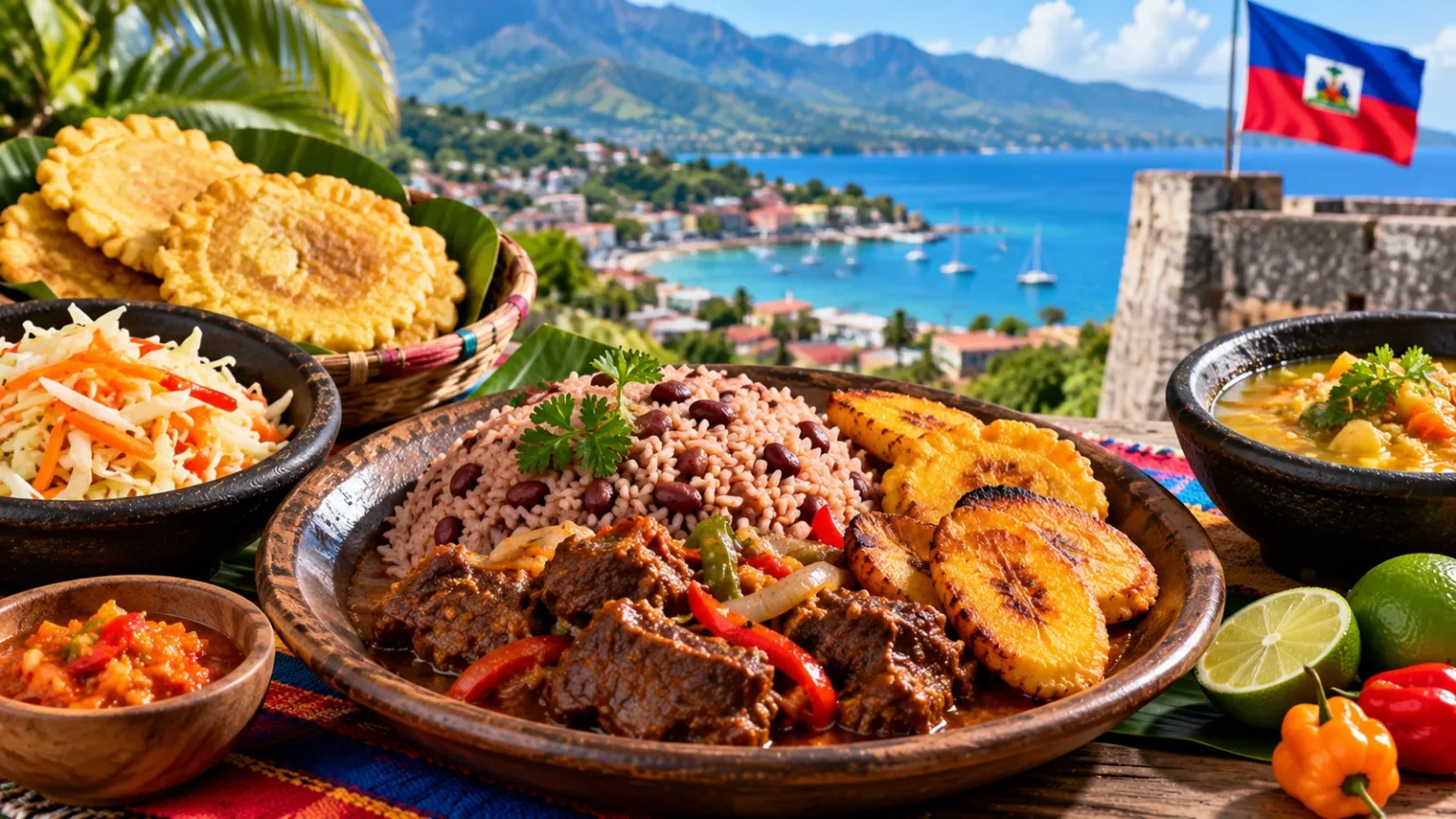
The easiest first plate is griyo + bannann peze + pikliz + rice. It gives a newcomer crispness, acidity, heat, starch and seasoned meat in one meal and makes the role of Haitian side dishes immediately clear.
1. Soup Joumou Is the Haitian Food With the Deepest Symbolism
Soup joumou is a pumpkin-based soup traditionally prepared with vegetables, plantains, meat, pasta and spices, although family recipes vary. It is eaten particularly on January 1, Haiti’s Independence Day, and is also associated with Sunday meals. In 2021, the traditions surrounding soup joumou were inscribed on UNESCO’s Representative List of the Intangible Cultural Heritage of Humanity.
Its importance comes from much more than flavor. During the colonial period, the soup was associated with French slave owners and was not available to enslaved Haitians. Following Haitian independence in 1804, eating and sharing soup joumou became associated with freedom, dignity and national identity.
For a visitor or first-time diner, this is the Haitian food worth understanding before tasting it. A bowl can contain pumpkin, vegetables, meat, plantain and pasta, making it substantially more filling than the word “soup” might suggest. Recipes differ from household to household, so two authentic versions do not need to look or taste identical.
When is soup joumou traditionally eaten?
January 1 is the most significant day for soup joumou because it is Haiti’s Independence Day. The soup is traditionally shared as the first meal of the year and remains closely connected with that celebration. It is also eaten as a Sunday meal beyond the New Year tradition.
If a Haitian restaurant offers soup joumou only on particular days, that is not unusual. Do not assume every traditional Haitian restaurant will have it available throughout every service.
2. Griyo Is the First Haitian Main Dish Many Newcomers Should Try
Griyo, also written griot and griyo depending on language and spelling conventions, is seasoned pork that is typically cooked until tender before being fried for a browned exterior. Citrus and aromatic seasoning help give the meat its characteristic flavor. It is one of the most recognizable traditional Haitian foods and an excellent starting point for someone unfamiliar with the cuisine.
The important part is what comes beside it. Griyo is commonly paired with bannann peze and pikliz, creating a plate that moves between rich pork, crisp plantain and sharp, spicy pickled vegetables. Rice may turn the combination into a larger meal.
If only one Haitian food plate is available to try, griyo with plantains, pikliz and rice is one of the most complete introductions. Ordering the pork alone misses much of the contrast that makes the combination work.
3. Pikliz Can Change an Entire Haitian Plate
Pikliz is a spicy pickled condiment commonly made with shredded cabbage, carrots, peppers, vinegar and aromatics. Scotch bonnet peppers can give it considerable heat, while vinegar provides the acidity that cuts through fried meat and plantains. It is particularly associated with fritay and dishes such as griyo.
Do not treat pikliz like decorative coleslaw. A small amount alongside fried pork or plantain changes both the flavor and texture of the bite. Anyone sensitive to chili heat should start cautiously rather than covering the entire plate.
Pikliz also demonstrates an important feature of Haitian food: richness is often balanced rather than simply amplified. Fried meat and starch become much livelier when paired with something crunchy, acidic and hot.
4. Diri ak Djon Djon Is the Rice Dish to Remember
Diri ak djon djon is rice prepared using djon djon, a dried mushroom associated particularly with northern Haiti. The mushroom contributes a distinctive dark color and earthy character, giving the rice an appearance and flavor unlike a standard rice-and-beans side.
It can accompany meat, poultry or seafood, but good djon djon rice is interesting enough not to feel like background filler. First-time diners sometimes refer to it simply as Haitian black rice, but knowing the name diri ak djon djon makes ordering clearer.
This is an excellent choice for anyone who wants traditional Haitian food without making every selection fried. Pair it with chicken or another main, then add pikliz or plantain for contrast.
5. Bannann Peze Is More Than a Side of Fried Plantain
Bannann peze is made from green plantain that is fried, flattened and fried again, producing a crisp exterior and dense, starchy middle. Similar plantain preparations appear elsewhere in the Caribbean and Latin America, but bannann peze has a familiar place beside Haitian fritay, griyo and pikliz.
It is best eaten while still crisp. Dip or combine it with sauce or take a bite with pikliz rather than judging it as an unseasoned snack on its own. The plantain acts as a sturdy, relatively mild counterpoint to more intense components on the plate.
Bannann peze is particularly useful for first-time diners because it connects several traditional Haitian dishes. Once its role makes sense, a fritay platter becomes much easier to understand.
6. Taso Is the Alternative When Pork Is Not Your First Choice
Taso is seasoned meat that is typically fried, with goat and beef among the versions encountered in Haitian cooking. Taso kabrit, made with goat, is especially useful to know when exploring fritay beyond griyo. The texture and flavor differ from pork, giving the meal a noticeably different character.
Like griyo, taso works well with fried plantains and pikliz. This is another example of why Haitian dishes are better understood as plates and combinations rather than isolated proteins. The condiment and starch are doing important work alongside the meat.
For a shared meal, ordering one portion of griyo and one of taso can provide more variety than buying two similar pork dishes. Add one rice dish and pikliz and several people can compare flavors without over-ordering.
7. Akra Is One of the Essential Haitian Fritters
Haitian akra is a fritter made from malanga, a root vegetable also known by names including taro or cocoyam in different contexts. Seasoning is incorporated before frying, creating a crisp exterior around a softer center. Akra commonly appears as part of fritay or as an appetizer.
Pikliz is an excellent partner because its vinegar and chili cut through the fried surface. A mixed fritay plate may combine akra with plantain and meat, creating several textures from ingredients that might otherwise seem similarly heavy.
This is one of the easiest Haitian foods to share. Order a few pieces for the table rather than making akra the entire meal, especially if griyo, taso and plantains are also coming.
8. Fritay Is a Category, Not Just One Dish
Fritay refers broadly to a selection of fried Haitian foods rather than one fixed recipe. A platter can include griyo, taso, bannann peze, akra and other fried components, usually with pikliz adding the acidity and heat needed to balance them. The exact selection changes between cooks and restaurants.
For a newcomer, fritay is one of the fastest ways to sample several Haitian foods in one sitting. It is also easy to over-order because pork, goat, fritters and plantains are all filling. Share a platter where possible and add something non-fried, such as rice or a stew, if the goal is to explore the cuisine rather than simply eat the largest meal possible.
Travelers who enjoy understanding a cuisine through casual food stalls and small bites can use a similar strategy elsewhere. The LitiTravels guide to 18 Thai street foods worth trying beyond Pad Thai shows how regional dishes, snacks and street-food combinations reveal far more than ordering only the internationally famous classics.
9. Pâté Haïtien Is a Savory Pastry Worth Trying Early in the Day
Haitian pâté is a flaky savory pastry that can contain fillings such as chicken, beef, salted cod, turkey or smoked herring. It is smaller and easier to eat on the move than a full plate of rice and meat, making it a useful breakfast or snack option.
The pastry should not be confused with pâté in the sense of a spreadable meat paste. Here, the name refers to the filled pastry itself. The contrast between crisp, flaky layers and strongly seasoned filling is the main appeal.
For a one-day Haitian food crawl, a pâté makes a better starting point than beginning with a huge fritay plate. It leaves room for several other dishes later in the day.
10. Pate Kode Is the More Substantial Fried Pastry
Pate kode is a fried Haitian pastry with savory fillings that can include combinations of meat, fish, egg, vegetables and other ingredients. Recipes and fillings vary, and individual versions can be large enough to function as a quick meal rather than a small snack.
Compared with flaky Haitian pâté, pate kode is more closely associated with a fried exterior and a heartier street-food character. It is exactly the kind of dish where asking what is inside before ordering is useful, particularly for diners avoiding certain meats or fish.
Eat it fresh if possible. Like many fried foods, much of its appeal comes from the contrast between the hot exterior and flavorful filling.
11. Legim Is the Haitian Comfort Food That Balances a Fried-Food Crawl
Legim is a Haitian vegetable stew whose exact composition can vary considerably. Vegetables such as eggplant, cabbage, chayote, carrots or greens may be used, and versions can also contain meat or seafood. It is commonly served with rice and can be paired with bean sauce.
This is an important dish for anyone who has encountered Haitian cuisine only through photos of fritay. Traditional Haitian food includes stews, vegetables, soups and grains alongside fried specialties. Legim shows that broader everyday side of the cuisine.
Vegetarians should not assume legim is meat-free simply because vegetables dominate the name and appearance. Ask how the specific version was prepared, as meat, seafood or stock may be included.
12. Diri ak Pwa Is Everyday Haitian Food at Its Most Useful
Diri ak pwa simply means rice and beans, but its importance should not be underestimated. Variations using different beans appear frequently alongside chicken, meat, vegetables and sauce. For many meals, rice is not an afterthought but a core part of the plate.
Diri kole ak pwa refers to rice cooked together with beans, while white rice can also be served separately with a bean sauce. Understanding that distinction makes Haitian menus easier to navigate because not every rice-and-bean combination arrives in the same form.
If djon djon rice is unavailable, rice and beans remain a natural choice for a first Haitian meal. Pair them with poul an sòs, legim or griyo depending on how rich the rest of the meal should be.
13. Mayi Moulen Is Haitian Cornmeal Comfort Food
Mayi moulen is cooked cornmeal with a soft consistency that can accompany beans, fish, vegetables or other savory foods. Its relatively mild base makes it especially good at carrying sauces and stronger seasonings.
The dish demonstrates how staples such as cornmeal remain central to Haitian home-style cooking. A first-time visitor focused only on famous restaurant dishes could easily miss it, but it provides useful contrast to rice and fried plantains.
Mayi moulen can also appear in different meal contexts, including breakfast. What accompanies it determines whether the result feels simple and comforting or substantial enough for a main meal.
14. Poul an Sòs Is an Easy First Choice for Chicken Eaters
Poul an sòs is Haitian chicken cooked in a savory sauce and seasoned with the aromatics characteristic of Haitian cooking. It is a useful first order for someone who wants familiar meat without losing the flavors that distinguish the cuisine.
Rice is a natural accompaniment because it absorbs the sauce, while plantain and pikliz can add texture and acidity. Compared with a fritay platter, this creates a softer, saucier meal with less emphasis on frying.
It is also a practical group order when not everyone eats pork or goat. Combine one chicken dish with rice, legim and a smaller fritay selection and the table gains much more range.
15. Lambi Is the Haitian Seafood Dish to Look For
Lambi is conch, a shellfish eaten in Haiti and elsewhere around the Caribbean. Haitian preparations can cook it in a seasoned sauce, and the meat has a firm texture that benefits from careful cooking. Availability can vary, particularly outside areas with strong Caribbean food communities.
For seafood lovers, lambi broadens a Haitian food tasting beyond meat and poultry. It is better approached as a specific dish worth seeking than as something every Haitian restaurant is guaranteed to serve.
Anyone with a shellfish allergy should be especially careful when ordering both seafood dishes and foods prepared in shared kitchens. Djon djon rice and other menu items can also vary in preparation, so asking the restaurant directly is safer than relying on a generic ingredient list.
16. Bouyon Is Built for a Slow, Filling Meal
Haitian bouyon is a substantial soup or stew that can bring together meat, vegetables, root crops, dumplings or other ingredients depending on the recipe. It is the opposite of a light starter and can easily function as the center of a meal.
Like soup joumou, bouyon illustrates the importance of soups and stews within Haitian food. Not every traditional meal revolves around crisp fried meat, even if fritay is often the easiest part of the cuisine to encounter internationally.
Choose bouyon when comfort food sounds more appealing than a mixed fried platter. It is particularly satisfying when the weather is cool or when a meal needs to be filling without ordering several separate sides.
17. Haitian Spaghetti May Completely Change Your Idea of Breakfast
Haitian spaghetti is often eaten for breakfast and can be prepared with tomato-based seasoning and additions such as sausage or hot dog pieces, depending on the household or restaurant. The idea of pasta in the morning can surprise visitors from places where spaghetti is strongly associated with dinner.
That is exactly why it deserves a place in a Haitian food guide. Traditional food is not only about ingredients but also about when and how people eat them. Trying a familiar food in an unfamiliar meal context can reveal more than another “must-eat” dinner.
If a Haitian bakery or restaurant serves breakfast, check the morning menu rather than assuming the same dishes appear all day. A plate of Haitian spaghetti followed later by griyo or legim creates far more variety than repeating rice-and-meat combinations at every meal.
18. Finish With Akasan or a Haitian Sweet
Akasan is a sweet corn-based drink with a thick, creamy consistency and warming spices in many preparations. It can appear around breakfast and provides a completely different experience from the savory foods that dominate most introductory Haitian food lists. Recipes vary, particularly in sweetness and dairy ingredients.
Haitian sweets also include different forms of tablet, which may be made with coconut, peanuts, cashews or other ingredients depending on the version. These are often intensely sweet, so a small portion can be enough after a large meal.
Do not end a Haitian food tasting after the main course simply because griyo and rice were filling. Drinks, pastries and sweets help show the range of ingredients and textures that a list of savory mains cannot capture.
What Does Haitian Food Taste Like?
Haitian food is aromatic, savory and often brightened with acidity, while heat varies dramatically by dish. Garlic, herbs, peppers, citrus, vinegar and seasoned sauces can all contribute, but there is no single flavor that defines every Haitian meal. Fried foods tend to gain contrast from pikliz, while rice and cornmeal absorb sauces and seasoning.
One common misconception is that all Haitian food is extremely spicy. It can be hot, particularly when Scotch bonnet pepper and pikliz are involved, but spice level is not the same across the cuisine. A chicken stew, rice dish and fiery serving of pikliz can sit on the same table with very different heat levels.
Anyone cautious about chili should ask for pikliz on the side. That preserves the traditional contrast while allowing each bite to be adjusted individually.
What Is Epis and Why Does It Matter?
Epis is one of the aromatic foundations of Haitian cooking. Although recipes vary, it commonly combines fresh herbs, garlic, peppers, scallions or onions, citrus and other seasonings into a blended mixture used to season meat, fish, poultry, rice and other foods.
There is no need to search for one supposedly definitive epis recipe to understand Haitian food. Household cooking traditions differ, and proportions can change according to the dish. Its importance lies in the way it builds flavor before food reaches the frying pan, pot or grill.
That also explains why describing Haitian food as simply “spicy” misses the point. Aroma, herbs, acidity and seasoning are just as important as chili heat.
What Should You Order at a Haitian Restaurant for the First Time?
For a first Haitian restaurant meal, order one signature meat, one rice dish, plantain and pikliz. Griyo + diri ak djon djon + bannann peze + pikliz is an especially strong introduction because each component adds something different rather than repeating the same flavor and texture.
If pork is not an option, replace griyo with poul an sòs or taso if available. Add akra only if the table is sharing, since the rice, plantains and meat already create a substantial meal. Soup joumou should move to the top of the order whenever it is available, particularly around New Year.
For two people, sharing dishes is often the best way to learn the cuisine. One fried main, one saucy main, one rice dish, plantain and pikliz provide a much broader introduction than ordering two identical combination plates.
What to Order If You Get Only One Haitian Meal
One Haitian meal should contain contrast rather than the maximum possible number of dishes. Start with a few pieces of akra, then share griyo with bannann peze and pikliz alongside diri ak djon djon. If soup joumou is available, substitute it for the starter or share a bowl.
The result covers several essential elements of Haitian food: seasoned meat, fried plantain, pickled heat, mushroom rice and a root-vegetable fritter. Dessert can be something small such as tablet, while akasan makes sense if it is available and the meal is not already too heavy.
This approach is more useful than ordering four fried meats. A cuisine becomes easier to understand when each new item contributes something different.
A One-Day Haitian Food Crawl You Can Actually Finish
A Haitian food crawl should move from small breakfast foods toward a substantial midday plate and finish with something lighter or sweet. The objective is not to eat 18 dishes in one day. It is to sample different parts of Haitian food without reaching lunch already too full to appreciate them.
Current travel conditions matter: as of September 2026, major government travel advisories warn against travel to Haiti because of the security situation. This food crawl should therefore be treated as a tasting framework for a place where Haitian food is safely accessible, including Haitian communities and restaurants abroad, rather than as encouragement to travel to Haiti under current conditions.
Breakfast – Pâté and Akasan
Start with a Haitian pâté filled with chicken, beef, cod or another available filling. Add akasan if it is on the breakfast menu. This gives the morning a savory pastry plus a sweet drink without using up the appetite needed later.
Haitian spaghetti is the alternative for anyone who wants a more substantial breakfast. Do not order both a large spaghetti plate and several pastries unless the food crawl is being shared.
Late Morning – Pate Kode or Akra
Choose one snack rather than both. Pate kode is heavier and can approach meal size, while a small order of akra is easier to share and leaves more room for lunch.
Use this stop to try pikliz if it accompanies the fritters. Starting with a small amount is sensible because heat levels can vary substantially.
Lunch – Griyo, Djon Djon Rice, Bannann Peze and Pikliz
Lunch should be the main event. Order griyo, diri ak djon djon, bannann peze and pikliz, ideally sharing the plate if portions are large. This is the point in the crawl where several of the most recognizable Haitian foods come together naturally.
If the restaurant has soup joumou, consider sharing a bowl before the main plate rather than adding another fried appetizer. Around January 1, soup joumou deserves priority.
Afternoon – Something Sweet
Use the afternoon for tablet, another Haitian sweet or a drink rather than another full savory meal. This is also the right time to pause instead of turning the crawl into a speed-eating exercise.
A bakery or grocery with Haitian products can be as useful as another restaurant. Packaged sweets, drinks and pantry ingredients reveal foods that may never appear on a standard restaurant menu.
Dinner – Legim, Poul an Sòs or Lambi
Finish with a dish that changes the texture of the day. Legim with rice, poul an sòs or lambi provides a better final meal than another platter of fried pork and plantains.
If lunch was particularly large, skip dinner as a formal tasting stop and return another day. Haitian food rewards repeat meals far more than forcing every famous dish into one afternoon.
How Much Does Haitian Food Cost?
There is no useful universal price for Haitian food because restaurant costs differ dramatically between Haiti, Miami, New York, Montreal, Paris and other cities with Haitian communities. A pâté or small snack should generally sit at the lower end of a menu, while combination plates with meat, rice, plantains and sides cost substantially more.
The smarter approach is to compare portion size before ordering. Haitian restaurant plates can be generous, and buying separate rice, plantain, fritay and meat portions may produce far more food than expected. Sharing appetizers and sides is usually a better tasting strategy than ordering a complete plate for every person plus several extras.
Prices also change too quickly for a global guide to give one number that remains useful. Check the current menu locally, then spend more on the dish that is difficult to find elsewhere rather than automatically ordering the largest combination.
Is Haitian Food Spicy?
Haitian food can be spicy, but it is not uniformly hot. Pikliz can carry substantial heat because of Scotch bonnet peppers, while many stews, rice dishes and meat preparations focus more heavily on herbs, aromatics, citrus and savory seasoning.
This makes Haitian cuisine relatively easy to approach for diners with different spice tolerances. Ask for pikliz on the side and add a small amount first. Sauces should also be checked individually rather than assuming they are mild.
People who enjoy heat can increase it without losing the other flavors. The best Haitian food balances spice with acidity, herbs, savory depth and texture rather than using chili as the only source of character.
What Haitian Food Can Vegetarians Eat?
Vegetarian Haitian food is possible, but individual dishes need to be checked because foods that appear vegetable-based may contain meat, seafood or animal-based stock. Rice and beans, mayi moulen, plantains, akra and some vegetable preparations can work well when prepared without animal ingredients.
Legim requires particular attention. Although its name refers to vegetables, many versions contain beef, seafood or other animal ingredients. Djon djon rice can also vary in preparation, so anyone with strict dietary requirements should ask rather than rely on the dish name.
Pikliz is one of the easiest plant-based additions and brings considerable flavor to rice, plantains and fritters. A vegetarian plate can still have the acidity, heat and texture that make a broader Haitian meal interesting.
Haitian Breakfast Foods Worth Knowing
Haitian breakfast can be savory and substantial. Spaghetti, eggs, plantains, cornmeal preparations, patties, bread and drinks such as akasan can all appear in morning eating, depending on the household and setting.
For a traveler, breakfast is useful because it opens a different section of Haitian cuisine from the restaurant dinner menu. Eating pâté in the morning and griyo at lunch gives far more range than ordering two meat-and-rice plates.
Soup joumou also has a morning connection, particularly as a traditional Sunday breakfast and as the first meal of the year on January 1. That makes it one of the clearest examples of how timing and cultural context matter as much as ingredients.
Haitian Food vs Other Caribbean Food
Haitian food shares ingredients with other Caribbean cuisines, including plantains, rice, beans, root vegetables, seafood and hot peppers, but the combinations and preparations are distinctly Haitian. Djon djon mushrooms, epis, pikliz, soup joumou and specific fritay traditions make it misleading to treat the cuisine as interchangeable with Jamaican, Dominican or Puerto Rican food.
The neighboring Dominican Republic is an especially interesting comparison because Haiti and the Dominican Republic share the island of Hispaniola while maintaining distinct culinary traditions and histories. Anyone planning a wider Caribbean journey can use the LitiTravels guide to the best places to visit in the Dominican Republic to understand how dramatically experiences can change across the island.
The useful lesson is not to search for exact equivalents between cuisines. Try Haitian dishes by their own names and combinations first, then notice the wider Caribbean connections afterward.
Haitian Food Names Travelers Should Recognize
A Haitian menu becomes much easier once several Haitian Creole food terms are familiar. Spellings can vary between Haitian Creole, French and English-language menus, so the same food may appear in more than one form.
| Haitian food name | What to expect |
|---|---|
| Griyo | Seasoned pork, usually fried after cooking |
| Pikliz | Spicy pickled vegetable condiment |
| Diri | Rice |
| Pwa | Beans |
| Diri ak pwa | Rice and beans |
| Djon djon | Dried mushroom used especially in rice |
| Bannann peze | Flattened fried green plantain |
| Taso | Seasoned fried meat |
| Kabrit | Goat |
| Poul | Chicken |
| Pwason | Fish |
| Lambi | Conch |
| Legim | Vegetable stew, sometimes with meat |
| Mayi moulen | Cooked cornmeal |
| Akra | Malanga fritter |
| Soup joumou | Haitian pumpkin soup |
| Pate kode | Fried stuffed pastry |
You may also be interested in our article: 18 Australian Foods That Tell You More Than Vegemite Ever Could
Learning even five or six of these words makes ordering less dependent on simplified English descriptions. It also helps distinguish a side dish from a main or condiment before an unexpectedly large order reaches the table.
How to Build a Balanced Haitian Plate
A balanced Haitian food plate needs contrast. Choose one main protein or stew, one rice or cornmeal component, one plantain or fritter if desired and something acidic or spicy such as pikliz. Adding every fried option on the menu rarely improves the meal.
For example, griyo + djon djon rice + pikliz already has richness, starch, earthiness, acidity and heat. Bannann peze adds crunch, but another three fried appetizers are unnecessary unless several people are sharing.
The same principle works in other cuisines with strong regional combinations. The LitiTravels guide to 15 Swiss foods worth trying on a trip to Switzerland similarly shows why understanding where and how dishes are eaten produces a better food trip than simply checking famous foods off a list.
8 Mistakes to Avoid When Trying Haitian Food
Most first-time mistakes come from ordering dishes individually without understanding how Haitian meals are assembled. A little context makes it easier to taste more while wasting less food.
Avoid these common mistakes:
- Ordering griyo without pikliz. The acidity and heat provide an important contrast to the rich fried pork.
- Assuming every Haitian dish is extremely spicy. Heat varies, and pikliz is often where the strongest chili kick appears.
- Treating djon djon rice as ordinary black-colored rice. Its distinctive color and flavor come from the mushroom preparation.
- Ordering an entire fritay menu for one person. Fried pork, goat, plantains and fritters become filling very quickly.
- Assuming legim is vegetarian. Many versions contain meat or seafood.
- Skipping breakfast foods. Haitian spaghetti, patties, cornmeal preparations and akasan reveal a different side of the cuisine.
- Expecting one fixed recipe for every dish. Haitian cooking varies between households, regions and cooks.
- Calling every Haitian dish simply Caribbean food. Shared ingredients do not erase the cuisine’s specific traditions, names and history.
The goal is not to memorize rules before eating. It is to understand enough of the meal that the sides, condiments and main dishes make sense together.
Which Haitian Foods Should Come First?
For a first encounter with Haitian food, prioritize soup joumou when available, griyo, pikliz, diri ak djon djon, bannann peze and one non-fried dish such as legim or poul an sòs. Those choices cover history, rice, meat, vegetables, acidity, spice and contrasting cooking techniques.
On a second meal, move toward taso, mayi moulen, lambi, bouyon or breakfast foods. Desserts and drinks deserve space as well because an introduction made entirely of savory meat dishes gives a distorted picture of Haitian cuisine.
The best Haitian food experience is therefore not the plate with the most items. It is the one where each dish reveals something the previous one did not.
FAQ About Haitian Food
What is the most famous Haitian food?
Griyo is one of the best-known Haitian foods internationally, while soup joumou has exceptional cultural importance within Haiti. Soup joumou is closely associated with Haitian independence and January 1, and the traditions surrounding it were inscribed on UNESCO’s Representative List of the Intangible Cultural Heritage of Humanity in 2021.
What Haitian food should a beginner try first?
A beginner can start with griyo, bannann peze, pikliz and either djon djon rice or rice and beans. The combination includes several defining flavors and textures without requiring an enormous tasting menu. Poul an sòs is a good alternative for someone who does not eat pork.
What is Haiti’s national food?
Soup joumou is one of Haiti’s most culturally significant national dishes and is strongly connected with Independence Day. Griyo is also among the country’s most recognizable foods. Haitian cuisine is too varied, however, to be represented accurately by a single everyday dish.
What is griyo in Haitian food?
Griyo is seasoned pork that is cooked until tender and typically fried to create a browned exterior. It is commonly served with fried plantains and pikliz. The contrast between rich pork and acidic, spicy pikliz is an important part of the experience.
What is the black rice in Haitian food?
The dark rice commonly called Haitian black rice is diri ak djon djon. Its color and earthy character come from djon djon mushrooms used during preparation. It is particularly associated with northern Haiti and can accompany meat, poultry or seafood.
Is all Haitian food spicy?
No. Haitian food uses strong seasoning, aromatics and peppers, but not every dish is highly spicy. Pikliz can be particularly hot because it often contains Scotch bonnet peppers. Diners sensitive to heat can ask for it on the side.
What is pikliz?
Pikliz is a Haitian pickled condiment generally made with shredded vegetables, vinegar and hot peppers. It is crunchy, acidic and often quite spicy. It commonly accompanies griyo, plantains, akra and other fried foods.
What is a typical Haitian breakfast?
Haitian breakfast can include spaghetti, eggs, plantains, cornmeal preparations, bread, patties and drinks such as akasan. Soup joumou also has a traditional connection with Sunday breakfast and is especially important on January 1. Breakfast can therefore be much more savory and substantial than visitors expect.
Is Haitian food vegetarian-friendly?
Some Haitian foods can be vegetarian, including plantains, pikliz, akra, rice, beans and certain cornmeal or vegetable preparations. However, recipes must be checked individually because legim, rice dishes and other apparently plant-based foods can contain meat, seafood or animal-based stock.
What is epis in Haitian cooking?
Epis is an aromatic seasoning blend used throughout Haitian cooking. Recipes vary, but ingredients can include garlic, herbs, peppers, scallions or onions, citrus and other seasonings. It can be used with meat, poultry, fish, rice and numerous other dishes.
What are the best Haitian street foods?
Pate kode, Haitian patties, akra and different fritay combinations are among the foods commonly associated with casual or street-style eating. Griyo, taso, bannann peze and pikliz can appear together as fritay. Availability and preparation vary by location.
What Haitian food should you order if you do not eat pork?
Poul an sòs, taso kabrit, lambi, fish dishes, legim prepared without pork and different rice dishes provide alternatives. Always confirm ingredients because recipes and cooking methods vary. Vegetarians should also ask specifically about stock and hidden meat.
Why is soup joumou important in Haiti?
Soup joumou is connected with Haitian independence and freedom. After independence was declared on January 1, 1804, the soup became associated with reclaiming a food that had been denied to enslaved Haitians under colonial rule. It remains traditionally eaten on Independence Day and carries meaning far beyond its ingredients.
What is the best Haitian food combination?
One of the strongest first combinations is griyo, bannann peze, pikliz and diri ak djon djon. The pork brings richness, plantain adds crisp starch, pikliz provides acidity and heat, and djon djon rice adds an earthy savory component. It is a much more complete introduction than tasting any one of those foods alone.
Can you experience Haitian food outside Haiti?
Yes. Significant Haitian communities and Haitian restaurants exist outside Haiti, particularly in parts of the United States, Canada, France and elsewhere. This is especially relevant while official travel advisories warn against travel to Haiti. Authentic Haitian cooking is not limited to eating the food inside the country, and diaspora restaurants, bakeries and food businesses can provide access to a wide range of traditional dishes.
Most romantic cities in the world


Author of LitiTravels Portal


Articles by the author:
All articles by author


Geneva looks polished and compact, but trying to see everything in two days can waste more time than it saves. These 17 things to do in Geneva show what deserves priority, what can be skipped when time is tight, and how to turn...
 October 2, 2026
 13
13

A phone full of travel apps does not necessarily make a trip easier. These are the best travel apps in 2026 for the jobs that actually matter – from finding flights and building an itinerary to navigating offline, translating m...
October 1, 2026
12

Mountains, medieval streets, Roman ruins and Mediterranean beaches are all close enough to Barcelona for a day trip – but some are much easier than others. Compare 15 escapes by travel time, transport, cost and how much of your...
September 30, 2026
16

A cheap hotel does not guarantee a cheap family vacation. Flights, parking, meals, seat fees and daily activities can double the real cost. These 12 trip ideas show where families can save – and where “budget” vacations become ...
September 30, 2026
18
Subscribe to “lititravels” on Telegram for gaming intel.
No filler, no fuss—just your daily XP boost. Hop in and level up, squad!



Read also
Australian food is much more than Vegemite and barbecue. From bakery meat pies and barramundi to lamingtons, flat whites and Indigenous ingredients, these are the foods that reveal what Australia actually tastes like.
September 28, 2026
19

London has enough museums to fill an entire trip, and many of the biggest cost nothing to enter. This 2026 guide shows which museums deserve your limited time, what to see first and how to avoid spending a day wandering galleri...
September 24, 2026
27
Thailand's best meals do not always come with reservations. They arrive sizzling from a wok, smoking over charcoal or packed into a paper tray. These 18 Thai street foods are the ones worth knowing before your first market visit.
September 23, 2026
48

Karnak is overwhelming, Philae sits on an island and Abu Simbel was moved piece by piece. These nine Egyptian temples make far more sense once you know what to look for – and which ones actually fit the same trip.
September 21, 2026
38

Puerto Rico is more than beaches and Old San Juan. These 21 fact-checked Puerto Rico facts explain the glowing water, rainforest, music, food, history and everyday details you can actually notice on a trip – plus the myths wort...
September 20, 2026
24

The historic Parisian quarter of Montmartre is associated with a strong affinity for art and cultural backgrounds. This is the area where famous artists such as Picasso and Monet used to reside and work. Here, you may find art ...
May 26, 2025
482

Saint-Rémy-de-Provence is one of the oldest towns in France founded by the Celts more than 2,500 years ago and developed by both the Greeks and the Romans. Set at the base of the Alpilles Mountains and surrounded by vineyards a...
April 15, 2025
528

September is an exciting month for festivals. It brings together people from all over the world to celebrate culture, food, music, and traditions. From massive beer festivals in Germany to light-filled lantern parades in China,...
March 21, 2025
407

If you’re into history or impressive architecture, then Morocco palaces are your deal. They expose the country’s past and just-skilled local builders. Each of them has a story to tell, and each has an atmosphere of its ow...
 March 17, 2025
525
March 17, 2025
525

Spain acquires the best know-how to eat well, in fact, street food becomes one of the best ways to get into its gastronomic culture. You can be doing a lively walk in a city or lying on the beach soaking up the sunny rays; the ...
March 28, 2025
483

Cooperation
Looking to shine a spotlight on your project? LitiTravels has you covered! We offer article-based promotion, manage branded blogs on our platform, drive engagement through our social media channels, and create content that delivers real results. Get in touch today and let’s make your brand stand out!
Subscribe to the monthly news digest from LitiTravels
The main news and updates from the team about gadgets, sports, cars, health, and lifestyle.
