


Popular articles


18 Thai Street Foods Worth Trying Beyond Pad Thai
 Cultural Discoveries18 Thai Street Foods Worth Trying Beyond Pad Thai
Cultural Discoveries18 Thai Street Foods Worth Trying Beyond Pad Thai
18 Thai Street Foods Worth Trying Beyond Pad Thai
Article content

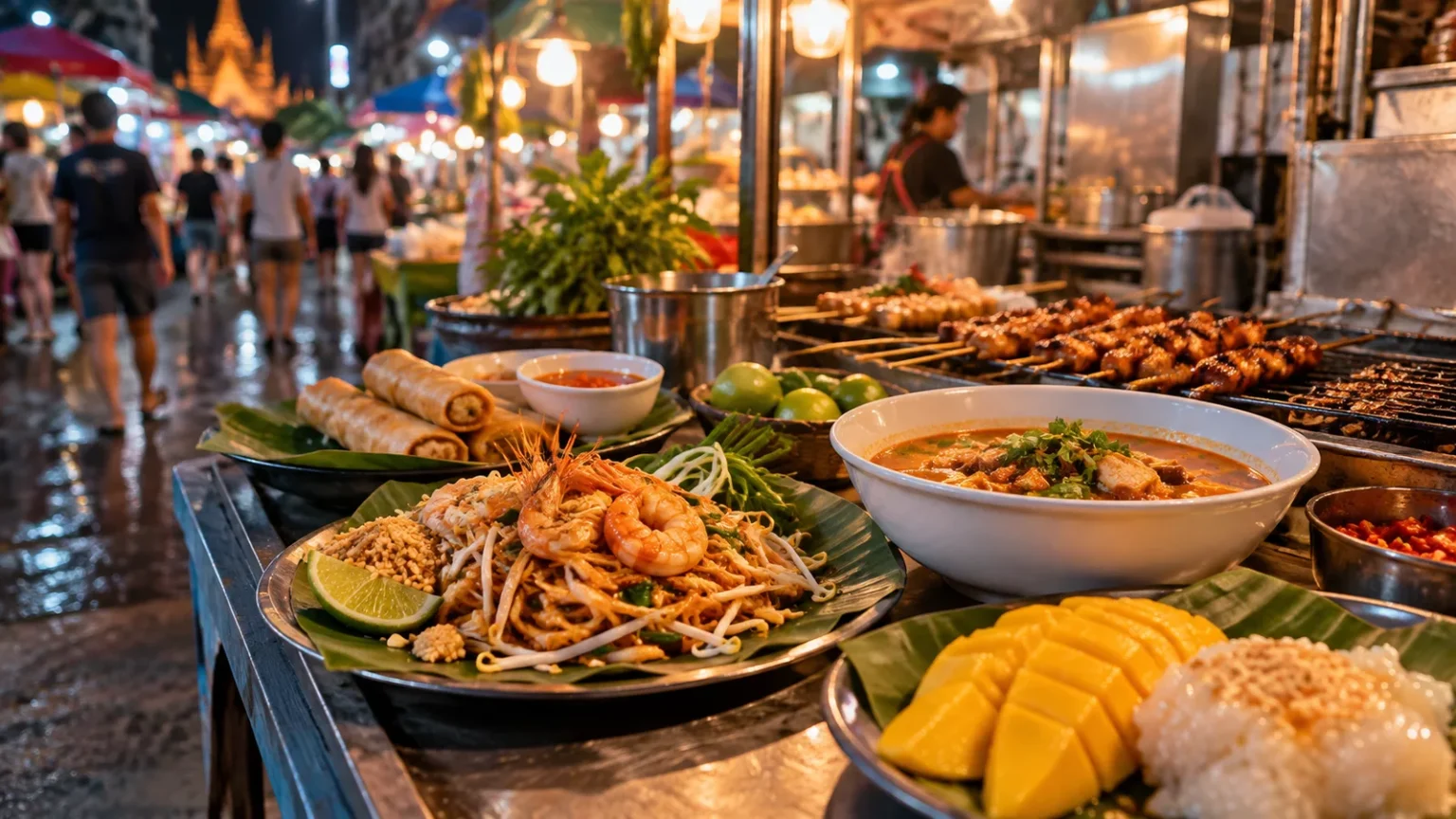
Thai street food can turn an ordinary walk into dinner before you have even decided where to eat. Woks flare beside sidewalks, skewers smoke over charcoal, papaya is pounded to order, noodles disappear beneath herbs and broth, and mango sticky rice is assembled in seconds. For travelers, this is one of the easiest ways to experience Thai food without turning every meal into a restaurant reservation.
Pad Thai deserves a place on the list, but traditional Thai food is much bigger than pad Thai, green curry and tom yum. What appears on the street changes between Bangkok, Chiang Mai, Isan, Phuket and other parts of the country. Northern Thailand brings khao soi and sai ua, northeastern cooking contributes som tam and grilled meats, while southern Thai food can bring seafood, turmeric, coconut and much more aggressive heat.
The challenge is not finding food. It is understanding what is in front of you when menus are short, English translations vary and ten excellent stalls compete for attention at once. This guide focuses on popular Thai dishes travelers can realistically encounter, how they taste, what to order first and how to build a street food crawl without eating five full meals in an hour.
What Thai Street Food Should You Try First?
Start with pad Thai, moo ping, som tam, khao man gai and mango sticky rice if this is your first experience with Thai street food. Together they cover noodles, grilled meat, fresh spicy flavors, rice-based comfort food and dessert without requiring particularly adventurous ingredients. Once those feel familiar, move toward boat noodles, larb, sai ua, khao soi and more regional dishes.
Street food in Thailand is not one standardized category. Vendors may specialize in one dish, while other stalls serve rice with prepared curries, quick stir-fries, noodles, salads or grilled foods. Thailand’s official tourism information specifically describes street stalls selling dishes such as chicken rice, stewed pork leg with rice, barbecue pork with rice and noodles, alongside made-to-order stalls preparing quick stir-fries and rice dishes.
| Thai street food | What it is | Typical flavor | Spice level |
|---|---|---|---|
| Pad Thai | Stir-fried rice noodles | Sweet, sour, savory | Mild |
| Som tam | Green papaya salad | Sour, spicy, salty, sweet | Medium to very hot |
| Moo ping | Grilled pork skewers | Sweet, savory, smoky | Mild |
| Khao man gai | Chicken with seasoned rice | Savory, gentle | Mild |
| Pad kra pao | Holy basil stir-fry with rice | Savory, aromatic, spicy | Medium to hot |
| Khao soi | Coconut curry noodles | Rich, aromatic, mildly spicy | Mild to medium |
| Boat noodles | Dark, concentrated noodle soup | Deep, savory, aromatic | Mild to spicy |
| Sai ua | Northern Thai sausage | Herbal, smoky, spicy | Medium |
| Larb | Minced meat salad | Sour, herbal, spicy | Medium to hot |
| Gai yang | Grilled chicken | Smoky, savory | Mild |
| Khanom krok | Coconut pancakes | Sweet, creamy | Mild |
| Roti | Thin fried flatbread | Sweet, crisp, buttery | Mild |
| Mango sticky rice | Mango, coconut sticky rice | Sweet, creamy, slightly salty | Mild |
The spice column is only a starting point. There is no universal Thai heat scale, and a dish prepared mildly at one stall may be significantly hotter at another.
1. Pad Thai – Start Here, but Don’t Stop Here
Pad Thai is one of the world’s most recognizable Thai foods: rice noodles stir-fried with ingredients that can include egg, tofu, dried or fresh shrimp, bean sprouts and seasonings built around tamarind and fish sauce. Peanuts, lime, chili and fresh vegetables commonly finish the plate. The combination should balance sweet, sour, salty and savory flavors rather than taste simply sugary.
It is also ideal street food because the cooking happens quickly in a hot wok. Watching the vendor prepare it can be almost as useful as reading the menu: noodles go in, sauce hits the pan, ingredients are tossed together and the whole dish can be ready within minutes.
Pad Thai is a sensible first Thai street food because it is familiar enough to be approachable but still demonstrates the balancing act behind traditional Thai cuisine. The mistake is assuming it represents all Thai food. Once you have tried a good plate, move on.
Is pad Thai actually traditional Thai food?
Yes, although its rise to national prominence is considerably more recent than visitors sometimes assume. The dish became strongly associated with Thai national identity during the 20th century rather than being an unchanged recipe stretching back through ancient Thai history.
That does not make it less authentic. Food traditions evolve, and dishes can become deeply embedded in a country’s cuisine within generations rather than millennia.
2. Moo Ping – The Breakfast Skewer That Works Any Time of Day
Moo ping consists of marinated pork grilled on skewers over charcoal. The meat is generally slightly sweet, savory and smoky, with enough fat to stay juicy over the heat. It is often paired with sticky rice, turning a few inexpensive skewers into a surprisingly satisfying meal.
This is one of the easiest Thai street foods for nervous first-time visitors. There is no broth to decode, no complicated assembly and usually no extreme spice hidden inside. Point to the number of skewers you want, add sticky rice and breakfast or a snack is essentially solved.
Moo ping also demonstrates why morning markets are worth visiting. Thai street food is not just a nighttime activity, and some stalls are at their busiest when travelers are still thinking about hotel breakfast.
3. Som Tam – Thailand’s Famous Salad Can Be Fiercely Hot
Som tam is a salad built around shredded unripe papaya pounded with ingredients such as chili, lime, fish sauce, garlic and other seasonings. Peanuts, tomatoes, long beans and dried shrimp commonly appear in versions such as som tam Thai. The result is crunchy, sour, salty, sweet and potentially extremely spicy.
It is especially associated with northeastern Thailand and has numerous regional and stylistic variations. Versions may include fermented fish sauce, salted crab or other ingredients that dramatically change both flavor and aroma. Ordering simply “papaya salad” without understanding the version can therefore produce a surprise.
How do you order som tam less spicy?
Ask for fewer chilies rather than relying only on the word “mild.” If communication allows, indicating one chili provides a much clearer starting point than assuming everyone shares the same definition of medium heat. Even then, residual chili in the mortar can keep the salad spicy.
Som tam is often better as part of a shared meal than eaten alone. Sticky rice and grilled chicken are classic companions because they soften and balance the salad’s intensity.
4. Khao Man Gai – Thai Comfort Food for When You Need a Break From Spice
Khao man gai is Thailand’s version of Hainanese chicken rice. Tender chicken is served over fragrant rice cooked with chicken fat and aromatics, usually accompanied by broth and a dipping sauce. The dish is gentle compared with many famous Thai foods, but that simplicity is precisely its appeal.
It is particularly useful midway through a trip when every meal has become a competition between chili, curry and deep-frying. Good khao man gai depends on texture, rice and sauce rather than overwhelming seasoning. It also works well for breakfast or lunch.
Do not mistake mildness for blandness. Some of Thailand’s most satisfying everyday food is built on careful cooking rather than maximum spice.
5. Pad Kra Pao – The Dish to Order When You Don’t Know What to Eat
Pad kra pao is a fast stir-fry commonly made with minced or chopped meat, chilies, garlic and holy basil, then served over rice. Adding a fried egg turns it into one of Thailand’s great all-purpose meals. It is fast, filling and widely available.
The important ingredient is holy basil, which gives the dish an aromatic character different from ordinary sweet basil. Recipes and transliterations vary, so travelers may encounter names such as pad krapow, pad kra pao or phat kaphrao on English menus.
This is an excellent dish to remember when faced with an overwhelming made-to-order stall. Rice, stir-fried meat and a crispy-edged egg require little explanation, while the basil and chili make the result unmistakably Thai.
How spicy is pad kra pao?
It can be very spicy. Chili is integral to many versions, so travelers with low heat tolerance should request less chili when ordering rather than assuming the fried egg will neutralize everything.
The egg helps, but it does not turn a genuinely fiery pad kra pao into a mild meal.
6. Khao Soi – The Northern Thai Dish Worth Traveling For
Khao soi is one of the essential foods to seek out in northern Thailand, particularly around Chiang Mai. It combines noodles with a rich coconut-based curry broth and is commonly served with chicken or beef. Crispy noodles on top create the dish’s distinctive contrast between soft, crunchy and creamy textures.
Pickled mustard greens, shallots, lime and chili condiments typically allow diners to adjust the bowl themselves. That is important because the first taste should come before adding everything on the table. The broth already contains layers of flavor that can disappear if immediately overwhelmed with chili.
The Tourism Authority of Thailand highlights khao soi among characteristic northern dishes, alongside sai ua, nam prik noom and gaeng hung lay. Northern Thai cuisine also differs from other regional traditions in its use of herbs, local vegetables and sticky rice.
If Bangkok is your only destination, try khao soi if you find a specialist. If you are going to Chiang Mai, save at least one bowl for the north.
7. Boat Noodles – Small Bowls With Serious Flavor
Boat noodles are intensely flavored noodle soups historically associated with vendors serving from boats along Bangkok’s canals. Modern versions are much easier to find on land, but the name and compact serving style remain closely connected with the dish’s history.
The broth tends to be dark, rich and heavily seasoned. Diners may choose noodles and meat depending on the vendor, while herbs, bean sprouts and condiments add texture and freshness. Traditional recipes can include blood as a thickening and flavoring ingredient, something travelers with dietary restrictions may want to ask about.
Bowls can be deliberately small. That makes boat noodles particularly good for a tasting day because ordering one does not necessarily eliminate the possibility of trying something else an hour later.
8. Sai Ua – Chiang Mai’s Herb-Packed Sausage
Sai ua is a northern Thai sausage packed with pork, herbs and aromatic curry ingredients. Lemongrass, kaffir lime leaf, chili and other seasonings can give it an intensely fragrant character that distinguishes it immediately from a simple grilled sausage. It is commonly encountered in northern markets.
The sausage is sliced into rounds, making it easy to share. That is useful because the flavors can be strong and rich, particularly when several other market foods are waiting nearby.
Sai ua also proves why a Thai street food guide should not focus only on Bangkok. Regional food changes dramatically across Thailand, and some of the country’s most memorable dishes become easier to find once travelers move away from the capital.
9. Gai Yang – Charcoal-Grilled Chicken Done the Thai Way
Gai yang is grilled chicken associated particularly strongly with northeastern Thai cooking. The chicken is marinated, cooked over charcoal and served with dipping sauces that can bring sweetness, acidity, chili and toasted-rice flavors to the plate. Crispy skin and smoky meat make it one of the easiest dishes to appreciate immediately.
It pairs exceptionally well with som tam and sticky rice. That trio gives travelers spicy salad, smoky protein and neutral rice in one balanced meal rather than three unrelated street-food snacks.
For anyone overwhelmed by unfamiliar dishes, grilled chicken is also an easy reset. The cooking method is recognizable, while marinades and dipping sauces provide the regional Thai character.
10. Larb – A Salad That Doesn’t Look Like a Salad
Larb is a minced-meat dish particularly associated with northeastern Thai and Lao food traditions. Meat is combined with lime, fish sauce, herbs, chili and toasted rice powder, producing something aromatic, sour, spicy and savory. Calling it a “salad” can confuse international travelers because there may be little resemblance to a bowl of lettuce.
Versions can use pork, chicken, beef or other proteins. Toasted rice powder is particularly important because it contributes both aroma and a subtle grainy texture. Fresh herbs prevent the meat from feeling excessively heavy.
Larb is commonly eaten with sticky rice and other shared dishes. It is a strong choice once pad Thai and basic curries feel too familiar and you want to understand the sharper, herb-driven side of traditional Thai cuisine.
11. Kuay Teow – The Noodle Bowl With Hundreds of Possible Personalities
Kuay teow broadly refers to Thai noodle dishes rather than one rigid recipe. A street noodle vendor may offer choices of noodle type, broth, meat and toppings, which can make the stall intimidating when nothing is written in English. Watching what other customers order is often surprisingly effective.
Broths can be clear and light or dark and intensely seasoned. Pork, beef, chicken, fish balls and other additions vary by vendor, while tables often provide chili flakes, vinegar, sugar and fish sauce for adjustment.
Do not automatically add every condiment before tasting. Thai noodle tables give you tools to personalize the bowl, not instructions to use all of them.
12. Khao Kha Moo – Slow-Cooked Pork Over Rice
Khao kha moo is braised pork leg served over rice, commonly with egg, greens or pickled vegetables and a sauce. The pork becomes tender during long cooking, while the braising liquid delivers sweet and savory depth. It is one of the Thai dishes that immediately feels like comfort food even to someone eating it for the first time.
Thailand’s official tourism information lists stewed pork leg with rice among the foods commonly sold by specialist single-dish stalls. That specialization is useful for travelers: when a vendor spends the day making essentially one thing, ordering becomes much easier.
The dish is generally not aggressively spicy unless chili-heavy condiments are added. That makes it another reliable option when a traveler needs a break from hotter Thai food.
13. Khanom Krok – Tiny Coconut Pancakes Made for Market Snacking
Khanom krok are small coconut pancakes cooked in distinctive round molds. They develop crisp edges while remaining soft and creamy inside, creating much more textural contrast than their tiny size suggests. Sweet and slightly salty coconut flavors dominate.
Some versions include toppings such as corn, spring onion or taro. They are normally sold in small portions, which makes them almost perfect street food: inexpensive, shareable and easy to eat while continuing through a market.
Eat them carefully when freshly cooked. The center can remain considerably hotter than the outside suggests, and enthusiasm has ruined more than one first bite.
14. Thai Roti – Crispy, Sweet and Impossible to Pretend Is a Light Snack
Thai-style roti is a thin piece of dough stretched, folded and fried on a hot griddle. Street versions are frequently served sweet, with combinations such as banana, condensed milk, sugar or chocolate. The outside becomes crisp while the layers inside remain softer and chewy.
It is not a uniquely Thai invention with no outside influences. Roti belongs to a much wider family of flatbreads with South and Southeast Asian connections, and Thailand’s street version reflects the country’s long history of cultural exchange.
For travelers, the practical issue is portion control. One roti shared between two people makes an excellent market dessert. Eating a whole condensed-milk-covered roti immediately before mango sticky rice requires considerably more commitment.
15. Mango Sticky Rice – Thailand’s Most Famous Street Dessert
Mango sticky rice, or khao niao mamuang, combines ripe mango with glutinous rice enriched with coconut milk. The best versions balance sweet mango and coconut with a subtle salty element rather than tasting like pure sugar. Toasted mung beans or other toppings may add a little crunch.
Mango quality matters enormously, which is why seasonality can change the experience. Thailand’s hot season and mango season make the dessert particularly appealing around spring, although versions are available more broadly.
The Tourism Authority of Thailand describes mango sticky rice as one of the country’s emblematic desserts, built around sweet ripe mango, sticky rice and coconut milk.
This is also one of the easiest traditional Thai foods for travelers with dietary restrictions to investigate. Many versions are naturally free from meat and dairy, although anyone with strict allergies should still confirm ingredients and cross-contact.
16. Khanom Buang – Thailand’s Tiny Crispy Crepes
Khanom buang are small, crisp crepes often filled with a sweet or savory topping. Their delicate shells and colorful fillings make them immediately recognizable at markets. Depending on the version, flavors can move between sweet coconut-based fillings and more savory combinations.
They work best as a snack rather than a meal. Buy a few, share them and keep moving instead of filling up before reaching the stalls serving noodles or grilled meat.
Their appearance can suggest a modern decorative dessert, but khanom buang have much deeper roots in Thai food culture. Street presentation simply makes an old snack unusually photogenic.
17. Grilled Seafood – One of the Best Reasons to Eat Street Food in Southern Thailand
Grilled squid, prawns, fish and shellfish become particularly compelling in Thailand’s coastal destinations. Seafood may be grilled simply and served with a sharp dipping sauce built around lime, chili, garlic and fish sauce. When the seafood itself is fresh, complicated preparation is unnecessary.
Phuket is especially interesting because its food reflects Thai, Chinese and other historical influences rather than functioning as a tropical copy of Bangkok cuisine. The island’s culinary identity is one reason UNESCO designated Phuket a Creative City of Gastronomy.
Seafood also provides a useful reminder that Thai food changes with geography. A street food itinerary in Chiang Mai should not look identical to one in Phuket, and that difference is worth embracing rather than searching everywhere for the same famous dishes.
18. Thai Fresh Fruit – The Street Snack Travelers Often Underrate
Thailand’s fruit stalls can be as useful as its cooked-food stalls. Vendors sell cut pineapple, watermelon, mango, papaya, guava and other fruit ready to eat, while seasonal availability introduces varieties that may be expensive or difficult to find elsewhere.
Fresh fruit becomes especially valuable during a long street food crawl. After grilled pork, noodles, coconut desserts and fried snacks, cold pineapple or watermelon can taste more refreshing than another famous dish.
Fruit also creates an easy pause between heavier foods. Not every stop needs to be something fried, spicy or covered in coconut milk.
Bangkok, Chiang Mai or Phuket – Where Is Thai Street Food Best?
There is no single best city for Thai street food because each destination reveals a different part of traditional Thai cuisine. Bangkok offers extraordinary variety, Chiang Mai provides easier access to northern dishes, while Phuket combines southern Thai traditions with seafood and strong Chinese cultural influences.
For a first trip, Bangkok gives the broadest introduction. Travelers can find famous national dishes alongside regional specialists without leaving the city. Chiang Mai becomes more rewarding once the goal shifts from “Thai food” in general toward khao soi, sai ua and other northern flavors.
| Destination | Best for | Foods to prioritize |
|---|---|---|
| Bangkok | Maximum variety | Pad Thai, boat noodles, khao man gai, pad kra pao, moo ping |
| Chiang Mai | Northern Thai cuisine | Khao soi, sai ua, nam prik noom, northern curries |
| Isan/Northeast | Spicy, herbal food | Som tam, larb, gai yang, sticky rice |
| Phuket | Southern flavors and seafood | Grilled seafood, southern curries, local noodle dishes |
| Markets nationwide | Snacks and desserts | Khanom krok, roti, fruit, mango sticky rice |
You may also be interested in our article: 9 Egyptian Temples That Change How You See Ancient Egypt
The best strategy is not trying to find every famous Thai dish in one city. Eat regional food where it naturally belongs whenever your itinerary allows it.
What Makes Thai Street Food Taste So Different?
Thai cuisine frequently builds flavor through contrast rather than relying on one dominant taste. Sour lime or tamarind can sit beside palm sugar, fish sauce adds salinity and umami, fresh herbs add aroma, and chilies contribute heat. Texture matters just as much: crushed peanuts, crispy noodles, raw vegetables and fried garlic can transform otherwise soft dishes.
That balance explains why removing one ingredient can change more than expected. Fish sauce is not simply there to make food taste “fishy,” just as palm sugar is not used solely to make a dish sweet. Ingredients interact, and the final result often depends on their proportions rather than any one component.
Regional differences add another layer. Northern food, northeastern Isan cooking, central Thai dishes and southern cuisine have distinct ingredient patterns and histories. Talking about “Thai cuisine” as if it were one fixed flavor profile hides much of what makes eating across Thailand interesting.
How to Order Thai Street Food When You Don’t Speak Thai
Ordering Thai street food without speaking Thai is usually easier than it appears. Many stalls specialize in only a handful of dishes, ingredients are visible and pointing remains a perfectly functional travel skill. Tourist-heavy areas may also have English signs, photographs or translated menus.
The most useful approach is simple:
- Watch What Is Being Cooked. A busy specialist stall may reveal its entire menu before you reach the front.
- Point Clearly. Pointing at the dish or ingredient is often more reliable than struggling through an unfamiliar pronunciation.
- Show the Quantity With Your Fingers. This reduces confusion when buying skewers, pancakes or portions.
- Ask About Spice Before Ordering. If heat matters, communicate it before the wok or mortar is already in action.
- Keep Small Payments Accessible. Street transactions move quickly, particularly during busy periods.
- Do Not Customize Everything. If there is no dietary or allergy reason, trying the vendor’s normal preparation is often the simplest introduction.
- Use Translation Tools for Allergies. A serious food allergy should never depend on gestures or assumptions.
Most interactions are brief. Knowing the exact Thai name of every ingredient is far less important than communicating clearly and respectfully.
How to Ask for Less Spicy Thai Food
The safest strategy is to ask for fewer chilies rather than assuming “medium” has a universal meaning. Spice tolerance varies enormously, and a vendor’s idea of mild may still be hot to someone who rarely eats chilies. Dishes such as som tam and pad kra pao are especially easy to underestimate.
Do not assume removing visible chili after cooking solves the problem. Chili heat spreads into sauces, oils and other ingredients during preparation. Coconut milk can soften the perception of heat in some dishes, but it does not automatically make a curry mild.
If spice tolerance is low, begin with khao man gai, moo ping, grilled chicken, noodle soups or simpler rice dishes. Build upward once you know how local heat levels compare with your own.
Thai Street Food for Vegetarians and Vegans
Vegetarian Thai street food exists, but visual inspection is not enough to identify it. A dish containing tofu and vegetables may still use fish sauce, oyster sauce, shrimp paste, dried shrimp or meat-based stock. This is one of the most important things plant-based travelers should understand before ordering.
Pad Thai is a classic example. Tofu does not automatically make the dish vegetarian because fish sauce and dried shrimp can be part of the standard preparation. Som tam can contain fish sauce, dried shrimp, crab or fermented fish depending on the version.
Dedicated vegetarian restaurants and stalls make communication much easier. At general street vendors, clearly communicating the restriction matters more than simply asking for “no meat.”
Is Thai Street Food Safe to Eat?
Thai street food can be eaten safely, but no street stall anywhere can offer zero risk. The most useful strategy is to choose busy vendors with high turnover, look for food cooked thoroughly in front of you and pay attention to how raw and cooked ingredients are handled.
Freshly cooked food served piping hot is generally a more reassuring choice than something that appears to have been sitting at ambient temperature for a long period. Busy stalls also cycle through ingredients more quickly, although popularity alone cannot guarantee hygiene.
Travelers should be especially careful if they have allergies, compromised immunity or other medical reasons to avoid foodborne illness. A crowded stall is a useful clue, not a food-safety certificate.
Street Food Markets vs Random Street Stalls
Neither format is automatically better. Markets provide variety, seating and the ability for groups to choose different foods, while specialist roadside vendors may spend years perfecting one dish. The right choice depends on whether you want to sample widely or eat one proper meal.
Markets work particularly well on the first night. Walking past dozens of stalls helps travelers recognize dishes they have read about and compare what looks appealing before committing. They are also ideal for sharing several small portions.
Specialist stalls become more interesting once you know what you are looking for. A vendor selling only chicken rice or one type of noodles may offer a more focused experience than a giant menu designed to serve everything.
How to Spot a Street Food Stall Worth Trying
A long line can be useful, but copying crowds blindly is not necessary. Look at turnover, cooking activity and whether locals repeatedly order the same dish. A stall constantly preparing fresh batches has a different rhythm from one surrounded by pre-cooked food with little movement.
A short menu can also be a positive sign. Specialization allows a vendor to repeat the same process throughout the day, although a long menu does not automatically mean poor quality.
The strongest clues are practical rather than glamorous:
- Food Is Cooked Continuously. High turnover reduces the time cooked food sits around.
- The Stall Has a Clear Specialty. Repetition often means the vendor knows that dish exceptionally well.
- Raw and Cooked Ingredients Appear Separated. Basic handling matters.
- Customers Keep Arriving. Local repeat business can be more useful than an empty photogenic stall.
- Cooking Surfaces Look Actively Maintained. Street food can be informal without being careless.
- Ingredients Look Fresh. Especially important for seafood, meat, herbs and cut fruit.
No checklist eliminates risk completely, but these observations are more useful than choosing purely by social-media popularity.
A One-Evening Thai Street Food Crawl That Actually Works
A street food crawl should involve tasting, not attempting six dinners. Sharing portions between two people makes it possible to experience more dishes without reaching dessert already uncomfortably full. Alternating heavy and fresh foods also keeps flavors distinct.
A balanced first crawl could look like this:
- Start With Moo Ping. Share a few grilled pork skewers while walking through the market.
- Add Som Tam. Move from smoky and sweet to fresh, sour and spicy.
- Choose One Main Dish. Split pad kra pao, pad Thai or a bowl of noodles rather than ordering all three.
- Take a Walking Break. Spend at least 20–30 minutes exploring before eating again.
- Try a Small Snack. Khanom krok or another market bite works better than another full rice dish.
- Finish With Mango Sticky Rice or Roti. Pick one dessert unless several people are sharing.
- Add Fresh Fruit for Later. It makes a useful hotel snack without another heavy meal.
This structure gives you grilled, fresh, spicy, savory and sweet flavors in one evening. More importantly, it leaves enough room to remember what each dish actually tasted like.
Travelers who enjoy exploring a country through casual food can use the same approach elsewhere. LitiTravels’ guide to street food in Spain covers eight regional foods worth seeking out across the country.
Thai Street Food Mistakes First-Time Visitors Make
The most common mistake is ordering only foods already famous outside Thailand. Eating pad Thai, green curry and mango sticky rice can be delicious, but it barely scratches the surface of traditional Thai food. Regional markets become much more interesting once travelers recognize names such as khao soi, sai ua, larb and khao kha moo.
Another mistake is turning spice into a competition. Eating the hottest possible som tam does not make a meal more authentic, and spending the next hour unable to taste anything defeats the purpose of a food crawl.
Avoid these seven problems:
- Ordering Everything “Thai Spicy” on Day One. Learn your tolerance first.
- Eating Only Pad Thai. Use it as an introduction, not an entire food strategy.
- Assuming Tofu Means Vegetarian. Fish sauce, oyster sauce and shrimp products can still be present.
- Adding Condiments Before Tasting. Especially at noodle stalls, taste the vendor’s seasoning first.
- Eating Six Full Portions in One Market. Share dishes and pace the evening.
- Ignoring Regional Food. Khao soi in the north and southern seafood deserve space beside Bangkok classics.
- Choosing Stalls Only Because They Photograph Well. Cooking activity and turnover matter more than neon signs.
The best Thai street food experiences are rarely about completing a checklist. They happen when travelers understand enough to recognize what is cooking and still leave room for something unexpected.
What Thai Food Should You Try in Each Region?
Thailand’s regional food differences are large enough that travelers should adjust their tasting list as they move around the country. Northern food is not simply milder Bangkok food, and Isan cuisine cannot be reduced to one papaya salad. Geography, agriculture, migration and neighboring cultures all shape what reaches the plate.
In northern Thailand, prioritize khao soi, sai ua and local chili dips. In Isan, look for som tam, larb, gai yang and sticky rice. Bangkok offers the widest cross-section, while southern destinations introduce seafood and curries that can be intensely spiced.
That regional approach transforms food into part of the journey. Instead of asking “What Thai dishes haven’t I eaten yet?”, ask “What does this part of Thailand do particularly well?”
How Much Does Thai Street Food Cost?
Thai street food is generally positioned as everyday food rather than luxury dining, but there is no single national price. Bangkok tourist districts, local residential neighborhoods, islands and provincial markets can have noticeably different prices. Seafood, premium ingredients and particularly famous vendors can also cost more than simple rice or noodle dishes.
The most useful rule is to look for clearly displayed prices when possible and confirm the cost before ordering if it is unclear. Tourist-focused night markets may charge more than ordinary neighborhood stalls, while a specialist vendor outside a major visitor area can be surprisingly inexpensive.
Do not judge quality purely by price. Some of Thailand’s most satisfying dishes are inexpensive because the vendor specializes in a fast, high-volume meal rather than because the food is inferior.
Why Thai Street Food Is More Than Cheap Food
Street food in Thailand is not merely a budget substitute for restaurant dining. Specialist stalls, carts, markets and made-to-order shops form part of everyday eating culture and can preserve dishes that make little sense on an international hotel menu. A vendor may spend years preparing one noodle soup, one grilled meat or one rice dish.
The format also lets travelers see cooking up close. Ingredients, flames, mortars, grills and assembly are visible in ways that disappear behind a restaurant kitchen door. That turns dinner into a small lesson in technique even when no words are exchanged.
Most importantly, Thai street food demonstrates how misleading the phrase “Thai food” can be. There is no single flavor, dish or spice level that represents an entire country. Bangkok noodles, northern curry, Isan salad and southern seafood can all be traditional Thai cuisine while tasting radically different.
FAQ About Thai Street Food
What is the most popular Thai street food?
Pad Thai is one of the internationally best-known Thai street foods, while dishes such as som tam, khao man gai, pad kra pao, noodle soups, moo ping and grilled chicken are also widely eaten. Popularity varies by region and time of day.
What are the best Thai dishes for first-time visitors?
Pad Thai, moo ping, khao man gai, gai yang and mango sticky rice are approachable starting points. Som tam and pad kra pao are also excellent choices, but travelers with low spice tolerance should request fewer chilies.
What traditional Thai food should you try in Bangkok?
Useful starting points include pad kra pao, boat noodles, khao man gai, moo ping, som tam, pad Thai and mango sticky rice. Bangkok also has vendors specializing in foods from other Thai regions, making it possible to sample much more than central Thai cuisine.
What food should you try in Chiang Mai?
Khao soi and sai ua should be high on the list, along with northern chili dips and regional curries. Northern Thai cuisine has its own ingredient combinations and traditions, so it is worth prioritizing local dishes rather than repeating everything eaten in Bangkok.
Is all Thai street food spicy?
No. Khao man gai, moo ping, many noodle soups, roti, khanom krok and mango sticky rice can be mild. Other foods, particularly som tam, larb and pad kra pao, may contain substantial amounts of chili.
Is Thai street food safe for tourists?
It can be, but food safety varies from stall to stall. Choose busy vendors with good turnover, favor food cooked thoroughly and served hot, and pay attention to ingredient handling. Travelers with serious allergies or medical vulnerabilities should take additional precautions.
Is Thai street food vegetarian?
Some dishes can be vegetarian, but vegetables or tofu do not guarantee that a dish contains no animal products. Fish sauce, oyster sauce, shrimp paste, dried shrimp and meat stocks are common enough that strict vegetarians and vegans should confirm ingredients before ordering.
What is Thailand’s most famous dessert?
Mango sticky rice is one of Thailand’s most internationally recognized desserts. It combines ripe mango with coconut-enriched glutinous rice and usually balances sweetness with a slightly salty coconut component.
Is pad Thai really from Thailand?
Yes. Pad Thai is a Thai dish, although its emergence as a major national symbol is strongly connected with Thailand’s 20th-century history rather than an ancient unchanging recipe.
What is the best Thai street food that is not pad Thai?
Khao soi, som tam, moo ping, pad kra pao, khao man gai, sai ua, larb and boat noodles are all strong alternatives. Which one is “best” depends largely on region, spice tolerance and whether the traveler prefers noodles, grilled meat, rice or salads.
What should you eat at a Thai night market?
A good first night-market combination is one grilled item such as moo ping, one shared som tam, one noodle or rice dish and one dessert such as mango sticky rice or khanom krok. Sharing portions makes it possible to taste more without turning the evening into several full dinners.
What is the difference between northern and southern Thai food?
Northern Thai cooking commonly features sticky rice, herbs, sausages, chili dips and dishes such as khao soi, while southern cuisine makes extensive use of seafood and can feature powerful spice, turmeric and other ingredients associated with the region. Individual dishes vary widely, so neither region can be reduced to one flavor profile.
free things to do in Orlando


Author of LitiTravels Portal


Articles by the author:
All articles by author


New York can empty a travel budget fast, but some of its best experiences cost nothing. These 21 free NYC attractions include skyline views, museums, parks, ferries and walks – plus the “free” places tourists often misunderstand.
 September 23, 2026
 0
0

October is one of Latin America's most underrated travel months. Spring reaches the south, Caribbean Costa Rica catches a drier window, Patagonia wakes up and Oaxaca starts preparing for Día de Muertos. These 15 places make the...
September 23, 2026
1

The wrong London hotel can add an hour of Tube travel to every day. This guide compares 10 areas that actually work for visitors, from walkable Covent Garden to museum-friendly South Kensington and Heathrow-ready Paddington.
September 22, 2026
7

Paris in October can give you golden gardens, sunny café afternoons and cold rain in the same trip. This 2026 guide shows what the weather actually feels like, what to pack and which October dates need extra planning.
September 22, 2026
7
Subscribe to “lititravels” on Telegram for gaming intel.
No filler, no fuss—just your daily XP boost. Hop in and level up, squad!



Read also

Karnak is overwhelming, Philae sits on an island and Abu Simbel was moved piece by piece. These nine Egyptian temples make far more sense once you know what to look for – and which ones actually fit the same trip.
September 21, 2026
5

Puerto Rico is more than beaches and Old San Juan. These 21 fact-checked Puerto Rico facts explain the glowing water, rainforest, music, food, history and everyday details you can actually notice on a trip – plus the myths wort...
September 20, 2026
8

The historic Parisian quarter of Montmartre is associated with a strong affinity for art and cultural backgrounds. This is the area where famous artists such as Picasso and Monet used to reside and work. Here, you may find art ...
May 26, 2025
459

Saint-Rémy-de-Provence is one of the oldest towns in France founded by the Celts more than 2,500 years ago and developed by both the Greeks and the Romans. Set at the base of the Alpilles Mountains and surrounded by vineyards a...
April 15, 2025
499

September is an exciting month for festivals. It brings together people from all over the world to celebrate culture, food, music, and traditions. From massive beer festivals in Germany to light-filled lantern parades in China,...
March 21, 2025
373

If you’re into history or impressive architecture, then Morocco palaces are your deal. They expose the country’s past and just-skilled local builders. Each of them has a story to tell, and each has an atmosphere of its ow...
 March 17, 2025
497
March 17, 2025
497

Spain acquires the best know-how to eat well, in fact, street food becomes one of the best ways to get into its gastronomic culture. You can be doing a lively walk in a city or lying on the beach soaking up the sunny rays; the ...
March 28, 2025
433

Music festivals are a global phenomenon that bring people together from all walks of life. Whether it’s for the music, food, fashion, or the overall vibe, these events leave lasting memories. Let’s explore the biggest and...
March 23, 2025
820

The Lemon Festival in Menton represents one of the most famous events that happen on the French Riviera. For the citizens of Menton, citrus fruits have exceptional value, so the city somehow tries to thank them every year with ...
February 13, 2025
279

History is alive in Marrakech, and tales are told by its palaces. A visit to the palaces in Marrakech affords you a peek into the decoratively royal past of Morocco. These sights create a unique city, rather than one composed o...
February 3, 2025
2551

Cooperation
Looking to shine a spotlight on your project? LitiTravels has you covered! We offer article-based promotion, manage branded blogs on our platform, drive engagement through our social media channels, and create content that delivers real results. Get in touch today and let’s make your brand stand out!
Subscribe to the monthly news digest from LitiTravels
The main news and updates from the team about gadgets, sports, cars, health, and lifestyle.
