


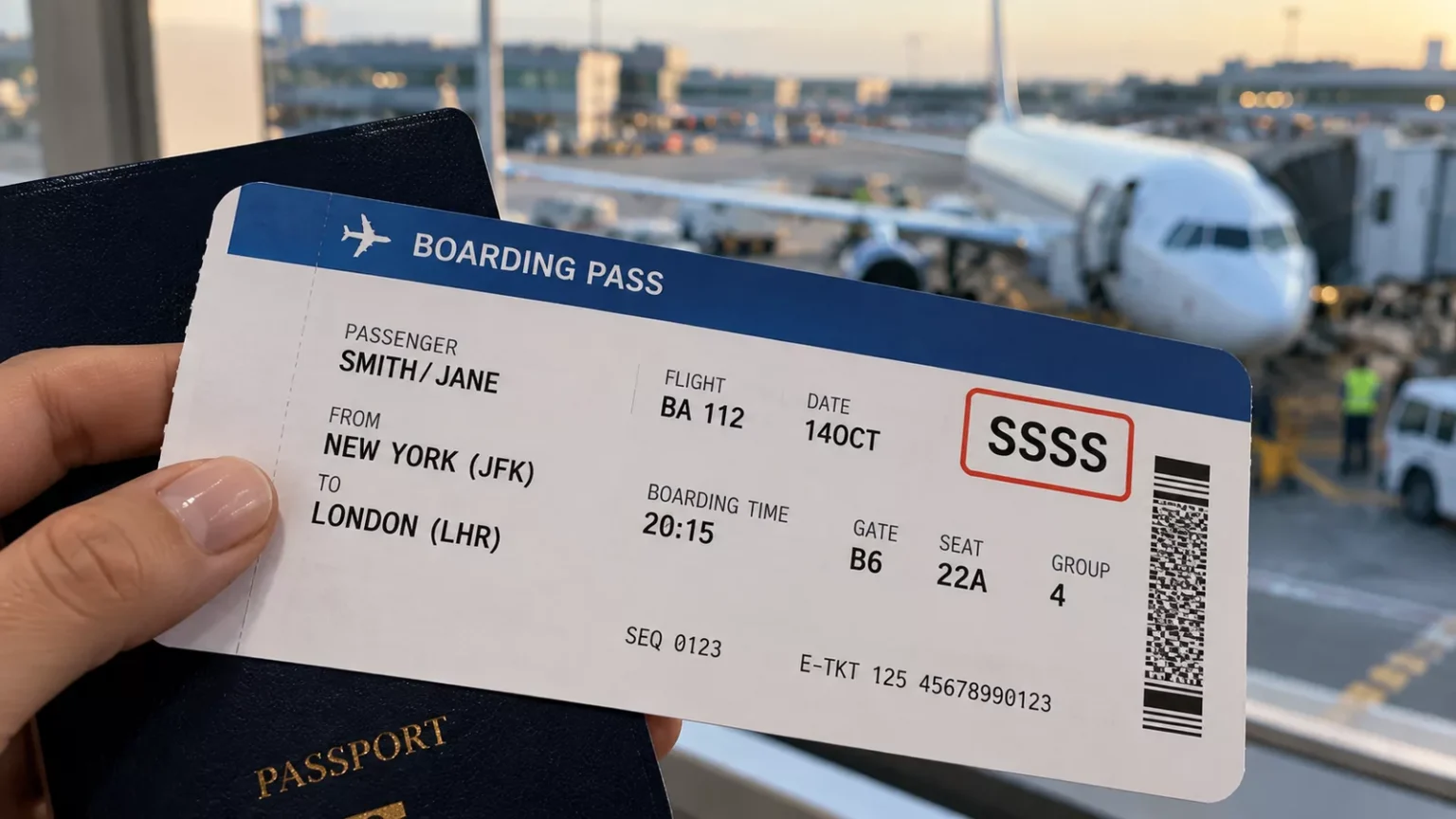
Popular articles


SSSS on a Boarding Pass: What It Means and What to Do Before Your Flight
 Tips & GuidesSSSS on a Boarding Pass: What It Means and What to Do Before Your Flight
Tips & GuidesSSSS on a Boarding Pass: What It Means and What to Do Before Your Flight
SSSS on a Boarding Pass: What It Means and What to Do Before Your Flight
Article content

The SSSS boarding pass meaning is Secondary Security Screening Selection. If SSSS appears on a boarding pass connected with U.S. air travel, the passenger has been selected for additional security screening beyond the ordinary airport process.
Seeing SSSS does not by itself mean a traveler has done something wrong, is prohibited from flying or will be denied boarding. It means additional screening should be expected before the passenger is cleared for the flight.
That screening can involve extra identity and document checks, a pat-down, closer inspection of carry-on belongings and testing for traces of explosives. The exact process and location can vary, particularly on international flights to the United States.
The most useful response is practical rather than speculative: allow more airport time, keep travel documents and electronics accessible, cooperate with screening personnel and do not leave a tight margin before boarding.
For travelers who see SSSS repeatedly rather than once, there is also a formal U.S. government redress process worth knowing about.
SSSS Boarding Pass Meaning in One Minute
SSSS stands for Secondary Security Screening Selection. The code indicates that the traveler has been selected for additional security screening associated with U.S. aviation security procedures.
The essential facts are straightforward.
| Question | Short answer |
|---|---|
| What does SSSS stand for? | Secondary Security Screening Selection |
| Does SSSS mean you cannot fly? | No |
| Will there be extra screening? | Yes |
| Does SSSS mean you are on a watchlist? | Not necessarily |
| Can TSA PreCheck prevent SSSS? | No guarantee |
| Can SSSS appear on an international flight? | Yes |
| Can screening happen at the gate? | Yes, particularly on some U.S.-bound international departures |
| Should you arrive earlier? | Yes |
| Can SSSS happen more than once? | Yes |
| Is there a process for repeated screening problems? | Yes, DHS TRIP may be relevant |
The main consequence of an SSSS boarding pass is extra time and additional screening, not automatic denial of travel.
What Does SSSS Mean on a Boarding Pass?
SSSS means Secondary Security Screening Selection. It identifies a passenger who has been selected for enhanced security screening before traveling.
The code is most closely associated with the U.S. Transportation Security Administration’s Secure Flight security framework. Secure Flight conducts passenger prescreening for covered flights, including flights within the United States and relevant flights involving U.S. airspace.
For a traveler, however, the technical background matters less than the practical result. An SSSS boarding pass means the normal airport routine may take longer.
Depending on the airport and itinerary, additional screening may occur at the main security checkpoint, in another screening area or near the departure gate.
Is SSSS a TSA Code?
Yes, SSSS is associated with U.S. aviation security screening and means Secondary Security Screening Selection. It should not be confused with an airline fare code, boarding group or seat designation.
The airline may print the boarding pass carrying SSSS, but an airline employee at the check-in desk does not simply choose passengers for extra screening on a whim.
For travelers, this distinction matters because arguing with a check-in agent about removing SSSS is unlikely to solve the problem. Once selected, the practical goal is to complete the required screening with enough time remaining to board the flight.
Does SSSS Mean You Are on a Watchlist?
No. An SSSS boarding pass alone does not establish that a passenger is on a government watchlist.
This is one of the most important misconceptions surrounding the SSSS boarding pass meaning. Additional screening can occur for different reasons, and the U.S. government does not publicly disclose the complete selection methodology in a way that lets a traveler look at the four letters and determine exactly why they were selected.
That means an SSSS code should not be interpreted as proof of suspicion, wrongdoing or watchlist status.
A traveler can receive additional screening and continue the trip normally once the required procedures are completed.
Does SSSS Mean You Are on the No Fly List?
No. SSSS and being prohibited from boarding are not the same thing.
A traveler with SSSS has been selected for additional screening. The entire point of the process is that the passenger proceeds through that screening before travel.
Someone who is legally prohibited from boarding faces a fundamentally different situation.
Seeing four S letters on a boarding pass can therefore be unsettling, but the code itself should not be read as a message that the passenger will not be allowed onto the aircraft.
Why Did I Get SSSS on My Boarding Pass?
There may be no way for an individual traveler to determine the exact reason. TSA does not publish a simple checklist that allows passengers to identify precisely why a particular boarding pass received SSSS.
Travel articles and traveler anecdotes frequently associate secondary screening with unusual itineraries, one-way international flights, late bookings, particular travel patterns or identity similarities. Those circumstances should not be treated as a definitive public list of SSSS triggers.
Risk-based security systems deliberately do not expose every selection rule. There can also be a random component to additional screening.
For that reason, asking “What did I do wrong?” may start from the wrong assumption. A single SSSS boarding pass does not demonstrate that the traveler did anything wrong at all.
Can SSSS Be Random?
Yes, random selection can be part of aviation security screening. A passenger should therefore avoid assuming that one SSSS boarding pass reveals something specific about their travel history.
This also explains why ordinary travelers can encounter SSSS unexpectedly.
A person can have an uncomplicated travel history, valid documents and no previous airport problems and still be selected for additional screening.
What Happens When You Have SSSS on Your Boarding Pass?
Expect additional security procedures before being cleared to travel. The exact sequence can vary by airport, route and circumstances.
Secondary screening may include a more detailed inspection of the passenger and belongings than the standard checkpoint process.
A traveler may encounter some combination of:
- Additional Identity or Document Checks. Keep a passport or other required identification easy to reach.
- A Pat-Down. Additional physical screening may be required.
- Carry-On Inspection. Officers may open bags and inspect their contents more closely.
- Explosive Trace Detection. Hands, clothing or belongings may be swabbed and tested.
- Additional Electronics Screening. Devices may receive closer inspection.
- Another Security Check Near the Gate. Some international U.S.-bound flights use additional screening close to boarding.
Not every SSSS passenger will experience an identical sequence. Airport layout, departure country and route can change how secondary screening is organized.
The safest assumption is simply that the process will take longer than normal security.
How Long Does SSSS Screening Take?
There is no guaranteed SSSS screening time. The additional procedure itself may be relatively quick, but queues, staffing, bag inspections and where the screening occurs can add unpredictable delays.
This distinction matters. A secondary inspection that takes only several minutes can still create a significant problem if the passenger reaches it shortly before boarding closes.
There may also be more than one stage of screening on some international itineraries.
For that reason, travelers should not plan around an internet claim that SSSS “takes 10 minutes” or any other fixed figure.
Build extra time into the airport schedule rather than trying to predict an exact screening duration.
How Early Should You Arrive at the Airport With SSSS?
Arrive earlier than you normally would for the same flight. There is no universal SSSS-specific arrival time because airports, routes, check-in procedures and security queues differ substantially.
If the airline recommends arriving three hours before an international departure, SSSS is not a reason to reduce that margin. It is a reason to make sure the recommended buffer is actually respected and potentially increase it when the airport or itinerary is complicated.
Do not plan a lounge visit, restaurant meal or duty-free shopping before allowing enough time for secondary screening.
The goal is not to spend unnecessary hours at the airport. It is to prevent an unpredictable security procedure from becoming a missed flight.
Can You Check In Online With SSSS?
Sometimes online check-in may not produce a usable boarding pass, and the traveler may be directed to an airline agent. In other cases, the passenger may first notice SSSS after a boarding pass is issued.
Being unable to obtain a mobile boarding pass does not automatically prove that SSSS is the reason. Airlines can block online check-in for many reasons, including document verification.
However, if an airline app or website repeatedly tells a traveler to see an agent, allow additional time at the airport rather than assuming the issue can be solved at the gate.
The agent may need to verify travel documents and issue a printed boarding pass.
Does “See Agent” Mean You Have SSSS?
Not necessarily. “See agent” can appear because of passport checks, visa requirements, ticketing problems, schedule changes, special-service requests and other issues unrelated to secondary security screening.
SSSS becomes clear when the designation appears on the boarding pass or the passenger is directed into the relevant screening process.
Do not diagnose every failed online check-in as an SSSS selection.
Where Does SSSS Screening Happen?
SSSS screening can occur at the normal security checkpoint, in a separate screening location or near the departure gate. The setup depends on the airport and itinerary.
For U.S.-bound flights departing another country, travelers may encounter additional security near the gate even after passing through the airport’s normal security checkpoint.
This can be surprising because the passenger may reasonably believe security is already finished.
If staff direct SSSS passengers into another line near boarding, follow those instructions and keep the boarding pass, passport and carry-on accessible.
Do not wander far from the gate shortly before boarding on an itinerary where secondary screening still needs to be completed.
Can SSSS Appear at a Foreign Airport?
Yes. The SSSS boarding pass meaning is not limited to physically standing inside a U.S. airport.
Travelers can encounter secondary screening on flights departing international airports for the United States. Depending on the airport and route, the additional procedure may take place before boarding rather than at a standard U.S. TSA checkpoint.
This is particularly important for international travelers who assume SSSS is relevant only to U.S. domestic flights.
A passenger flying from Europe, Asia, the Middle East, Latin America or another region to the United States can potentially encounter additional U.S.-related aviation security procedures before departure.
Does Europe Use SSSS?
European airports have their own aviation security requirements, governed by applicable European and national rules. SSSS specifically refers to the U.S.-associated Secondary Security Screening Selection process rather than a general four-letter label for European airport security.
However, a passenger departing a European airport on a U.S.-bound flight can encounter SSSS-related additional screening.
This distinction helps explain why someone can see SSSS in London, Paris, Frankfurt, Istanbul or another international departure airport without having reached the United States yet.
Does SSSS Mean Your Carry-On Will Be Searched?
A closer carry-on inspection is a common part of secondary screening, so passengers should be prepared for bags to be opened and examined. That does not mean every passenger will experience an identical bag search.
Pack with screening accessibility in mind. Keep electronics, liquids, travel documents and other items that may need separate inspection somewhere they can be reached without unpacking an entire suitcase.
A carefully organized carry-on cannot eliminate secondary screening, but it can make the process less frustrating.
Will SSSS Mean a Pat-Down?
A pat-down can be part of SSSS secondary screening. Travelers should be prepared for more extensive physical screening than they normally experience at an airport checkpoint.
In the United States, passengers can request that a pat-down be conducted in private. TSA procedures also provide options regarding the presence of a companion during private screening.
If a traveler has a medical condition, disability or other circumstance that affects screening, communicate that clearly to security personnel.
The presence of a pat-down does not mean the passenger has been accused of an offense. It is part of the additional screening process.
Will TSA Search Your Phone If You Have SSSS?
SSSS should not be interpreted as a simple automatic authorization for TSA to read the personal contents of a phone. Airport security screening and searches of digital data are not the same thing.
Electronics can receive additional physical or explosive-trace screening, and travelers on some routes may be asked to demonstrate that an electronic device can power on.
Questions involving searches of digital data can implicate different authorities, laws and border procedures, particularly during international travel.
The practical preparation is straightforward: keep electronics accessible and sufficiently charged, especially on international itineraries.
Do You Have to Unlock Your Phone Because of SSSS?
SSSS itself does not mean every passenger will be required to unlock a phone and expose its digital contents. Physical aviation security screening of a device is different from examination of the data stored inside it.
International border inspections can involve different legal authorities from TSA checkpoint screening, so travelers should not combine the two into one rule.
If a government officer makes a request involving access to digital data, the legal context may depend on where the traveler is, which agency is making the request and the traveler’s status.
For ordinary SSSS preparation, focus on having devices charged, accessible and ready for physical screening.
What Happens to Checked Luggage With SSSS?
Checked baggage is already subject to aviation security screening, and an SSSS designation does not give travelers a simple visible checklist showing exactly what additional procedures will happen to a checked suitcase.
The most noticeable SSSS experience is usually associated with the passenger and accessible belongings.
Travelers should follow the same checked-baggage rules they would for any flight and keep prohibited items out of luggage.
Valuables, essential medication and important travel documents should not be placed in checked baggage merely because additional screening is expected.
Can You Use TSA PreCheck With SSSS?
TSA PreCheck does not guarantee that a traveler will avoid additional screening. A Trusted Traveler Program membership is not an exemption from all future security procedures.
That is a crucial part of understanding the SSSS boarding pass meaning. A traveler may have passed the vetting required for an expedited-screening program and still be selected for additional security on a particular trip.
Do not assume that SSSS must be an airline mistake simply because the traveler has TSA PreCheck.
Follow the instructions given for that flight rather than insisting on the usual expedited lane.
Does Global Entry Prevent SSSS?
No. Global Entry does not guarantee protection from SSSS.
Global Entry primarily concerns expedited processing for eligible travelers entering the United States, while TSA PreCheck concerns expedited security screening for eligible flights. Neither should be understood as immunity from additional aviation security measures.
A Global Entry member can therefore encounter SSSS.
The same practical advice applies: complete the required screening and investigate further only if the problem becomes persistent.
Can CLEAR Prevent SSSS?
No. Identity-verification or expedited-access services do not override a requirement for secondary security screening.
CLEAR and SSSS solve different problems. A service that speeds identity verification or access to a checkpoint cannot guarantee that a passenger will not be selected for additional government security screening.
Travelers should therefore avoid treating paid or trusted-traveler airport services as a way to bypass SSSS.
If additional screening is required, it still needs to be completed.
Does SSSS Cancel TSA PreCheck Permanently?
No. Receiving SSSS on one boarding pass does not by itself mean a traveler’s TSA PreCheck membership has been permanently canceled.
The selection concerns the relevant security process for that trip.
If TSA PreCheck benefits disappear repeatedly across reservations, or a traveler repeatedly encounters security identification problems, investigate the broader issue separately.
One unusual flight should not automatically be interpreted as permanent loss of Trusted Traveler benefits.
Can Children Get SSSS on a Boarding Pass?
Additional screening procedures can affect travelers of different ages, but screening of children follows applicable security procedures and should not simply be assumed to mirror an adult experience in every detail.
Parents should remain calm and follow instructions from security personnel.
For U.S. domestic travel, TSA generally does not require children under 18 to provide identification when traveling with an adult, although airlines can have their own requirements and special rules can apply in other circumstances.
International travel is different because children need the documents required for the destination and itinerary.
Families should therefore prepare children’s documents just as carefully as adults’ documents before an international flight.
Can You Refuse SSSS Screening?
A traveler who wants to enter the secure area and board a commercial flight must comply with the applicable security screening requirements. Refusing required screening can mean the traveler cannot proceed to the flight.
Passengers can still ask questions about procedures and request appropriate accommodations where available.
For example, TSA allows passengers to request private screening for a pat-down. Travelers with disabilities, medical conditions or other needs can communicate those circumstances to officers.
Cooperation does not mean a traveler cannot ask what will happen next. It means required security screening cannot simply be skipped in order to catch the flight.
Will SSSS Make You Miss Your Flight?
Not necessarily. Many passengers complete secondary screening and board normally, but SSSS can add enough unpredictability that arriving late becomes risky.
The biggest controllable factor is time.
A passenger who reaches the airport early can absorb an additional screening delay. Someone who arrives shortly before check-in or boarding deadlines has much less margin.
This is especially important on international departures where document verification, immigration procedures and another security stage may already make the airport process longer.
Treat SSSS as a reason to protect the schedule, not as a prediction that the flight will be missed.
What Should You Do If You See SSSS Before Going to the Airport?
Do not try to remove the code by repeatedly downloading a boarding pass or changing trivial reservation details. Prepare for additional screening instead.
A simple SSSS boarding pass checklist is enough:
- Allow Extra Airport Time. Do not use the tightest possible arrival schedule.
- Check Airline Check-In Deadlines. International flights can close check-in well before departure.
- Carry the Correct ID or Passport. Keep it immediately accessible.
- Organize the Carry-On. Make electronics and liquids easy to remove if requested.
- Charge Electronic Devices. This is particularly sensible on international flights.
- Keep the Boarding Pass Accessible. Do not bury a printed pass in the bottom of a bag.
- Stay Near the Gate Once Boarding Approaches. Additional screening can sometimes occur there.
- Tell Traveling Companions What Is Happening. They may be able to continue boarding while the selected passenger is screened.
- Remain Calm and Follow Instructions. SSSS is additional screening, not automatic denial of travel.
- Keep Records if It Happens Repeatedly. Recurrent problems may justify using DHS TRIP.
Preparation cannot eliminate SSSS, but it can prevent a security delay from becoming a travel disruption.
What Not to Do When You Get SSSS
The most common mistake is spending valuable airport time trying to determine why the passenger was selected instead of preparing for the screening itself. The exact reason may not be available.
Avoid these responses:
- Do Not Arrive Late Because You Usually Have TSA PreCheck. Additional screening can change the normal routine.
- Do Not Assume SSSS Means You Are on a Watchlist. The code alone does not establish that.
- Do Not Assume Global Entry Makes SSSS Impossible. Trusted Traveler status does not guarantee exemption.
- Do Not Treat Internet Lists of “SSSS Triggers” as Official Rules. TSA does not publish a complete public trigger list.
- Do Not Hide or Rearrange Items to Avoid Inspection. Pack normally and comply with security requirements.
- Do Not Leave the Gate Area at the Last Minute. Some additional screening can occur near boarding.
- Do Not Confuse Security Screening With Immigration or Customs. Different agencies and procedures can apply.
- Do Not Ignore a Repeated Pattern. Persistent screening problems may warrant a DHS TRIP inquiry.
The distinction between one SSSS event and repeated travel difficulties is particularly important. A single selection may require nothing beyond extra time. A persistent problem deserves a closer look.
Why Do I Keep Getting SSSS on My Boarding Pass?
Repeated SSSS selections can be more significant from the traveler’s perspective because they create recurring delays. However, repeated SSSS still does not allow the passenger to know the precise reason from the boarding pass alone.
If a traveler consistently experiences additional screening, boarding difficulties or apparent misidentification, the U.S. Department of Homeland Security operates the DHS Traveler Redress Inquiry Program, or DHS TRIP.
DHS TRIP is designed for travelers who have experienced difficulties during travel screening or related processes and want the government to review the issue.
It is not a guarantee that a traveler will never receive additional screening again.
What Is DHS TRIP?
DHS TRIP is the Department of Homeland Security’s Traveler Redress Inquiry Program. It provides a formal process for travelers seeking resolution of certain recurring travel-screening or identification difficulties.
After a case is reviewed and closed, an eligible traveler may receive a Redress Control Number.
DHS states that government partners use the results of the redress process to update or correct relevant government records as appropriate.
A Redress Control Number can then be provided when making airline reservations.
Should You Apply for DHS TRIP After One SSSS?
Not necessarily. One instance of secondary screening does not automatically mean there is an identity problem that needs formal redress.
DHS TRIP becomes more relevant when a traveler experiences a recurring pattern of security or boarding difficulties, particularly when misidentification may be involved.
Before applying, review the current DHS TRIP eligibility and instructions and determine whether the actual travel problem fits the program.
The program should not be treated as a button that permanently disables additional screening.
What Is a Redress Control Number?
A Redress Control Number, or RCN, is a 7-digit number associated with a DHS TRIP case. Travelers who receive one can provide it when making airline reservations to help the government identify their redress record during security checks.
DHS specifically encourages travelers with an RCN to include it in reservations to help prevent misidentification.
However, the number does not guarantee completely delay-free travel or eliminate every possibility of additional screening.
This is another area where two airport numbers are frequently confused.
Redress Number vs. Known Traveler Number: What Is the Difference?
A Redress Control Number and a Known Traveler Number serve different purposes and should go into different reservation fields.
| Number | Main purpose | Typical format/use |
|---|---|---|
| Redress Control Number | Connects a reservation with a DHS TRIP redress case | 7-digit number |
| Known Traveler Number | Connects eligible travelers with Trusted Traveler benefits such as TSA PreCheck | Separate KTN field |
You may also be interested in our article: eSIM vs Physical SIM for Travel: Which Should You Use Abroad?
DHS specifically warns travelers not to put a Redress Control Number in the Known Traveler Number field.
If both numbers are available, enter each one in its correct reservation field.
Will a Redress Number Stop SSSS?
It may help with problems caused by misidentification, but it does not guarantee that SSSS or other additional screening will never happen again.
DHS states that travelers with Redress Control Numbers are encouraged to include them in reservations to help prevent misidentifications during checks against government records and other information.
The agency also makes clear that the redress process cannot guarantee completely delay-free travel.
That distinction matters. A Redress Control Number is a tool for connecting a traveler to a reviewed redress case, not a lifetime exemption from aviation security screening.
Does SSSS Stay on Your Record?
There is no simple public rule saying that receiving SSSS once creates a permanent SSSS status attached to every future flight. Travelers can receive it once and not encounter it on their next trip.
Others may experience repeated additional screening.
Because the complete selection methodology is not publicly disclosed, passengers should avoid drawing conclusions from one boarding pass.
If the pattern becomes persistent, document the affected trips and consider whether DHS TRIP is appropriate.
Can an Airline Remove SSSS From Your Boarding Pass?
Do not assume an airline check-in agent can simply erase the SSSS designation on request. Airlines issue boarding passes, but security selection is not equivalent to choosing a seat or correcting a frequent-flyer number.
If the designation appears, prepare to complete the additional screening.
Changing seats, printing another copy of the boarding pass or asking another employee to issue it again should not be treated as a strategy for avoiding security procedures.
If there appears to be a genuine identity or reservation error, address that underlying problem separately.
Does Changing Your Flight Remove SSSS?
There is no reliable reason to assume changing a flight will eliminate additional screening. Altering travel plans solely to try to make SSSS disappear can create new costs and complications without solving anything.
If the flight itself still works, complete the required screening.
This is particularly important with restrictive fares. Changing a ticket can involve fare differences, fees or loss of a desirable itinerary.
A secondary security selection is usually a time-management issue, not a reason to rebuild an otherwise suitable trip.
Does SSSS Affect Connecting Flights?
It can affect the airport process surrounding an itinerary, but the exact screening point depends on the route. A traveler may encounter additional screening before one segment rather than every segment.
Connections become risky when the itinerary already has very little spare time.
If an SSSS passenger needs additional screening during a connection, a legal minimum connection time on paper may feel much tighter in practice.
Travelers who already know they frequently experience secondary screening should be cautious about booking exceptionally short connections, particularly on international itineraries involving immigration, terminal changes or another security checkpoint.
A cheap itinerary is not necessarily a good itinerary if every connection depends on perfect timing. LitiTravels’ guide to affordable family vacations and the real costs behind cheap travel explains the same principle from a budgeting perspective: the lowest advertised flight price can become a poor choice once airport, baggage, connection and schedule realities are included.
Is SSSS More Common on International Flights?
There is no reliable public passenger statistic that allows a precise comparison of how frequently SSSS appears on international versus domestic flights.
What can be said confidently is that SSSS can occur in both contexts and is particularly noticeable to travelers on U.S.-bound international itineraries because additional screening may take place at a foreign airport near the departure gate.
Do not assume a domestic flight is immune or that every international traveler faces the code.
The designation applies to selected passengers, not to every person on a particular type of trip.
Can You Get SSSS on a Domestic U.S. Flight?
Yes. Secondary security screening is not limited to international travel.
A passenger can encounter additional screening while traveling within the United States.
The practical response is the same: allow more time, bring acceptable identification where required, keep belongings accessible and follow checkpoint instructions.
For domestic U.S. travelers age 18 and older, current TSA identification requirements also matter independently of SSSS. A security-selection issue and an identification problem can both create delays, but they are not the same thing.
Is SSSS Related to REAL ID?
Not directly. SSSS is a secondary security screening designation, while REAL ID concerns which identification documents are accepted for particular federal purposes, including TSA airport checkpoints.
A traveler can have fully acceptable identification and still receive SSSS.
Likewise, arriving without acceptable identification can create a separate identity-verification process without necessarily meaning the traveler was selected through SSSS.
Do not combine the two issues.
For U.S. domestic airport screening, travelers should check current TSA identification requirements before departure, particularly if they rarely fly.
Does SSSS Affect Immigration or Entry Into the United States?
SSSS is an aviation security screening designation and should not automatically be interpreted as an immigration decision.
Airport security screening, customs inspection and immigration admissibility are separate processes, even though an international traveler may encounter them during the same journey.
Receiving SSSS does not by itself tell a passenger whether U.S. Customs and Border Protection will ask additional questions on arrival.
Travelers should therefore avoid assuming that secondary screening before a flight predicts what will happen at passport control.
Is SSSS Only for U.S. Citizens?
No. The SSSS boarding pass meaning concerns additional security screening associated with covered air travel, not a designation reserved only for U.S. citizens.
International visitors traveling to the United States can encounter it as well.
Nationality, visa status and aviation security screening are distinct issues.
Any traveler who sees SSSS should focus on the instructions for that particular airport and flight.
Can You Find Out Exactly Why You Got SSSS?
Usually, a passenger should not expect airport personnel to provide the exact internal reason for selection. Security systems do not expose their complete decision logic to travelers.
Trying to force an explanation at the checkpoint is therefore unlikely to be productive and can consume valuable time.
If the event happens once, completing the screening is generally the immediate priority.
If screening difficulties happen repeatedly, DHS TRIP provides the more appropriate formal route for seeking redress.
Is SSSS Something to Worry About?
SSSS is inconvenient, but for most travelers the immediate issue is additional screening and additional time. It is not, by itself, proof of wrongdoing or a notice that the traveler cannot fly.
The best approach is to separate what the boarding pass actually says from what it does not say.
It does say that secondary security screening is required.
It does not say why the passenger was selected, prove that the passenger is on a watchlist or automatically indicate that boarding will be denied.
That distinction removes much of the unnecessary anxiety surrounding the four letters.
A Practical Airport Timeline When Your Boarding Pass Says SSSS
The safest SSSS strategy is to remove avoidable time pressure. Build the airport routine around the possibility that both check-in and security will take longer than expected.
A practical sequence looks like this:
- Before Leaving for the Airport. Confirm flight status, required travel documents and the airline’s recommended arrival time.
- At Check-In. Go to a staffed counter if online check-in did not produce a boarding pass or the airline instructs you to see an agent.
- Before Security. Put identification, boarding pass and essential documents somewhere immediately accessible.
- At Security. Follow directions for secondary screening and ask questions if a procedure is unclear.
- After the Main Checkpoint. Do not assume all screening is finished on every international itinerary.
- At the Gate. Stay close enough to respond if selected passengers are called for an additional procedure.
- After Screening. Repack carefully and confirm that passport, wallet, phone and other valuables are still present.
- After the Trip. If SSSS becomes a recurring pattern, record the flight details and review DHS TRIP.
The most useful preparation is surprisingly ordinary: time, organization and accessible documents.
SSSS Boarding Pass Meaning: The Bottom Line
SSSS means Secondary Security Screening Selection. It tells a passenger to expect additional aviation security screening, which can include identity checks, a pat-down, carry-on inspection, explosive-trace testing and additional procedures at the checkpoint or gate.
It does not automatically mean the traveler is on a watchlist. It does not mean the passenger has committed an offense. It does not mean the passenger is banned from flying.
TSA PreCheck, Global Entry and other expedited-travel arrangements do not guarantee that a traveler will never receive SSSS.
For a one-time selection, the most practical response is simply to arrive with enough time and complete the required screening. For travelers who repeatedly experience SSSS or other apparent misidentification problems, DHS TRIP provides a formal redress process, and an eligible traveler may receive a Redress Control Number to include in future reservations.
Four letters can make an airport day slower. They do not automatically make it a travel emergency.
FAQ About SSSS Boarding Pass Meaning
What is the SSSS boarding pass meaning?
SSSS stands for Secondary Security Screening Selection. It means the passenger has been selected for additional security screening before flying.
What does SSSS stand for on a boarding pass?
SSSS stands for Secondary Security Screening Selection. The designation is associated with enhanced security procedures for selected passengers.
Is SSSS on a boarding pass bad?
SSSS is inconvenient because it can mean extra screening and additional airport time, but it does not by itself mean the traveler has done something wrong or cannot fly.
Does SSSS mean you are on a watchlist?
No. An SSSS boarding pass alone does not prove that a traveler is on a government watchlist. The complete selection methodology is not publicly disclosed.
Does SSSS mean you are on the No Fly List?
No. SSSS means additional screening, not automatic prohibition from flying. A passenger with SSSS can normally proceed after completing the required security procedures.
Why did I get SSSS on my boarding pass?
The exact reason may not be available to the traveler. Security selection can involve risk-based processes and random screening, and TSA does not publish a complete list of selection criteria.
Can SSSS be random?
Yes. Random selection can be part of security screening, so one SSSS boarding pass does not necessarily indicate a specific problem with the passenger or itinerary.
What happens if you have SSSS on your boarding pass?
Expect additional screening that may include document checks, a pat-down, carry-on inspection and explosive-trace testing. The exact procedure varies by airport and itinerary.
How long does SSSS screening take?
There is no guaranteed duration. The screening itself may be relatively quick, but queues, detailed bag inspections and airport procedures can add unpredictable time.
How early should you arrive with SSSS?
Arrive earlier than you normally would for the same flight and respect the airline’s recommended airport arrival time. International travelers should leave a generous buffer because secondary screening can occur close to boarding.
Can you get SSSS with TSA PreCheck?
Yes. TSA PreCheck does not guarantee exemption from additional security screening.
Can you get SSSS with Global Entry?
Yes. Global Entry membership does not prevent a traveler from being selected for additional aviation security screening.
Can you get SSSS on a domestic flight?
Yes. SSSS can occur on domestic U.S. travel as well as international itineraries associated with U.S. aviation security.
Can you get SSSS at a foreign airport?
Yes. Travelers can encounter SSSS and additional screening at an international airport before a U.S.-bound flight.
Can SSSS screening happen at the gate?
Yes. On some itineraries, particularly certain U.S.-bound international departures, additional screening can occur near the boarding gate.
Does SSSS mean your carry-on will be searched?
A more detailed inspection of carry-on belongings can be part of secondary screening. Passengers should keep electronics and other frequently inspected items accessible.
Will you get a pat-down with SSSS?
A pat-down can be part of SSSS screening. The exact procedures vary depending on the passenger, airport and security circumstances.
Can you refuse SSSS screening?
A passenger who refuses required security screening may not be permitted to proceed to the secure area or board the flight. Travelers can still ask questions and request available accommodations such as private screening.
Can an airline remove SSSS?
Travelers should not expect an airline employee to simply remove a security-screening designation on request. If SSSS appears, prepare to complete the required screening.
Why do I keep getting SSSS?
Repeated screening can have different causes, including possible identity or record-matching issues, but the boarding pass does not reveal the exact reason. Travelers experiencing recurring problems can review the DHS Traveler Redress Inquiry Program.
What is DHS TRIP?
DHS TRIP is the U.S. Department of Homeland Security’s Traveler Redress Inquiry Program. It provides a formal process for travelers experiencing certain recurring security, identification or travel-screening difficulties.
What is a Redress Control Number?
A Redress Control Number is a 7-digit number associated with a completed DHS TRIP case. Travelers who receive one are encouraged to enter it in the appropriate airline reservation field to help prevent misidentification.
Will a Redress Control Number stop SSSS permanently?
No guarantee exists. A Redress Control Number can help address misidentification, but DHS states that the redress process cannot guarantee completely delay-free travel or prevent every instance of additional screening.
Is a Redress Control Number the same as a Known Traveler Number?
No. A Redress Control Number relates to DHS TRIP, while a Known Traveler Number is associated with Trusted Traveler Programs such as TSA PreCheck or Global Entry. They belong in separate airline reservation fields.
Does SSSS affect immigration?
SSSS concerns aviation security screening and is not automatically an immigration decision. Immigration, customs and airport security are separate processes.
Should you worry if SSSS appears once?
Usually, the practical response to a one-time SSSS selection is simply to allow extra airport time and complete the additional screening. If similar problems occur repeatedly, consider whether the DHS TRIP redress process is appropriate.


Author of LitiTravels Portal


Articles by the author:
All articles by author

A passport can still be legally valid and still get you denied boarding. The passport 6-month rule varies by destination, and some countries require three months, 30 days or only enough validity for your stay. Here is how to ch...
 October 15, 2026
 9
9
A power bank belongs in your carry-on, a pocket knife does not, and peanut butter counts as a liquid at TSA security. Before closing your suitcase, check 25 items travelers still pack in the wrong bag and what to do with them i...
October 14, 2026
16

The best honeymoon destinations in the world are not simply the places with the prettiest beaches. This 2026/27 shortlist compares 15 romantic trips by season, budget, privacy, travel time and what couples can realistically do ...
October 13, 2026
23
A canceled flight can turn an airport into chaos within minutes, but the longest customer-service line is not always the best place to start. This step-by-step guide explains how to get rebooked faster, protect your refund righ...
October 12, 2026
29
Subscribe to “lititravels” on Telegram for gaming intel.
No filler, no fuss—just your daily XP boost. Hop in and level up, squad!



Read also
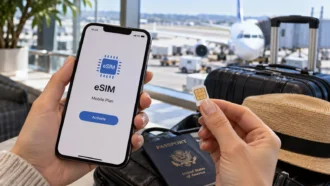
An eSIM can get you online before you leave the airport, while a local physical SIM may offer better value or a real local number. This eSIM vs physical SIM travel guide explains which option wins for short trips, long stays an...
October 8, 2026
29

London makes it easy to plan a memorable date – and surprisingly easy to overcomplicate one. These 27 date ideas cover free afternoons, first meetings, rainy days, big anniversaries and unusual nights, with practical ways to ch...
October 8, 2026
41
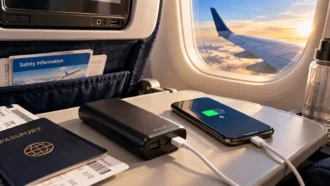
Taking a power bank on a plane is still allowed in 2026, but the rules have changed. A new two-power-bank limit, strict carry-on requirements and airline-specific restrictions mean travelers should check more than the mAh numbe...
October 6, 2026
44
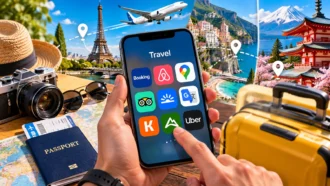
A phone full of travel apps does not necessarily make a trip easier. These are the best travel apps in 2026 for the jobs that actually matter – from finding flights and building an itinerary to navigating offline, translating m...
October 1, 2026
83

The wrong London hotel can add an hour of Tube travel to every day. This guide compares 10 areas that actually work for visitors, from walkable Covent Garden to museum-friendly South Kensington and Heathrow-ready Paddington.
September 22, 2026
134

Chicago has enough great coffee to turn café-hopping into a full day out. These 12 Chicago coffee shops range from pioneering specialty roasters to tiny neighborhood favorites – plus there is a realistic route for tasting them ...
September 22, 2026
59

Swiss food is much bigger than fondue and chocolate. Travel from Zurich to Valais and Ticino and the menu changes completely. These 15 dishes show what to order, where each specialty makes sense and which famous foods are actua...
September 21, 2026
75

Glasgow food is much bigger than haggis. The city mixes old-school Scottish comfort dishes, legendary breakfast rolls, chippy culture, South Asian flavours and ambitious modern cooking. Start with these 15 foods and the neighbo...
September 19, 2026
63

San Francisco is easier to navigate safely when you know how quickly conditions can change from one block to the next. Here is what visitors need to know in 2026 about neighborhoods, nighttime travel, transit, car break-ins and...
September 18, 2026
98

Edinburgh is much easier to enjoy when you stop treating it as one long checklist. This 2026 guide picks the sights worth your time, shows which ones fit together and reveals where to go when the Royal Mile starts feeling too c...
September 17, 2026
59

Cooperation
Looking to shine a spotlight on your project? LitiTravels has you covered! We offer article-based promotion, manage branded blogs on our platform, drive engagement through our social media channels, and create content that delivers real results. Get in touch today and let’s make your brand stand out!
Subscribe to the monthly news digest from LitiTravels
The main news and updates from the team about gadgets, sports, cars, health, and lifestyle.
