Home Travel Planning15 Boutique Hotels in San Francisco That Make Choosing Where to Stay Much Easier
Travel Planning15 Boutique Hotels in San Francisco That Make Choosing Where to Stay Much Easier
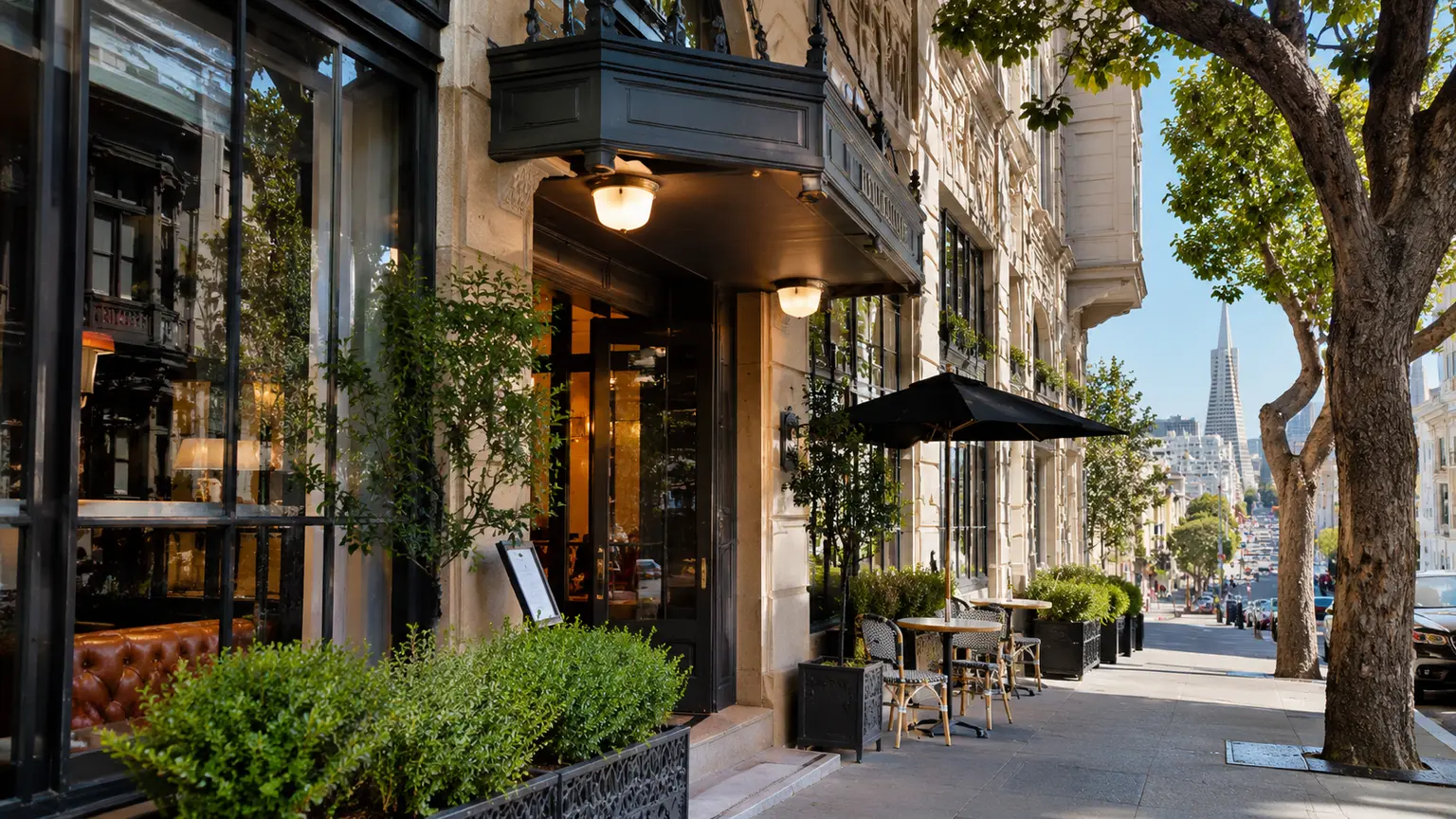
The best boutique hotels in San Francisco are not necessarily the most expensive or the ones with the most impressive interiors. For a first visit, a well-located hotel near Union Square can make transportation remarkably simple. For a quieter vacation, Pacific Heights or Japantown may be worth the extra travel time, while waterfront hotels put major attractions within walking distance.
Location matters as much as the room itself in San Francisco. A hotel that looks close to everything on a map may sit at the top of a steep hill, several blocks from convenient transit, or beside streets that become noticeably quieter after dark. Two similarly priced boutique hotels can therefore produce very different travel experiences.
There is also the question of price. San Francisco's 2026 hotel market is experiencing rising room rates, and nightly amenity fees, hotel taxes, parking, and breakfast charges can make an apparently affordable booking considerably more expensive. A beautiful $200 room is not necessarily a $200 stay.
This guide compares 15 boutique hotels in San Francisco, covering historic properties, contemporary design hotels, intimate guesthouses, and luxury retreats. Each option includes its strongest advantages, neighborhood trade-offs, and the type of traveler most likely to appreciate it.
The strongest boutique hotels in San Francisco serve different needs: central transportation, waterfront sightseeing, peaceful neighborhoods, or distinctive architecture. There is no single property that combines every advantage without compromise.
The table offers a quick comparison of the 15 hotels, including their locations, relative price positioning, and the most important consideration before booking.
|
Boutique hotel |
Neighborhood |
Price tier |
Best for |
Main trade-off |
|
Hotel Emblem |
Union Square |
Upper-midrange |
Couples, art lovers |
Central street noise |
|
Chancellor Hotel |
Union Square |
Value–midrange |
First-time visitors |
Compact rooms, no AC |
|
Hotel Zeppelin |
Union Square |
Midrange–upscale |
Friends, design lovers |
Lively atmosphere, additional fees |
|
White Swan Inn |
Lower Nob Hill |
Upscale |
Romantic trips |
Hills, historic-property limitations |
|
Galleria Park Hotel |
Financial District |
Upper-midrange |
Sightseeing, business |
Amenity fee, quieter evenings nearby |
|
1 Hotel San Francisco |
Embarcadero |
Luxury |
Waterfront luxury |
High fees and parking costs |
|
Hotel Boheme |
North Beach |
Midrange |
Food lovers, couples |
Stairs, no elevator |
|
Argonaut Hotel |
Fisherman's Wharf |
Upscale–luxury |
Families, waterfront |
Busy tourist surroundings |
|
Hotel Zoe |
Fisherman's Wharf |
Upper-midrange |
First-time visitors, families |
Daily amenity fee |
|
Hotel Kabuki |
Japantown |
Upscale |
Design and food lovers |
Less convenient for BART |
|
Kimpton Hotel Enso |
Japantown |
Upscale |
Couples, pet owners |
Bus or rideshare often useful |
|
Hotel Drisco |
Pacific Heights |
Luxury |
Quiet romantic stays |
Residential location |
|
The Laurel Inn |
Pacific Heights |
Upper-midrange |
Families, longer stays |
Farther from downtown attractions |
|
Parker Guest House |
Castro/Mission |
Upper-midrange |
Couples, local experiences |
Smaller guesthouse facilities |
|
Hotel VIA |
South Beach/SoMa |
Upscale |
Baseball, events, business |
Event-related noise and pricing |
Price tiers describe each hotel's general market positioning, not guaranteed rates. Actual nightly prices can move between categories depending on travel dates, room type, and availability.
For most first-time visitors, Hotel Emblem, Chancellor Hotel, or Galleria Park Hotel offer particularly practical starting points because they combine central locations with relatively convenient sightseeing access. Travelers who value peaceful surroundings may prefer Hotel Drisco, while Hotel Kabuki provides a stronger neighborhood experience away from the conventional downtown hotel district.
Boutique hotels in San Francisco commonly require a planning budget of approximately $150–$350 per night before taxes and additional charges, while luxury properties can cost substantially more. This is a broad budgeting range rather than a live quotation or an individual hotel's fixed price.
San Francisco's official tourism forecast projects a citywide average daily hotel rate of $266.16 for 2026, an 8.5% increase from the previous year. That average includes different hotel categories and should not be mistaken for the typical price of every boutique property.
For accommodation planning, the following ranges provide a useful starting point.
|
Budget tier |
Planning budget per night |
What to expect |
|
Lower-cost boutique |
$120–$180 |
Smaller rooms, limited services, occasional promotional rates |
|
Midrange boutique |
$180–$275 |
Distinctive design, central or desirable neighborhood location |
|
Upscale boutique |
$275–$400 |
Better room categories, additional services, premium interiors |
|
Luxury boutique |
$400–$650+ |
High-end design, enhanced service, prestigious location or views |
These ranges are useful for setting a search budget, not predicting what a particular hotel will charge. A room normally positioned in the upscale category may occasionally become cheaper during low-demand periods, while major conventions can push even ordinary rooms into luxury pricing territory.
A realistic hotel budget must include the final checkout total, not only the advertised room rate. San Francisco imposes a 14% transient occupancy tax on qualifying short stays, and additional tourism assessments or hotel-specific charges may apply.
For travelers comparing a short stay, a $50 nightly difference adds $150 to a three-night booking before taxes. That amount may justify a better location, a quieter room, or an included breakfast, but only if those benefits will actually be used.
Union Square is generally the most practical neighborhood for first-time visitors without a car, while Nob Hill, Japantown, and Pacific Heights suit travelers seeking a quieter or more residential atmosphere. Fisherman's Wharf works particularly well for families focused on waterfront attractions, and North Beach is a strong choice for food and neighborhood character.
Choosing the right neighborhood before comparing individual hotels prevents many common booking mistakes.
|
Neighborhood |
Best for |
Transportation |
What to consider |
|
Union Square |
First visits, shopping, sightseeing |
Excellent near Powell Street |
Busy streets, location varies block by block |
|
Lower Nob Hill |
Couples, classic architecture |
Good, with hills |
Steep approaches and varied street conditions |
|
Financial District |
Business, central sightseeing |
Excellent |
Some streets quiet after office hours |
|
Embarcadero |
Waterfront views, luxury |
Excellent near Market Street |
Premium pricing |
|
Fisherman's Wharf |
Families, Alcatraz, waterfront |
Streetcars, cable cars, buses |
Tourist crowds and expensive dining |
|
North Beach |
Restaurants, nightlife, culture |
Mainly buses and walking |
Street noise, limited direct rail |
|
Japantown |
Food, design, local atmosphere |
Mainly buses |
BART stations farther away |
|
Pacific Heights |
Quiet stays, upscale surroundings |
Mainly buses |
Hills and longer journeys |
|
Castro/Mission |
Local culture, restaurants |
Muni and nearby BART routes |
Fewer conventional hotels |
|
South Beach/SoMa |
Baseball, conferences, events |
Good on major corridors |
Traffic and prices during events |
Union Square is a strong choice for first-time visitors who want central transportation and easy access to shopping, restaurants, and downtown attractions. Its greatest advantage is proximity to Powell Street, where BART, Muni Metro, and cable car connections make it easier to explore without renting a car.
The important limitation is that Union Square is not one uniform neighborhood experience. A hotel on Powell Street can feel different from one several blocks west, even when both advertise the same area.
Check the exact address and the walking route to your nearest station before booking. Downtown conditions can vary significantly between streets, especially around the boundaries of the Tenderloin and Mid-Market districts.
Travelers deciding between central accommodation options can find a more detailed explanation in the guide to San Francisco safety and the neighborhoods tourists should know. It covers practical issues that matter when choosing a hotel, including nighttime routes and transportation.
Fisherman's Wharf is often more convenient for families and visitors whose priority is the waterfront rather than shopping or downtown nightlife. PIER 39, the sea lions, Aquatic Park, and the departure area for Alcatraz tours are within the wider neighborhood.
The trade-off is a more tourist-oriented setting, with restaurants and attractions that can be expensive for what they offer. Direct BART access is also less convenient than in Union Square or the Financial District.
The historic F-line streetcar and cable car routes help connect Fisherman's Wharf with other areas. However, these services should not be mistaken for a subway station immediately outside every waterfront hotel.
Pacific Heights is among the strongest choices for travelers who want residential streets, historic architecture, and a calmer place to return after sightseeing. Japantown offers another attractive balance, combining restaurants and shops with a setting less dominated by large tourist hotels.
Neither area is the fastest base for every attraction. Buses, rideshares, and occasional longer journeys are part of the trade-off, especially when traveling between opposite sides of the city.
For travelers staying four or five nights, this difference may be worthwhile. A short two-night visit with an ambitious sightseeing schedule may benefit more from a central hotel.
Union Square and lower Nob Hill have one of the city's strongest concentrations of boutique accommodation. The hotels range from historic family-run properties to design-focused establishments with bars, libraries, and elaborate interiors.
Hotel Emblem is a strong choice for travelers who want a creative boutique hotel without sacrificing a central San Francisco location. Situated at 562 Sutter Street, it sits where Union Square meets the lower Nob Hill and Theater District area.
The property draws on San Francisco's literary and artistic history rather than following a conventional luxury-hotel design. Its Writer's Alcove, expressive interiors, and social spaces create an atmosphere particularly appealing to couples and travelers interested in art and culture.
The location makes Chinatown, Union Square, and downtown shopping relatively accessible on foot. Public transportation is also convenient, although reaching the main Powell Street stations requires a walk.
The main compromise is the urban setting. Travelers who are sensitive to street activity should ask about room placement and sound insulation before selecting a category.
Hotel Emblem is particularly suitable for a two- or three-night city break where sightseeing convenience matters but the hotel should feel more distinctive than a standardized business property.
Chancellor Hotel is one of the more practical historic boutique hotels in San Francisco for travelers who prioritize location over elaborate amenities. This family-owned property stands at 433 Powell Street, directly along the Powell Street cable car route.
The building dates to 1914, giving it a traditional San Francisco identity that differs from newer lifestyle hotels. Its main strength is straightforward: visitors can reach shopping, restaurants, and transportation without arranging a separate transfer across town.
The hotel is especially appealing to solo travelers and couples who spend most of their day exploring. It also deserves consideration when central luxury properties are priced beyond the available budget.
There are important room limitations. The hotel states that bathrooms are compact, guestrooms do not have air conditioning, and accessibility is complicated by the historic building.
Those details may be minor for travelers comfortable with older accommodation, but they matter for anyone who requires strong climate control, substantial bathroom space, or particular mobility accommodations.
Hotel Zeppelin offers a more playful interpretation of a San Francisco boutique hotel, with rock-and-roll-inspired design and social spaces. Located at 545 Post Street, it is close to Union Square and the Theater District.
The property is known for its unconventional interiors and entertainment facilities, including a game room. This makes it a natural choice for friends traveling together, couples looking for an energetic setting, and visitors who appreciate a hotel with its own personality.
Hotel Zeppelin's central location is another advantage, especially for travelers planning evening activities downtown. Restaurants, bars, and major transportation connections are accessible within the wider neighborhood.
The hotel's lively atmosphere is not ideal for everyone. Some rooms may be affected by street noise or activity around communal spaces, and a nightly guest amenities fee can increase the final bill.
Choose Hotel Zeppelin for atmosphere and location, not for a guaranteed quiet retreat. Confirm the room category, additional charges, and cancellation conditions before booking.
White Swan Inn is one of the most distinctive boutique hotels in San Francisco for couples who prefer an intimate property with traditional architecture. It is located at 845 Bush Street on lower Nob Hill.
The 26-room inn combines English country-house influences with playful interiors and individual fireplaces. Its rooms have a different atmosphere from contemporary hotels dominated by minimalist furniture and large public spaces.
An important advantage is the collection of included hospitality features. The property advertises breakfast, afternoon refreshments, and an evening wine-and-snack reception, which can make its overall value stronger than a similarly priced hotel charging separately for these services.
The principal consideration is the historic setting. Guests should confirm whether their preferred room has the right bed configuration, bathroom facilities, and accessibility features.
White Swan Inn is particularly appealing for anniversaries, romantic weekends, and travelers who prefer returning to a comfortable lounge rather than a busy hotel lobby.
Downtown and waterfront hotels provide a practical combination of sightseeing, restaurants, and public transportation. The experience varies from historic Financial District buildings to luxury properties facing the bay.
Galleria Park Hotel is a well-located boutique property at 191 Sutter Street, between Union Square and the Financial District. It works particularly well for travelers who want central transportation without staying directly in the busiest shopping area.
The hotel combines a historic setting with contemporary guestrooms and a landscaped outdoor terrace. Its location puts Chinatown, the Financial District, and Union Square within relatively convenient reach.
Business travelers may appreciate the desk space, central address, and access to downtown offices. Leisure visitors can use the same location for walking routes through the northeastern part of San Francisco.
One important cost is the $35 nightly urban amenity fee, plus applicable tax. This covers services that include access to the terrace, Wi-Fi, fitness facilities, and hospitality amenities.
Parking is another significant expense, with the hotel listing valet parking from $74 per night plus tax for standard vehicles. Travelers without a car are therefore likely to get better value from this location.
1 Hotel San Francisco is a luxury, design-focused property overlooking the Embarcadero at 8 Mission Street. Its location across from the Ferry Building is one of the clearest advantages among premium boutique-style hotels in San Francisco.
The interiors emphasize natural materials and contemporary design, while selected accommodations offer views of the waterfront or Bay Bridge. Guests can explore the Ferry Building, walk along the Embarcadero, and access downtown transportation without depending entirely on taxis.
The property also offers wellness facilities, dining, and neighborhood-oriented amenities. However, not every room has a bay view, and the preferred outlook should be confirmed when selecting accommodation.
The hotel lists a $48 daily amenity fee, excluding tax, and valet parking at $84 per night plus tax for a standard vehicle. Breakfast is not automatically included in ordinary room rates.
There is also a $150-per-night incidental authorization, which can affect available credit during a stay even though it is not automatically a final expense.
1 Hotel San Francisco is best suited to travelers whose budget comfortably accommodates a premium room and the additional costs of waterfront luxury.
Hotel Boheme is a small independent hotel at 444 Columbus Avenue in North Beach, one of San Francisco's most characterful neighborhoods. It offers a particularly appealing alternative to large downtown properties for travelers who want restaurants and cafés immediately outside.
The interiors draw inspiration from the Beat Generation, reflecting the area's literary history. Nearby attractions include City Lights Bookstore, Washington Square, Chinatown, and the streets around Telegraph Hill.
This is a strong choice for couples and solo travelers who enjoy walking through neighborhoods rather than spending extensive time in hotel facilities. The surrounding restaurants and bars make evening dining particularly convenient.
Hotel Boheme does not have an elevator, so guests must be comfortable using stairs. Street-facing rooms may also experience noise, and the historic building offers fewer contemporary facilities than a full-service luxury hotel.
It is less suitable for travelers requiring step-free access or large guestrooms. For visitors comfortable with those compromises, the North Beach location is the strongest reason to stay.
Argonaut Hotel occupies a historic waterfront building at 495 Jefferson Street, close to Aquatic Park and Fisherman's Wharf. Its maritime-inspired interiors provide a distinctive setting for families and travelers interested in San Francisco's waterfront history.
The location is especially convenient for visiting Ghirardelli Square, exploring the waterfront, and taking boat excursions. It also allows visitors to spend much of a sightseeing day on foot without repeatedly returning to public transportation.
The hotel offers a more atmospheric alternative to conventional family hotels in the same district. Selected rooms provide particularly appealing waterfront outlooks, although views depend on the room category booked.
Its main disadvantage is the surrounding tourist activity. Fisherman's Wharf can be crowded during the day, and neighborhood restaurants are not always the best value.
Argonaut Hotel is a particularly sensible option for first-time families prioritizing waterfront access and convenient sightseeing over direct BART connections.
Hotel Zoe is a contemporary boutique-style hotel at 425 North Point Street, near Fisherman's Wharf. It combines modern guestrooms, outdoor gathering areas, and convenient access to the waterfront.
The property has an on-site Italian restaurant, courtyard spaces, and several room configurations. Families can consider rooms with two beds, while couples may prefer a king room or suite.
Hotel Zoe is an attractive choice for visitors who want the convenience of Fisherman's Wharf without selecting a traditional waterfront luxury hotel. The surrounding neighborhood provides straightforward access to PIER 39, boat tours, and casual restaurants.
The hotel charges a taxable $40 daily guest amenities fee. Included benefits feature certain bicycle rentals, hospitality services, and a dining credit, but restrictions and availability can apply.
The amenities fee should be treated as part of the total room cost rather than automatically considered a saving. Travelers who will not use the bundled services may obtain better value elsewhere.
Japantown and Pacific Heights offer some of the strongest boutique accommodation options for travelers who want San Francisco's residential character. These areas work well for longer stays, food-focused vacations, and visitors who prefer returning to a less tourist-oriented environment.
Hotel Kabuki is an upscale design hotel at 1625 Post Street in Japantown. Its Japanese-influenced interiors, neighborhood location, and contemporary guestrooms make it a strong alternative to conventional downtown accommodation.
The hotel is part of the JdV by Hyatt collection and contains 225 guestrooms and suites. It is therefore larger than many traditional independent boutique hotels, but its distinctive design and neighborhood setting place it within the broader boutique-style category.
Guests are close to Japantown's restaurants, shops, and cultural landmarks. Fillmore Street and parts of Pacific Heights are also accessible on foot, although some routes involve hills.
Hotel Kabuki is particularly appealing to travelers who enjoy planning evenings around neighborhood dining instead of traveling back to a busy central hotel district.
The principal compromise is transportation. Bus services are useful, but a BART station is not immediately outside, so journeys to the airport or some attractions can involve connections.
Kimpton Hotel Enso is a Japanese-inspired boutique hotel at 1800 Sutter Street, close to the intersection of Japantown, Pacific Heights, and the Fillmore District. Its interiors emphasize a calmer, more minimalist atmosphere than many downtown design hotels.
You may also be interested in our article: Traveling Internationally With Prescription Medication: What to Check Before You Fly
The property includes an outdoor courtyard and social spaces that provide somewhere to relax between sightseeing trips. Restaurants and neighborhood shops are accessible nearby, making it appealing to couples who enjoy exploring on foot.
Kimpton's pet-friendly approach is also an advantage for travelers bringing dogs. However, parking, amenity policies, and any pet-related conditions should be checked for the specific reservation.
Hotel Enso is less convenient for visitors planning to rely heavily on BART because the nearest stations require a longer connection. Buses and rideshares are often more practical for reaching certain attractions.
Choose Hotel Enso for a neighborhood-focused stay rather than a nonstop downtown sightseeing schedule. It is especially attractive for travelers spending several nights in the city.
Hotel Drisco is a luxury boutique property at 2901 Pacific Avenue in Pacific Heights. Its historic architecture, residential surroundings, and service-focused approach make it particularly attractive for travelers seeking a quieter San Francisco experience.
The hotel occupies an Edwardian building and offers elegant guestrooms and suites, with several categories featuring neighborhood or city views. The surrounding streets provide opportunities to explore distinctive residential architecture and nearby viewpoints.
A major advantage is the collection of included amenities. The property offers a complimentary breakfast, an evening wine-and-food reception, and additional guest services that distinguish it from hotels charging separately for almost every convenience.
Hotel Drisco also advertises complimentary chauffeur transportation within San Francisco, subject to its service arrangements and availability. That benefit can partly offset the inconvenience of staying away from central transportation hubs.
The main limitation is location. Pacific Heights is excellent for a quiet retreat, but it is not the easiest base for travelers who want to walk directly to every major attraction.
Hotel Drisco is a luxury choice for relaxation, service, and neighborhood character rather than maximum sightseeing efficiency.
The Laurel Inn is a boutique hotel at 444 Presidio Avenue in Pacific Heights, near the Presidio Heights area. It is particularly suitable for visitors who prefer a residential base with access to parks, local restaurants, and neighborhoods outside downtown.
The hotel has 49 rooms and suites, with an atmosphere closer to a comfortable neighborhood property than a large convention hotel. Its location provides access to the Presidio and surrounding streets, making it a useful choice for travelers interested in outdoor activities.
Families and longer-stay guests may appreciate the more relaxed setting and the availability of different room configurations. The property also welcomes pets under defined conditions.
The trade-off is the distance from central sightseeing areas. Public buses are useful, but visitors planning several daily journeys toward downtown should factor that time into their schedule.
The Laurel Inn is best for guests who want to experience San Francisco beyond the main tourist corridors and do not need a BART station immediately nearby.
Travelers whose interests center on restaurants, nightlife, baseball, or local neighborhoods may find a more suitable hotel outside the traditional sightseeing districts. Two particularly distinctive options are Parker Guest House and Hotel VIA.
Parker Guest House is an intimate boutique guesthouse at 520 Church Street, near the Castro, Mission, and Noe Valley neighborhoods. Its residential atmosphere makes it appealing to travelers who prefer a personal, smaller-scale stay.
The property includes a garden, library, and social spaces, with breakfast and a wine reception included among its advertised amenities. These features give the experience a guesthouse character rather than a large hotel atmosphere.
Nearby streets provide access to restaurants, bars, and neighborhood attractions. Dolores Park and the wider Mission District can be explored without returning repeatedly to Union Square.
Parker Guest House is especially appealing to couples and travelers who value local culture, independent dining, and a more intimate setting.
The property lists parking at $35 per day, which may be more manageable than premium downtown valet charges. However, availability, room configuration, and accessibility should all be checked before booking.
Hotel VIA is a contemporary boutique hotel at 138 King Street in South Beach, directly across from Oracle Park. Its location makes it a particularly practical choice for baseball games, concerts, conferences, and visits to the southeastern waterfront.
The property offers stylish guestrooms and a rooftop venue, creating a more modern experience than many of San Francisco's historic hotels. It is also within the broader area served by Muni Metro and regional transportation connections.
Hotel VIA is especially useful for travelers attending events at Oracle Park. Chase Center and the Mission Bay area are also accessible using nearby transportation, although walking distances should be checked for the particular event.
Event schedules are the biggest booking consideration. A room that is reasonably priced on a quiet night can become more expensive when major games, concerts, or conferences increase demand.
Street activity and nighttime noise may also differ substantially between event and non-event days. Travelers seeking a consistently quiet romantic retreat may prefer Pacific Heights or a smaller Nob Hill property.
The best boutique hotel depends on the traveler's priorities more than a universal ranking. A hotel that works extremely well for a couple celebrating an anniversary may be inconvenient for a family with young children or a business traveler attending meetings near Moscone Center.
The following comparison highlights the most suitable starting points for different types of trips.
|
Traveler type |
Strong options |
Why they fit |
|
First-time visitors |
Chancellor Hotel, Hotel Emblem |
Central location and transportation |
|
Romantic trip |
White Swan Inn, Hotel Drisco |
Intimate atmosphere and distinctive rooms |
|
Luxury vacation |
Hotel Drisco, 1 Hotel San Francisco |
Premium setting and service |
|
Families with children |
Argonaut Hotel, Hotel Zoe |
Waterfront attractions nearby |
|
Food-focused trip |
Hotel Boheme, Hotel Kabuki |
Restaurants and neighborhood culture |
|
Solo travelers |
Chancellor Hotel, Hotel Emblem |
Central base and walkable surroundings |
|
Pet owners |
Kimpton Hotel Enso, The Laurel Inn |
Pet-friendly accommodation policies |
|
Business travelers |
Galleria Park Hotel, Hotel VIA |
Access to offices or event venues |
|
Baseball or concert trip |
Hotel VIA |
Close to Oracle Park and event transit |
|
Longer residential stay |
The Laurel Inn, Parker Guest House |
Neighborhood atmosphere |
|
Travelers prioritizing quiet |
Hotel Drisco, White Swan Inn |
Less emphasis on nightlife and large crowds |
These recommendations are starting points rather than guarantees of particular room conditions. A quiet hotel can still have a noisy street-facing room, and a family-oriented location does not automatically mean every room accommodates four people.
Boutique hotels in San Francisco can add mandatory amenity charges, city taxes, tourism assessments, parking fees, and refundable deposits to the advertised room rate. The most important booking step is to compare the complete stay total for the same dates and occupancy.
A low advertised rate is not necessarily misleading, but it may represent only one part of the actual cost. Some hotels include services such as breakfast and refreshments in their pricing, while others apply separate daily fees.
San Francisco's transient occupancy tax is 14% on qualifying accommodation charges for stays shorter than 30 days. Tourism Improvement District assessments also apply to hotels in the relevant zones, currently at 2.25% in Zone 1 and 2% in Zone 2.
Certain hotels can face additional assessments associated with the Moscone Expansion District. These assessments may be passed through to guests, and the treatment of separately charged services can affect the final calculation.
There is no reliable universal percentage that should simply be added to every San Francisco hotel quote. The safest approach is to examine the property's detailed checkout breakdown.
Several boutique-style hotels publish daily fees that substantially affect a multi-night reservation. These are not optional purchases simply because the guest does not use the services.
The following examples illustrate why checking individual hotel policies matters.
|
Hotel |
Published amenity fee |
Published parking charge |
|
Galleria Park Hotel |
$35 per night + tax |
Valet from $74 per night + tax |
|
Hotel Zoe |
$40 per day + tax |
Check selected parking arrangement |
|
1 Hotel San Francisco |
$48 per day + tax |
Valet $84 per night + tax |
|
Parker Guest House |
Check booking terms |
On-site parking $35 per day |
|
Hotel Drisco |
No resort fee advertised |
No hotel garage or valet service |
Fees and policies can change, and package rates may treat them differently. Always review the final reservation conditions rather than assuming a past quote applies to a new booking.
A hotel advertising a $200 nightly rate can exceed $260 per night once ordinary taxes, assessments, and mandatory amenity fees are considered. Parking and other optional expenses can increase that figure further.
Consider an illustrative three-night booking with a $200 base room rate, a $35 nightly amenity fee, 14% room tax, and a 2.25% tourism assessment.
|
Expense |
Three-night amount |
|
Advertised room rate, $200 × 3 |
$600.00 |
|
14% room tax |
$84.00 |
|
2.25% tourism assessment on room revenue |
$13.50 |
|
$35 daily amenity fee × 3 |
$105.00 |
|
Illustrative subtotal |
$802.50 |
This example is a simplified calculation, not a final quotation. It excludes any tax applied to the amenity fee, other applicable assessments, parking, and incidental purchases.
The difference between the initial $600 room subtotal and the $802.50 illustrated amount is already $202.50. That is enough to change which property represents better value.
A competing hotel that initially appears $20 more expensive per night may ultimately cost less if its advertised package includes breakfast or avoids substantial mandatory charges.
No. A refundable incidental authorization is generally a temporary hold against the guest's payment card rather than a charge for services already purchased. However, it can reduce available credit until the authorization is released.
For example, 1 Hotel San Francisco publishes an incidental hold of $150 per night. A three-night stay may therefore require substantial available credit beyond the accommodation payment.
The hotel indicates that release after checkout can take several business days. International travelers should also allow for their card issuer's processing time.
Check the incidental deposit before arrival, especially when traveling with a debit card or a credit card with a limited available balance.
Boutique hotels are often more attractive to travelers who value distinctive design, neighborhood character, and a personal atmosphere. Traditional full-service hotels may offer advantages in room consistency, larger facilities, extensive accessibility options, or standardized services.
The distinction is not always straightforward. Some boutique hotels are independently owned properties with fewer than 30 rooms, while others belong to international hospitality groups and contain hundreds of guestrooms.
The better decision depends on the actual room and services.
|
Consideration |
Boutique hotel |
Larger conventional hotel |
|
Design |
Often individual and distinctive |
Usually more standardized |
|
Room size |
Can be compact |
Wider variety in some properties |
|
Service |
Can feel more personal |
Often more extensive staffing |
|
Facilities |
May be limited |
More likely to have several facilities |
|
Neighborhood location |
Frequently in historic or residential areas |
Often concentrated in business and tourist districts |
|
Accessibility |
Historic buildings may present limitations |
Larger properties may offer more options |
|
Loyalty benefits |
Depends on affiliation |
Often integrated into large programs |
|
Fees |
Property-specific |
Also property-specific |
A boutique hotel should not automatically be assumed to be quieter, more affordable, or more luxurious. Those qualities need to be assessed independently.
For travelers choosing between a small historic property and a large modern hotel, room comfort, accessibility, location, and total cost are more useful criteria than the boutique label itself.
Public transportation is sufficient for most travelers staying in central San Francisco, and a rental car is usually unnecessary for ordinary city sightseeing. Muni buses, trains, historic streetcars, cable cars, and the regional BART system connect major parts of the city.
The convenience of the network depends on the hotel's precise address. A property near Powell Street or Embarcadero Station generally provides easier rail connections than a hotel in Pacific Heights or Fisherman's Wharf.
The current adult Muni single-ride fare is $2.85 when paid using an eligible contactless method or Clipper. A regular Muni day pass costs $5.70, while visitor passports include cable car access at a higher price.
The main options are:
|
Ticket |
Published fare |
Important detail |
|
Adult single ride |
$2.85 |
Valid for 120 minutes under fare rules |
|
Adult cash single ride |
$3.00 |
Exact change may be required |
|
Muni day pass |
$5.70 |
Excludes cable cars |
|
Single cable car ride |
$9.00 |
No ordinary transfer entitlement |
|
1-day Visitor Passport |
$15.00 |
Includes cable cars |
|
3-day Visitor Passport |
$35.00 |
Includes cable cars |
|
7-day Visitor Passport |
$47.00 |
Includes cable cars |
Visitor passports do not cover BART airport journeys. Travelers using BART between San Francisco International Airport and downtown need the applicable BART fare.
The Muni system began phasing out certain MuniMobile ticket products in 2026, so visitors should check the currently supported payment methods. Contactless bank cards and Clipper are useful options for many ordinary journeys.
Boutique hotels near Powell Street and Embarcadero are among the simplest to reach from San Francisco International Airport without arranging a private car. BART connects the airport with downtown stations, after which some hotels are accessible on foot.
Chancellor Hotel and Hotel Emblem are practical options around Union Square, while Galleria Park Hotel and 1 Hotel San Francisco benefit from their proximity to the downtown transit network.
Travelers staying in Japantown, Pacific Heights, or Fisherman's Wharf will usually need an additional Muni connection, taxi, or rideshare after the main airport journey.
Oakland International Airport has a separate BART airport connection and should not be confused with San Francisco International Airport. Fares and journey times differ depending on the airport and destination.
A rental car is unnecessary for most short San Francisco city breaks and may become an expensive inconvenience. Parking charges, steep streets, congested areas, and the need to protect belongings can outweigh its benefits.
A car becomes more attractive when the trip includes substantial travel outside the city, particularly destinations with limited public transportation. Even then, collecting a rental vehicle only for the day it is needed may be cheaper than paying for several nights of hotel parking.
Travelers using transit instead of driving can prepare with travel apps for navigation, public transportation, and offline maps. Saving the hotel address and nearest station in advance makes arrival easier, especially after a long flight.
The best time to book boutique hotels in San Francisco depends heavily on conventions, major events, and the specific travel dates. There is no reliable rule that every summer weekend is more expensive than every winter weekday.
San Francisco has an unusually event-sensitive accommodation market. Large conventions at Moscone Center, concerts, professional sports, and international events can increase demand across multiple neighborhoods.
Some winter dates can provide better hotel value, particularly when leisure demand and event activity are lower. However, major conferences, holidays, and special events can still produce expensive periods.
January, February, November, and December deserve comparison for travelers with flexible schedules. The goal is not to assume that a particular month is always inexpensive but to compare several specific dates.
San Francisco's weather also matters. Summer is not uniformly warm because coastal fog and cool temperatures can affect the city, while winter is generally wetter.
For ordinary travel periods, comparing prices several weeks or months ahead provides time to evaluate room categories and cancellation policies. For major conferences, holidays, or special events, booking earlier can protect against limited availability.
A refundable reservation can be valuable when travel plans are uncertain. However, it may cost more than an advance-purchase rate, so the price difference should be considered.
For example, a nonrefundable booking that saves $25 per night provides a $75 discount over three nights. That saving may not justify losing the whole reservation amount if flights or travel dates change.
Booking directly with a hotel can sometimes provide a competitive rate, added benefits, or more straightforward communication about room requests. However, a direct reservation is not guaranteed to be cheaper than every other booking channel.
Compare the same room category, occupancy, cancellation deadline, payment terms, and total price. A third-party listing with a lower initial rate may exclude charges that appear in the final step.
Loyalty programs can influence the calculation as well. Hotels affiliated with Hyatt, Kimpton, or other hospitality brands may offer eligible member benefits, but participation and rate conditions vary.
The correct comparison is always the final total for the same stay conditions.
A boutique hotel's photographs do not reveal every detail that determines whether the stay will be comfortable. Room dimensions, noise exposure, accessibility, climate control, and additional charges deserve attention before payment.
This is particularly important in San Francisco because many distinctive properties occupy older buildings.
The following checklist covers the questions most likely to prevent booking regret:
A hotel meeting most of these conditions is more likely to provide a comfortable stay than one chosen solely because of an attractive lobby photograph.
International travelers can also use the travel documents checklist for saving accommodation confirmations offline to organize essential booking details before departure.
The most expensive hotel mistakes usually happen before arrival, when travelers rely on photographs, neighborhood labels, or incomplete price comparisons. Avoiding a few common assumptions can improve both the budget and the experience.
The most useful booking strategy is to narrow the choice to two or three neighborhoods first. Compare the best properties within those areas only after deciding what matters most about the location.
For a first-time San Francisco trip without a rental car, Hotel Emblem, Chancellor Hotel, and Galleria Park Hotel offer some of the clearest practical advantages. Their central locations make it easier to reach major attractions, although the atmosphere and room facilities differ substantially.
For a romantic or quieter vacation, Hotel Drisco and White Swan Inn provide a more intimate experience. Hotel Drisco is better suited to a high-budget residential retreat, while White Swan Inn combines historic character with a comparatively central setting.
Families concentrating on the waterfront should compare Argonaut Hotel and Hotel Zoe. Travelers seeking dining, culture, and neighborhood atmosphere may find Hotel Boheme, Hotel Kabuki, or Kimpton Hotel Enso more appealing.
The best boutique hotel is the one that matches the actual itinerary, not the property with the most impressive photographs or highest starting price. A convenient location, predictable final cost, and comfortable room are worth more than amenities that will never be used.
Some of the best boutique hotels in San Francisco include Hotel Drisco, Hotel Kabuki, Hotel Emblem, White Swan Inn, Galleria Park Hotel, and Argonaut Hotel. The best choice depends on budget, preferred neighborhood, and whether sightseeing, luxury, or a quiet setting is the priority.
Union Square is particularly convenient for first-time visitors because it offers excellent public transportation and central sightseeing access. Pacific Heights is better for quiet residential surroundings, while Japantown and North Beach appeal to travelers interested in dining and local culture.
Many boutique hotels in San Francisco require a budget of approximately $150–$350 per night before taxes and fees, while luxury properties can exceed $400–$600. Actual prices depend heavily on dates, demand, room type, and hotel-specific charges.
Yes. Chancellor Hotel and some smaller historic properties are worth comparing when searching for affordable boutique hotels in San Francisco. Promotional rates can also make normally upscale hotels more accessible, but the final price must include taxes and mandatory fees.
Hotel Drisco, White Swan Inn, Hotel Emblem, and Parker Guest House are strong options for couples. Hotel Drisco prioritizes quiet luxury, White Swan Inn offers romantic historic interiors, and Hotel Emblem provides a livelier central experience.
Argonaut Hotel and Hotel Zoe are appealing for families because Fisherman's Wharf offers convenient access to waterfront attractions. The Laurel Inn is another option for families preferring a residential setting. Always confirm room occupancy and bed configurations before booking.
1 Hotel San Francisco offers selected accommodations with waterfront or Bay Bridge views, while Hotel Drisco has certain room categories featuring city outlooks. Hotel Kabuki and other properties also offer selected view rooms. The specific room category determines what is visible.
Chancellor Hotel, Hotel Emblem, and Galleria Park Hotel offer convenient access to downtown transportation. 1 Hotel San Francisco is also close to the Embarcadero transit corridor. Properties in Pacific Heights and Japantown generally require more bus or rideshare travel.
Boutique hotels in San Francisco operate across neighborhoods with different street environments. Many are in established visitor or residential areas, but conditions can change block by block. Check the exact address, nighttime walking routes, and transportation connections before booking.
Some boutique hotels in San Francisco charge mandatory amenity or guest-services fees, even when they are not described as resort fees. Examples include Galleria Park Hotel, Hotel Zoe, and 1 Hotel San Francisco. Other properties, such as Hotel Drisco, advertise no resort fee.
Union Square is generally better for transportation, shopping, and exploring multiple parts of San Francisco without a car. Fisherman's Wharf is better for waterfront sightseeing, Alcatraz-related activities, and family attractions. The stronger choice depends on the planned itinerary.
A luxury boutique hotel can be worth the higher cost when its location, room comfort, service, and included amenities match the trip. Travelers who spend most of their time sightseeing may receive better value from a comfortable midrange hotel near convenient transportation.





A valid prescription does not guarantee that a medication can cross every border. Learn which medicines face restrictions, how much you can carry, what documents to prepare, and how rules differ for Japan, the UK, the US, Singa...
 November 4, 2026
 0
Berlin's best experiences don't have to come with expensive tickets. Explore 23 free and budget-friendly attractions, from the Reichstag dome and Berlin Wall to street art, hidden courtyards, and local parks - plus realistic da...
November 4, 20260
The biggest first-trip mistakes happen before the suitcase comes out. This practical checklist puts passport and entry rules first, then walks through booking, budgeting, insurance, airport procedures, and the first hour after ...
November 4, 20260
As the sun sets over Dubai, dates and water appear on tables, families gather, and the evening call to prayer marks the end of the daily fast. Tourists can share this tradition without being Muslim or fasting. Here's how to fin...
November 3, 20261A valid prescription does not guarantee that a medication can cross every border. Learn which medicines face restrictions, how much you can carry, what documents to prepare, and how rules differ for Japan, the UK, the US, Singa...
November 4, 20260The biggest first-trip mistakes happen before the suitcase comes out. This practical checklist puts passport and entry rules first, then walks through booking, budgeting, insurance, airport procedures, and the first hour after ...
November 4, 20260
Too little cash can leave you stranded at a taxi stand or market. Too much creates a security problem. Learn how to calculate a realistic arrival amount, balance cash with cards, avoid conversion fees, and check customs rules a...
October 30, 20260
An airport Wi-Fi outage or a dead roaming connection should not leave your reservation details out of reach. This international travel documents checklist explains exactly which files to download, which originals to carry, and ...
October 29, 20262
Pack a small paper activity folder for a family trip: coloring stories, mazes, counting games and a simple travel journal, with free printable examples.
October 27, 20260
A passport can still be legally valid and still get you denied boarding. The passport 6-month rule varies by destination, and some countries require three months, 30 days or only enough validity for your stay. Here is how to ch...
October 15, 202671
A power bank belongs in your carry-on, a pocket knife does not, and peanut butter counts as a liquid at TSA security. Before closing your suitcase, check 25 items travelers still pack in the wrong bag and what to do with them i...
October 14, 202657
The best honeymoon destinations in the world are not simply the places with the prettiest beaches. This 2026/27 shortlist compares 15 romantic trips by season, budget, privacy, travel time and what couples can realistically do ...
October 13, 202668
A canceled flight can turn an airport into chaos within minutes, but the longest customer-service line is not always the best place to start. This step-by-step guide explains how to get rebooked faster, protect your refund righ...
October 12, 202677
The best travel backpack is not necessarily the biggest or most expensive. These 2026 picks cover budget city breaks, European low-cost flights, week-long trips and premium one-bag travel, with practical sizes and prices to hel...
October 9, 2026123
Looking to shine a spotlight on your project? LitiTravels has you covered! We offer article-based promotion, manage branded blogs on our platform, drive engagement through our social media channels, and create content that delivers real results. Get in touch today and let’s make your brand stand out!
The best travel guides, trip planning tips and cultural discoveries from the LitiTravels team — once a month, straight to your inbox.