Home Cultural Discoveries17 Moroccan Dishes You Must Try – And the Best Places to Eat Them
Cultural Discoveries17 Moroccan Dishes You Must Try – And the Best Places to Eat Them
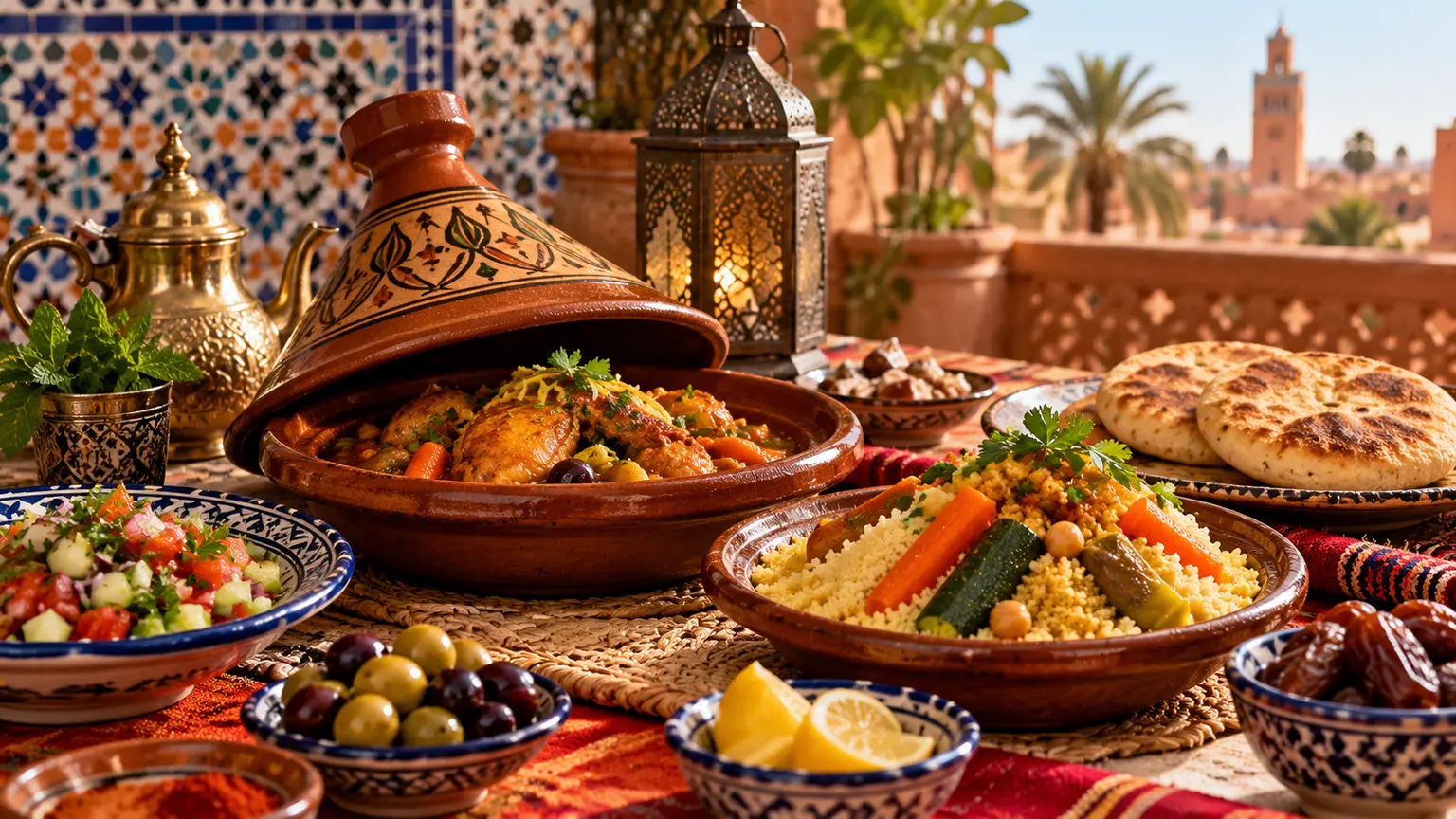
A chicken tagine with preserved lemon tastes nothing like the slow-cooked meat served from a clay jar in Marrakech. In Fes, a delicate pastry can combine pigeon, almonds, cinnamon, and powdered sugar in one dish. Along Morocco's Atlantic coast, freshly grilled sardines may be the most memorable meal of the trip, served simply with bread and a squeeze of lemon.
Moroccan food is far more varied than the familiar restaurant combination of tagine and couscous. Recipes change with geography, ingredients, family traditions, and the occasion. Some dishes appear on ordinary breakfast tables, while others are prepared for Friday lunch, Ramadan, celebrations, or gatherings that take hours of cooking.
The country's culinary traditions reflect centuries of Amazigh, Arab-Andalusian, Mediterranean, and Jewish influences. They also depend on local agriculture, from olives and saffron to wheat, almonds, argan oil, and seafood.
For travelers, the most rewarding approach is to eat different foods in different places. Try tanjia in Marrakech, pastilla in Fes, fresh sardines in Essaouira, and amlou around Agadir. These regional specialties reveal aspects of Morocco that an interchangeable tourist menu cannot.
This guide covers 17 Moroccan dishes worth trying, including traditional meals, inexpensive street food, vegetarian-friendly options, breakfast specialties, and desserts. It also explains where to find them, realistic food costs, how to order, and the dining customs worth understanding before arriving.
Moroccan food is known for slow cooking, fragrant spices, contrasting sweet and savory flavors, fresh bread, and meals designed for sharing. It is generally aromatic rather than intensely hot, although individual dishes and condiments can provide plenty of chili heat.
The most recognizable ingredients include cumin, ginger, turmeric, cinnamon, paprika, saffron, coriander, preserved lemons, olives, almonds, and dried fruit. Ras el hanout, a spice blend whose composition varies between merchants and cooks, appears in many preparations.
Cooking methods are equally important. Tagines simmer gently in covered vessels, couscous is traditionally steamed over broth, bread is baked in communal ovens, and certain meats cook for hours over low heat.
A typical Moroccan meal may begin with several small cooked salads before the main dish arrives. Bread often accompanies the entire meal, while mint tea serves as a familiar gesture of hospitality.
Moroccan cuisine is not exclusively meat-based. Vegetable salads, bean soups, bread, pancakes, and vegetable tagines provide excellent choices for travelers who do not eat meat, although preparation methods and cooking stocks must still be checked.
The essential Moroccan foods include tagine, couscous, pastilla, tanjia, rfissa, harira, and several regional specialties that are less commonly found on international restaurant menus. The best place to try each dish depends on whether it is an everyday staple, a local specialty, or a food associated with particular occasions.
This comparison provides a starting point for deciding what to order in different parts of the country.
|
Moroccan dish |
What to expect |
Where to look |
Vegetarian-friendly? |
|
1. Tagine |
Slow-cooked stew with vegetables, meat, or fish |
Nationwide |
Vegetable versions |
|
2. Couscous |
Steamed semolina with vegetables and broth |
Nationwide, especially Friday lunch |
If prepared without meat stock |
|
3. Pastilla |
Crisp pastry with spiced filling and sweet notes |
Fes, Marrakech |
Some specialty versions |
|
4. Tanjia |
Meat slowly cooked in a clay jar |
Marrakech |
No |
|
5. Rfissa |
Chicken, lentils, and shredded flatbread |
Traditional restaurants and home kitchens |
Usually no |
|
6. Mechoui |
Tender slow-roasted lamb |
Marrakech, traditional meat restaurants |
No |
|
7. Chermoula sardines |
Grilled or fried fish with herb marinade |
Essaouira, Agadir, Atlantic coast |
No |
|
8. Harira |
Tomato, chickpea, and lentil soup |
Nationwide |
Only if made without meat stock |
|
9. Bissara |
Fava bean or split pea soup |
Fes, Tangier, northern Morocco |
Usually |
|
10. Zaalouk |
Cooked eggplant and tomato salad |
Nationwide |
Usually |
|
11. Taktouka |
Cooked pepper and tomato salad |
Nationwide |
Usually |
|
12. Msemen |
Layered pan-cooked flatbread |
Breakfast stalls nationwide |
Usually |
|
13. Baghrir |
Spongy semolina pancakes |
Breakfast cafes nationwide |
Check toppings |
|
14. Khobz |
Round Moroccan bread |
Bakeries nationwide |
Usually |
|
15. Amlou |
Almond, argan oil, and honey spread |
Agadir, Souss region |
Vegetarian; contains honey |
|
16. Chebakia |
Sesame pastry coated in honey |
Nationwide, especially Ramadan |
Vegetarian; contains honey |
|
17. Kalinti |
Baked chickpea-flour snack |
Tangier and northern Morocco |
Usually |
Vegetarian suitability refers to traditional or common preparations, not a guarantee for every restaurant. Cooking fat, broth, eggs, honey, and shared preparation surfaces can change whether a dish meets particular dietary requirements.
For travelers with only a few days in Morocco, tagine, couscous, harira, msemen, and one regional specialty provide a particularly useful introduction. The remaining dishes become worthwhile as the itinerary moves through different cities.
Traditional Moroccan main dishes are built around slow preparation, layered seasoning, and ingredients that reflect local cooking traditions. Tagine and couscous are widely available, while tanjia, rfissa, and certain types of pastilla are worth seeking out more deliberately.
These seven dishes offer a useful foundation for understanding Moroccan cuisine beyond ordinary restaurant menus.
Tagine is a traditional Moroccan stew cooked slowly with vegetables, meat, poultry, or fish, usually with spices and a modest amount of liquid. The name also refers to the distinctive cooking vessel with a shallow base and conical lid.
The most familiar chicken version combines preserved lemon and green olives, creating a savory dish with a pronounced citrus flavor. Lamb with prunes and almonds offers a different experience, balancing tender meat with fruit, cinnamon, and sweet spices.
Vegetable tagines may contain potatoes, carrots, zucchini, tomatoes, peas, and seasonal produce. Recipes vary considerably, so there is no single standard tagine that represents the entire country.
A carefully prepared tagine should have a concentrated sauce and tender ingredients. It is commonly accompanied by Moroccan bread, which helps soak up the cooking juices.
Where to try it: Marrakech, Fes, Rabat, Chefchaouen, or almost any traditional restaurant.
What to order first: Chicken tagine with preserved lemon and olives.
Price cue: Approximately 40–80 Moroccan dirhams (MAD) at some neighborhood eateries, with tourist-oriented restaurants commonly charging 90–180 MAD or more.
Tagine is an excellent introduction for first-time visitors. However, ordering it at every meal leaves little room to discover Morocco's more regional culinary traditions.
Moroccan couscous consists of steamed semolina grains served with vegetables, aromatic broth, and often chicken, lamb, or beef. It is especially associated with Friday lunch, when families traditionally gather for a shared meal.
The grains are prepared differently from instant couscous commonly sold in supermarkets abroad. Traditional methods involve moistening and steaming them repeatedly until they become light and separate.
One well-known version features seven vegetables, often including carrots, zucchini, turnips, pumpkin, and cabbage. The precise combination changes with availability and household tradition.
Another variation, couscous tfaya, adds caramelized onions, raisins, and warm spices, producing a noticeably sweeter dish.
The knowledge and practices involved in producing and consuming couscous were added to UNESCO's Representative List of the Intangible Cultural Heritage of Humanity in 2020 through a joint nomination by Morocco, Algeria, Mauritania, and Tunisia.
Where to try it: Traditional restaurants in Fes, Marrakech, Rabat, and smaller towns, particularly on Fridays.
What to order first: Seven-vegetable couscous or couscous tfaya.
Price cue: Around 40–80 MAD for some simple local lunch portions, while established restaurants may charge 85–150 MAD or more.
Some restaurants prepare couscous only on Fridays or serve their largest selection that day. Ask about availability rather than assuming it appears throughout the week.
Vegetarian travelers should confirm that both the grains and vegetables are prepared without meat broth.
Pastilla, also spelled bastilla, is a delicate Moroccan pastry traditionally filled with pigeon or chicken, almonds, eggs, and warm spices. Its defining feature is the contrast between a savory filling and a crisp pastry finished with cinnamon and powdered sugar.
The outer layers are traditionally made from thin warqa pastry, which becomes crisp during baking. Inside, the combination of meat, onions, spices, and almonds creates a rich filling that is unlike an ordinary savory pie.
Pastilla is strongly associated with the refined culinary traditions of Fes, although it is now available in many Moroccan cities.
Seafood pastilla offers another interpretation, often combining fish or shellfish with vermicelli, herbs, and spices. This version usually has a more savory flavor profile than the classic poultry preparation.
Where to try it: Traditional restaurants and specialist kitchens in Fes, with additional options in Marrakech and Rabat.
What to order first: Chicken or pigeon pastilla with almonds and cinnamon.
Price cue: Approximately 60–100 MAD for some restaurant portions, rising to 120–220 MAD at more elaborate establishments.
Pastilla is particularly worthwhile for travelers interested in dishes that combine sweet and savory ingredients. Ask whether it is prepared fresh or available only as part of a larger meal or advance-order menu.
Tanjia is a slow-cooked meat dish traditionally associated with Marrakech, prepared in a tall earthenware jar rather than the familiar conical tagine vessel. It commonly contains lamb or beef, garlic, preserved lemon, saffron, cumin, and aged clarified butter known as smen.
The ingredients are sealed inside the jar and cooked slowly using residual heat, traditionally from the furnace serving a neighborhood hammam.
This method produces exceptionally tender meat and a concentrated sauce. The result is usually simpler in appearance than an elaborate tagine, but the flavor comes from long cooking and carefully balanced ingredients.
Tanjia has a particularly strong connection to Marrakech's historic working communities and neighborhood food culture.
Where to try it: Traditional meat restaurants in Marrakech, especially in and around the medina.
What to order first: Classic Marrakech lamb or beef tanjia.
Price cue: Approximately 80–150 MAD at some local restaurants and 140–200 MAD or more at established tourist-facing establishments.
A useful distinction is that tanjia and tagine are not interchangeable names. They refer to different preparations, cooking vessels, and culinary traditions.
For travelers combining food with sightseeing, Marrakech's traditional kitchens can fit naturally into a day exploring the city's historic neighborhoods. The city's historic palaces and architectural landmarks provide another way to understand the setting in which many of its culinary traditions developed.
Rfissa is a traditional Moroccan dish made with chicken, lentils, onions, fenugreek, and shredded flatbread soaked in a fragrant broth. It is closely associated with family meals, hospitality, and certain celebrations.
The bread, often called trid or prepared using shredded msemen, is central to the dish. It absorbs the cooking liquid and becomes tender while retaining some texture.
Fenugreek contributes a recognizable earthy flavor, while ginger, turmeric, saffron, and other seasonings give the broth its warmth.
Rfissa also has cultural associations with meals prepared for women after childbirth. However, it is not restricted to that occasion and can appear at family gatherings and traditional restaurants.
Where to try it: Home-style Moroccan restaurants, family-run dining establishments, and cooking experiences in Fes or Marrakech.
What to order first: Chicken rfissa with lentils and fenugreek.
Price cue: Pricing varies substantially because rfissa is often prepared as a large shared dish rather than an inexpensive individual street-food portion.
Rfissa is less consistently available than tagine. Some restaurants require advance notice, so travelers interested in trying it should ask before arriving.
Mechoui is lamb or sheep traditionally roasted slowly until the meat becomes tender enough to separate easily from the bone. It is one of Morocco's most recognizable meat-centered specialties.
The preparation can involve a whole animal roasted in an underground or clay oven, although restaurant methods vary. Some versions rely primarily on the quality of the meat and careful roasting rather than a complex spice mixture.
In Marrakech, traditional mechoui sellers operate in the medina, where customers may order portions by weight. Bread, salt, and cumin are common accompaniments.
This is a different experience from ordering lamb tagine. The focus is on the roast itself rather than a vegetable-rich sauce.
Where to try it: Traditional meat establishments in Marrakech, particularly around the streets associated with the city's historic roasting kitchens.
What to order first: A modest portion of roast lamb with bread and cumin.
Price cue: Some traditional sellers charge approximately 25–40 MAD per 100 grams, while larger restaurant portions can cost considerably more.
Ask how the meat is priced before ordering. A quoted amount per 100 grams is not the same as the price of a complete serving.
Chermoula sardines are fresh fish seasoned with a Moroccan herb-and-spice marinade, then grilled, fried, or sometimes stuffed and cooked. They represent a very different side of Moroccan cuisine from the slow-cooked meat dishes of the interior.
Chermoula commonly combines cilantro, parsley, garlic, cumin, paprika, olive oil, and lemon. The mixture adds flavor without overwhelming the natural taste of fresh fish.
Sardines are particularly important along Morocco's Atlantic coast. They may be sold grilled whole, fried, or prepared as stuffed sardine sandwiches.
The most memorable versions are often simple, with bread, salad, and lemon served alongside the fish.
Where to try it: Essaouira, Agadir, Safi, and other coastal towns with active fishing traditions.
What to order first: Fresh grilled sardines or chermoula-stuffed sardines.
Price cue: Costs depend on the catch, preparation, and whether fish is sold by weight or as a complete plate.
At seafood stalls, confirm the price and whether bread, salad, and other accompaniments are included before ordering.
For travelers visiting Essaouira or Agadir, a fresh fish lunch is one of the most worthwhile alternatives to another inland-style meat tagine.
Some of the best Moroccan food is inexpensive, vegetable-based, and served as breakfast or a starter rather than a full main course. Harira, bissara, zaalouk, and taktouka offer an especially useful introduction to everyday cooking.
These dishes are also valuable for vegetarians, although traditional preparation does not always guarantee the absence of meat stock, butter, or other animal ingredients.
Harira is a hearty Moroccan soup usually made with tomatoes, lentils, chickpeas, herbs, and spices. Some versions also contain small pasta pieces, flour for thickening, and meat.
The soup is closely associated with Ramadan, when it is frequently served to break the daily fast. It is commonly accompanied by dates and traditional sweets, particularly chebakia.
Harira is also available outside Ramadan in many restaurants and neighborhood eateries. Its combination of legumes and vegetables makes it more substantial than a simple broth.
Where to try it: Marrakech, Fes, Rabat, and traditional restaurants throughout Morocco.
What to order first: A fresh bowl of harira with lemon and bread.
Price cue: Around 5–15 MAD at some simple local soup counters, with restaurant versions commonly costing 20–40 MAD or more.
Harira may look vegetarian but can contain lamb, beef, or meat stock. Travelers avoiding animal products should ask how it was prepared.
Bissara is a thick soup or purée made from dried fava beans or split peas, traditionally seasoned with olive oil, cumin, and sometimes paprika. It is one of Morocco's most satisfying inexpensive breakfast foods.
The dish is particularly associated with northern Morocco, although variations are eaten elsewhere. Its texture can range from a pourable soup to a thick dip.
Bissara is commonly served hot with bread, making it particularly appealing on cool mornings. Unlike elaborate celebration dishes, it represents the practical, affordable side of Moroccan cooking.
Where to try it: Traditional breakfast counters in Fes, Tangier, Tetouan, and other northern cities.
What to order first: Bissara topped with olive oil and cumin.
Price cue: Approximately 5–15 MAD at basic local eateries, depending on portion size.
This is one of the best options for travelers who prefer a simple, filling breakfast to pastries. Many versions are naturally plant-based, but the cooking ingredients should still be confirmed when necessary.
Zaalouk is a cooked Moroccan salad made with eggplant, tomatoes, garlic, olive oil, and spices. It is usually served as a starter or accompaniment, either warm or at room temperature.
The eggplant becomes soft during cooking, while tomatoes, paprika, cumin, and herbs create a concentrated flavor. Some preparations are smooth and spreadable, while others retain recognizable pieces of vegetable.
Zaalouk is often eaten with khobz, Morocco's traditional round bread. It can also accompany grilled fish, meat, or a larger spread of cooked salads.
Where to try it: Traditional restaurants throughout Morocco, particularly establishments offering several cooked salads.
What to order first: Zaalouk served with fresh bread.
Price cue: Commonly included in starter assortments or sold as a modestly priced individual side.
Zaalouk is one of the most accessible vegetarian-friendly Moroccan foods. However, it should not be confused with a complete meal unless accompanied by bread and other substantial dishes.
Taktouka is a Moroccan cooked salad made primarily from peppers, tomatoes, garlic, olive oil, and spices. It is a classic accompaniment to traditional meals and often appears beside zaalouk.
The peppers may be roasted before being combined with tomatoes, giving the dish a softer texture and slightly smoky flavor.
Although some versions contain hot peppers, taktouka is not necessarily spicy. Its character depends on the variety of peppers and the cook's seasoning.
Where to try it: Traditional restaurants in Marrakech, Fes, Rabat, and smaller towns.
What to order first: A selection of cooked Moroccan salads containing taktouka and zaalouk.
Price cue: Usually purchased as an individual starter or included in a larger salad assortment.
For vegetarian travelers, ordering two or three cooked salads with bread can be a practical light lunch. Confirm that the kitchen uses vegetable-based ingredients if following a strict diet.
Traditional Moroccan breakfasts often include fresh bread, layered flatbreads, semolina pancakes, olive oil, honey, and tea. They can be inexpensive, filling, and easier to find in neighborhood cafes than elaborate restaurant specialties.
These foods also provide an opportunity to eat like a local without committing to a large lunchtime or evening meal.
Msemen is a square, layered Moroccan flatbread cooked on a hot griddle until the outside becomes lightly crisp and the interior remains soft. It is a familiar breakfast and afternoon snack throughout the country.
The dough is repeatedly folded with oil or another fat, creating thin layers. It can be eaten plain, with honey, with cheese, or occasionally with savory fillings.
Fresh msemen is considerably more appealing than a piece that has been sitting cold for hours. The contrast between its crisp edges and tender center is an important part of the experience.
Where to try it: Neighborhood breakfast cafes, market stalls, and street vendors in Marrakech, Fes, Tangier, and elsewhere.
What to order first: Fresh msemen with honey or olive oil.
Price cue: Approximately 3–8 MAD per piece at many simple stalls.
Msemen is among the easiest Moroccan foods to try on a modest budget. Watch for vendors cooking it directly on the griddle, especially during morning hours.
You may also be interested in our article: Finding Halal Food in South Korea Beyond Seoul Is Easier With These 2027 Travel Tips
Baghrir is a soft semolina pancake recognizable by the many small holes that form across its surface during cooking. It is sometimes described in English as a thousand-hole pancake.
Unlike conventional pancakes cooked on both sides, baghrir is usually cooked primarily from one side. The resulting texture is spongy and particularly effective at absorbing toppings.
It is commonly served with melted butter and honey, although toppings vary by household and cafe.
Where to try it: Traditional breakfast cafes, bakeries, and guesthouses throughout Morocco.
What to order first: Warm baghrir with honey and butter.
Price cue: Commonly available as an inexpensive breakfast item or as part of a larger breakfast plate.
Baghrir is particularly suitable for travelers who enjoy sweet breakfasts but want something distinctly different from ordinary pastries.
Khobz is traditional Moroccan bread, usually baked as a round, relatively flat loaf with a soft interior and a firm crust. It is an essential part of everyday meals rather than simply a side item.
Different varieties may use white wheat, whole wheat, barley, or combinations of grains. Bakeries and communal ovens are important parts of traditional neighborhood food culture.
Khobz often replaces utensils for eating tagine, cooked salads, and other dishes. Small pieces are torn from the loaf and used to pick up food or absorb sauces.
Where to try it: Bakeries and neighborhood bread stalls throughout Morocco.
What to order first: Freshly baked whole wheat or traditional round khobz.
Price cue: Usually among the least expensive items at a neighborhood bakery, with the cost depending on size and grain.
Bread is a useful way to understand the difference between a Moroccan meal designed for sharing and an individual plated restaurant dish. It also appears regularly alongside soups, salads, and grilled foods.
Moroccan sweets often feature almonds, sesame, honey, dates, and fragrant ingredients such as cinnamon or orange blossom water. Their importance extends beyond dessert, as certain foods are associated with hospitality, celebrations, and religious occasions.
These three specialties are particularly worth seeking out when traveling through southern and northern Morocco.
Amlou is a traditional Moroccan spread made from almonds, culinary argan oil, and honey. It is strongly associated with the Souss region around Agadir and nearby communities.
The spread has a rich, nutty flavor and a texture that varies from relatively smooth to slightly grainy. It is commonly eaten with bread during breakfast or afternoon tea.
Amlou also introduces visitors to argan oil as a food ingredient. Culinary argan oil has a distinctive roasted, nutty flavor and should not be confused with cosmetic argan oil.
Where to try it: Agadir, Taghazout, Taroudant, and traditional breakfast establishments in southern Morocco.
What to order first: Amlou served with warm bread.
Price cue: Small breakfast portions are relatively accessible, while jars of high-quality amlou can be considerably more expensive because of their almond and argan oil content.
Amlou is one of the most distinctive regional foods worth bringing home, provided the packaging is secure and complies with destination customs rules.
It contains tree nuts and usually honey, making it unsuitable for people with relevant allergies and for strict vegans unless the honey is replaced.
Chebakia is a traditional Moroccan pastry made from shaped strips of dough that are fried and coated in honey or honey-based syrup, then finished with sesame seeds. It is especially associated with Ramadan.
The pastry has a recognizable flower-like shape and a rich flavor from spices, seeds, and the sweet coating. Depending on the preparation, it can be crisp at the edges while remaining slightly chewy inside.
Chebakia is often served with harira when breaking the Ramadan fast. The combination of savory soup and intensely sweet pastry is a familiar part of seasonal food traditions.
Where to try it: Traditional bakeries and pastry shops throughout Morocco, especially during Ramadan.
What to order first: Fresh chebakia with mint tea or harira.
Price cue: Commonly sold by weight or in small quantities, so compare the price per portion or kilogram before buying.
Chebakia can be found outside Ramadan, but availability is usually greater around the fasting month. Its sweetness makes a small portion sufficient for many visitors.
Kalinti, also written kalinté or karane in regional variations, is a soft baked snack made from chickpea flour, water, oil, and commonly eggs. It is particularly associated with Tangier and other parts of northern Morocco.
The mixture is baked until it develops a lightly browned surface while retaining a soft, custard-like interior. It is often served in slices, sprinkled with cumin or pepper, and sometimes placed inside bread.
Kalinti is an excellent example of Moroccan street food that rarely appears on standard international restaurant menus. It is filling, inexpensive, and closely connected to ordinary neighborhood food culture.
Where to try it: Street-food sellers and neighborhood snack shops in Tangier and other northern cities.
What to order first: A warm slice of kalinti with cumin.
Price cue: Usually sold as an inexpensive snack rather than a formal restaurant dish.
Although chickpea flour is the principal ingredient, recipes often include eggs. Travelers following a vegan diet should confirm the preparation before ordering.
The best place to eat traditional Moroccan food depends on the specialty. Marrakech is particularly associated with tanjia and roast lamb, Fes with elaborate pastries and traditional cooking, the Atlantic coast with seafood, and the Souss region with argan-based products.
This regional approach is more useful than assuming every Moroccan city offers the same culinary experience.
Marrakech is particularly worthwhile for tanjia, mechoui, harira, tagine, and a wide selection of street snacks. Its food scene combines traditional neighborhood kitchens, market stalls, family-run restaurants, and more elaborate dining establishments.
Jemaa el-Fna is the best-known evening food location, with numerous stalls and a lively atmosphere. However, prices and quality vary, and the busiest stalls are not automatically the best places to eat.
For tanjia and roast lamb, traditional specialist kitchens in the medina are particularly interesting. A straightforward lunch at a place known for preparing one dish well may be more rewarding than a long menu offering every Moroccan specialty.
Breakfast stalls and small bakeries offer another side of Marrakech. Fresh msemen, baghrir, bread, and soup can provide a satisfying meal without the cost of an elaborate restaurant setting.
Fes is a strong destination for pastilla, traditional couscous, harira, bissara, and more elaborate Moroccan cooking. The city's long culinary traditions make it particularly appealing for travelers interested in layered flavors and ceremonial dishes.
The medina contains small eating places alongside more formal traditional restaurants. Some specialties, including pastilla and rfissa, may be easier to find through establishments that prepare them regularly or accept advance orders.
Fes is also an excellent place to explore spice merchants, bakeries, and shops selling preserved ingredients.
For a short food-focused visit, prioritize pastilla, a traditional Friday couscous meal, and at least one simple neighborhood breakfast.
Essaouira is particularly worthwhile for fresh fish, grilled sardines, seafood tagines, and chermoula preparations. Its Atlantic location makes seafood a natural priority.
Fish availability depends on the day's catch, so the best choice may change from one visit to another. A simple grilled fish served with bread and salad can be more memorable than a complicated dish that hides the flavor of the seafood.
Ask whether fish is sold by weight or as a prepared meal, and confirm the complete price before ordering.
Essaouira is especially appealing for travelers who have spent several days eating meat-based dishes in inland Morocco and want a change of pace.
Agadir and the surrounding Souss region are particularly interesting for amlou, argan oil, honey, fresh bread, and seafood. The region's agricultural traditions influence both sweet and savory foods.
Breakfast is an excellent opportunity to taste amlou with warm bread. Food markets and cooperatives also provide opportunities to compare argan products, although packaging and authenticity should be checked carefully.
The nearby Atlantic coast offers grilled fish, seafood tagines, and dishes prepared with chermoula.
For travelers interested in local ingredients, this region provides one of Morocco's clearest connections between farming traditions and everyday food.
Tangier and northern Morocco are especially worthwhile for bissara, kalinti, fresh seafood, and traditional breakfast foods. The region's food reflects its location between Atlantic and Mediterranean influences.
A breakfast of hot bissara with olive oil and bread is a particularly straightforward introduction. Later in the day, kalinti provides an inexpensive street-food snack that visitors may not encounter in southern Morocco.
Seafood is another priority, especially around fishing areas and restaurants serving the daily catch.
Travelers should not expect every northern specialty to appear in tourist restaurants. Neighborhood cafes and small food counters are often more useful places to look.
Moroccan food can be inexpensive at neighborhood stalls and significantly more expensive at tourist-oriented restaurants, particularly in major medinas. A simple breakfast or soup may cost less than 20 MAD, while a complete restaurant meal can easily exceed 100 MAD.
Prices are not standardized nationally. Differences depend on the city, ingredients, location, portion size, and whether an establishment primarily serves local customers or international visitors.
The following figures are planning ranges drawn from published 2026 menus and market-price information, rather than official national averages.
|
Food or meal |
Indicative price |
|
Msemen from a simple street stall |
3–8 MAD |
|
Bissara at a neighborhood eatery |
5–15 MAD |
|
Harira at a simple local counter |
5–15 MAD |
|
Harira at a central restaurant |
20–40 MAD |
|
Basic local sandwich or snack |
10–30 MAD |
|
Chicken or vegetable tagine |
40–120 MAD |
|
Couscous at a traditional restaurant |
40–150 MAD |
|
Chicken pastilla |
60–150 MAD |
|
Tanjia in Marrakech |
80–200 MAD |
|
Casual meal at a local restaurant |
40–100 MAD |
|
Meal at a tourist-oriented restaurant |
120–250 MAD or more |
|
Moroccan mint tea |
5–35 MAD, depending on setting |
The most useful comparison is not simply cheap versus expensive, but what is included. A larger restaurant may charge more while providing additional salads, bread, service, or a more comfortable setting.
A single published central Marrakech restaurant menu, for example, lists chicken tagine at 95 MAD, vegetarian couscous at 85 MAD, chicken pastilla at 80 MAD, and tanjia at 140 MAD. Such prices are useful reference points, but they should not be treated as fixed market rates.
For a food-focused day, approximately 100–200 MAD per person can cover a modest combination of local breakfast, snacks, and a casual meal, depending on the city and choices. Travelers who prefer full-service restaurants should allow considerably more.
The most accessible vegetarian Moroccan foods include vegetable tagine, zaalouk, taktouka, bissara, msemen, baghrir, and bread. However, some dishes that appear vegetarian may contain meat broth, butter, eggs, or honey.
Vegetable couscous is the most important example. Even if no meat appears on the plate, the grains or vegetables may have been prepared with chicken or meat stock.
For strict vegetarians and vegans, asking about the cooking liquid is more useful than simply requesting a plate without meat.
The following distinctions help avoid misunderstandings:
Travelers with celiac disease should also be aware that ordinary couscous, khobz, msemen, and baghrir contain wheat or semolina. Traditional kitchens may use shared utensils and preparation surfaces.
For severe allergies, communicate ingredients and cross-contact concerns clearly before ordering. A dish's familiar name is not enough to establish that it is safe.
Moroccan dining traditions emphasize hospitality, shared meals, and respect for the host or people preparing the food. Understanding a few customs can make restaurant meals and home visits more comfortable.
A large dish may be placed in the center of the table for several people to share. In some traditional settings, bread is used to pick up food rather than relying entirely on cutlery.
When eating from a communal platter, guests generally take food from the portion closest to them rather than reaching across the dish. The right hand is traditionally preferred when eating with the hands, although restaurant customs and individual practices vary.
Mint tea is another recognizable part of Moroccan hospitality. It is commonly prepared with green tea, fresh mint, and sugar, then poured into small glasses.
Tea may be offered in homes, shops, and restaurants. Accepting is customary in many situations, but travelers can politely decline if they do not want it.
Food is also connected to the rhythm of daily life. Friday couscous, Ramadan harira, and celebratory pastilla illustrate how certain dishes carry meanings beyond their ingredients.
For travelers interested in understanding these traditions through architecture, crafts, and historic neighborhoods as well as food, LitiTravels' cultural discoveries and heritage guides offer related travel ideas.
Moroccan food is generally fragrant and well-seasoned rather than consistently hot. Cumin, ginger, cinnamon, turmeric, paprika, and saffron contribute flavor without necessarily producing strong chili heat.
Some dishes include hot peppers or are served with chili-based condiments. These are more likely to create intense heat than a typical chicken tagine or vegetable couscous.
Travelers sensitive to spice should ask before ordering unfamiliar sauces or chili preparations. Mild and strongly seasoned foods can appear on the same menu.
Most traditional Moroccan meat dishes are prepared within a predominantly Muslim food culture, and halal meat is widely available. However, individual restaurant practices should not be assumed without confirmation when formal halal certification is important.
Travelers who require verified halal preparation should ask the restaurant directly. The same applies to anyone with strict dietary, religious, or allergy-related requirements.
Tipping is customary in many Moroccan restaurants and cafes, but the expected amount depends on the type of establishment and whether a service charge is already included. Small cash tips are common for satisfactory service.
At simple cafes, rounding up or leaving a few dirhams may be appropriate. At sit-down restaurants, approximately 5–10% is a commonly used guideline when service is not already included and the experience warrants it.
Check the bill before adding a tip. A percentage should not be treated as a mandatory charge unless the establishment clearly identifies it as such.
Street food can be a rewarding part of traveling in Morocco, but food safety depends on handling, cooking temperatures, water quality, and storage rather than the popularity of the stall alone. Freshly cooked dishes served hot are generally a more cautious choice than food left unrefrigerated for long periods.
The World Health Organization's food-safety principles emphasize clean handling, thorough cooking, safe temperatures, and safe water. These recommendations are particularly important for travelers unfamiliar with local food preparation conditions.
A sensible routine includes:
These precautions do not mean travelers should avoid Moroccan street food altogether. They help distinguish a freshly prepared snack from a potentially higher-risk item.
People who are pregnant, immunocompromised, or otherwise more vulnerable to foodborne illness may need to be especially cautious about undercooked meat, unpasteurized dairy, and raw foods.
Ordering food in Morocco is usually straightforward, but unfamiliar menu terms, unclear portion sizes, and different pricing arrangements can cause confusion. A little preparation is particularly useful at seafood stalls, traditional meat counters, and busy market locations.
The most important step is to understand what is being ordered and how it is priced before the food arrives.
At some market establishments, portions of meat or seafood are sold by weight rather than as a complete meal. At others, bread, salads, or drinks may be charged separately.
Menus may appear in Arabic or French, with English more common in tourist areas. The following terms help travelers recognize familiar dishes.
|
Menu term |
Meaning |
|
Tajine |
Tagine or slow-cooked stew |
|
Couscous |
Steamed semolina dish |
|
Poulet |
Chicken |
|
Agneau |
Lamb |
|
Boeuf |
Beef |
|
Poisson |
Fish |
|
Légumes |
Vegetables |
|
Citron confit |
Preserved lemon |
|
Harira |
Traditional Moroccan soup |
|
Khobz |
Bread |
|
Thé à la menthe |
Mint tea |
|
Sans viande |
Without meat |
|
Sans bouillon de viande |
Without meat broth |
|
L'addition, s'il vous plaît |
The bill, please |
French menu vocabulary is useful in many Moroccan cities, although Moroccan Arabic, often called Darija, is widely spoken. Availability of English varies by establishment.
For strict dietary restrictions, a written translation describing the prohibited ingredients is more reliable than relying on a single memorized phrase.
Jemaa el-Fna is worth visiting for its evening food-market atmosphere, but it should not be the only place where travelers eat in Marrakech. Prices, food quality, menus, and preparation standards vary between stalls.
The square becomes particularly lively after dark, when vendors serve grilled meats, soups, seafood, and other dishes. It offers a memorable introduction to the social side of Moroccan street food.
However, many neighborhood restaurants and specialist kitchens provide alternatives with more focused menus. Travelers interested in tanjia or mechoui should consider establishments known for preparing those dishes rather than assuming the busiest square provides the best version.
Check posted prices, ask what is included, and avoid ordering until the cost is clear.
A food-focused day in Marrakech can include several different dishes without requiring expensive restaurants or a formal tasting tour. The best approach is to alternate between everyday snacks, one substantial local meal, and lighter foods in the evening.
This sample plan is designed around traditional food availability rather than particular businesses.
This schedule provides a more varied experience than eating tagine three times in one day. It also leaves room to explore Marrakech's souks and historic streets between meals.
For travelers planning a broader cultural itinerary, the city's dining traditions pair naturally with an exploration of Morocco's historic palaces, where architecture and decorative arts provide additional context for the country's heritage.
The best Moroccan food for a first-time visitor is chicken tagine with preserved lemon and olives, followed by traditional couscous, harira, and fresh breakfast bread. These dishes are relatively accessible, widely available, and represent several important aspects of Moroccan cooking.
Travelers who enjoy trying unfamiliar combinations should prioritize pastilla. Those interested in regional traditions should order tanjia in Marrakech, fresh sardines along the coast, or amlou in southern Morocco.
Vegetarians can begin with zaalouk, taktouka, bissara, and a carefully verified vegetable tagine. For inexpensive street-food experiences, msemen, kalinti, and traditional soups are particularly useful choices.
There is little benefit in treating all 17 dishes as a checklist that must be completed during a short visit. The more rewarding goal is to try foods that belong naturally to the places being visited.
Moroccan food offers many options for first-time visitors, vegetarians, families, and travelers on a budget. These answers address common questions about traditional dishes, ingredients, prices, and eating customs.
Tagine and couscous are among Morocco's best-known traditional dishes. Tagine is a slow-cooked stew, while couscous is steamed semolina commonly served with vegetables, broth, and meat.
Start with chicken tagine, Friday couscous, harira, pastilla, and fresh msemen. Add regional dishes such as Marrakech tanjia or Atlantic-coast sardines when visiting those destinations.
Couscous is widely regarded as Morocco's national dish, although the cuisine includes many other important specialties. Traditional couscous is particularly associated with Friday family meals.
Tagine is a stew typically cooked in a shallow vessel with a conical lid. Tanjia is a Marrakech meat specialty traditionally slow-cooked in a tall clay jar.
Most Moroccan food emphasizes aromatic spices rather than intense chili heat. Cumin, cinnamon, ginger, turmeric, and saffron are common, while hot sauces and peppers may be served separately.
Good choices include vegetable tagine, bissara, zaalouk, taktouka, and bread. Vegetable couscous can also be suitable when prepared without meat broth.
Msemen, bissara, harira, kalinti, grilled sardines, and local sandwiches are worthwhile choices. Availability differs by region, with kalinti particularly associated with northern Morocco.
Tanjia and mechoui are particularly associated with Marrakech. Harira, tagine, msemen, and Moroccan salads are also widely available throughout the city.
Pastilla is one of Fes's most recognizable specialties. Traditional couscous, bissara, rfissa, and Moroccan pastries are also worth seeking out.
Msemen, baghrir, khobz, olive oil, honey, amlou, and mint tea are common traditional breakfast choices. Bissara provides a more substantial savory option, especially in northern Morocco.
Simple street snacks may cost approximately 3–20 MAD, while a traditional restaurant meal can range from around 40 MAD to well over 150 MAD. Prices vary substantially by location and establishment.
Yes. Moroccan cuisine includes many vegetable, bean, and bread-based dishes. Strict vegetarians should confirm that soups, couscous, and vegetable stews do not contain meat broth.
Moroccan mint tea is commonly prepared with green tea, fresh spearmint, and sugar. It is traditionally served in small glasses and plays an important role in hospitality.
Many visitors enjoy Moroccan food without problems, but normal food-safety precautions remain important. Choose thoroughly cooked food served hot, use safe drinking water, and check how perishable ingredients are stored.
Chebakia, almond pastries, ghriba cookies, and gazelle horns are traditional sweets worth trying. Amlou with bread is another excellent sweet option, especially in southern Morocco.






A beautiful hotel can still be the wrong place to stay in San Francisco. These 15 boutique hotels offer everything from quiet Pacific Heights luxury to waterfront views and lively downtown escapes. Compare locations, prices, fe...
 November 5, 2026
 0

A valid prescription does not guarantee that a medication can cross every border. Learn which medicines face restrictions, how much you can carry, what documents to prepare, and how rules differ for Japan, the UK, the US, Singa...
November 4, 20260
Berlin's best experiences don't have to come with expensive tickets. Explore 23 free and budget-friendly attractions, from the Reichstag dome and Berlin Wall to street art, hidden courtyards, and local parks - plus realistic da...
November 4, 20260
The biggest first-trip mistakes happen before the suitcase comes out. This practical checklist puts passport and entry rules first, then walks through booking, budgeting, insurance, airport procedures, and the first hour after ...
November 4, 20260
Finding halal food in South Korea gets more complicated once you leave Seoul. But a little preparation opens the door to Korean barbecue, local specialties, and memorable food experiences. Discover where to eat, which labels to...
November 3, 20262
Peru's food culture goes far beyond seafood and Lima's famous restaurants. Discover what to order in Cusco, Arequipa, the northern coast, and the Amazon, including regional specialties, vegetarian options, realistic food budget...
November 2, 20261
A Korean convenience store can serve a surprisingly good meal for a few thousand won, even if you cannot read the packaging. Learn which rice balls, noodles, lunch boxes, and snacks to buy, how to heat them safely, and what Kor...
November 1, 20261
A beautiful Parisian restaurant doesn't have to come with an expensive tasting menu. Discover ten places where a modest budget buys more than a meal - century-old interiors, a recreated Tokyo alley, former railway buildings, ge...
October 31, 20261
The best Chicago foodie spots go far beyond deep-dish pizza. Find iconic sandwiches, neighborhood taquerias, Michelin-recognized restaurants and global food districts, with what to order, what meals cost and a practical food ro...
October 11, 202673
Haitian food goes far beyond fried pork and rice. These 18 dishes reveal the flavors worth knowing first, the combinations that belong together, what to order if you only get one meal, and how to build a Haitian food crawl with...
October 3, 2026125
Australian food is much more than Vegemite and barbecue. From bakery meat pies and barramundi to lamingtons, flat whites and Indigenous ingredients, these are the foods that reveal what Australia actually tastes like.
September 28, 202679
London has enough museums to fill an entire trip, and many of the biggest cost nothing to enter. This 2026 guide shows which museums deserve your limited time, what to see first and how to avoid spending a day wandering galleri...
September 24, 2026111
Thailand's best meals do not always come with reservations. They arrive sizzling from a wok, smoking over charcoal or packed into a paper tray. These 18 Thai street foods are the ones worth knowing before your first market visit.
September 23, 2026130
Karnak is overwhelming, Philae sits on an island and Abu Simbel was moved piece by piece. These nine Egyptian temples make far more sense once you know what to look for – and which ones actually fit the same trip.
September 21, 2026155
Looking to shine a spotlight on your project? LitiTravels has you covered! We offer article-based promotion, manage branded blogs on our platform, drive engagement through our social media channels, and create content that delivers real results. Get in touch today and let’s make your brand stand out!
The best travel guides, trip planning tips and cultural discoveries from the LitiTravels team — once a month, straight to your inbox.