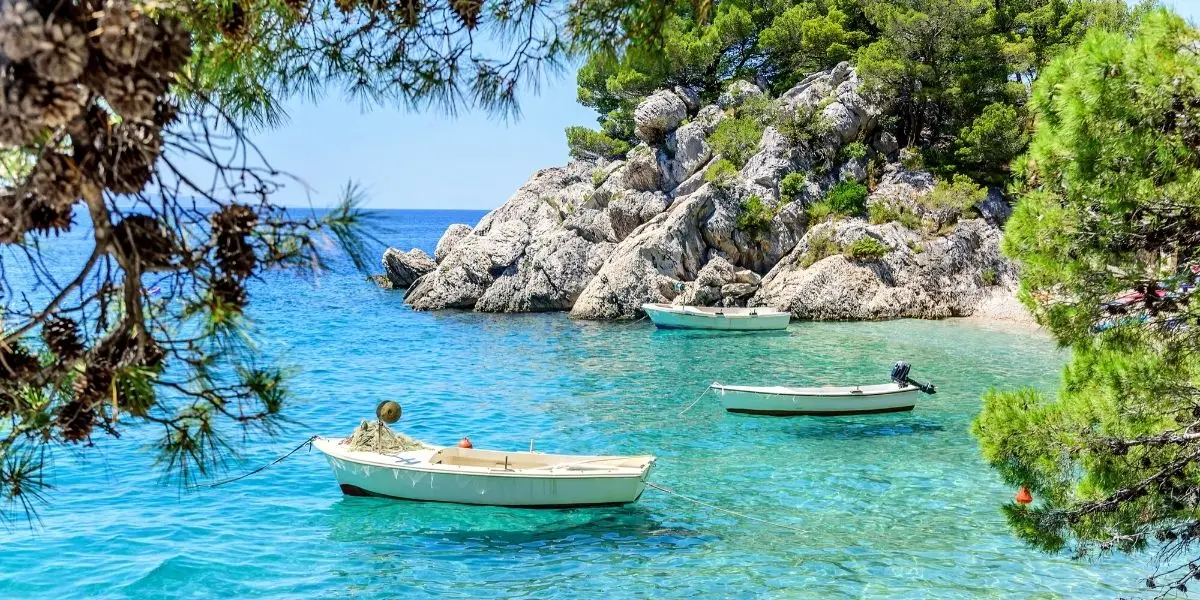
The best things to see in Croatia include Dubrovnik's medieval Old Town, Split's ancient Roman palace, Zadar's musical waterfront, the waterfalls of Plitvice Lakes, and beautiful Adriatic beaches. Many of these attractions are completely free, while some of Croatia's most impressive natural wonders cost as little as €7–€10 during the winter season.
Croatia is not necessarily a cheap Mediterranean destination, particularly in Dubrovnik, Hvar, and the most popular coastal resorts during summer. However, many of the experiences that make the country memorable involve walking through historic neighborhoods, discovering small harbor towns, swimming at public beaches, and exploring coastal landscapes without paying admission.
Late autumn brings an additional advantage. From November 1, 2026, adult admission to Plitvice Lakes National Park drops to €10, while Krka National Park costs €7. These prices make two of Croatia's most famous natural attractions considerably more accessible to travelers visiting outside the busy summer months.
For a first trip, the most practical approach is to choose two or three neighboring destinations rather than attempting to see the entire country in a week. Split, Zadar, and Šibenik offer a particularly good combination of free attractions, inexpensive local experiences, and convenient connections.
Best Things to See in Croatia at a Glance
The best places to visit in Croatia depend on whether the priority is history, beaches, landscapes, or keeping expenses low. Several famous destinations provide enough free activities to fill an entire day, making paid attractions optional rather than essential.
The following comparison highlights the most practical choices for budget travelers.
|
Attraction |
Location |
Cost |
Time needed |
Best for |
|
Diocletian's Palace |
Split |
Free public areas |
2–3 hours |
Roman history |
|
Marjan Hill |
Split |
Free |
1.5–3 hours |
Hiking and views |
|
Sea Organ |
Zadar |
Free |
20–40 minutes |
Sunset |
|
Roman Forum |
Zadar |
Free outdoor area |
30–60 minutes |
Ancient ruins |
|
Šibenik Old Town |
Šibenik |
Free public streets |
1–2 hours |
Medieval architecture |
|
Trogir Old Town |
Trogir |
Free public areas |
2–3 hours |
Historic towns |
|
Zagreb Upper Town |
Zagreb |
Free public areas |
2–3 hours |
Culture and history |
|
Maksimir Park |
Zagreb |
Free |
1–3 hours |
Nature and families |
|
Dubrovnik Old Town |
Dubrovnik |
Free public streets |
2–4 hours |
Historic architecture |
|
Mount Srđ |
Dubrovnik |
Free on foot |
2–3 hours |
Panoramic views |
|
Rovinj Old Town |
Istria |
Free public areas |
2–3 hours |
Coastal scenery |
|
Pula Roman Amphitheater |
Pula |
Free outside |
20–40 minutes |
Roman architecture |
|
Opatija Coastal Promenade |
Opatija |
Free |
1–4 hours |
Seaside walking |
|
Brač Island |
Near Split |
€13 return ferry |
Half or full day |
Island experience |
|
Plitvice Lakes |
Central Croatia |
€10–€40 in 2026 |
4–6 hours |
Lakes and waterfalls |
|
Krka National Park |
Near Šibenik |
€7–€40 in 2026 |
2–4 hours |
Waterfalls |
Costs refer to general public access or standard adult admission where relevant. Ferry transportation, food, rentals, and optional activities are additional expenses.
Split and Zadar are particularly strong choices for travelers who want to spend almost nothing on sightseeing. Both cities combine major landmarks, waterfront walks, beaches, and historic public spaces within relatively compact areas.
Free Things to See in Croatia's Capital Zagreb
Zagreb is one of the most practical places to explore Croatia without spending much money. Unlike coastal destinations where prices can rise dramatically during summer, the capital offers year-round cultural attractions, public parks, markets, and walkable neighborhoods.
Two experiences provide an excellent introduction to the city without requiring admission tickets.
1. Explore Zagreb Upper Town and Its Historic Streets
Zagreb Upper Town is among the best free things to see in Croatia for travelers interested in architecture, history, and local culture. Its historic streets connect Saint Mark's Church, Stone Gate, Strossmayer Promenade, and several important public buildings.
Begin at Ban Jelačić Square and walk uphill through Radićeva Street toward Stone Gate. This surviving medieval gateway contains a small religious shrine and leads toward the historic heart of the city.
Saint Mark's Church is recognizable for its colorful tiled roof depicting historic coats of arms. The surrounding area includes government buildings and attractive viewpoints, although access to some streets and buildings may occasionally be restricted for security or restoration work.
Continue toward Strossmayer Promenade for views across Zagreb's rooftops. Walking the public streets costs nothing, while museums and historic interiors may require separate admission.
Cost: Free.
Allow: 2–3 hours.
Budget tip: Walk uphill instead of paying for the funicular. The route is short enough for most visitors comfortable with steps and inclines.
2. Spend an Afternoon in Maksimir Park
Maksimir Park is one of Zagreb's most enjoyable free outdoor attractions. Its wooded paths, meadows, lakes, and historic garden structures provide a quieter experience than the central sightseeing districts.
The park dates to the late 18th century and contains landscaped areas alongside woodland. Visitors can follow the paths between lakes, relax on the grass, or bring food for a picnic.
Families will find space for children to explore without paying for a formal attraction. Zagreb Zoo is located within the wider park area, but zoo admission is separate.
Cost: Free park admission.
Allow: 1–3 hours.
Best time: Spring and autumn are especially pleasant for walking, while summer offers shaded places to escape the heat.
For a particularly inexpensive day in Zagreb, combine Upper Town in the morning with Maksimir Park in the afternoon. Public transportation is available when walking between the two areas is inconvenient.
Best Free Things to Do in Croatia Around Zadar and Šibenik
Zadar and Šibenik combine historic architecture with distinctive waterfront attractions. Their central districts are relatively compact, making them useful bases for travelers who prefer walking instead of paying for organized sightseeing tours.
Both cities also provide convenient access to beaches and some of Croatia's most recognizable natural landscapes.
3. Listen to the Sea Organ in Zadar
Zadar's Sea Organ is one of the most unusual free attractions in Croatia. Instead of playing recorded music, this waterfront installation uses the movement of seawater to produce sounds through pipes beneath a series of stone steps.
The Sea Organ extends for approximately 70 meters along the waterfront, with 35 pipes installed beneath the structure. Waves and changing water conditions create different tones throughout the day.
Visitors can sit on the steps, watch boats passing through the harbor, and listen without purchasing a ticket.
Immediately nearby stands the Greeting to the Sun, a circular installation made from glass panels that creates a light display after dark.
Cost: Free.
Allow: 30–60 minutes for both installations.
Best time: Arrive shortly before sunset and remain until after dark to experience the Sea Organ and the illuminated installation.
This is a particularly useful stop for families and budget travelers because it requires no reservation, guide, or special equipment.
4. Discover Zadar's Roman Forum and Old Town
Zadar's Roman Forum is one of the most accessible ancient sites among the things to see in Croatia. The surviving ruins occupy an open public space beside the Church of Saint Donatus and Saint Anastasia's Cathedral.
The forum originally served as the center of Roman public life. Today, visitors can walk around surviving columns, stone foundations, and archaeological remains without paying admission to the outdoor area.
Continue through Zadar's narrow streets toward People's Square, Five Wells Square, and the historic Land Gate. These landmarks provide an enjoyable self-guided walk through different periods of the city's history.
The cathedral bell tower and certain museums require separate tickets, but the surrounding streets and major exterior landmarks are free.
Cost: Free outdoor sightseeing.
Allow: 1.5–2.5 hours for a relaxed Old Town walk.
Budget tip: Combine the Roman Forum with the Sea Organ rather than scheduling them as separate excursions. They are within easy walking distance.
5. Wander Through Šibenik's Medieval Old Town
Šibenik is among the most rewarding places to visit in Croatia for travelers who enjoy discovering historic streets without paying attraction fees. Its old center rises from the waterfront through stone staircases, narrow passages, and small squares.
The Cathedral of Saint James is the city's architectural highlight. This UNESCO-listed monument is famous for its stone construction and distinctive exterior decoration.
Viewing the cathedral from the surrounding square is free, although entering the interior may require admission.
The surrounding streets offer plenty to explore, particularly around the old town's elevated residential areas. Visitors can also enjoy the waterfront promenade and views toward Saint Michael's Fortress from outside the ticketed site.
Cost: Free for public streets, squares, and exterior viewpoints.
Allow: 2–3 hours.
Budget tip: Stay in Šibenik if visiting Krka National Park. Depending on accommodation prices and transportation connections, it can be a practical alternative to more expensive coastal bases.
Best Things to See in Croatia Around Split
Split is one of the strongest destinations for an affordable Croatian vacation. Its historic center, Roman architecture, public beaches, and nearby coastal towns provide enough free activities for several days.
It also has useful bus and ferry connections, making it possible to explore the surrounding region without renting a car.
6. Walk Through Diocletian's Palace for Free
Diocletian's Palace is one of the most important historical attractions in Croatia, and exploring its public streets costs nothing. Built around the beginning of the fourth century for the Roman emperor Diocletian, the palace gradually became part of the living city of Split.
Unlike a conventional museum, the palace is not a single enclosed attraction. Its ancient walls, gates, squares, and passages contain shops, apartments, restaurants, churches, and everyday city life.
Begin at the Golden Gate and continue through the old streets toward the Peristyle, the palace's central ceremonial square.
The Peristyle is surrounded by Roman columns and historic buildings, including Saint Domnius Cathedral. The cathedral, bell tower, and underground palace cellars have separate admission arrangements, but wandering through the central public areas is free.
Cost: Free for public streets and squares.
Allow: 2–3 hours.
Budget tip: Explore the palace independently before considering a guided tour. The layout is compact, and much of its architecture can be appreciated from public spaces.
An early morning visit is particularly useful during the warmer months, when narrow streets become crowded later in the day.
7. Hike Marjan Hill for Panoramic Views of Split
Marjan Hill offers some of the best free views in Croatia. This wooded peninsula rises immediately west of Split's historic center and combines walking trails, scenic viewpoints, and access to coastal areas.
The Vidilica viewpoint is one of the most convenient destinations for visitors starting from the Old Town. From here, the city, harbor, and surrounding mountains form a wide panorama.
Reaching the viewpoint involves an uphill walk and steps, but the experience does not require an admission ticket.
Travelers with more time can continue along the peninsula's marked trails. Some paths lead toward beaches and quieter wooded areas, although access may occasionally change because of forest maintenance or safety restrictions.
Cost: Free.
Allow: 1.5–3 hours, depending on the walking route.
Best time: Morning or late afternoon, particularly in summer.
Budget tip: Carry water and snacks from a supermarket or bakery. There is no need to purchase a drink simply to enjoy the viewpoint.
8. Spend a Beach Day at Bačvice or Kašjuni
A beach day is one of the easiest ways to enjoy Croatia without paying for attractions. Split has several public beaches, including Bačvice near the center and Kašjuni on the Marjan Peninsula.
Bačvice is known for its relatively shallow water and sandy sections, making it popular with families and swimmers. Its location is convenient for travelers staying near Split's historic center.
Kašjuni offers a different setting, with pebbles, surrounding greenery, and views toward the hills. Reaching it may require a longer walk or local transportation.
Both beaches can be enjoyed without renting a sunbed or purchasing food from nearby businesses.
Cost: Free beach access; optional rentals and services cost extra.
Allow: 2–4 hours.
Budget tip: Bring a towel, refillable water bottle, and picnic supplies. Water shoes can make rocky beaches more comfortable.
Swimming conditions vary by season, weather, and individual swimming ability. Lifeguard availability and beach facilities should not be assumed outside the main summer period.
9. Take a Budget Day Trip to Trogir
Trogir is one of the most attractive historic towns near Split and can be explored largely for free. Its UNESCO-listed center occupies a small island connected to the mainland by bridges.
The compact streets contain Venetian-influenced architecture, medieval buildings, historic squares, and a picturesque waterfront.
Begin near the North Gate before continuing through the central streets toward Saint Lawrence Cathedral. Its ornate exterior is visible from the surrounding square, while certain interior areas require admission.
Continue toward the waterfront and Kamerlengo Fortress. The fortress itself may charge admission, but the surrounding public promenade offers attractive views without a ticket.
Cost: Free sightseeing; transportation from Split costs extra.
Allow: 2–3 hours in Trogir, excluding travel.
Budget tip: Compare local bus fares with organized tours. Trogir is close enough to Split that an expensive guided excursion is unnecessary for a straightforward sightseeing visit.
10. Explore Omiš and the Cetina River Canyon
Omiš is one of the most scenic coastal towns near Split. Its setting combines dramatic limestone mountains, a river canyon, historic streets, and an accessible beach.
The Cetina River flows through the town before reaching the Adriatic Sea. Walking near the river mouth and exploring the old streets provides views of the surrounding cliffs without paying for an activity.
The main beach offers another inexpensive way to spend several hours.
Adventure activities such as rafting, canyoning, and zip-lining are available in the wider area, but they are optional and generally cost considerably more than independent sightseeing.
Cost: Free for the town, riverfront, and public beach.
Allow: Half a day.
Budget tip: Visit for the scenery and walking routes rather than assuming an adventure package is necessary.
Omiš is a particularly useful alternative for travelers who want a combination of mountains and the sea without paying for a boat excursion.
Free Things to See in Croatia Around Dubrovnik
Dubrovnik is one of Croatia's most expensive destinations, especially in summer. However, the UNESCO-listed Old Town, coastal viewpoints, and public beaches make it possible to experience much of the city without paying for its famous walls or cable car.
The key is distinguishing between free public areas and ticketed attractions.
11. Explore Dubrovnik Old Town Without Buying a City Walls Ticket
Dubrovnik Old Town is one of the essential things to see in Croatia, and entering its public streets is free. The historic center is surrounded by defensive walls and contains limestone streets, monumental gates, churches, squares, and small residential passages.
Enter through Pile Gate and follow the main pedestrian street, Stradun, toward the Old Port.
Along the way, visitors can admire Onofrio's Fountain, historic church exteriors, and the architecture surrounding Luža Square.
A visit does not need to end at the main street. Some of the most interesting parts of Dubrovnik are the smaller passages and stairways leading into residential areas.
Cost: Free Old Town access.
Allow: 2–4 hours.
Budget tip: Visit early in the morning or later in the afternoon when the busiest sightseeing groups are less concentrated.
Walking the actual City Walls is a separate paid experience. The standard adult ticket is €40 during the main 2026 season, so travelers on a very limited budget can reasonably prioritize street-level sightseeing instead.
12. Relax at Dubrovnik's Public Beaches
Dubrovnik has several coastal areas where spending time beside the Adriatic does not require an expensive beach club.
Banje Beach, near the Old Town, is particularly recognizable because it offers views toward the historic fortifications and nearby Lokrum Island.
Lapad provides another option, with waterfront paths, places to swim, and a less monument-focused atmosphere.
Danče Beach is also worth considering for travelers who prefer a smaller rocky swimming location, although its layout and access are less convenient for some visitors.
Cost: Free access to public beach areas; optional facilities and rentals cost extra.
Allow: 1–3 hours.
Budget tip: Avoid automatically renting loungers or umbrellas. Bringing basic beach equipment can substantially reduce spending.
Rocky entrances, waves, and exposed coastal sections require care. Some locations are unsuitable for inexperienced swimmers, particularly when conditions are rough.
13. Hike Mount Srđ Instead of Taking the Cable Car
Mount Srđ provides one of the most recognizable panoramic views of Dubrovnik. From its elevated position above the city, visitors can see the red rooftops of the Old Town, surrounding coastline, and Adriatic islands.
The cable car provides a convenient route to the summit, but reaching the mountain on foot avoids the transport fare.
A marked uphill route is used by hikers, although it is steep, rocky, and exposed in places. Allow sufficient time for both the ascent and descent, and check current trail conditions before starting.
Cost: Free on foot.
Allow: Approximately 2–3 hours for a return hike, depending on fitness and conditions.
Best time: Cooler daylight hours.
Important: Stay on established, permitted routes. Do not shortcut across unfamiliar terrain, and avoid attempting the hike in extreme heat, storms, or darkness without appropriate preparation.
For travelers mainly interested in the panorama rather than the cable car experience, hiking offers a worthwhile alternative.
Things to See in Croatia for Free in Istria and Kvarner
Northern coastal Croatia provides a different atmosphere from Dalmatia. Colorful harbor towns, Roman remains, historic villas, and seaside walking routes make Istria and Kvarner attractive for travelers who prefer independent exploration.
These areas can work particularly well as a separate short trip rather than an additional detour on a tightly scheduled southern Croatia itinerary.
14. Discover Rovinj's Colorful Old Town
Rovinj is one of the most picturesque seaside towns in Croatia, and exploring its old center costs nothing. The town occupies a peninsula where narrow stone streets climb toward the Church of Saint Euphemia.
Its historic buildings, colorful facades, and small passages create numerous opportunities for photography.
Begin at the harbor before walking uphill through the old streets. Grisia Street is particularly attractive for its galleries and historic atmosphere.
Near the church, visitors can enjoy views over the coastline and surrounding islands from public areas, while climbing the bell tower requires separate admission when available.
Cost: Free public streets and viewpoints.
Allow: 2–3 hours.
Budget tip: Stay long enough to explore the streets away from the busiest waterfront restaurants. Eating a few blocks inland may provide better-value options.
15. See Pula's Roman Amphitheater From Outside
Pula's Roman Amphitheater is among the most impressive ancient buildings in Croatia. The limestone structure dates to the Roman era and remains one of the country's most recognizable historical landmarks.
Entering the arena requires a ticket, but visitors can admire its monumental exterior from the surrounding public streets.
The structure's multiple levels of arches are clearly visible, making it possible to appreciate the scale of the building without purchasing admission.
Continue through central Pula to see the Arch of the Sergii, Forum Square, and the exterior of the Temple of Augustus.
Cost: Free exterior sightseeing.
Allow: 1.5–2.5 hours for a central walking route.
Budget tip: Pay for the arena interior if Roman history is a major interest. Otherwise, combining its exterior with Pula's other public monuments creates a substantial free sightseeing experience.
16. Walk Opatija's Beautiful Coastal Promenade
Opatija's coastal promenade is one of the best free seaside walks in Croatia. Known as the Lungomare or Franz Joseph I Promenade, it extends approximately 10 kilometers between Volosko and Lovran.
The path connects small harbors, public coastal areas, historic villas, landscaped gardens, and viewpoints over Kvarner Bay.
There is no need to complete the entire route. Shorter sections around central Opatija provide views of historic resort architecture and the sea.
The famous Maiden with the Seagull statue is one of the recognizable landmarks along the waterfront.
Cost: Free.
Allow: 1–4 hours, depending on the chosen section.
Budget tip: Begin in central Opatija and walk toward Volosko for a shorter outing with coastal scenery and traditional harbor views.
The promenade is especially pleasant during spring and autumn, when walking temperatures are generally more comfortable than during midsummer.
Cheap Coastal and Island Experiences in Croatia
Some of the best things to do in Croatia involve its coastline and islands. Although private boat tours can be expensive, public beaches, waterfront trails, and scheduled passenger ferries offer more affordable alternatives.
The following two experiences are particularly useful for travelers who want scenic views without paying for premium excursions.
17. Explore the Makarska Riviera's Beaches and Promenades
The Makarska Riviera offers an accessible combination of turquoise water, pebble beaches, coastal towns, and mountains rising dramatically behind the shoreline.
Makarska itself provides a convenient base, with a harbor promenade, public beaches, and streets that can be explored without admission fees.
Nearby coastal settlements offer different beach settings and quieter stretches of shoreline.
The mountains of Biokovo create an impressive backdrop, but access to Biokovo Nature Park and special attractions such as the Skywalk may involve admission fees and additional transportation.
Cost: Free for public beaches and promenades.
Allow: Half a day or longer.
Budget tip: Choose one coastal town and explore it on foot rather than paying for multiple transfers between similar beaches.
18. Take a €13 Return Ferry Trip to Brač Island
Brač is one of the easiest Croatian islands to visit without paying for a private boat excursion. The scheduled ferry between Split and Supetar provides a practical way to experience the Adriatic while keeping transportation costs predictable.
In 2026, the standard adult foot-passenger fare on the Split–Supetar ferry is €6.50 each way, or €13 return.
The crossing takes approximately 50 minutes.
Once in Supetar, visitors can explore the harbor, historic streets, public waterfront, and nearby coastal areas without paying additional attraction fees.
This provides a genuine island experience at a fraction of the cost of many organized island-hopping tours.
Cost: €13 return for one adult foot passenger in 2026.
Allow: Half a day to a full day.
Budget tip: Stay in Supetar and explore on foot if avoiding additional transportation expenses is the priority.
The famous Golden Horn Beach near Bol is elsewhere on Brač. Reaching it requires onward transportation, so it should not be treated as a free walking extension of the Supetar ferry trip.
Check the official Jadrolinija Split–Supetar schedule before traveling, especially during autumn and winter.
The Best Cheap National Parks in Croatia
Croatia's national parks are among the country's biggest natural attractions, but they are generally not free. Their entrance prices vary significantly by season, and the time of year can make a substantial difference to the cost.
For travelers visiting in late autumn or winter, two famous waterfall parks become surprisingly affordable.
19. Visit Plitvice Lakes for €10 in Winter
Plitvice Lakes National Park is one of the most spectacular things to see in Croatia. Its interconnected lakes, waterfalls, forest paths, and wooden boardwalks create a landscape unlike the country's coastal destinations.
The park contains 16 named lakes and is protected as a UNESCO World Heritage Site.
Visitors can follow designated sightseeing routes through the park, with included boat and panoramic vehicle transportation operating as conditions permit.
The standard adult entrance price changes throughout the year.
|
Travel period |
Standard adult ticket |
|
January–March |
€10
|
|
April–May |
€23 |
|
June–September |
€40 standard daytime rate |
|
October |
€23 |
|
November–December |
€10 |
The park also offers a lower-priced afternoon entry option during part of the summer season. The applicable ticket depends on the date and selected entry time.
Visiting in November instead of the main summer season can save €30 per adult on standard admission alone.
That difference is particularly useful for couples and families planning several paid attractions.
Allow: 4–6 hours for a substantial visit, depending on the route and conditions.
Important: Plitvice Lakes is not free to enter simply because someone intends to hike. Visitors need a valid admission ticket, and swimming in the lakes is prohibited.
In late autumn and winter, snow, ice, flooding, or maintenance can affect access to individual trails. Check the official Plitvice Lakes ticket prices and current visitor conditions before departure.
20. See Krka National Park's Waterfalls for €7 in Winter
Krka National Park is another excellent low-cost natural attraction during the cooler months. The park protects a river landscape with waterfalls, walking routes, historical sites, and distinctive limestone formations.
Skradinski Buk is the most famous waterfall area. A circular walking route of approximately 1.9 kilometers passes through the surrounding landscape.
The standard adult entrance fee for accessible land sites is considerably lower during winter.
|
Travel period |
Adult admission |
|
January–March |
€7 |
|
April–May |
€20 |
|
June–September |
€40 standard daytime rate |
|
October |
€20 |
|
November–December |
€7 |
Visitors entering after 3 p.m. during June–September can qualify for a reduced adult admission rate under the published 2026 tariff.
There is an important seasonal difference beyond price. The regular park boat transfer from Skradin and shuttle buses from Lozovac operate from April through October, not throughout winter.
From November through March, visitors using the Lozovac entrance may access the waterfall area by the permitted road arrangement or walking route, subject to current conditions.
Allow: 2–4 hours for the main waterfall area.
Important: Swimming at Skradinski Buk is prohibited. Swimming elsewhere in the national park is restricted to designated areas and permitted dates.
Check the official Krka National Park visitor information before traveling, particularly when visiting without a car.
For travelers with a limited budget, Krka's €7 winter admission offers excellent value. However, transportation to the park can cost more than the entrance ticket, so the complete journey should be considered before choosing between Krka and Plitvice.
Which Croatian Attractions Are Actually Worth Paying For?
A budget trip to Croatia does not need to exclude every paid attraction. The better strategy is to spend selectively on experiences that cannot be replicated by free walks, exterior viewpoints, or public beaches.
For many first-time visitors, the strongest paid options are Plitvice Lakes, Krka National Park, and Dubrovnik's City Walls.
|
Paid attraction |
Typical 2026 adult admission |
Free or cheaper alternative |
When paying makes sense |
|
Dubrovnik City Walls |
€40 in the main season |
Explore Old Town streets |
Historic rampart views are a priority |
|
Plitvice Lakes |
€10–€40 |
Free nature walks elsewhere |
Waterfalls and lake boardwalks are essential |
|
Krka National Park |
€7–€40 |
Coastal walks near Šibenik |
Waterfall scenery is a priority |
|
Pula Arena |
Separate paid ticket |
View the amphitheater outside |
Roman archaeology is a major interest |
|
Diocletian's Palace interiors |
Separate paid tickets |
Explore palace streets and Peristyle |
Historic interiors are a major interest |
These prices and distinctions help prevent a common budgeting mistake: paying for several attractions that provide similar experiences.
A traveler who enjoys archaeological interiors may find Pula Arena worth the admission fee. Someone mainly interested in impressive architecture can experience much of the structure from outside and spend that money elsewhere.
The same principle applies to European destinations beyond Croatia. Travelers planning a longer journey can also explore free things to do in Prague, where major historic streets, viewpoints, and public squares can fill several days without expensive admission tickets.
How to Visit Croatia on a Budget Without a Car
Croatia can be explored using intercity buses, local transportation, and scheduled ferries. For visitors concentrating on major coastal towns, renting a car is often unnecessary.
The most practical route depends on the number of destinations and whether remote beaches or national parks are essential.
Use Intercity Buses Between Major Towns
Buses are often the most useful form of transportation between Croatian cities, particularly along the Dalmatian coast.
Split, Zadar, Šibenik, Trogir, and Dubrovnik have intercity or regional bus connections, although frequencies and ticket prices vary.
The most useful approach is to build an itinerary along a logical geographic route instead of repeatedly returning to the same city.
A straightforward coastal sequence runs from Zadar to Šibenik, then Split, with Trogir as a nearby side trip.
Travelers continuing south can add Dubrovnik, but this introduces additional travel time and accommodation costs.
Use Scheduled Ferries Instead of Private Boat Tours
Scheduled ferries are often much cheaper than private sightseeing cruises. They also provide an opportunity to experience the Adriatic as part of normal transportation rather than purchasing a premium excursion.
For example, the standard adult return crossing between Split and Supetar costs €13 in 2026.
Other island routes have different prices, travel times, seasonal timetables, and arrival ports.
Compare the total cost before booking. A cheap ferry ticket may not produce an inexpensive day if the desired beach or village requires an additional taxi journey.
Choose Accommodation Near Walkable Attractions
The cheapest room is not always the cheapest overall place to stay.
Accommodation far from the historic center can create extra expenses for buses, taxis, and late-night transportation.
In Split and Zadar, staying within a reasonable walking distance of the old center can make most daily sightseeing free of transportation costs.
A simple guesthouse or apartment with cooking facilities may also reduce food expenses over several days.
Keep Food Costs Low Without Missing Croatian Cuisine
Croatian food can be enjoyed without eating at expensive waterfront restaurants every day. Bakeries, produce markets, casual lunch establishments, and supermarket meals provide alternatives.
Useful inexpensive food choices include:
- Burek: A savory pastry commonly filled with meat, cheese, or other ingredients.
- Ćevapi: Small grilled minced-meat sausages usually served with bread and accompaniments.
- Local bakery sandwiches: Convenient for a quick breakfast or picnic lunch.
- Marenda: A traditional daytime meal that can provide better value than a full evening restaurant dinner.
- Fresh market produce: Useful for inexpensive lunches when accommodation includes a kitchen.
Trying one regional specialty each day can provide a meaningful food experience without turning every meal into a restaurant expense.
A practical compromise is to buy breakfast from a bakery, prepare a simple lunch, and choose one reasonably priced sit-down meal.
How Much Does a Budget Trip to Croatia Cost in 2026?
A budget-conscious traveler can plan around approximately €55–€85 per person per day in many Croatian destinations, assuming hostel-style accommodation, inexpensive meals, mostly free attractions, and limited transportation expenses.
This is an illustrative planning range rather than a guaranteed price. Dubrovnik, Hvar, and peak summer dates can cost substantially more.
|
Expense |
Estimated daily budget |
|
Hostel bed or inexpensive shared accommodation |
€20–€35 |
|
Food and drinks |
€20–€30 |
|
Local transportation and averaged intercity travel |
€5–€15 |
|
Attractions |
€0–€10 |
|
Illustrative total |
€45–€90 |
A realistic working budget of €55–€85 per day falls within this wider spending range when accommodation is affordable and paid activities are limited.
The figures exclude international flights, travel insurance, visa expenses where applicable, and major private excursions.
A seven-day trip could therefore involve approximately €385–€595 in basic on-the-ground spending, although travelers changing cities frequently or visiting several paid attractions should allow more.
For families, shared accommodation and apartment kitchens can change the economics considerably. The broader principles of comparing room configurations, transportation costs, and daily expenses are also useful when planning affordable family vacations.
A Free One-Day Walking Itinerary in Split
Split is one of the easiest Croatian cities to explore almost entirely on foot. Its major historic attractions are concentrated near the center, while Marjan Hill offers an inexpensive outdoor alternative for the afternoon.
This itinerary focuses on walking and free public areas.
|
Time |
Stop |
Cost |
|
9:00 a.m. |
Golden Gate and palace streets |
Free |
|
10:00 a.m. |
Peristyle and historic squares |
Free |
|
11:00 a.m. |
Riva waterfront promenade |
Free |
|
12:00 p.m. |
Bakery or market lunch |
Food extra |
|
1:30 p.m. |
Walk toward Marjan Hill |
Free |
|
2:00 p.m. |
Vidilica viewpoint and nearby trails |
Free |
|
4:00 p.m. |
Waterfront or beach time |
Free |
The schedule allows time to explore without paying admission to museums or historic interiors.
Total sightseeing admission: €0. Meals, accommodation, and any public transportation are additional.
This route is particularly practical for visitors who have one full day in Split and want to experience its most recognizable landmarks without purchasing guided excursions.
The Best Three-Day Croatia Itinerary on a Budget
Three days are enough for a focused introduction to Croatia, but not for visiting the country's major regions. The strongest budget itinerary stays within one coastal area rather than spending hours traveling between distant destinations.
A Split-based trip can combine Roman architecture, beaches, scenic walking routes, and a nearby medieval town.
Day 1 – Explore Split's Historic Center
Spend the first day exploring Diocletian's Palace, the Peristyle, Golden Gate, and the Riva promenade.
These landmarks are within walking distance and do not require paid admission to their public areas.
Finish with an evening walk along the harbor or a sunset viewpoint.
Day 2 – Hike Marjan and Visit the Beach
Begin with a walk toward Marjan Hill and the Vidilica viewpoint.
Continue along accessible marked trails or visit one of Split's public beaches, depending on the weather.
This creates a full outdoor day with no attraction admission costs.
Day 3 – Visit Trogir or Omiš
Use the third day for one nearby excursion.
Trogir is the better choice for medieval architecture, squares, and historic streets. Omiš is more suitable for mountain scenery, river views, and coastal walking.
Both destinations offer enough free activities to justify a half-day or full-day visit.
Best budget choice: Stay in one Split accommodation for all three nights rather than changing hotels.
A Seven-Day Croatia Itinerary With Free and Cheap Attractions
Seven days allow a broader introduction to Croatia, including the capital, waterfalls, historic towns, and the Adriatic coast. However, the route requires several intercity journeys.
For travelers arriving in Zagreb and departing from Split, the following north-to-south itinerary is geographically logical.
|
Day |
Destination |
Main activities |
Attraction cost |
|
1 |
Zagreb |
Upper Town, Stone Gate, city squares |
Free |
|
2 |
Zagreb |
Maksimir Park and neighborhood walks |
Free |
|
3 |
Plitvice Lakes |
Waterfalls and lake trails |
€10–€40 |
|
4 |
Zadar |
Roman Forum, Sea Organ, waterfront |
Free |
|
5 |
Šibenik |
Historic Old Town and cathedral exterior |
Free |
|
6 |
Split |
Diocletian's Palace and Marjan Hill |
Free |
|
7 |
Trogir or Split |
Historic streets or beach day |
Free |
The itinerary's attraction admission could be as low as €10 per adult during the November–March Plitvice ticket period, excluding food, accommodation, and all transportation.
A practical detail is the transfer through Plitvice Lakes. Travelers without a car should verify bus schedules and onward connections before booking accommodation, particularly outside summer.
Trying to add Dubrovnik to this route would increase travel time considerably. It is usually better to reserve the city for a longer trip or replace another destination rather than compressing the itinerary.
Where to Stay in Croatia for the Lowest Overall Cost
Accommodation is often the largest expense on a Croatian trip. Choosing the right base can save more money than skipping a few attraction tickets.
For travelers who want to prioritize free things to do in Croatia, the following destinations offer different advantages.
|
Base |
Main advantage |
Best for |
|
Zagreb |
Year-round city activities |
Culture and autumn travel |
|
Zadar |
Compact center and free waterfront attractions |
Short coastal breaks |
|
Šibenik |
Historic town near Krka |
Waterfalls and architecture |
|
Split |
Major transport hub and many free attractions |
First-time visitors |
|
Trogir |
Compact medieval center |
Short relaxing stays |
|
Pula |
Roman landmarks and northern coastal access |
History and Istria |
|
Makarska |
Beaches and mountain scenery |
Summer seaside vacations |
Split provides the strongest combination of transportation connections and varied attractions for many first-time visitors.
Zadar is an excellent alternative for travelers who prefer a smaller historic center and want a slower pace.
Dubrovnik remains worth visiting, but staying outside the Old Town and comparing transportation costs can be necessary when accommodation prices rise.
When Is the Cheapest Time to Visit Croatia?
The cheapest time to visit Croatia often falls outside the main summer season, particularly from November through March. However, the lowest prices do not always coincide with the most enjoyable weather or best transportation availability.
For many travelers, late spring and early autumn provide a better balance between affordability and outdoor activities.
September and Early October
September and early October are particularly attractive for coastal sightseeing. The sea may remain warm enough for swimming, while temperatures are generally more comfortable for walking than during July and August.
Accommodation prices can fall after the busiest summer weeks, although popular locations may remain expensive.
This period is suitable for travelers who want beaches, ferries, and historic towns without the full intensity of peak-season crowds.
November Through March
November through March can offer some of the lowest attraction prices of the year, including winter admission at Plitvice Lakes and Krka National Park.
However, shorter daylight hours, rain, occasional snow inland, and reduced seasonal services require more careful planning.
Many coastal restaurants and tourist-oriented businesses operate limited hours or close for part of the winter.
For a late-autumn itinerary, Zagreb, Split, Zadar, and Šibenik can be more practical than depending on small island resorts.
April, May, and June
Spring and early summer offer another useful balance for budget travelers. Historic towns, coastal walks, and national parks can be particularly enjoyable before the hottest weather.
May and early June are strong choices for hiking and cultural sightseeing.
Accommodation and attraction prices vary, so comparing the complete cost is more useful than relying on the month alone.
Budget Travel Mistakes to Avoid in Croatia
A cheap Croatian vacation can become unexpectedly expensive when transportation, seasonal access, or accommodation decisions are overlooked.
The most common mistakes involve assuming that every major attraction is free, booking too many distant destinations, or underestimating the cost of getting to national parks.
A few practical precautions can protect the travel budget.
- Do Not Assume National Parks Are Free to Hike. Plitvice Lakes and Krka National Park require valid admission tickets for their main protected visitor areas.
- Avoid Changing Accommodation Every Night. Additional transfers, luggage storage, and inconvenient check-in times can make an otherwise cheap itinerary inefficient.
- Check Winter Transport Schedules. Ferry departures, attraction transfers, and tourist services may operate less frequently outside the main season.
- Compare Total Excursion Costs. A low admission fee is not necessarily a bargain if reaching the attraction requires expensive transportation.
- Do Not Book Every Famous Attraction Automatically. Dubrovnik's historic center, Split's palace streets, and many coastal viewpoints can be enjoyed for free.
- Plan Around the Weather. Heavy rain, strong coastal winds, and winter trail closures can affect hiking, ferries, and outdoor sightseeing.
- Budget for Food and Small Purchases. Frequent waterfront coffees, snacks, and drinks can add considerably to daily spending.
- Check Accommodation Locations Carefully. A cheaper room far from public transportation can create higher overall costs.
- Verify Beach and Trail Access. Some scenic coastal routes are rocky or steep, and facilities may be unavailable outside summer.
- Avoid Trying to See All of Croatia in One Week. The country offers too many widely separated attractions for a rushed itinerary to provide good value.
These decisions can make a bigger difference than searching for the cheapest individual ticket.
What to Know Before Visiting Croatia in 2026–2027
Croatia uses the euro, making it straightforward to compare prices when traveling through other eurozone countries.
The country is also part of the Schengen Area. Travelers should check the entry requirements applicable to their nationality, passport, and existing Schengen travel history before departure.
Cards are widely accepted, but carrying a modest amount of cash can be useful for small purchases, markets, and places with limited payment options.
Public drinking water is generally safe in Croatian cities, although local notices should always be followed. A refillable bottle is useful for keeping daily expenses down.
For coastal walks and beaches, comfortable footwear is important because many shorelines are rocky rather than sandy. Water shoes can be helpful, but they do not replace attention to slippery surfaces and sea conditions.
Travelers visiting national parks should check current trail availability and weather conditions. Seasonal ticket discounts are valuable only when the desired sightseeing routes are actually accessible.
For those deciding whether to include Croatia in a broader European journey, its combination of ancient cities, national parks, and coastal scenery makes it one of the varied destinations covered in this guide to the best countries to visit in Europe.
Are Croatia's Best Attractions Still Worth Visiting on a Small Budget?
Croatia is worth visiting on a small budget because many of its defining experiences do not require paid admission. Walking through Diocletian's Palace, listening to the Sea Organ, exploring Dubrovnik's historic streets, and spending time beside the Adriatic are worthwhile regardless of how much money is available.
The most satisfying budget itinerary is usually built around one region, with enough time to explore rather than constantly moving between destinations.
For first-time visitors, Split and Zadar offer the strongest combination of free sightseeing, accessible transport, historic architecture, and coastal experiences. Zagreb is particularly useful for inexpensive cultural sightseeing, while Šibenik provides access to one of Croatia's most recognizable waterfall landscapes.
A carefully timed national park visit can add a memorable paid experience without dominating the budget. During the winter pricing period, €17 covers standard adult admission to both Plitvice Lakes and Krka National Park, although transportation between them is additional and fitting both into a short trip may not be practical.
The most important savings come from choosing destinations intelligently, traveling when prices are favorable, and recognizing that some of the country's best experiences are already free.
FAQ About Things to See in Croatia on a Budget
What are the best things to see in Croatia for free?
The best free things to see in Croatia include Diocletian's Palace public areas in Split, Zadar's Sea Organ and Roman Forum, Dubrovnik Old Town, Zagreb Upper Town, Marjan Hill, Trogir's historic center, and public beaches along the Adriatic coast.
Is Croatia expensive for tourists in 2026?
Croatia can be expensive during peak summer, particularly in Dubrovnik and popular island resorts. Budget travelers may manage approximately €55–€85 per day in less expensive destinations with basic accommodation, inexpensive food, public transportation, and mostly free sightseeing.
What is the cheapest city to visit in Croatia?
Zagreb is often a practical budget choice because it offers year-round free attractions and accommodation options outside the coastal resort market. Zadar and Šibenik are also worth comparing for affordable coastal trips, especially outside summer.
Is Dubrovnik Old Town free to enter?
Yes. Dubrovnik Old Town's public streets and squares are free to explore. The City Walls, certain museums, and historical interiors require separate admission.
Can you visit Plitvice Lakes for free?
Most visitors need a valid admission ticket to explore the protected lake system and designated sightseeing routes. In 2026, standard adult tickets cost €10 during January–March and November–December. Children under seven qualify for free admission, alongside certain other eligible visitor categories.
Is Krka National Park cheaper than Plitvice Lakes?
Yes, based on standard 2026 adult entry prices during the same seasonal periods. Krka costs €7 in winter compared with €10 at Plitvice, while both have standard summer adult admission of €40. Transportation costs may change which park is cheaper overall.
What are the best things to do in Croatia without a car?
Explore Split's palace and beaches, Zadar's historic center and Sea Organ, Zagreb's Upper Town, Šibenik's medieval streets, and Trogir's Old Town. Intercity buses and scheduled ferries make many coastal destinations accessible without renting a vehicle.
Are beaches in Croatia free?
Most public beaches in Croatia can be accessed without an admission fee. Optional sunbeds, umbrellas, parking, beach clubs, and water activities may cost extra. Visitors should check local access arrangements at individual beaches.
What is the cheapest Croatian island to visit from Split?
Brač is a practical affordable option because the scheduled Split–Supetar ferry costs €6.50 per adult foot passenger each way in 2026. A return crossing costs €13, excluding food and any onward transport on the island.
How many days do you need to see Croatia?
Three days are enough for Split and one nearby destination. Five to seven days allow a combination of coastal towns and a national park, while 10–14 days provide more flexibility for several regions without rushing.
What are the best things to see in Croatia in November?
Split's historic center, Zagreb Upper Town, Zadar's Sea Organ, Šibenik Old Town, and the waterfalls at Plitvice and Krka are worthwhile November options. National park admission is cheaper, although weather conditions and shorter operating hours require planning.
Which part of Croatia is best for first-time visitors on a budget?
The Split–Šibenik–Zadar corridor is particularly practical for first-time visitors. It combines free historic attractions, beaches, accessible public transportation, and optional national park excursions without requiring an expensive island-hopping itinerary.