
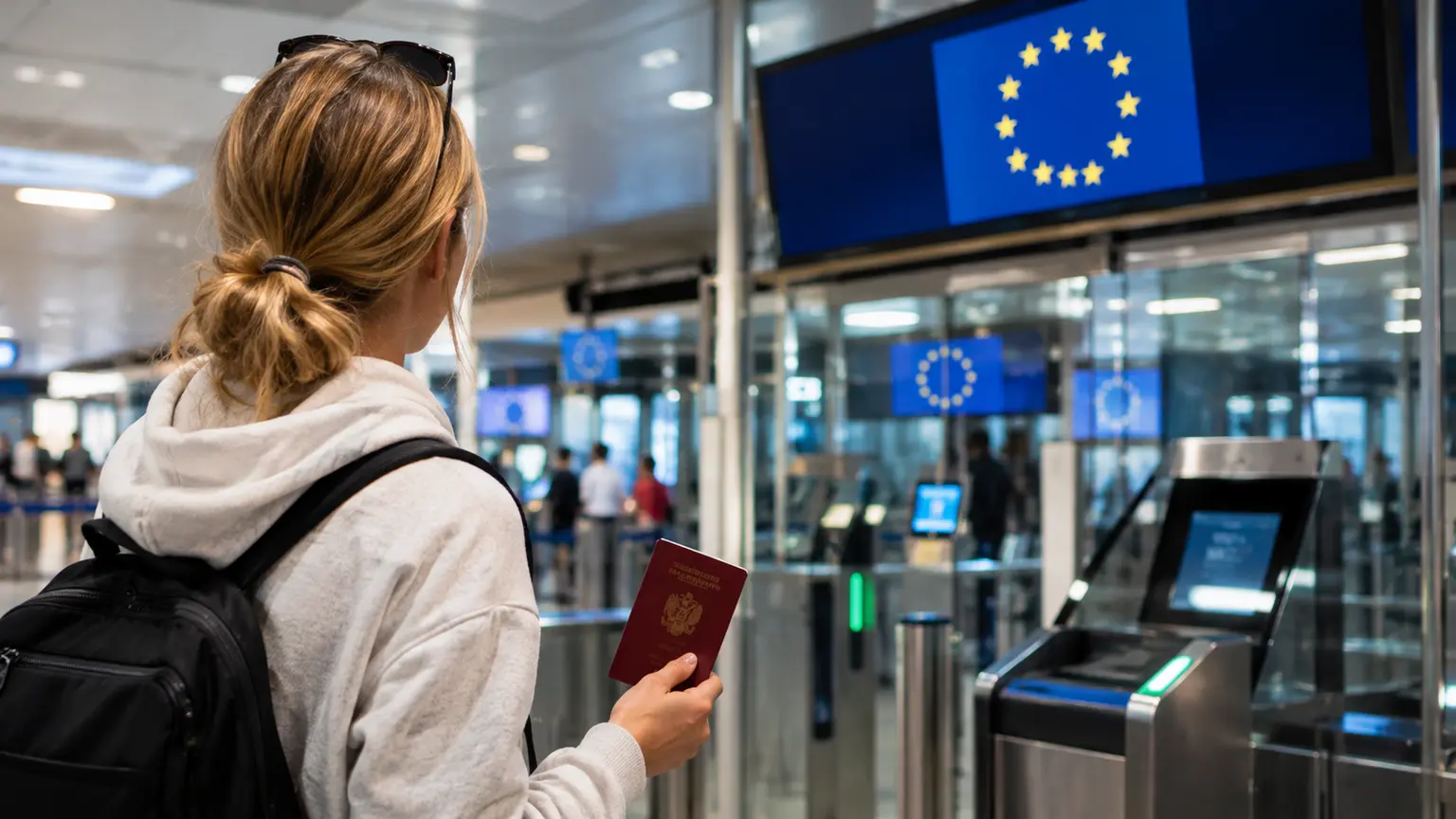
ETIAS and EES are two different European border systems: ETIAS is an electronic travel authorization that eligible visa-free visitors will apply for before departure, while EES is a biometric registration system that records eligible non-EU travelers entering and leaving the Schengen Area. Some travelers will eventually encounter both systems, others will only use EES, and many European residents are exempt.
The timing matters. As of November 2, 2026, the Entry/Exit System (EES) is already operating at external Schengen borders, while the European Travel Information and Authorization System (ETIAS) has not yet launched. The European Union continues to identify the final quarter of 2026 as the expected ETIAS launch period, but has not announced an exact start date. No ETIAS applications are currently being accepted, and travelers do not need to purchase an authorization yet.
The confusion is understandable because both systems affect travel to many of the same European countries. However, ETIAS and EES serve different purposes, apply to different traveler categories, and operate at different stages of the journey.
A British tourist flying to Spain, an American visiting France, an Indian traveler holding a Schengen visa, and a Ukrainian resident with temporary protection do not necessarily follow the same procedure. Understanding the distinction before booking can prevent unnecessary payments, incorrect applications, and problems at check-in or immigration.
ETIAS vs EES – What's the Main Difference?
The simplest way to understand ETIAS vs EES is to separate permission to travel from registration at the border. ETIAS will screen eligible visa-exempt travelers before their journey, while EES records border crossings and biometric information for non-EU short-stay visitors who fall within its scope.
Neither system replaces the ordinary conditions for entering Europe. Travelers must still have suitable travel documents, satisfy applicable immigration requirements, and respect their permitted length of stay.
|
Feature |
ETIAS |
EES |
|
Full name |
European Travel Information and Authorization System |
Entry/Exit System |
|
Main purpose |
Authorizes eligible visa-free travel |
Records entry, exit, and biometric data |
|
Status on November 2, 2026 |
Not operational |
Fully operational |
|
Launch timeline |
Expected in the final quarter of 2026; exact date unannounced |
Launched October 12, 2025; fully operational April 10, 2026 |
|
Countries covered |
30 European countries |
29 Schengen countries |
|
Who is generally affected? |
Eligible visa-exempt non-EU travelers |
Non-EU short-stay travelers, including visa holders |
|
When does it happen? |
Before travel |
At an external Schengen border |
|
Online application |
Yes, once launched |
No separate application |
|
Standard fee |
€20 |
Free |
|
Fingerprints |
Not required for the application |
Collected where applicable |
|
Facial image |
No biometric capture during application |
Recorded where applicable |
|
Validity |
Up to 3 years or until passport expiration |
Border records retained under applicable EES rules |
|
Does it replace a visa? |
No |
No |
|
Does approval guarantee entry? |
No |
EES registration does not itself grant entry |
The most important practical difference is that EES registration is not something travelers need to buy online. Eligible visitors complete the necessary border procedure when crossing into or out of the Schengen Area.
ETIAS, by contrast, will involve an electronic application before travel once the system becomes operational and its applicable requirements take effect.
Is ETIAS or EES Already Required in November 2026?
EES is already operational, but ETIAS is not yet available. Travelers entering the Schengen Area in November 2026 may therefore encounter biometric EES checks without needing an ETIAS authorization.
The two systems were deliberately introduced on different timelines.
EES Has Been Fully Operational Since April 10, 2026
The Entry/Exit System began operating on October 12, 2025, and was introduced progressively across participating European countries.
The rollout concluded on April 9, 2026. From April 10, EES became fully operational at external border crossing points throughout the 29-country Schengen Area.
The system replaced routine manual passport stamping for travelers covered by EES with electronic records of their border crossings.
This affects eligible non-EU visitors arriving by plane, train, ferry, bus, or car, including travelers using short-stay Schengen visas.
ETIAS Is Still Awaiting Its Official Launch
ETIAS is expected to begin operating in the final quarter of 2026, but its exact launch date has not been announced as of November 2.
Until the system officially opens, travelers cannot submit legitimate ETIAS applications or receive valid ETIAS travel authorizations.
Websites offering to issue an approved ETIAS before the official launch should not be treated as authorized application services.
The practical rule for travelers planning a trip now is straightforward: prepare for EES border procedures, but do not pay anyone for ETIAS until official applications are available.
Which European Countries Use ETIAS and EES?
ETIAS will cover 30 European countries, while EES operates in 29. The difference is Cyprus, which will participate in ETIAS but is not part of the EES system.
Ireland participates in neither system. The United Kingdom also remains outside both European arrangements.
The 29 Countries Using EES
EES applies at external borders of the following Schengen countries:
- Austria, Belgium, Bulgaria, Croatia, and Czechia.
- Denmark, Estonia, Finland, France, and Germany.
- Greece, Hungary, Iceland, Italy, and Latvia.
- Liechtenstein, Lithuania, Luxembourg, Malta, and the Netherlands.
- Norway, Poland, Portugal, Romania, and Slovakia.
- Slovenia, Spain, Sweden, and Switzerland.
These countries form the Schengen Area, including four participating countries that are not European Union members: Iceland, Liechtenstein, Norway, and Switzerland.
For most eligible short-stay travelers, EES registration occurs when entering or leaving this area through an external border.
The 30 Countries That Will Require ETIAS
ETIAS will apply to the same 29 Schengen countries plus Cyprus.
The addition of Cyprus explains why the number of countries differs between the two systems.
A traveler who eventually needs ETIAS for a visa-free holiday in Cyprus will not undergo EES registration simply by arriving in Cyprus. However, connecting through another Schengen country and passing immigration there may trigger EES procedures.
What About Ireland and the United Kingdom?
Ireland does not participate in ETIAS or EES, and neither system applies to entry into the United Kingdom.
Both countries operate their own immigration arrangements.
For example, a visitor flying directly from the United States to Dublin does not need ETIAS or EES for that journey. If the same traveler continues to France, the Schengen entry requirements become relevant.
Do not confuse the United Kingdom's Electronic Travel Authorization (ETA) with Europe's ETIAS. They are separate systems with different eligibility rules and applications.
Who Needs ETIAS vs EES? Check Your Passport and Travel Status
Whether a traveler needs ETIAS, EES, both, or neither depends mainly on nationality, visa requirements, immigration status, and the destination.
Most visa-free tourists from countries such as the United States, United Kingdom, Canada, Australia, and Japan will eventually fall within both systems when traveling to the Schengen Area for short visits.
Travelers who require a short-stay Schengen visa generally use EES but do not need ETIAS.
|
Traveler |
ETIAS once applicable |
EES at Schengen external border |
|
American tourist traveling visa-free |
Yes |
Yes |
|
British tourist traveling visa-free |
Yes |
Yes |
|
Canadian tourist traveling visa-free |
Yes |
Yes |
|
Australian tourist traveling visa-free |
Yes |
Yes |
|
Japanese tourist traveling visa-free |
Yes |
Yes |
|
Indian tourist with a short-stay Schengen visa |
No |
Yes |
|
Chinese tourist with a short-stay Schengen visa |
No |
Yes |
|
Ukrainian visitor with a qualifying biometric passport |
Yes, unless exempt |
Yes, unless exempt |
|
EU citizen traveling on an EU passport |
No |
No |
|
Swiss citizen traveling on a Swiss passport |
No |
No |
|
Eligible holder of a qualifying Schengen residence permit |
Generally no |
Generally no |
|
Eligible Ukrainian beneficiary of EU temporary protection |
No |
Generally exempt when appropriately documented |
|
Visa-free visitor entering Ireland only |
No |
No |
These examples assume ordinary short visits unless otherwise stated. Family-member rights, residence documents, special travel documents, and other legal exemptions can change the outcome.
Do Americans Need Both ETIAS and EES?
American citizens visiting the Schengen Area for a visa-free short stay are generally subject to EES registration. Once ETIAS becomes applicable, they will also need an ETIAS travel authorization unless an exemption applies.
For a typical vacation in France, Italy, or Spain, the future process will involve obtaining ETIAS before departure and completing EES registration at the external Schengen border.
Americans do not need to apply for ETIAS as of November 2, 2026, because applications are not yet available.
Do British Citizens Need ETIAS and EES?
British passport holders traveling for ordinary visa-free short stays generally fall within both systems. EES already applies, while ETIAS will be introduced later.
A British traveler taking a ferry or train to France may encounter EES procedures at the relevant French border control point, including checks conducted before departure from the United Kingdom.
Certain British citizens protected by the EU–UK Withdrawal Agreement have different immigration rights and may be exempt when holding appropriate residence documentation.
Do Schengen Visa Holders Need ETIAS?
No. Travelers who already require a short-stay Schengen visa generally do not need ETIAS for that trip.
They must continue following the visa application process and the conditions printed on their visa.
EES still applies to eligible short-stay visa holders when crossing external Schengen borders.
A Schengen visa and ETIAS are not interchangeable documents. ETIAS does not give visa-required travelers an alternative way to enter Europe.
Do EU Residents Need ETIAS or EES?
Many non-EU nationals who hold qualifying residence permits or long-stay visas issued by participating European countries are exempt from EES registration.
Qualifying residence permit and residence card holders are also generally exempt from ETIAS, although the exact legal category of the document matters.
A residence permit issued by Ireland or Cyprus does not necessarily provide the same EES exemption as a permit issued by a Schengen country.
Travelers should check the status and legal basis of their document rather than assuming every European residence card has identical effects.
How Does EES Work at European Borders?
EES works by recording eligible travelers' passport information, biometric identifiers, and entry and exit details when they cross an external Schengen border.
The process does not require an advance application or payment.
For someone entering the Schengen Area for the first time since EES became operational, registration may take longer than a conventional document check because biometric information must be collected.
What Happens During Your First EES Border Check?
A first EES registration generally follows a series of identification and immigration checks.
The process may involve:
- Present Your Passport. The border authority checks your travel document, identity, and applicable entry conditions.
- Provide Your Facial Image. A photograph is collected and associated with your electronic record.
- Provide Fingerprints When Required. Eligible travelers who do not require a short-stay visa generally have four fingerprints collected.
- Confirm Your Travel Details. Immigration officers may ask about your destination, accommodation, purpose of visit, or intended departure.
- Complete the Border Check. Your entry is recorded electronically if admission is granted.
Border equipment and the order of these steps can vary. Some crossings have self-service systems, while others rely primarily on immigration officers.
EES registration is free, including biometric collection.
Are Fingerprints Required for Every EES Traveler?
Not every EES traveler provides fingerprints in the same way.
For visa-exempt visitors, EES generally stores a facial image and four fingerprints. For short-stay visa holders, the system normally stores a facial image because fingerprints were already collected during the visa application process.
Children under 12 are not fingerprinted for EES registration, although their other required information may still be recorded.
A child's exemption from fingerprint collection does not mean the child is automatically exempt from EES.
What Happens on Your Second or Third Trip?
Subsequent EES border crossings should generally involve verification against an existing digital record rather than repeating the complete initial enrollment.
Border authorities may check previously stored fingerprints or facial images.
Additional biometric collection can still occur when necessary, such as when the existing data cannot be verified.
EES does not create a permanent exemption from future border checks. Eligible travelers remain subject to immigration controls each time they cross the external Schengen border.
Can You Register for EES Before Going to the Airport?
There is no mandatory online EES application to complete before travel.
However, some participating countries support limited advance data submission through the official Travel to Europe mobile application, which can be used within 72 hours before crossing where the service is available.
This does not replace border control, guarantee faster admission, or remove the requirement to provide biometric data when necessary.
Availability depends on the specific participating country and border crossing.
How Will ETIAS Work Once Applications Open?
ETIAS will require eligible visa-exempt travelers to submit an electronic travel authorization application before traveling to participating European countries.
The application will use personal information, passport details, and responses to eligibility and security-related questions.
Unlike EES, ETIAS will not involve collecting fingerprints during the online application process.
How to Apply for ETIAS Step by Step
Once ETIAS officially opens, travelers will be able to submit applications using the official European Union ETIAS service or its authorized mobile application.
The expected process is:
- Check Your Eligibility. Confirm that your nationality, travel document, and immigration status require ETIAS.
- Prepare Your Passport. Use the passport intended for the actual journey.
- Complete the Application. Enter personal information, passport details, contact information, and the required travel-related answers.
- Review Every Detail. Check names, passport numbers, and document expiration dates carefully.
- Pay the Applicable Fee. Eligible applicants pay €20, while qualifying groups are exempt.
- Submit the Application. Wait for the electronic decision rather than treating submission as approval.
- Check Your Authorization. Confirm that the approval is linked to the correct passport before departure.
You may also be interested in our article: 23 Things to Do in Cardiff That Cost Nothing or Very Little in 2026
ETIAS is expected to be linked electronically to the travel document used in the application.
Carriers will be able to verify authorizations through the relevant electronic systems once the applicable requirements are in force.
How Much Will ETIAS Cost in 2026–2027?
The standard ETIAS application fee will be €20 per eligible applicant.
The fee was previously planned at €7, but that amount is outdated. The European Union subsequently increased the standard charge to €20.
Applicants under 18 and those over 70 are exempt from the payment. Certain qualifying family members of EU citizens and other eligible individuals can also receive fee exemptions.
However, being exempt from paying does not automatically mean being exempt from applying.
For example, two adults aged between 18 and 70 traveling with two children under 18 would generally pay €40 in total if all four require ETIAS and no other exemption applies.
The children's applications would still need to be submitted.
How Long Does ETIAS Approval Take?
Most ETIAS applications are expected to receive a decision within minutes. However, some applications may require additional examination and take considerably longer.
The European Union advises that certain cases can take up to 30 days.
Travelers should therefore avoid relying on instant approval, particularly when booking nonrefundable flights or accommodation.
Submitting an application well before the intended departure is safer than assuming approval will arrive during airport check-in.
How Long Will ETIAS Be Valid?
An approved ETIAS travel authorization will generally remain valid for up to three years or until the passport used in the application expires, whichever happens first.
During that period, eligible travelers can make multiple visits without applying again for every trip.
However, each visit must still comply with the applicable short-stay limits.
ETIAS validity is not permission to remain in Europe continuously for three years. It is an authorization to travel, not a residence permit.
If the associated passport expires or is replaced, a new ETIAS application will generally be necessary.
ETIAS vs EES for Children, Seniors, and Families
ETIAS and EES also differ in how they affect children and older travelers. The main distinction is between an exemption from a payment, an exemption from biometric collection, and an exemption from the system itself.
These are three separate questions.
|
Traveler category |
ETIAS rules |
EES rules |
|
Child under 12 |
Authorization generally required if eligible; no fee under 18 |
Registration may apply, but no fingerprint collection |
|
Teenager aged 12–17 |
Authorization generally required if eligible; no fee |
Biometric registration generally applies |
|
Adult aged 18–70 |
Standard €20 fee if required and not otherwise exempt |
Registration free |
|
Adult over 70 |
Authorization generally required if eligible; fee waived |
Registration generally applies |
|
Qualifying family member of EU citizen |
Special exemptions or fee arrangements may apply |
Exemption depends on family status and documentation |
A family traveling with children should not assume the parents' authorization covers everyone.
When ETIAS becomes applicable, each eligible traveler will need their own authorization, including infants and children, unless an exemption from the authorization requirement applies.
An adult with parental authority or legal guardianship must submit applications for minors.
Family members holding qualifying residence cards may be subject to different rules, so their documentation should be checked individually.
Do Ukrainian Citizens Need ETIAS or EES?
Ukrainian citizens traveling with qualifying biometric passports under ordinary visa-free short-stay arrangements generally fall within the scope of ETIAS once it becomes applicable. They are also generally subject to EES registration when crossing external Schengen borders, unless an exemption applies.
However, the situation differs for people who benefit from temporary protection in Europe.
Beneficiaries of temporary protection under the EU Temporary Protection Directive do not need ETIAS on the basis of that protection status.
Travelers should be able to demonstrate their protected status using appropriate documentation.
EES exemptions may also apply when the traveler holds a qualifying residence permit or other recognized document. The precise outcome depends on the document and legal status.
This distinction matters because Ukrainian nationality alone does not determine the complete answer. Someone visiting Europe for a two-week vacation and someone legally residing in an EU country under temporary protection have different circumstances.
For Ukrainian visa-free visitors, the biometric passport requirement also matters. An ordinary non-biometric Ukrainian passport does not provide the same standard visa-free eligibility.
ETIAS vs EES and the 90/180-Day Schengen Rule
Neither ETIAS nor EES changes the basic rule that ordinary visa-free short stays in the Schengen Area are generally limited to 90 days within any rolling 180-day period.
ETIAS will not add extra days. EES will record border crossings and help authorities calculate the length of a visitor's stay.
This is one of the most important distinctions for travelers planning several European countries in one trip.
How Does the 90/180-Day Rule Work?
The 90-day limit generally applies to the Schengen Area as a whole rather than separately to every country.
For example, consider a visa-free traveler with no earlier Schengen stays during the relevant 180-day period.
The traveler spends:
- 20 days in France.
- 15 days in Spain.
- 10 days in Italy.
That is 45 Schengen days, leaving 45 days within the applicable 90-day allowance, assuming no earlier stays affect the calculation.
Traveling from France to Spain does not reset the limit. Neither does visiting another Schengen country such as Germany or Austria.
The calculation uses a rolling 180-day reference period, with each day of stay counting according to the applicable rules.
Does ETIAS Allow Multiple Entries Into Europe?
Yes. An approved ETIAS will generally allow multiple journeys during its validity period.
However, every visit remains subject to applicable immigration rules and the permitted duration of stay.
A traveler cannot use a valid three-year ETIAS authorization to bypass the 90/180-day rule or remain in the Schengen Area indefinitely.
Does Cyprus Count Toward the Schengen 90 Days?
Cyprus is not part of the Schengen Area, and its short-stay calculation is separate.
For example, a traveler might spend 30 days in France and Italy, followed by 20 days in Cyprus.
The Cyprus stay does not use an additional 20 days of the ordinary Schengen 90-day allowance.
However, Cyprus has its own entry conditions and permitted-stay rules. Travelers should not assume they can enter without meeting those requirements.
Do You Need ETIAS or EES When Traveling Between European Countries?
EES registration generally concerns external Schengen border crossings, not ordinary travel between countries already inside the Schengen Area.
This means a traveler who enters France from outside Schengen and then travels to Spain or Germany usually does not undergo a new EES registration simply because they crossed an internal Schengen border.
ETIAS works differently because it is a travel authorization rather than a record of each internal journey.
A valid ETIAS will generally cover multiple participating destinations without requiring a new application every time the traveler changes countries.
Example 1 – Flying From the United States to France and Italy
An eligible American tourist flying to Paris and then traveling to Rome would generally register with EES upon entering the Schengen Area in France.
Traveling from France to Italy ordinarily does not trigger a second EES registration because both countries are in Schengen.
When ETIAS becomes applicable, the traveler will also need a valid authorization before the journey, subject to the rollout rules.
Example 2 – Traveling From the United Kingdom to France
A British tourist crossing to France by ferry or train generally falls within EES for an ordinary short visit.
Depending on the route, French immigration and EES checks may occur at a border control location in the United Kingdom before departure.
Once ETIAS becomes applicable, eligible British travelers will also need to satisfy the authorization requirement.
The fact that the traveler uses a train or ferry instead of an airplane does not automatically remove these immigration requirements.
Example 3 – Flying to Spain With a Schengen Visa
An Indian citizen holding a valid short-stay Schengen visa does not generally need ETIAS.
However, EES registration applies when entering and exiting the Schengen Area, unless a specific exemption applies.
The traveler must still comply with the visa's dates, permitted duration, number of entries, and other entry conditions.
Example 4 – Visiting Ireland and Then Germany
An eligible American visitor entering Ireland does not encounter ETIAS or EES solely because of that Irish trip.
If the traveler subsequently flies from Dublin to Germany, the Schengen rules become relevant.
EES registration generally occurs upon entering Germany, and ETIAS will also become relevant once its requirements apply.
Example 5 – Transiting Through a European Airport
A traveler who remains entirely within an airport's international transit area generally does not need ETIAS merely for that airside connection.
However, collecting checked luggage, changing terminals, using separate tickets, or transferring to a domestic or intra-Schengen flight may require passing immigration.
When that happens, the traveler may need ETIAS once applicable and may undergo EES procedures.
Airport layouts and transit visa requirements differ, so the specific connection should be checked rather than assuming that every airport transfer is immigration-free.
Can EES Cause Longer Airport Queues?
EES can add time to some border crossings, particularly when travelers are completing biometric registration for the first time.
Collecting facial images and fingerprints may take longer than a previous passport-stamping procedure. Waiting times also depend on staffing, equipment, passenger volumes, and airport or land-border arrangements.
Returning travelers may complete verification more quickly because their information is already stored.
However, automated border processing does not guarantee shorter queues at every airport.
Allow extra time for passport control when connecting through an external Schengen border, especially if the itinerary involves separate tickets or baggage collection.
Travelers who have an onward connection should also distinguish between a normal airside transfer and a journey requiring immigration clearance.
What Happens If You Refuse EES Fingerprinting?
Travelers who are legally required to provide biometric information for EES generally must cooperate with the registration procedure.
Refusing mandatory biometric collection can result in refusal of entry.
The situation differs for travelers who are exempt, including children under 12 for fingerprint collection and certain residence permit holders.
People who cannot provide particular biometric identifiers because of a physical limitation or other legally recognized circumstance may be subject to an alternative procedure.
Border officers determine the applicable process under the relevant rules.
Travelers with concerns about their eligibility or biometric registration should establish their legal status before departure rather than refusing the procedure at the border.
Does EES Store Your Fingerprints and Travel History?
Yes. EES electronically stores relevant personal information, including biometric identifiers, entry and exit records, and refusals of entry, according to applicable European data-protection rules.
Different information categories have different retention periods.
In ordinary cases, entry, exit, and refusal records are retained for three years. An individual file can be retained for three years and one day after the last exit or relevant refusal.
Where no exit is recorded after the authorized stay expires, certain records can be retained for five years.
Specific categories, including some family members with free-movement rights, are subject to different retention arrangements.
Travelers have data-protection rights under the applicable legislation, including rights relating to access and correction of inaccurate information.
The EES database also helps authorities identify visitors who exceed the permitted duration of stay.
What Happens If Your ETIAS Application Is Refused?
An ETIAS refusal will mean that the traveler has not received the requested travel authorization. Once the applicable authorization requirement is enforced, that can prevent boarding or travel under the normal visa-free process.
The applicant will receive a decision explaining the outcome and relevant appeal arrangements.
Possible issues include inaccurate application information, identity concerns, or grounds identified through the required screening procedures.
Submitting a new application with corrected information may be appropriate in some circumstances, but it does not automatically resolve the reason for refusal.
A refused ETIAS application does not automatically make someone eligible to obtain a Schengen visa instead. Visa eligibility and the applicable appeal process must be considered separately.
This is another reason to complete applications carefully and well before nonrefundable travel arrangements become unavoidable.
What If Your ETIAS Passport Details Are Wrong?
An ETIAS authorization will be linked to the passport used in the application. Incorrect passport information can create a serious problem because the authorization may not match the travel document presented to the carrier or border authorities.
The passport number, full name, nationality, and expiration date deserve particular attention.
A replacement passport generally requires a new ETIAS authorization, even if the previous authorization has not reached its original expiration date.
Before booking or departure, checking the passport's validity is equally important. The rules are not identical worldwide, and the guide to the passport 6-month rule explains why a document can be legally valid yet still fail a destination's entry requirements.
For ordinary short-stay entry into the Schengen Area, passports generally must have been issued within the previous 10 years and remain valid for at least three months after the intended departure, subject to applicable exceptions.
ETIAS approval will not override these passport conditions.
Is ETIAS Mandatory Immediately After It Launches?
ETIAS will be introduced with transitional and grace periods rather than an immediate switch to full enforcement for every eligible traveler.
The planned framework includes an initial transitional period of at least six months, followed by a grace period of at least six months.
During the transitional period, eligible travelers are encouraged to obtain ETIAS, but those without an authorization may still enter if they satisfy the other applicable conditions.
During the subsequent grace period, travelers will generally need ETIAS, with a limited exception for a qualifying first entry following the transitional period.
The precise timing depends on the official launch date and implementation arrangements.
Do not assume that a future headline announcing the ETIAS launch means every traveler without ETIAS will immediately be refused entry that same day. Equally, do not rely on transitional exemptions without checking the rules for the actual travel date.
ETIAS vs EES – Common Mistakes That Can Affect Your Trip
The most expensive mistakes usually come from treating ETIAS and EES as interchangeable requirements.
Both systems relate to travel in Europe, but they operate differently and should be checked separately.
These are the most important errors to avoid:
- Paying for ETIAS Before Its Official Launch. As of November 2, 2026, no legitimate applications are being accepted.
- Assuming EES Requires an Online Application. Registration normally occurs at the border and is free.
- Using the Outdated €7 ETIAS Fee. The standard published application charge is now €20.
- Assuming a Schengen Visa Holder Needs ETIAS. Ordinary short-stay visa holders generally use EES but do not require ETIAS.
- Forgetting That Children May Need ETIAS. Fee exemptions do not automatically remove the application requirement.
- Confusing Residence Permits With Tourist Status. Qualifying residence documents can create exemptions that ordinary short-stay visitors do not have.
- Believing ETIAS Extends the 90-Day Limit. It does not grant additional Schengen days.
- Assuming Cyprus and Ireland Follow Identical Rules. Cyprus participates in the planned ETIAS system but not EES, while Ireland participates in neither.
- Assuming a Passport Change Has No Effect. ETIAS will be tied to the passport used for the application.
- Treating ETIAS Approval as Guaranteed Entry. Border authorities retain responsibility for deciding whether entry conditions are satisfied.
Travelers who review these distinctions before booking can avoid many of the problems that occur during document checks at airports and other border crossings.
What to Check Before Traveling to Europe in 2026–2027
The safest way to prepare for Europe's changing entry rules is to check the passport, visa status, destination, and travel dates separately.
ETIAS and EES are only two parts of the broader immigration process.
A practical predeparture checklist should cover the following:
- Confirm Your Nationality and Passport Type. Visa-free rules can depend on the specific passport issued.
- Check Whether You Need a Schengen Visa. ETIAS does not replace a visa for travelers who are required to obtain one.
- Review Any Residence Permit or Special Status. This may change whether EES or ETIAS applies.
- Check Your Destination Countries. Cyprus, Ireland, and Schengen countries do not all use the same systems.
- Verify Passport Validity. Check both the expiration date and the original issue date.
- Review Your Schengen Travel History. Previous visits may affect the remaining days available under the 90/180-day rule.
- Check the Official ETIAS Launch Status. Do not assume applications have opened merely because an expected launch period has been announced.
- Prepare for EES Registration. Allow time for biometric checks if the procedure applies to you.
- Save Important Travel Information. Keep booking confirmations, immigration documents, and necessary backup details accessible.
- Check Your Return or Onward Journey. Make sure the planned departure remains within the permitted stay.
For practical preparation, the international travel documents checklist covers which records to save offline, which originals to carry, and how to prepare for problems with mobile internet access.
Travelers visiting several European countries should also allow realistic time for border crossings that fall outside the Schengen Area.
A multi-country trip does not necessarily involve EES registration every time the traveler changes destination. For example, an itinerary through France, Germany, Switzerland, and Italy normally remains within the Schengen Area, while a detour to the United Kingdom introduces an external border crossing.
The distinction is particularly useful when planning a longer journey. A three-week Europe itinerary can include several countries, but the route should account for Schengen limits, applicable travel authorizations, and the time required for border procedures.
What Travelers Should Remember About ETIAS and EES
ETIAS and EES are connected parts of Europe's border management system, but they are not the same requirement.
EES is already operational and records eligible non-EU visitors entering and leaving the Schengen Area. Travelers generally complete the registration process at the border without paying an application fee.
ETIAS will introduce a separate electronic travel authorization for eligible visa-exempt visitors. The standard fee will be €20, approvals will generally be valid for up to three years or until passport expiration, and applications will be completed before travel once the system opens.
As of November 2, 2026, the immediate requirement for affected travelers is EES, not ETIAS.
The most useful preparation is to identify which system applies to the traveler, confirm whether a visa or residence exemption changes the rules, and verify the official status before departure.
These steps matter more than purchasing unnecessary services or assuming every non-European traveler follows the same process.
FAQ About ETIAS vs EES in 2026
What Is the Main Difference Between ETIAS and EES?
The main ETIAS vs EES difference is their purpose and timing. ETIAS will be an electronic travel authorization for eligible visa-exempt travelers before departure. EES is an operational biometric border registration system recording eligible non-EU short-stay visitors entering and exiting the Schengen Area.
Is ETIAS Already Required in November 2026?
No. As of November 2, 2026, ETIAS is not operational and applications are not being accepted. The European Union still expects a launch in the final quarter of 2026 but has not announced an exact start date.
Is EES Already Mandatory for Tourists?
EES has been fully operational since April 10, 2026. Eligible non-EU short-stay travelers are registered when crossing external Schengen borders, including both visa-exempt tourists and visitors holding short-stay Schengen visas.
Do You Need Both ETIAS and EES to Travel to Europe?
Some travelers will need both once ETIAS becomes applicable. For example, an eligible American or British tourist visiting the Schengen Area visa-free will generally require ETIAS before travel and EES registration at the external border. Visa-required travelers normally do not need ETIAS.
How Much Do ETIAS and EES Cost?
The standard ETIAS application fee will be €20, with exemptions for applicants under 18, those over 70, and certain qualifying individuals. EES border registration is free, including mandatory biometric collection.
Is ETIAS the Same as a Schengen Visa?
No. ETIAS is a travel authorization for eligible visa-exempt visitors, not a Schengen visa. Travelers who require a visa must continue applying through the relevant visa procedure. ETIAS does not replace that requirement or guarantee admission.
Do Children Need ETIAS and EES?
Children may be subject to both systems. Eligible minors will generally need individual ETIAS authorizations but are exempt from the application fee. Under EES, children under 12 are exempt from fingerprint collection, although registration may still apply.
Can You Apply for ETIAS Online Right Now?
No. Legitimate ETIAS applications are not available as of November 2, 2026. Once the system launches, eligible travelers will be able to apply through the official European Union ETIAS service or authorized mobile application.
How Long Does ETIAS Last?
An ETIAS authorization will generally be valid for three years or until the associated passport expires, whichever occurs first. It will permit multiple trips, subject to the applicable entry conditions and permitted length of stay.
Does EES Replace Passport Stamps?
Yes, for travelers covered by the system. EES electronically records entry and exit information instead of relying on routine manual passport stamps. Travelers outside the system's scope may follow different border procedures.
Do UK Citizens Need ETIAS or EES After Brexit?
Most British citizens visiting the Schengen Area for ordinary visa-free short stays are subject to EES. They will also generally need ETIAS once it becomes applicable, unless they qualify for an exemption such as certain residence rights under the Withdrawal Agreement.
Do US Citizens Need ETIAS for Europe in 2026?
American citizens do not need ETIAS as of November 2, 2026, because the system has not launched. Once the applicable requirement is introduced, eligible American visa-free visitors will generally need ETIAS before traveling to participating European countries.
Does ETIAS Cover Cyprus and Ireland?
ETIAS will cover Cyprus but not Ireland. Cyprus is included among the 30 participating countries despite remaining outside the Schengen Area. Ireland does not participate in either ETIAS or EES.
Do Residence Permit Holders Need ETIAS or EES?
Qualifying residence permit or long-stay visa holders are often exempt from EES, and qualifying residence card or permit holders may also be exempt from ETIAS. The answer depends on the issuing country, document type, and legal status.
Does EES Track the 90 Days in 180 Days Rule?
Yes. EES records relevant entries and exits and helps calculate the duration of authorized short stays in the Schengen Area. It does not increase the 90-day allowance or replace existing immigration conditions.
Can You Travel to Europe Without ETIAS During the Transition Period?
Yes, subject to the applicable rollout arrangements. The planned initial transitional period will allow eligible travelers to enter without ETIAS if they meet other entry conditions. A subsequent grace period will have more limited exceptions.
Will ETIAS Be Required for Airport Transit?
Not when an eligible traveler remains entirely within the international transit area and does not enter the territory of a participating country. Passing immigration during a transfer can change the requirements, and separate transit visa rules may still apply.
What Happens If ETIAS Is Approved but Border Officials Refuse Entry?
ETIAS approval does not guarantee admission. Border authorities may refuse entry if the traveler does not satisfy applicable immigration conditions, even when the authorization is valid. ETIAS and EES do not replace ordinary passport and immigration checks.