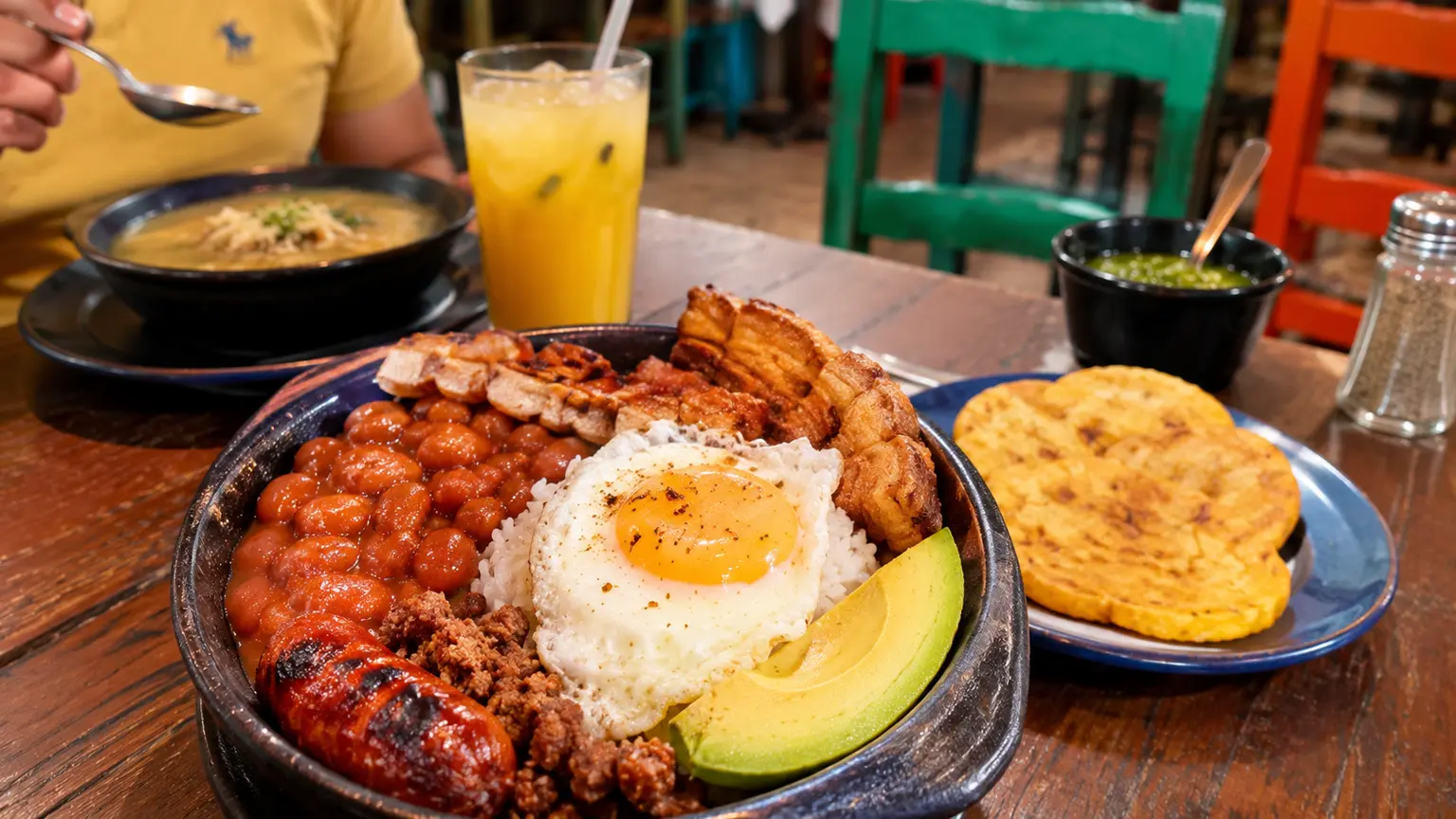
Traditional Colombian dishes reveal a side of the country that travelers can easily miss when eating only in tourist-oriented restaurants. In Bogotá, a warming chicken and potato soup is a local specialty. Medellín is known for generous platters of beans, rice, and meat, while Cartagena's Caribbean cooking brings coconut rice, fried fish, and crisp corn-based snacks to the table.
Colombia does not have one uniform national cuisine. Its traditional food changes dramatically between the Andes, the Caribbean coast, the Pacific region, the coffee-growing highlands, and the eastern plains. The geography influences everything from ingredients and cooking techniques to portion sizes and meal times.
That variety makes Colombian food particularly interesting for travelers planning a trip in late 2026 or 2027. A traditional breakfast in Bogotá may include a milk-based soup and hot chocolate with cheese, while a morning in Cartagena might begin with a freshly fried corn cake stuffed with an egg.
The good news is that exploring Colombian cuisine does not require an expensive restaurant budget. Neighborhood lunch counters, bakeries, traditional markets, and specialist food stalls serve many regional favorites at accessible prices.
This guide covers 25 traditional Colombian dishes, their English descriptions, regional origins, approximate 2026 costs, and the best places to find them. Familiar local menu names are included alongside English explanations so travelers can recognize dishes and order confidently.
What Is Traditional Colombian Food?
Traditional Colombian food is a regional cuisine built around ingredients such as corn, potatoes, beans, rice, plantains, cassava, meat, fish, tropical fruit, and fresh cheeses. Indigenous, African, and European culinary traditions have all contributed to the foods served across the country today.
In the Andean highlands, cooler temperatures favor substantial soups, stews, and potato-based meals. The Caribbean coast uses more coconut, seafood, plantains, and fried snacks, while the Pacific region is particularly associated with fish, coconut-based preparations, and aromatic herbs.
The coffee-growing region shares many culinary traditions with Antioquia, including hearty bean dishes and corn cakes. In the eastern plains, grilled beef and other preparations associated with cattle-raising traditions are especially significant.
Unlike some other Latin American cuisines, many traditional Colombian dishes are relatively mild rather than intensely spicy. Chili sauces are often served separately, allowing diners to adjust the heat themselves.
For first-time visitors, the most useful approach is to sample the specialties of each destination rather than repeatedly ordering the same internationally recognizable dish.
The Best Traditional Colombian Dishes at a Glance
The traditional Colombian dishes most worth trying first include bandeja paisa, ajiaco, arepas, sancocho, empanadas, lechona, and Caribbean fried fish with coconut rice. They offer an accessible introduction to the country's different cooking traditions.
The table below compares the principal ingredients, regional associations, and typical cost of each dish. Prices are approximate 2026 estimates in Colombian pesos (COP), not fixed menu prices.
|
Traditional dish |
English description |
Best region to try it |
Approximate price |
|
Bandeja paisa |
Colombian mixed meat and bean platter |
Medellín, Antioquia |
COP 25,000–55,000 |
|
Ajiaco |
Chicken and three-potato soup |
Bogotá |
COP 20,000–45,000 |
|
Arepas |
Colombian corn cakes |
Nationwide |
COP 3,000–15,000 |
|
Sancocho |
Hearty meat or fish stew |
Nationwide |
COP 18,000–40,000 |
|
Empanadas |
Fried stuffed corn pastries |
Nationwide |
COP 2,000–6,000 |
|
Lechona |
Slow-roasted stuffed pork |
Tolima |
COP 15,000–30,000 |
|
Tamales |
Savory steamed parcels |
Bogotá, Tolima |
COP 10,000–22,000 |
|
Changua |
Milk, egg, and bread soup |
Bogotá |
COP 10,000–22,000 |
|
Calentado |
Colombian breakfast rice and beans |
Antioquia, Bogotá |
COP 12,000–28,000 |
|
Caldo de costilla |
Beef rib and potato soup |
Andean region |
COP 12,000–25,000 |
|
Egg-filled arepa |
Fried corn cake stuffed with egg |
Caribbean coast |
COP 3,000–7,000 |
|
Carimañola |
Fried stuffed cassava roll |
Caribbean coast |
COP 3,000–7,000 |
|
Coconut rice with fish |
Fried fish with coconut rice |
Cartagena, Caribbean coast |
COP 30,000–70,000 |
|
Posta cartagenera |
Cartagena-style braised beef |
Cartagena |
COP 30,000–60,000 |
|
Mote de queso |
Yam and coastal cheese soup |
Caribbean coast |
COP 18,000–35,000 |
|
Cayeye |
Mashed green bananas with cheese |
Santa Marta region |
COP 12,000–25,000 |
|
Arroz atollado |
Savory rice and meat dish |
Cali, Valle del Cauca |
COP 20,000–40,000 |
|
Aborrajados |
Fried ripe plantains with cheese |
Cali |
COP 4,000–10,000 |
|
Pacific seafood stew |
Fish or seafood cooked with coconut |
Pacific coast |
COP 30,000–65,000 |
|
Llanero-style beef |
Slow-grilled plains-style beef |
Eastern plains |
COP 30,000–65,000 |
|
Hormigas culonas |
Roasted large-bottomed ants |
Santander |
Varies by portion |
|
Pandebono |
Colombian cheese bread |
Cali, bakeries nationwide |
COP 2,000–5,000 |
|
Buñuelos |
Fried cheese dough balls |
Nationwide |
COP 2,000–5,000 |
|
Obleas |
Thin wafers with caramel filling |
Bogotá, nationwide |
COP 4,000–10,000 |
|
Cocadas |
Coconut sweets |
Caribbean coast |
COP 3,000–10,000 |
Prices represent broad everyday planning ranges, with considerable differences between neighborhood vendors, established restaurants, and tourist districts. Portions, seasonal ingredients, and future price changes affect actual costs.
A food-focused visit does not require trying all 25 dishes. Selecting four or five regional specialties in each city is usually enough to experience meaningful differences without spending the entire trip searching for restaurants.
Traditional Colombian Dishes From Bogotá and the Andean Highlands
Traditional Colombian dishes from Bogotá and the surrounding highlands are particularly associated with potatoes, corn, poultry, beef, fresh cheese, and warming broths. The capital's relatively cool climate helps explain the popularity of soups and substantial breakfasts.
Bogotá is also an excellent introduction to regional Colombian cooking because its markets serve specialties from different departments.
1. Ajiaco – Bogotá's Famous Chicken and Potato Soup
Ajiaco is one of the essential traditional Colombian dishes to try in Bogotá. This thick, comforting soup combines chicken, corn on the cob, several varieties of potatoes, and a herb called guascas that gives the preparation its distinctive flavor.
The potatoes are especially important. Some varieties break down during cooking and thicken the broth, while others retain their shape and provide texture.
A traditional Bogotá-style serving often comes with avocado, cream, capers, and sometimes rice on the side.
 Where to try it: Traditional restaurants around La Candelaria, La Perseverancia Market, and other established Bogotá food markets.
What to expect: A filling meal with mild flavors and a substantial portion of chicken and potatoes. It is particularly suitable for lunch on a cool or rainy day.
Ajiaco is generally not vegetarian, even when the bowl appears dominated by vegetables, because chicken is central to its preparation.
2. Tamales – Savory Parcels Wrapped in Leaves
Colombian tamales are steamed parcels of seasoned corn-based dough, rice, vegetables, and fillings wrapped in plantain leaves. They are popular throughout the country, although ingredients and preparation styles differ considerably between regions.
Bogotá-style tamales frequently include chicken, pork, carrots, peas, and other ingredients.
The plantain leaf is used as a wrapper during cooking. It is opened before eating and is not intended to be consumed.
Tamales are commonly served for breakfast or during family gatherings, often accompanied by hot chocolate or bread.
Where to try them: Traditional breakfast cafés, neighborhood bakeries, and Bogotá's established markets.
What to expect: A savory, filling meal with a soft texture and aromatic seasoning.
For travelers interested in traditional Colombian dishes with relatively simple ingredients, tamales provide a useful introduction to the importance of corn and leaf-wrapped cooking across Latin America.
3. Changua – Milk and Egg Breakfast Soup
Changua is one of the more unusual traditional Colombian dishes for international visitors. This Bogotá breakfast soup contains milk, water, eggs, scallions, and cilantro, with bread added or served alongside.
The eggs are typically poached directly in the hot liquid.
Unlike the thick chicken and potato soup found elsewhere in the city, changua has a lighter consistency and a distinctly dairy-based flavor.
It is associated with breakfast, particularly in Bogotá and the surrounding highlands.
Where to try it: Traditional Bogotá breakfast restaurants, including establishments specializing in regional soups.
What to expect: A mild, comforting breakfast that may be unfamiliar to travelers accustomed to sweet breakfasts.
Because dairy and eggs are central ingredients, it is unsuitable for people avoiding those foods unless a specific alternative is offered.
4. Caldo de Costilla – Traditional Beef Rib and Potato Soup
Caldo de costilla is a clear beef rib soup served with potatoes, herbs, and seasonings. It is particularly associated with the Andean region and remains a familiar breakfast or early-morning meal.
The broth develops its flavor through cooking beef ribs with potatoes, garlic, onions, and cilantro.
Unlike heavier stews, the liquid is relatively clear, although portions can be substantial because of the meat and potatoes.
The dish is sometimes enjoyed after a late night, but it is also an ordinary traditional breakfast.
Where to try it: Bogotá's neighborhood cafés, market kitchens, and restaurants specializing in traditional breakfast dishes.
What to expect: A savory broth with tender beef and potatoes, usually served hot.
Travelers wanting to experience traditional Colombian breakfast habits can compare this soup with changua, as the two offer very different flavors.
5. Obleas – Crisp Wafers Filled With Caramel
Obleas are a popular Colombian sweet made from two thin, crisp wafers filled with caramelized milk spread, known locally as arequipe. Additional fillings may include fruit jam, cheese, coconut, or other sweets.
The wafers are assembled when ordered, making them a convenient street snack.
Their appeal lies in the contrast between the delicate, crisp wafers and the soft, sweet filling.
Where to try them: Street stalls, traditional dessert shops, and tourist areas in Bogotá and other Colombian cities.
What to expect: A very sweet dessert that can become substantial when several fillings are added.
Travelers who prefer a less sugary option can request a simpler version with only caramel filling rather than multiple toppings.
Traditional Colombian Dishes From Medellín and Antioquia
Traditional Colombian dishes from Medellín and Antioquia reflect the region's agricultural history and its reliance on beans, corn, rice, pork, and beef. Meals are frequently substantial, with several ingredients served together on a single plate.
The cuisine is often described as Paisa cooking, referring to the cultural region associated with Antioquia and parts of Colombia's coffee-growing area.
6. Bandeja Paisa – Colombia's Most Recognizable Mixed Platter
Bandeja paisa is arguably the country's most internationally recognizable traditional dish. Its name refers to a generous platter associated with Paisa cuisine, usually containing red beans, rice, ground or shredded beef, crispy pork belly, fried egg, ripe plantain, avocado, and a small corn cake.
Some versions also include sausage or blood sausage.
The dish is famous for its substantial portions, which can easily exceed what one person expects from a normal lunch.
Where to try it: Traditional restaurants in Medellín, particularly around the city center and neighborhoods serving regional Colombian cooking.
What to expect: A rich, filling combination of savory meat, beans, rice, and sweet plantain.
Budget tip: Smaller versions are sometimes available, while sharing a large platter can be practical when restaurant policies and portion sizes allow.
Bandeja paisa is particularly useful for travelers who want to sample several familiar components of Colombian food in a single meal.
7. Arepas – The Corn Cakes Found Across Colombia
Arepas are among the most widespread traditional Colombian foods, appearing in different forms at breakfast, lunch, dinner, and snack time. They are generally made from corn dough and cooked on a griddle, although some varieties are fried or baked.
The preparation changes significantly by region.
In Antioquia, a relatively plain white corn cake may accompany beans, eggs, or meat. Elsewhere, arepas can be made with sweeter corn, mixed with cheese, or filled with different ingredients.
A popular variety is the cheese-filled corn cake, known as arepa de queso.
Another is the sweet corn and cheese cake, often called arepa de choclo.
Where to try them: Bakeries, street stalls, neighborhood restaurants, and markets throughout Colombia.
What to expect: A versatile corn-based food that may be soft, crisp, sweet, savory, plain, or filled.
Travelers should not assume every arepa is gluten-free in practice. Corn-based recipes may be suitable, but fillings, additives, and shared preparation equipment require checking when dietary restrictions are involved.
8. Calentado – A Hearty Colombian Breakfast
Calentado is a traditional breakfast made by reheating rice, beans, and other cooked ingredients, often accompanied by eggs, meat, plantain, or a corn cake.
The name reflects the practice of warming previously prepared food.
Its origins are closely connected to making practical use of leftovers, although restaurants now prepare it as a standard breakfast dish.
In Medellín and the surrounding region, calentado often features beans and rice, while variations elsewhere may include lentils or different meats.
Where to try it: Neighborhood breakfast restaurants and traditional cafés in Medellín and Bogotá.
What to expect: A savory, substantial breakfast that can be more filling than a typical hotel buffet meal.
For budget travelers, calentado can provide a satisfying start to a day of sightseeing without requiring an expensive restaurant.
9. Sancocho – Colombia's Comforting Meat and Vegetable Stew
Sancocho is one of the most geographically widespread traditional Colombian dishes. This substantial soup or stew combines meat or fish with vegetables and starches such as cassava, plantain, potatoes, corn, and other regional ingredients.
Different regions prepare different versions.
Chicken sancocho is common in several areas, while beef, pork, fish, or combinations of meats are also used.
The broth is generally savory and aromatic rather than particularly spicy.
Sancocho is associated with family gatherings and weekend meals, but it is also available at traditional restaurants.
Where to try it: Regional restaurants throughout Colombia, especially establishments specializing in home-style cooking.
What to expect: A large bowl of broth containing meat, vegetables, and substantial pieces of plantain or cassava.
This is one of the best traditional Colombian dishes for understanding how the same basic preparation changes according to local ingredients.
Traditional Colombian Food From Cartagena and the Caribbean Coast
Traditional Colombian food along the Caribbean coast features coconut, seafood, cassava, plantains, corn, and sweet-savory combinations. Cartagena, Santa Marta, and Barranquilla provide excellent opportunities to explore these regional flavors.
The coastal cuisine has strong African, Indigenous, and European influences, creating dishes that differ significantly from the soups and bean-based meals of the Andean highlands.
10. Egg-Filled Arepas – A Crispy Caribbean Breakfast
Egg-filled arepas are one of the most distinctive Colombian Caribbean street foods. A corn cake is fried, opened, filled with an egg, sealed, and fried again until the exterior becomes crisp and the egg cooks inside.
Some versions also contain seasoned meat.
The result combines a crunchy outer shell with a soft, savory filling.
Where to try them: Cartagena's street-food vendors, traditional breakfast stalls, and markets across the Caribbean coast.
What to expect: A filling handheld breakfast or snack best eaten freshly prepared.
A recently fried arepa is generally more appealing than one that has been sitting for a long period, both in texture and food-handling terms.
11. Carimañola – Fried Cassava Rolls With Meat or Cheese
Carimañolas are traditional Caribbean snacks made from mashed cassava dough shaped around a savory filling and fried until golden.
The filling commonly contains seasoned ground beef or cheese.
The exterior becomes lightly crisp, while the inside remains soft and starchy.
Cassava gives the snack a different texture from corn-based empanadas or arepas.
Where to try them: Cartagena, Barranquilla, and Caribbean breakfast stalls.
What to expect: An inexpensive savory snack that is particularly convenient during a morning walk.
Carimañolas are useful for travelers who want to sample regional street food without committing to a large restaurant meal.
12. Coconut Rice With Fried Fish – A Classic Caribbean Combination
Coconut rice served with whole fried fish is one of the signature meals of Colombia's Caribbean coast. The rice is prepared with coconut ingredients, while the fish is fried until its exterior becomes crisp.
The meal is commonly accompanied by flattened fried green plantains, salad, or other local sides.
Some versions of coconut rice have a noticeable sweetness, creating a contrast with the savory fish.
Where to try it: Traditional seafood restaurants in Cartagena, Santa Marta, and coastal communities.
What to expect: A substantial seafood meal with a sweet-savory flavor combination.
Important: Always confirm the price of fresh fish before ordering, particularly when a restaurant charges by weight. A dish that appears inexpensive on a general menu can cost considerably more depending on the fish selected.
13. Posta Cartagenera – Cartagena-Style Braised Beef
Posta cartagenera is a traditional beef dish from Cartagena, prepared by slowly cooking beef in a dark, rich sauce that balances savory and sweet flavors.
Different recipes use ingredients such as sugar or panela, onions, garlic, spices, and other seasonings.
The meat is usually served in slices with sauce, often accompanied by rice and plantains.
Where to try it: Traditional Cartagena restaurants serving regional home-style cooking.
What to expect: Tender braised beef with a sweet-savory sauce rather than the grilled flavor associated with steak dishes.
Posta cartagenera is particularly worthwhile for travelers who want to explore Caribbean cooking beyond seafood.
14. Mote de Queso – Yam and Coastal Cheese Soup
Mote de queso is a traditional soup associated with Colombia's Caribbean region, particularly the departments of Sucre and Córdoba.
It is made with yam, salty coastal cheese, onions, garlic, and other seasonings.
The yam creates a thick, soft consistency, while the cheese provides a salty contrast.
Some recipes include a souring ingredient, giving the soup a slightly tangy flavor.
Where to try it: Regional restaurants on the Caribbean coast, including establishments specializing in traditional food from Sucre and Córdoba.
What to expect: A rich, creamy-textured soup with a pronounced cheese flavor.
Although the central ingredients are vegetarian, individual recipes may contain animal-based stock or other additions. Dietary requirements should be confirmed directly.
15. Cayeye – Mashed Green Bananas With Cheese
Cayeye is a traditional dish associated particularly with Santa Marta and the surrounding Caribbean region. Green bananas are cooked, mashed, and combined with ingredients such as butter, coastal cheese, or a regional cultured dairy accompaniment.
The texture is similar to a rustic mash rather than a fried plantain dish.
Cayeye is frequently eaten for breakfast, although it can also appear alongside other meals.
Where to try it: Traditional restaurants and breakfast establishments in Santa Marta and nearby communities.
What to expect: A savory, soft dish with mild banana flavor and salty dairy toppings.
This is one of the traditional Colombian foods most easily overlooked by visitors who spend their time eating only at international restaurants.
Traditional Colombian Dishes From Cali and the Pacific Region
Traditional Colombian dishes from Cali and the wider Pacific region feature an especially interesting combination of rice, plantains, meat, seafood, coconut, and regional herbs. Cali's cooking traditions differ from those of the Caribbean coast, even though some ingredients overlap.
The Pacific region also reflects important Afro-Colombian food traditions, particularly in coastal communities.
16. Arroz Atollado – Cali's Savory Rice and Meat Dish
Arroz atollado is a traditional rice dish associated with Cali and the Valle del Cauca region. Rice is cooked with meat, vegetables, and seasonings until it develops a moist, cohesive texture.
Recipes may include chicken, pork, sausage, and other regional ingredients.
Unlike a dry rice side dish, this preparation is intended to be substantial and richly flavored.
Where to try it: Traditional restaurants in Cali, particularly establishments specializing in regional Valle del Cauca cooking.
What to expect: A hearty rice-based main course with meat and a soft, savory texture.
For visitors exploring traditional Colombian dishes outside Bogotá and Medellín, arroz atollado provides a valuable introduction to Cali's culinary identity.
17. Aborrajados – Fried Ripe Plantains Stuffed With Cheese
Aborrajados are a specialty associated with Cali and the Valle del Cauca region. Ripe plantains are filled with cheese, coated in batter, and fried.
The plantain provides natural sweetness, while the cheese adds a salty, creamy filling.
Some recipes also incorporate guava paste, although the exact preparation varies.
Where to try them: Traditional snack shops, markets, and regional restaurants in Cali.
What to expect: A combination of sweet, soft plantain, melted cheese, and a lightly crisp exterior.
Aborrajados are particularly useful for travelers who prefer smaller food experiences and want to sample several specialties in a day.
18. Pacific Seafood Stew – Fish and Coconut in Regional Cooking
Colombia's Pacific coast is associated with seafood preparations that use coconut, aromatic herbs, fish, shellfish, and other locally available ingredients.
One distinctive style involves cooking fish or seafood in a coconut-based sauce, often known locally as encocado.
Preparations vary between coastal communities, and the exact seafood depends on availability.
Rice and plantains frequently accompany the dish.
Where to try it: Traditional seafood restaurants around Buenaventura and other Pacific coastal communities, as well as specialist Pacific cuisine restaurants in Cali.
What to expect: A savory, aromatic seafood preparation with coconut richness and regional herb flavors.
Travelers with shellfish allergies should ask specifically about broths and sauces because seafood combinations may contain ingredients not immediately visible.
19. Pandebono – Warm Colombian Cheese Bread
Pandebono is a small baked cheese bread associated particularly with the Valle del Cauca region and now widely available across Colombia.
It is typically prepared with cassava starch, corn flour or similar ingredients, cheese, and egg, depending on the recipe.
Fresh pandebono has a lightly browned exterior and soft, slightly chewy center.
Where to try it: Bakeries in Cali and cities throughout Colombia.
What to expect: A warm, savory cheese bread that pairs well with coffee or a morning drink.
For travelers interested in everyday Colombian food, a neighborhood bakery can provide as much cultural insight as a traditional restaurant.
More Traditional Colombian Dishes Worth Seeking Out
Several additional traditional Colombian dishes deserve attention because they represent cooking techniques and regional customs beyond the country's most famous meals.
Some are widespread everyday foods, while others require visiting a particular region or specialist restaurant.
20. Lechona – Slow-Roasted Pork From Tolima
Lechona is a traditional preparation associated especially with Tolima, where seasoned pork is slow-roasted until the skin becomes crisp.
Regional versions differ in their fillings and accompaniments. Traditional Tolima-style preparation is particularly associated with seasoned pork and peas, while rice appears in other Colombian variations.
The dish is often prepared for celebrations and large gatherings.
Where to try it: Specialist pork restaurants in Ibagué, Espinal, and other Tolima towns, as well as selected food markets in Bogotá.
What to expect: Rich roasted pork with crisp skin and a substantial, savory filling.
Because lechona is frequently prepared in large quantities, choosing a specialist establishment with good turnover is sensible.
21. Colombian Empanadas – Crispy Stuffed Corn Pastries
Colombian empanadas are usually fried pastries made from corn-based dough and filled with ingredients such as seasoned potatoes, beef, chicken, or combinations of these.
The filling and dough differ from the wheat-based baked empanadas common in some other South American countries.
They are typically served as small snacks rather than full restaurant meals.
A spicy dipping sauce, commonly called ají, may be served separately.
Where to try them: Bakeries, markets, street-food stalls, and neighborhood snack counters throughout Colombia.
What to expect: Crisp pastry with a savory filling, often eaten in one or two bites.
Empanadas are also useful for understanding how different countries adapt similar foods. The street food in Spain guide describes another version of this widespread food tradition, alongside other regional snacks.
22. Llanero-Style Beef – Traditional Grilled Meat From the Eastern Plains
Llanero-style beef, often referred to locally as mamona or ternera a la llanera, is a traditional meat preparation associated with Colombia's eastern plains.
Beef is cooked slowly over an open fire, frequently using wooden stakes arranged around the heat.
The preparation emphasizes the flavor of the meat and the cooking method rather than elaborate sauces.
Where to try it: Traditional restaurants around Villavicencio and the wider plains region.
What to expect: Grilled beef with a smoky flavor, often served alongside cassava, plantains, potatoes, or corn.
This is a specialist regional experience rather than a dish travelers should expect to find in every Bogotá or Cartagena restaurant.
23. Hormigas Culonas – Roasted Ants From Santander
Hormigas culonas are large-bottomed ants traditionally collected and roasted in Colombia's Santander region.
You may also be interested in our article: 17 Moroccan Dishes You Must Try – And the Best Places to Eat Them
The preparation is strongly associated with regional culinary heritage and is often described as a crunchy, nutty-tasting snack.
The ants are generally roasted with salt and sold in small portions or packages.
Where to try them: Traditional markets and specialty shops in Santander, particularly around Bucaramanga and nearby towns.
What to expect: A crunchy snack with a distinctive flavor and texture.
Availability can be seasonal, and prices differ considerably according to supply and portion size.
Travelers with shellfish allergies should exercise caution with edible insects because cross-reactivity involving insect proteins can occur.
24. Buñuelos – Colombian Fried Cheese Balls
Colombian buñuelos are round fried snacks made from a dough containing cheese and starches. Their exterior becomes golden, while the center remains soft and slightly airy.
They are commonly sold in bakeries and snack shops.
Although especially associated with Christmas celebrations, buñuelos are available throughout much of the year.
Where to try them: Neighborhood bakeries and traditional cafés nationwide.
What to expect: A warm, lightly salty cheese snack that is particularly enjoyable fresh from the fryer.
Buñuelos are among the easiest traditional Colombian foods to sample during a short visit because they require little planning and are widely available.
25. Cocadas – Traditional Caribbean Coconut Sweets
Cocadas are traditional coconut sweets popular along Colombia's Caribbean coast. They are made using grated coconut and sweetening ingredients, sometimes with milk or other additions.
Different varieties vary in color, sweetness, and texture.
Some are soft and chewy, while others are firmer and more caramelized.
Where to try them: Cartagena's traditional sweet stalls, coastal markets, and local dessert vendors.
What to expect: An intensely coconut-flavored sweet that works well as a small dessert or edible souvenir.
Because cocadas are often sold individually, travelers can compare different varieties without buying a large package.
Where to Eat Traditional Colombian Food in Bogotá, Medellín, Cartagena, and Cali
The best place to eat traditional Colombian food depends on the particular dish. Bogotá is particularly useful for Andean soups and markets, Medellín for Paisa cooking, Cartagena for Caribbean specialties, and Cali for regional dishes influenced by the Valle del Cauca and Pacific coast.
Rather than searching exclusively for famous restaurants, travelers should look for established traditional markets and food businesses specializing in a small number of dishes.
Bogotá – Traditional Markets, Breakfasts, and Ajiaco
Bogotá is one of the easiest cities for sampling several traditional Colombian dishes in a relatively short visit. Historic restaurants and public markets provide different experiences, from formal seated lunches to food counters serving regional specialties.
Four particularly useful places are:
- La Puerta Falsa – Calle 11 #6-50. A historic restaurant near Bolívar Square known for traditional Bogotá food, including ajiaco, tamales, and hot chocolate with cheese.
- La Concordia Market – Calle 12C #1-40. A traditional market in the historic La Candelaria neighborhood with prepared food, produce, and regional ingredients.
- La Perseverancia Market – Around Carrera 5A and Calle 30. A food-focused public market offering Colombian regional cooking, including soups, pork dishes, and substantial lunches.
- Paloquemao Market – Around 19th Street and Carrera 25. A large produce and flower market particularly useful for sampling tropical fruit, juices, breakfast foods, and traditional market cooking.
These places serve different purposes. La Puerta Falsa is particularly convenient during a historic-center walk, while Paloquemao is better treated as a dedicated market visit.
Practical tip: Bogotá's public markets generally work best in the morning or around lunchtime. The availability of individual food stalls may differ from the opening hours of the overall market.
Medellín – Where to Try Bandeja Paisa and Other Regional Dishes
Medellín is the most obvious starting point for exploring Paisa cuisine. Traditional restaurants serve bandeja paisa, beans with rice, meat dishes, corn cakes, and regional soups.
The city center contains long-established local eating places, while Laureles provides numerous casual restaurants and cafés.
El Poblado also has traditional Colombian restaurants, but prices in tourist-oriented sections can be considerably higher than those in ordinary neighborhood establishments.
For a first visit, a traditional lunch restaurant specializing in Paisa cooking is often more practical than an international restaurant with one Colombian dish on its menu.
 What to order first: Bandeja paisa for lunch, corn cakes with cheese for a snack, and calentado for breakfast.
Cartagena – Where to Find Caribbean Street Food and Seafood
Cartagena is particularly rewarding for travelers seeking coastal Colombian dishes. Egg-filled corn cakes, cassava rolls, coconut sweets, fried fish, and coconut rice are among the principal foods to look for.
The historic walled city has numerous restaurants, but prices can be relatively high around the most popular tourist streets.
Getsemaní provides additional casual eating opportunities, while traditional markets offer insight into everyday food purchasing and preparation.
The historic city's Sweet Portal, known locally as Portal de los Dulces, is associated with traditional confectionery and is a convenient place to look for coconut sweets.
Bazurto Market is another important part of Cartagena's food culture, although it is a busy working market rather than a polished visitor attraction.
Travelers unfamiliar with the area may find a guided visit helpful, especially for navigating market sections and understanding the available foods.
What to order first: Egg-filled arepa for breakfast, fish with coconut rice for lunch, and cocadas as a sweet snack.
Cali – Where to Try Regional Rice Dishes, Plantains, and Fruit Drinks
Cali offers a distinct food experience that is often overlooked by travelers concentrating on Bogotá and the Caribbean coast.
Alameda Market is a useful destination for exploring regional ingredients, fresh fruit, traditional lunches, and Pacific-influenced cooking.
The city is associated with arroz atollado, fried plantain and cheese snacks, and several distinctive drinks.
Lulada, made with lulo fruit, is particularly associated with Cali. Another regional specialty is champús, a drink prepared with corn, fruit, and other ingredients.
What to order first: Arroz atollado for lunch, aborrajados as a snack, and a chilled lulada.
Cali provides an opportunity to experience a different side of Colombian cuisine without relying entirely on restaurants designed for international visitors.
How Much Does Traditional Colombian Food Cost in 2026?
Traditional Colombian food can be remarkably affordable when purchased from neighborhood restaurants, markets, and bakeries. However, prices vary significantly between cities, particularly when comparing everyday eating places with restaurants in Cartagena's historic center or Medellín's popular tourist districts.
The following estimates provide a realistic starting point for food budgeting in 2026.
|
Food or meal |
Typical price in COP |
Budget category |
|
Street empanada |
2,000–6,000 |
Very inexpensive |
|
Plain or cheese-filled arepa |
3,000–10,000 |
Inexpensive |
|
Buñuelo or pandebono |
2,000–5,000 |
Very inexpensive |
|
Fresh fruit juice |
4,000–10,000 |
Inexpensive |
|
Small black coffee |
1,000–4,000 |
Very inexpensive |
|
Neighborhood set lunch |
15,000–30,000 |
Budget meal |
|
Traditional soup or stew |
18,000–40,000 |
Budget to mid-range |
|
Bandeja paisa |
25,000–55,000 |
Mid-range |
|
Caribbean fish meal |
30,000–70,000 |
Mid-range |
|
Specialty coffee |
6,000–15,000 |
Café experience |
These are approximate 2026 spending allowances, not verified current menu prices for specific restaurants. Actual costs depend on the neighborhood, portion size, ingredients, and establishment.
For travelers paying in US dollars, euros, or pounds, the exchange rate will affect the equivalent cost. It is usually more reliable to plan daily food spending in Colombian pesos and convert the total using the current rate when booking the trip.
What Is a Typical Colombian Set Lunch?
A traditional neighborhood set lunch, commonly called a corrientazo or menú del día, usually includes a main course and may also include soup, rice, plantain, a drink, or other accompaniments.
The exact combination varies between restaurants.
This is one of the best-value ways to experience everyday Colombian dishes without paying tourist restaurant prices.
A budget of COP 15,000–30,000 is a reasonable planning range for many local set lunches in 2026, although some locations charge more.
Lunch specials are usually available around midday rather than throughout the evening.
Is Colombian Street Food Cheaper Than Restaurant Food?
Colombian street food is usually less expensive when buying individual snacks such as empanadas, corn cakes, or cheese breads.
However, several snacks and drinks can add up to the price of a complete neighborhood lunch.
Travelers seeking value should compare the cost of individual street foods with set lunch menus, particularly when planning a full day of sightseeing.
A balanced food budget might include a bakery breakfast, a traditional set lunch, and a lighter evening meal.
What Do Colombians Eat for Breakfast, Lunch, and Dinner?
Traditional Colombian meals vary by region, but breakfast and lunch often play particularly important roles. Visitors may encounter savory breakfasts and substantial midday meals that differ from eating habits in their home countries.
Understanding typical meal patterns helps travelers choose restaurants and find dishes when they are most commonly served.
Traditional Colombian Breakfast
Breakfast can include corn cakes, eggs, cheese breads, hot chocolate, coffee, or more substantial regional dishes.
In Bogotá, changua and beef rib soup are traditional options, while Medellín is associated with calentado and corn cakes.
On the Caribbean coast, egg-filled corn cakes and cassava rolls are common breakfast snacks.
A bakery breakfast is usually practical for travelers who want to begin sightseeing early without spending much money.
Traditional Colombian Lunch
Lunch is often the most substantial meal of the day. Traditional Colombian dishes such as ajiaco, bandeja paisa, sancocho, and regional rice preparations are particularly appropriate choices.
Neighborhood restaurants frequently offer set menus during the lunch period.
Travelers interested in a regional specialty should check whether it is served daily or only on selected days.
Some restaurants prepare certain stews or roasted meats mainly on weekends.
Traditional Colombian Dinner
Dinner can be lighter than lunch, although eating habits vary between households and cities.
Corn cakes, soups, grilled foods, and casual restaurant meals are common options.
Travelers should not assume that traditional lunch restaurants remain open late into the evening.
A restaurant specializing in a particular regional dish may finish service during the afternoon, making lunch the better time to visit.
Colombian Drinks and Tropical Fruits Worth Trying
Colombia's food culture also includes an extraordinary range of tropical fruits and drinks. Coffee is internationally famous, but travelers who only drink espresso and bottled juice miss much of the country's everyday beverage culture.
Fresh fruit markets are particularly useful for discovering regional ingredients.
Colombian Coffee – Beyond the Familiar Espresso
Colombian coffee is grown across several regions, including parts of the country's Andean highlands.
A small black coffee is often called tinto and is commonly available from neighborhood vendors and cafés.
Specialty coffee shops offer a different experience, with greater emphasis on bean origin, processing, and brewing methods.
For visitors spending time in the coffee-growing region, a farm visit can explain how coffee is cultivated, harvested, processed, and prepared.
Not every inexpensive street coffee represents the country's specialty coffee industry. The two serve different purposes and are worth experiencing separately.
Lulada – Cali's Refreshing Lulo Fruit Drink
Lulada is a traditional drink associated with Cali, made using lulo fruit, water, sugar, and ice.
The fruit has a tart, citrus-like flavor that makes the drink particularly refreshing in warm weather.
Some versions contain pieces of fruit rather than being blended into a completely smooth juice.
Travelers should confirm whether the water and ice are prepared safely, particularly when purchasing fresh drinks from informal vendors.
Aguapanela – A Traditional Sugarcane Drink
Aguapanela is a drink prepared by dissolving unrefined cane sugar, known as panela, in water.
It can be served hot or cold and is sometimes combined with lemon or other ingredients.
In cooler Andean areas, hot aguapanela can accompany breakfast or a snack.
The drink is generally sweet, so travelers monitoring sugar intake should consider that before ordering.
Tropical Fruit Juices and Regional Specialties
Fresh fruit juices are popular throughout Colombia, with different regions offering different selections.
Some fruits worth trying include:
- Lulo. A tart fruit commonly used in juice and refreshing drinks.
- Passion fruit. An aromatic, tangy fruit frequently prepared as juice.
- Soursop. A soft tropical fruit often blended into creamy drinks.
- Tree tomato. A tart fruit used in juices and other preparations.
- Guava. A fragrant fruit used fresh, in juice, or in sweets.
- Borojo. A regional fruit associated with Colombia's Pacific region.
Fruit selection changes with the region and season, so markets are often more interesting than standardized juice menus.
For travelers who enjoy exploring food traditions across South America, the guide to traditional foods in Peru provides another region-by-region introduction to local ingredients and everyday meals.
How to Order Traditional Colombian Dishes Without Speaking Spanish
Ordering traditional Colombian dishes becomes easier when travelers recognize the essential menu terms. English descriptions are useful for planning, but local restaurants usually identify dishes by their customary Spanish names.
Learning a few practical expressions can reduce confusion over ingredients, prices, and portion sizes.
The table below includes common restaurant terms travelers are likely to encounter.
|
Menu term |
English meaning |
|
Plato típico |
Traditional regional dish |
|
Menú del día |
Daily set menu |
|
Corrientazo |
Affordable everyday set lunch |
|
Sopa |
Soup |
|
Carne |
Meat, usually beef unless specified |
|
Pollo |
Chicken |
|
Cerdo |
Pork |
|
Pescado |
Fish |
|
Mariscos |
Seafood |
|
Arroz |
Rice |
|
Fríjoles |
Beans |
|
Arepa |
Corn cake |
|
Patacón |
Flattened fried green plantain |
|
Yuca |
Cassava |
|
Queso |
Cheese |
|
Ají |
Chili sauce or spicy condiment |
|
Jugo natural |
Fresh fruit juice |
|
Sin picante |
Without hot chili |
|
Sin carne |
Without meat |
|
La cuenta, por favor |
The bill, please |
Some terms vary between regions, and the English descriptions are approximations rather than exact equivalents for every recipe.
For travelers with dietary restrictions, the most important step is to ask about ingredients rather than rely on a dish's appearance.
A soup made primarily with vegetables may still contain meat stock, while a corn-based snack may have cheese or meat inside.
How to Ask About Prices and Portions
Asking about prices before ordering is particularly useful at seafood restaurants and informal stalls.
A few phrases can help:
- ¿Cuánto cuesta? – How much does it cost?
- ¿Qué incluye? – What is included?
- ¿Es para compartir? – Is it intended for sharing?
- ¿Tiene carne o caldo de carne? – Does it contain meat or meat stock?
- ¿Aceptan tarjeta? – Do you accept cards?
These expressions are useful because portion sizes, included sides, and payment methods vary widely between establishments.
Travelers eating whole fish should also ask whether the price is for a standard portion or calculated by weight.
Is Traditional Colombian Food Spicy?
Most traditional Colombian food is relatively mild, particularly compared with cuisines that use large amounts of hot chili peppers during cooking. Flavor commonly comes from herbs, garlic, onions, cumin, tomatoes, and slow-cooked ingredients.
Spicy condiments are widely available, but they are often added at the table rather than incorporated into every dish.
The sauce known as ají may contain chili peppers, cilantro, onions, and other ingredients, depending on the recipe.
Some varieties are quite mild, while others provide noticeably more heat.
Travelers sensitive to spicy food should ask about the sauce and request it separately. The same approach is useful for children who are unfamiliar with local seasonings.
Can Vegetarians Eat Traditional Colombian Food?
Vegetarians can find suitable traditional Colombian foods, but several of the country's best-known dishes contain meat, meat stock, or animal-derived ingredients.
Plain corn cakes, some cheese breads, fruit, and certain plantain preparations are relatively straightforward options for lacto-ovo vegetarians.
However, traditional soups, rice dishes, and bean preparations may use pork fat, meat stock, or other ingredients that are not obvious from the menu.
Vegan travelers face additional considerations because cheese, eggs, butter, and dairy products are common in many preparations.
The following dishes may be adaptable or suitable depending on preparation:
- Plain corn cakes. Check whether cheese, butter, or dairy ingredients are added.
- Corn cakes with cheese. Suitable for some vegetarians but not vegans.
- Fried green plantains. Ask about cooking oil and shared frying equipment.
- Fresh fruit and fruit salads. Confirm washing water and additional ingredients.
- Rice and beans. Ask whether pork fat, meat stock, or other animal products are used.
- Coconut sweets. Check for milk and other dairy ingredients.
The safest approach is to describe the dietary restriction clearly and ask about the ingredients and cooking process.
A dish should not be classified as vegetarian solely because the visible portion contains vegetables.
How to Eat Traditional Colombian Food Safely While Traveling
Traditional Colombian food can be enjoyed safely with ordinary travel precautions, but market conditions and food-handling practices vary between establishments. The most important concerns are temperature control, untreated water, raw seafood, and ingredients exposed to heat for extended periods.
Busy establishments may provide some indication of food turnover, but popularity alone does not guarantee safe preparation.
Freshly cooked food served hot is generally a more dependable choice than food that has been sitting at room temperature.
Travelers should pay particular attention to seafood, dairy-based drinks, and pre-cut fruit.
Practical precautions include:
- Choose food cooked thoroughly and served hot. This is particularly important for meat, seafood, and fried street snacks.
- Check how drinks are prepared. Use safe drinking water and be cautious with ice when its source is uncertain.
- Avoid seafood stored without refrigeration. Raw and lightly prepared seafood require especially careful handling.
- Wash or sanitize hands before eating. Market visits and public transportation create opportunities for contamination.
- Be cautious with unpasteurized dairy products. Traditional preparations may use fresh cheeses or milk from different sources.
- Communicate allergies clearly. Sauces, stocks, and mixed dishes can contain unexpected ingredients.
- Avoid food kept in direct heat for long periods. High ambient temperatures increase the importance of proper storage.
Travelers with food allergies, pregnancy-related dietary restrictions, or medical conditions requiring extra food safety precautions should be especially careful.
The same principles apply to street food elsewhere in the world. For additional context, the guide to Thai street food examines how markets, specialist stalls, and food-handling conditions influence the eating experience.
Tipping, Payments, and Restaurant Etiquette in Colombia
Restaurant etiquette in Colombia is generally straightforward, but payment practices can differ between informal stalls and full-service establishments.
In many restaurants, the bill may include a suggested service charge, commonly around 10%.
This suggested service charge is voluntary, not a mandatory tax. Customers should be informed about it and can ask for it to be adjusted or removed.
Always check the bill before adding an additional tip, as the suggested amount may already be included.
Credit and debit cards are widely accepted in many urban restaurants, but small market vendors and street-food stalls may operate primarily with cash.
Carrying some Colombian pesos in small denominations makes buying snacks and fruit easier.
Tourist-oriented businesses may offer payment in foreign currencies, but comparing the conversion with the local peso price is sensible.
Best Time to Visit Colombia for Food Experiences
Traditional Colombian dishes are available throughout the year, so a food-focused trip does not require a single specific season. However, weather patterns, regional festivals, fruit availability, and holiday celebrations can influence the experience.
The country has substantial climatic variation because of differences in altitude, geography, and proximity to the coast.
Bogotá remains relatively cool throughout the year, while Cartagena is hot and humid. Medellín has a milder climate, and Pacific coastal areas experience substantial rainfall.
September to November – Regional Food Without a Single Peak Season
September through November can be useful for exploring Colombian cities, although rainfall is an important consideration in several Andean regions.
Traditional restaurants and indoor markets remain accessible regardless of short showers.
For travelers visiting multiple cities, food experiences can help maintain a flexible itinerary when weather makes outdoor sightseeing less convenient.
However, the same months do not offer identical conditions across the entire country.
The broader guide to the best places to visit in Latin America in October compares seasonal conditions across different destinations and provides context for planning a regional trip.
December – Holiday Foods and Traditional Celebrations
December is a particularly interesting time for Colombian food traditions because family gatherings and holiday celebrations create additional opportunities to encounter festive dishes.
Buñuelos and custard-like desserts known locally as natilla are strongly associated with the Christmas season.
Tamales and other family preparations also feature during celebrations, although customs vary between regions and households.
Restaurants in tourist destinations may become busier during the Christmas and New Year's travel period.
Travelers planning special holiday meals should check availability and booking conditions in advance.
A Three-Day Colombian Food Itinerary for Bogotá
A three-day food itinerary in Bogotá provides enough time to experience the city's traditional breakfast dishes, famous soups, markets, and everyday neighborhood cooking. It also allows visitors to sample regional Colombian dishes without rushing through several distant locations in a single day.
The following plan is suitable for travelers spending at least three nights in the capital.
|
Day |
Breakfast |
Lunch |
Afternoon snack |
|
Day 1 |
Tamal and hot chocolate |
Ajiaco in La Candelaria |
Obleas |
|
Day 2 |
Calentado or changua |
Regional food at La Perseverancia Market |
Coffee or cheese bread |
|
Day 3 |
Fresh fruit and a bakery snack |
Traditional set lunch near Paloquemao |
Fresh fruit juice |
This itinerary works particularly well when food stops are combined with nearby sightseeing rather than treated as separate cross-city trips.
Day 1 – Historic Bogotá and Traditional Comfort Food
Begin with a traditional breakfast in La Candelaria. A tamal or changua provides an introduction to Bogotá's morning food culture.
Continue exploring the historic center before choosing ajiaco for lunch.
La Puerta Falsa is one well-known option, although its limited seating can result in queues.
Finish with a traditional wafer dessert or a coffee stop.
Day 2 – Regional Colombian Cooking at La Perseverancia
Start with calentado or another savory breakfast before visiting La Perseverancia Market around lunchtime.
The market is useful because it brings together cooks specializing in different Colombian regions.
Visitors can compare dishes before ordering and choose a substantial lunch rather than buying several expensive snacks.
An afternoon coffee provides a more relaxed conclusion.
Day 3 – Tropical Fruit and Everyday Market Food
Visit Paloquemao Market in the morning to explore Colombia's fruit variety and everyday food culture.
The market is particularly interesting for travelers unfamiliar with ingredients such as lulo, soursop, tree tomato, and other regional produce.
Afterward, choose a traditional neighborhood set lunch.
This approach provides a broader culinary experience than repeatedly eating in the same tourist-oriented restaurant district.
Common Mistakes Travelers Make When Trying Colombian Food
The most common mistakes when exploring traditional Colombian dishes involve ordering only famous meals, overlooking regional differences, and misunderstanding prices or ingredients.
Colombia's food traditions are too varied to be represented by a single platter or soup.
Avoiding a few common assumptions can make the experience considerably more rewarding.
- Eating bandeja paisa in every city. This overlooks coastal seafood, Cali's rice dishes, and regional specialties.
- Assuming Colombian food is always spicy. Many dishes are mild, with hot sauces served separately.
- Ordering whole fish without confirming the price. Some restaurants charge according to weight.
- Ignoring traditional breakfast dishes. Changua, calentado, tamales, and corn cakes are important parts of everyday food culture.
- Choosing only international restaurants. Neighborhood markets and traditional lunch counters often offer more regional variety.
- Assuming every arepa is the same. Corn cake recipes vary significantly between regions.
- Overlooking dietary ingredients. Beans, soups, and vegetable dishes may contain meat stock or animal fat.
- Paying an additional tip without checking the bill. A suggested service charge may already be included.
- Buying raw seafood from poorly refrigerated stalls. Safe food handling matters more than a vendor's popularity.
The most useful habit is to find out what a particular city or region is known for before deciding where to eat.
Which Traditional Colombian Dishes Should You Try First?
For travelers visiting Colombia for the first time, the best approach is to choose a few traditional dishes that demonstrate regional differences without requiring elaborate planning.
In Bogotá, ajiaco, tamales, and a traditional breakfast provide a strong introduction to Andean cooking.
In Medellín, bandeja paisa and corn cakes illustrate the importance of beans, rice, pork, and corn in Paisa cuisine.
Cartagena introduces a completely different flavor profile through egg-filled corn cakes, coconut rice, fried fish, and traditional sweets.
Cali adds savory rice dishes, fried plantain snacks, and regional fruit drinks, while Santander and the eastern plains offer more specialized food traditions.
The most memorable Colombian food experiences often come from eating the right dish in the region where it belongs, not from visiting the most expensive restaurant.
A combination of market visits, neighborhood lunches, bakery breakfasts, and selected regional restaurants can reveal much more about Colombian culture than a series of internationally standardized dining experiences.
FAQ About Traditional Colombian Dishes
What are the most popular traditional Colombian dishes?
The most popular traditional Colombian dishes include bandeja paisa, ajiaco, arepas, sancocho, empanadas, tamales, and lechona. Regional favorites also include Caribbean coconut rice with fish, Cali's arroz atollado, and traditional breakfasts such as changua and calentado.
What is Colombia's national dish?
Colombia does not have one universally recognized official national dish. Bandeja paisa is among the country's most famous foods, but ajiaco, sancocho, arepas, and numerous regional preparations are equally important to Colombian culinary identity.
What is a typical Colombian breakfast?
A traditional Colombian breakfast may include corn cakes with cheese, eggs, tamales, calentado, or soup. Bogotá is associated with changua and beef rib soup, while Medellín frequently features rice and beans and the Caribbean coast offers fried corn-based snacks.
Is traditional Colombian food spicy?
Most traditional Colombian dishes are relatively mild. Herbs, garlic, onions, and other seasonings provide flavor, while chili sauces are often served separately. The level of spice varies by restaurant, recipe, and individual preference.
What traditional Colombian dishes should tourists try in Bogotá?
The traditional Colombian dishes most worth trying in Bogotá include ajiaco, tamales, changua, beef rib soup, and obleas. La Candelaria, La Perseverancia Market, and Paloquemao Market provide useful opportunities to explore traditional food and local ingredients.
What food is Medellín famous for?
Medellín is particularly famous for bandeja paisa, a generous platter of beans, rice, meat, pork belly, fried egg, avocado, plantain, and a corn cake. Calentado, arepas, and regional soups are also important parts of traditional Paisa cuisine.
What traditional Colombian food should you eat in Cartagena?
Cartagena is particularly associated with egg-filled corn cakes, fried cassava rolls, coconut rice with fish, Cartagena-style braised beef, and coconut sweets. These dishes reflect the city's Caribbean culinary traditions and its combination of Indigenous, African, and European influences.
How much does traditional Colombian food cost?
Traditional Colombian food prices vary, but a street empanada may cost approximately COP 2,000–6,000, while an ordinary neighborhood set lunch often costs COP 15,000–30,000. Full restaurant meals and seafood dishes can cost considerably more, particularly in tourist areas.
Are traditional Colombian dishes vegetarian?
Some traditional Colombian foods can be vegetarian, including certain corn cakes, cheese breads, plantain preparations, and fruit dishes. However, soups, beans, and rice dishes may contain meat stock, pork fat, or other animal ingredients, so the preparation should always be checked.
What is the best Colombian street food?
Popular Colombian street foods include empanadas, arepas, cheese breads, fried cheese balls, egg-filled corn cakes, cassava rolls, and wafer desserts. The best choice depends on the region, with Caribbean fried snacks differing from the bakery and corn-based foods of the Andean highlands.
What drinks should you try with traditional Colombian food?
Coffee, fresh tropical fruit juices, aguapanela, lulada, and coconut-based drinks are popular options. Colombia offers a wide variety of fruits, including lulo, passion fruit, soursop, guava, and borojo, which appear in different regional beverages.
Where can tourists find authentic Colombian food?
Traditional markets, neighborhood lunch restaurants, bakeries, and specialist regional establishments are useful places to find Colombian cooking. Bogotá's La Perseverancia and Paloquemao markets, Medellín's regional restaurants, and Cartagena's Caribbean food vendors provide different experiences.