Zakopane in winter without skiing is an excellent choice for travelers who want snow-covered mountains, traditional Polish culture, and outdoor adventures without spending their vacation on ski slopes. Located at the foot of the Tatra Mountains in southern Poland, this mountain town offers scenic cable car rides, geothermal pools, forest walks, local food, and seasonal activities suitable for different ages and fitness levels.
Two or three days in Zakopane are enough to combine the most popular non-skiing attractions, while four days allow time for longer winter walks and a more relaxed itinerary. The key is choosing activities according to the weather rather than assuming every mountain excursion will be accessible throughout the season.
Winter also brings an important advantage: Zakopane's mountain scenery can be enjoyed without climbing a single peak. A funicular reaches panoramic viewpoints, outdoor thermal pools remain warm in freezing temperatures, and traditional wooden restaurants offer a welcome escape from the cold.
However, not every winter activity is equally accessible. Some routes require appropriate footwear and careful planning, and snowfall in the town itself is never guaranteed.
What Can You Do in Zakopane in Winter Without Skiing?
The best things to do in Zakopane in winter without skiing include riding the Gubałówka funicular, relaxing in thermal baths, exploring Krupówki Street, walking through Tatra valleys, visiting Kasprowy Wierch, discovering local museums, and enjoying traditional winter entertainment.
These nine experiences offer different combinations of scenery, relaxation, culture, and physical activity. The comparison below makes it easier to choose according to available time and travel preferences.
|
Winter experience |
Time needed |
Physical effort |
Best for |
|
Gubałówka funicular |
1–2 hours |
Low |
Mountain views, couples |
|
Thermal baths |
3–5 hours |
Low |
Relaxation, families |
|
Krupówki Street and local food |
2–3 hours |
Low |
First-time visitors |
|
Kościeliska Valley |
2–5 hours |
Moderate, depending on conditions |
Nature lovers |
|
Kasprowy Wierch cable car |
2–3 hours |
Low if staying at the station |
Mountain panoramas |
|
Morskie Oko winter walk |
Most of a day |
High endurance required |
Prepared walkers |
|
Museums and wooden architecture |
2–4 hours |
Low |
Culture, bad weather |
|
Traditional kulig sleigh ride |
1–3 hours |
Low |
Couples, groups |
|
Ice skating or snow tubing |
1–2 hours |
Low to moderate |
Families, active travelers |
For a first winter visit to Zakopane, Gubałówka, thermal baths, and the historic town center are the easiest experiences to combine. Mountain walks require more preparation, particularly when trails are icy or weather conditions deteriorate.
1. Ride the Gubałówka Funicular for the Best Easy Winter Views
Gubałówka is one of the simplest places to experience Zakopane in winter without skiing. The funicular carries visitors from near the town center to an elevated ridge overlooking Zakopane and the Tatra Mountains, making dramatic scenery accessible without a demanding climb.
The journey takes approximately three and a half minutes. At the top, visitors find panoramic viewpoints, places to eat, souvenir stalls, and areas for short walks.
On a clear winter day, the contrast between snow-covered peaks, dark forests, and the buildings below creates one of Zakopane's most recognizable landscapes.
What Is There to Do on Gubałówka in Winter?
The main attraction is the view, but visitors can also walk along parts of the ridge, enjoy hot drinks, and explore seasonal entertainment when available.
The ridge offers several ways to spend a relaxed afternoon:
- Photograph the Tatra Mountains from the panoramic viewpoints.
- Visit a mountain café for tea, coffee, or a warm meal.
- Browse regional handicrafts and souvenir stalls.
- Explore the maintained walking areas when they are not icy.
- Enjoy seasonal lighting installations when operating.
The area can become crowded during weekends and Polish school holidays. Visiting earlier in the morning often provides a calmer experience.
Gubałówka and Kasprowy Wierch are different attractions. Gubałówka is a lower, more accessible viewpoint, while Kasprowy Wierch reaches high-alpine terrain with considerably more severe winter conditions.
Allow approximately 60–120 minutes for Gubałówka, including photographs and a short break. Check the funicular's operating schedule before traveling, particularly in periods of strong winds or scheduled maintenance.
2. Relax in Outdoor Thermal Baths Surrounded by Snow
Thermal baths are among the most enjoyable reasons to visit Zakopane in winter without skiing. The Podhale region has several geothermal pool complexes where visitors can swim in heated outdoor water while cold mountain air surrounds the pools.
This contrast makes thermal bathing particularly appealing after sightseeing or walking outdoors. Most major complexes combine indoor and outdoor pools, although individual attractions and outdoor sections can operate under different schedules.
Which Thermal Baths Near Zakopane Are Best in Winter?
The best choice depends on whether the priority is family entertainment, quieter relaxation, or convenient transportation.
Three established options are especially relevant:
Chochołowskie Termy
Located in Chochołów, approximately 20 kilometers northwest of central Zakopane, Chochołowskie Termy is a large thermal complex with outdoor pools, water attractions, hydromassage facilities, and separate wellness areas.
It suits visitors who want several hours of relaxation rather than a quick swim. Families should check which children's facilities and slides operate during winter, since some outdoor attractions are seasonal.
Terma Bania
Situated in Białka Tatrzańska, Terma Bania offers heated indoor and outdoor pools, family-oriented water attractions, and separate relaxation areas.
Its thermal pools typically operate at temperatures around 34–38°C (93–100°F). The dedicated family zone makes this a practical option for visitors traveling with children.
Termy Bukovina
Located in Bukowina Tatrzańska, Termy Bukovina combines geothermal pools with wellness facilities and mountain surroundings.
It is another option for travelers seeking a longer spa-focused afternoon away from the busiest streets of Zakopane.
How to Choose the Right Thermal Baths
Before buying tickets, compare the admission duration, included zones, transportation, and any additional charges for saunas or treatments.
Several practical details can improve the experience:
- Book Ahead for Busy Dates. Weekends, holidays, and Polish winter school vacations can bring heavy demand.
- Check the Ticket Zone. A standard pool ticket does not necessarily include every wellness or sauna area.
- Bring Pool Essentials. Pack swimwear, a towel, and suitable poolside footwear.
- Plan the Return Trip. Confirm evening transportation if the complex is outside Zakopane.
- Allow Enough Time. A three-hour admission can feel short when changing, showering, and moving between pools are included.
Travelers planning a wider European winter vacation can compare Poland's geothermal experiences with the best thermal baths in Europe to find other destinations where outdoor bathing is possible during colder months.
For travelers who do not enjoy skiing, a thermal bath afternoon can easily become the highlight of a Zakopane winter vacation.
3. Explore Krupówki Street and Discover Traditional Highland Food
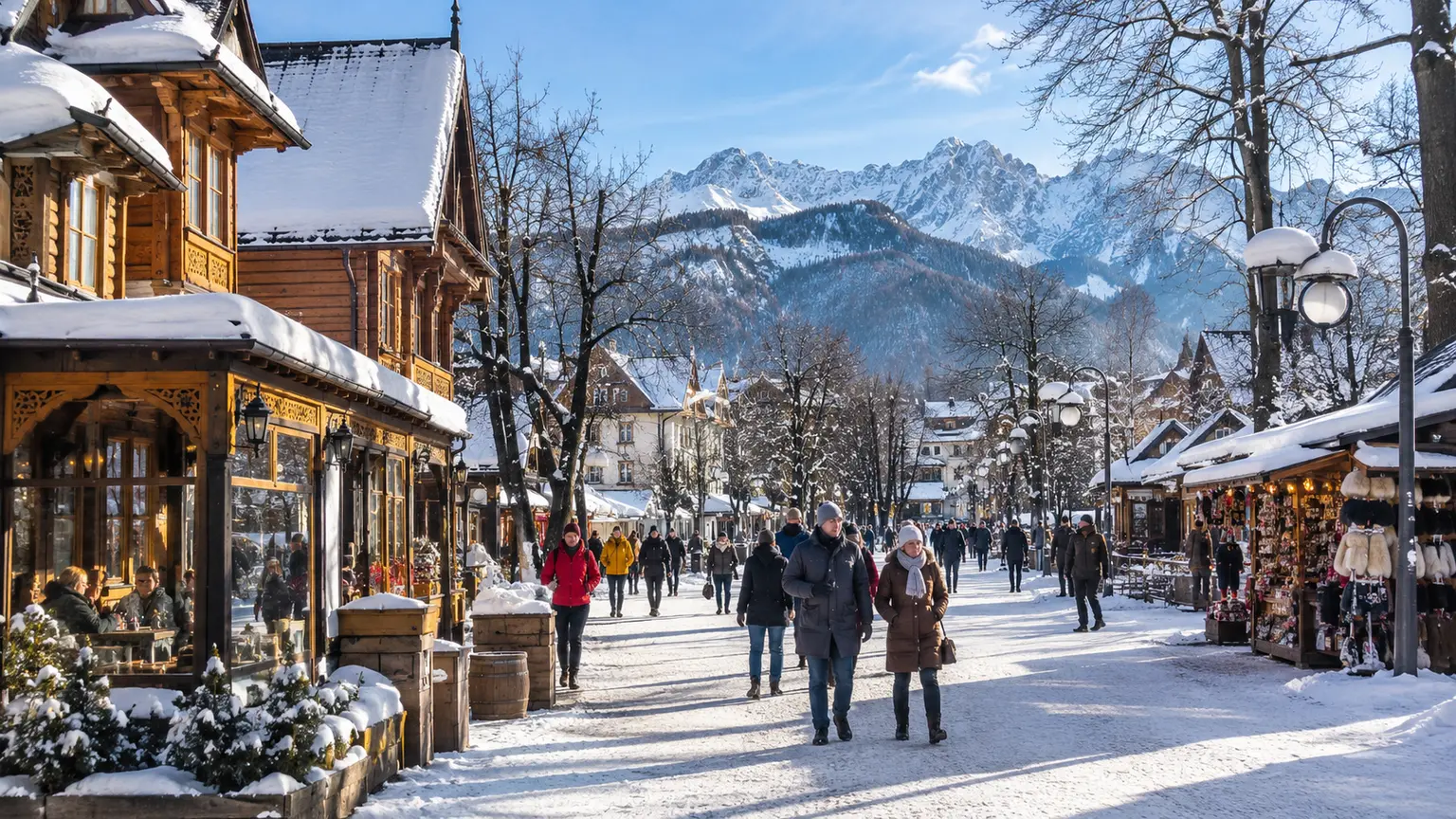
Krupówki Street is the social center of Zakopane and one of the easiest winter attractions to enjoy without special equipment. This pedestrian promenade brings together restaurants, shops, regional food stalls, and the lively atmosphere associated with Poland's mountain resorts.
During winter, decorated buildings, cold-weather food, and nearby snow-covered hills give the street a distinctive character. It can also be crowded and commercial, so the best experience comes from combining the promenade with nearby traditional streets and restaurants.
What Should You Eat in Zakopane in Winter?
Local highlander cuisine is an important part of the experience. Rich soups, smoked cheese, potatoes, and hearty meat dishes suit the cold weather particularly well.
Several regional specialties are worth knowing before ordering:
- Oscypek. Traditional smoked sheep's milk cheese, often grilled and served with cranberry sauce. Authentic protected-designation oscypek is seasonal, so not every cheese sold in winter under this familiar name is genuine oscypek.
- Kwaśnica. A sour cabbage soup commonly prepared with meat, particularly pork.
- Moskole. Traditional potato flatbreads, sometimes served with garlic butter or cheese.
- Pierogi. Polish dumplings with fillings such as potatoes and cheese, cabbage, mushrooms, or meat.
- Placek po zbójnicku. A substantial potato pancake served with meat stew.
Vegetarian visitors can find suitable dishes, but ingredients should be checked carefully. Some soups and regional preparations contain meat broth or animal fat even when the main ingredients appear plant-based.
For a more traditional dining experience, look for a karczma, a regional-style inn or restaurant. Wooden interiors, mountain decoration, and live highlander music can make dinner part of the cultural experience.
Is Zakopane Worth Visiting During Christmas?
Zakopane can be particularly atmospheric during Christmas and New Year, although festive markets and special events depend on the confirmed annual calendar. Visitors should not assume that every seasonal attraction operates throughout December.
A winter trip can also be combined with Kraków, whose major Christmas market is scheduled to run from November 27, 2026, to January 6, 2027. The city features in a broader comparison of Christmas markets in Europe in 2026, allowing travelers to combine historic Polish architecture and holiday traditions with a mountain escape.
4. Walk Through Kościeliska Valley in the Snow
Kościeliska Valley offers one of the most accessible introductions to winter walking in the Polish Tatras. The valley follows a scenic route through forests and limestone formations, with mountain streams and dramatic rock walls along the way.
The trail starts at Kiry, in the Kościelisko area west of Zakopane. Visitors can explore a shorter section or continue toward the mountain shelter at Hala Ornak when weather and trail conditions permit.
A valley walk is not automatically safe simply because it is less steep than a summit route. Snow, ice, falling branches, and avalanche conditions can affect lower mountain areas.
How Difficult Is Kościeliska Valley in Winter?
The main valley route is generally less technically demanding than high-altitude Tatra trails, but the required effort changes with snow depth and ice.
A short winter walk can take approximately two hours, while an outing toward the Ornak shelter and back may require four to five hours or longer depending on conditions and stops.
Before starting, check the Tatra National Park tourist bulletin and current avalanche information. Waterproof boots with good traction are essential, and microspikes may help on suitable icy paths.
Do not assume ordinary shoe grips are adequate for steep or avalanche-exposed mountain terrain.
Visitors should also remain on marked trails. Several caves and side routes that attract tourists in summer are unsuitable or closed during winter.
For a shorter alternative, the lower Strążyska Valley is another established winter walking option. It can be a better choice when a long hike is not practical, although the route still requires a current safety assessment.
The best winter hike in Zakopane is one that matches the weather, available daylight, and the least experienced person in the group.
5. Take the Kasprowy Wierch Cable Car Into the High Tatras
Kasprowy Wierch offers a different perspective on Zakopane in winter without skiing. Unlike Gubałówka, this cable car travels into the high mountains, reaching an upper station at approximately 1,959 meters (6,427 feet).
The journey begins in Kuźnice, a district of Zakopane, and involves a transfer between cable car sections at Myślenickie Turnie.
During the ascent, forests gradually give way to more exposed mountain landscapes. On clear days, the upper station offers views across the High Tatras and Western Tatras.
Can Non-Skiers Ride the Kasprowy Wierch Cable Car?
Yes. Visitors can purchase sightseeing tickets without skiing, subject to operating conditions and ticket availability.
However, this is an important distinction: being able to reach the upper cable car station does not mean the surrounding mountain trails are safe for casual winter walking.
Wind, poor visibility, ice, and avalanche danger can make the environment beyond the managed station area hazardous. Some routes require specialized mountaineering equipment and experience.
For visitors who simply want mountain scenery, the safest approach is to remain within the accessible station and viewing areas, following posted restrictions.
Check the cable car's operating status and mountain webcams before purchasing tickets. Strong winds can interrupt service, and fog may completely obscure the panorama.
Kasprowy Wierch is particularly appealing for travelers who want an impressive alpine experience without undertaking a mountain ascent. Nevertheless, Gubałówka remains the more flexible option for families and visitors seeking an uncomplicated outing.
6. Visit Morskie Oko for a Dramatic Winter Lake Landscape
Morskie Oko is one of the best-known natural attractions near Zakopane, and its winter appearance can be striking. Surrounded by steep Tatra peaks, the mountain lake often freezes or becomes covered in snow during colder periods.
Reaching it, however, requires considerably more effort than visiting Gubałówka or taking a cable car.
The standard walking route begins at Palenica Białczańska and follows a road of approximately 8–9 kilometers (5–5.6 miles) each way.
A return walk is roughly 16–18 kilometers, and winter conditions can make the journey significantly slower and more demanding.
Is Morskie Oko Safe to Visit in Winter?
Morskie Oko is not a universally safe or easy winter excursion. The approach crosses areas that can be exposed to avalanche danger, and the road may be icy or temporarily restricted.
The route should be considered only when current conditions, daylight, fitness, equipment, and experience make it appropriate.
Before planning a visit, check:
- Trail Conditions. Review current Tatra National Park notices and any temporary closures.
- Avalanche Danger. Check the mountain rescue avalanche bulletin and avoid exposed areas when conditions are unsafe.
- Daylight. Start early enough to complete the return before darkness.
- Footwear and Equipment. Match traction equipment to actual conditions and the route.
- Transportation. Confirm how to reach Palenica Białczańska and return to Zakopane.
Transport services on part of the route may be available, but arrangements can change. They should not be treated as a guaranteed alternative to walking the entire distance.
Never step onto the frozen lake. Ice thickness and stability are not reliably determined by appearance.
For travelers with limited winter hiking experience, Morskie Oko is better treated as a conditional option rather than a mandatory stop. A shorter valley walk or panoramic cable car ride can provide a rewarding mountain experience with less exposure.
7. Discover Zakopane's Wooden Architecture and Mountain Museums
Zakopane's cultural attractions make winter sightseeing possible even when snowstorms or strong winds affect outdoor plans. The town is known for a distinctive architectural tradition built around local materials, decorative woodworking, and highlander design.
One of the most important examples is the Zakopane Style developed by Stanisław Witkiewicz in the late 19th century. It combined local building traditions with an architectural approach intended to express the region's cultural identity.
Which Museums in Zakopane Are Worth Visiting?
The Tatra Museum and its branches offer an introduction to regional history, art, and architecture.
Particularly relevant stops include:
Villa Koliba
You may also be interested in our article: 20 Things to See in Croatia That Are Free or Surprisingly Cheap
Located at 18 Kościeliska Street, Villa Koliba houses the Museum of Zakopane Style. Designed by Stanisław Witkiewicz, the building is an important early example of the architectural movement.
Its interiors and exhibitions help visitors understand how the style developed and why wooden architecture became closely associated with Zakopane.
The Tatra Museum
The museum's exhibitions explore the natural environment, history, and traditions of the Tatra region. Opening schedules can vary between museum branches, so check the specific location rather than assuming all exhibitions operate at identical times.
Villa Atma
Villa Atma is associated with Polish composer Karol Szymanowski and provides another perspective on Zakopane's artistic history.
The town also contains historic wooden houses, traditional streets, and religious buildings. The Chapel of the Sacred Heart in Jaszczurówka is a notable example of Zakopane-style architecture.
A visit to these locations reveals a different side of the destination. Zakopane is not simply a winter sports resort but a mountain town with its own artistic and cultural heritage.
8. Experience a Traditional Polish Kulig Sleigh Ride
A traditional kulig is one of the most recognizable winter experiences in the Podhale region. These organized outings typically involve a horse-drawn sleigh ride, with some programs including a bonfire, regional food, and highlander music.
Kulig excursions generally take place outside central Zakopane, where rural roads and open landscapes provide a more suitable setting.
A shorter ride may last around 30–60 minutes, while an evening experience with food and entertainment can take several hours.
What Should You Check Before Booking a Kulig?
A winter sleigh ride can be enjoyable, but the experience depends heavily on the operator, actual snowfall, and animal welfare standards.
Ask about the total price, transportation, duration, weather policy, and how the horses are cared for.
Operators should provide clear information about the number of passengers, working conditions for the animals, and what happens if there is insufficient snow.
Some winter excursions substitute wheeled carriages for sleighs when snow conditions do not permit traditional rides. This should be made clear before booking.
Travelers who prefer to avoid animal-drawn attractions can choose a highlander cultural evening with traditional music and food instead.
The main appeal of a kulig is the atmosphere of the Podhale countryside after dark. It works best as an optional addition to a winter itinerary rather than an activity around which the entire trip depends.
9. Try Ice Skating or Snow Tubing Without Learning to Ski
Ice skating and snow tubing provide active winter entertainment in Zakopane without requiring skiing lessons. These activities are particularly suitable for families, groups of friends, and visitors who want something more energetic than sightseeing.
Seasonal skating rinks operate in the town during suitable winter conditions, with skate rental offered at selected facilities.
Snow tubing involves riding an inflatable tube down a prepared slope. Where available, it provides a short, accessible winter activity without the technical demands of downhill skiing.
Are These Zakopane Winter Activities Suitable for Children?
Many skating and tubing facilities welcome children, but age, height, and supervision requirements depend on the operator.
Parents should check whether suitable equipment is available and whether younger children can participate.
For ice skating, gloves and warm clothing are important, while a helmet is sensible, especially for beginners and children.
Tubing should take place only on designated, supervised runs. Ordinary ski slopes and unmanaged hills are not appropriate substitutes.
These activities are strongly weather-dependent. Some tubing facilities may not operate during warm periods or when snow coverage is insufficient.
For families planning Zakopane in winter without skiing, a short skating or tubing session works well alongside Gubałówka, cafés, and other attractions that do not require a full-day commitment.
When Is the Best Time to Visit Zakopane in Winter?
January and February are generally the strongest months for travelers hoping to experience snowy Zakopane, although snow in the town itself is never guaranteed. December offers a festive atmosphere, while March can provide a quieter transition toward spring.
The ideal month depends on whether the priority is snow scenery, Christmas celebrations, fewer crowds, or lower accommodation costs.
|
Month |
Winter conditions |
Crowds |
Main advantage |
|
December |
Variable snow, short days |
High around Christmas and New Year |
Festive atmosphere |
|
January |
Often cold, better snow prospects |
High during holiday periods |
Classic winter scenery |
|
February |
Strong winter conditions remain possible |
Busy during school vacations |
Outdoor winter activities |
|
March |
Highly variable, especially in town |
Often quieter outside holidays |
More daylight |
Visitors should also consider Poland's rotating winter school holiday schedule. Different regions have holidays at different times, contributing to busy periods throughout parts of January and February.
Snow in the higher Tatras does not guarantee snow-covered streets in Zakopane. Warmer spells, rain, and the regional halny wind can change conditions quickly.
For a flexible winter holiday, combine outdoor sightseeing with thermal baths, restaurants, and cultural attractions that remain enjoyable when snow is limited.
How Many Days Do You Need in Zakopane Without Skiing?
Three days offer a practical balance between mountain scenery, relaxation, and local culture. A two-day weekend is enough for the main town attractions, while four days provide more flexibility for weather-dependent excursions.
The following itinerary keeps travel distances manageable and avoids combining several demanding activities on the same day.
A Two-Day Zakopane Winter Itinerary
A short winter break is best organized around accessible attractions and one major relaxation experience.
Day 1
- Arrive in Zakopane and explore Krupówki Street.
- Ride the Gubałówka funicular.
- Enjoy a traditional highlander dinner.
- Visit seasonal evening attractions if operating.
Day 2
- Spend the morning exploring traditional wooden architecture.
- Travel to a nearby thermal bath complex.
- Allow time for the return journey.
This itinerary is appropriate for first-time visitors, couples, and families who do not want to undertake difficult winter hikes.
A Three-Day Zakopane Winter Itinerary
With an additional day, a short mountain walk becomes possible when conditions are favorable.
Day 1: Krupówki Street, local food, and Gubałówka.
Day 2: Kościeliska Valley or a shorter suitable trail, followed by a relaxed evening.
Day 3: Thermal baths and a museum or traditional architecture walk.
Kasprowy Wierch can replace the valley walk on a clear day if the cable car is operating. Morskie Oko requires considerably more time and should not be added casually to an already crowded schedule.
How Much Does a Zakopane Winter Trip Cost Without Skiing?
A winter vacation in Zakopane can be organized around a moderate budget, but total costs depend on accommodation, travel dates, meals, and the number of paid attractions.
Skipping skiing removes expenses such as ski equipment rental, lessons, and ski passes. However, sightseeing cable cars, thermal baths, and organized excursions still require a budget.
The following figures are approximate planning allowances in Polish złoty (PLN), not guaranteed admission prices or live booking quotes.
|
Expense |
Approximate allowance |
|
Gubałówka return funicular |
PLN 30–50 |
|
Thermal bath admission |
PLN 70–160 |
|
Museum visit |
PLN 20–35 |
|
Tatra National Park admission |
PLN 10–20 |
|
Casual restaurant meal |
PLN 35–70 |
|
Organized kulig experience |
PLN 100–250+ |
|
Ice skating or tubing |
Varies by venue and session |
For a relatively inexpensive day, focus on Krupówki, traditional streets, one paid viewpoint, and affordable local food. Thermal baths and organized excursions can be reserved for one or two selected days.
Accommodation often has a greater impact on the total budget than sightseeing. Prices can rise sharply over Christmas, New Year, and school holiday periods.
Booking refundable accommodation when available may provide useful flexibility if transport or winter conditions change.
How to Get to Zakopane From Kraków in Winter
Zakopane is accessible from Kraków by train, bus, or car. For international visitors, Kraków is one of the most convenient starting points because it has an international airport and established transport connections to southern Poland.
The journey usually takes approximately two to three hours, although winter road traffic and particular rail services can change travel times considerably.
Train or Bus From Kraków to Zakopane
Trains operate between Kraków and Zakopane, including services departing from Kraków Główny. The journey can be comfortable for travelers carrying luggage, but schedules and journey times should be checked for the actual travel date.
Intercity buses also connect Kraków and Zakopane. They can offer frequent departures, although road congestion may become significant during weekends and popular holiday periods.
Driving provides more flexibility for thermal bath excursions and remote attractions. Nevertheless, snowy roads, parking limitations, and winter driving requirements can make public transportation preferable.
Can You Explore Zakopane Without a Car?
Yes. Many central attractions are within walking distance, and local buses or minibuses serve several surrounding destinations.
However, reaching trailheads, thermal baths, and rural excursion locations can require transfers or additional planning. Services may be less frequent during evenings and holidays.
International travelers combining Zakopane with other European destinations can also benefit from checking how to avoid roaming charges in Europe before relying on mobile navigation, online tickets, and transport applications throughout the journey.
Download offline maps and save accommodation details before leaving Kraków, particularly if visiting mountain areas where mobile reception may be inconsistent.
What Should You Pack for Zakopane in Winter?
Warm, waterproof clothing and suitable footwear are essential for enjoying Zakopane in winter without skiing. Conditions can vary significantly between the town center, exposed viewpoints, and higher mountain locations.
A traveler who feels comfortable walking along Krupówki may encounter much colder temperatures and stronger winds at Kasprowy Wierch.
For a typical winter sightseeing trip, the most useful items include:
- Thermal base layers and insulating clothing.
- A warm, wind-resistant winter jacket.
- Waterproof boots with reliable traction.
- Warm socks, gloves, and a winter hat.
- Sunglasses and sunscreen for bright snow conditions.
- A compact daypack and reusable water bottle.
- A charged phone and a suitable power bank.
- Swimwear and pool essentials for thermal baths.
- Traction equipment appropriate to any planned walking route.
For winter hiking, additional equipment may be necessary according to conditions. Ordinary sightseeing boots and simple microspikes are not substitutes for specialized mountaineering equipment on technical or avalanche-exposed routes.
Winter daylight is also limited. Around the December solstice, sunset in Zakopane occurs before 4 p.m., reducing the time available for longer outdoor excursions.
Check Tatra National Park trail restrictions and current conditions before entering the mountains. Poland's general emergency number is 112, while the Tatra mountain rescue service TOPR also operates emergency assistance.
What Should You Avoid Doing in Zakopane During Winter?
The most common mistake is treating winter mountain activities as if they were ordinary summer sightseeing. Some familiar routes become dangerous when covered with snow, while outdoor attractions may close because of wind or poor visibility.
Avoid building an itinerary around activities that depend entirely on favorable weather.
Several precautions are particularly important:
- Do Not Enter Closed Trails. Park restrictions and temporary closures must be respected.
- Do Not Walk on Frozen Mountain Lakes. A frozen appearance does not establish safe ice conditions.
- Do Not Underestimate Hiking Distances. Ice and snow can significantly increase walking times.
- Do Not Assume Cable Cars Always Operate. Wind and maintenance can interrupt services.
- Do Not Rely on Snowfall in Town. Mountain peaks may be snowy while central Zakopane is wet or slushy.
- Do Not Ignore Return Transportation. Check schedules before visiting remote thermal baths or trailheads.
These precautions do not make Zakopane a difficult destination. They simply distinguish an enjoyable mountain holiday from a poorly planned winter excursion.
FAQ About Zakopane in Winter Without Skiing
Is Zakopane Worth Visiting in Winter if You Don't Ski?
Yes. Zakopane in winter without skiing offers scenic mountain viewpoints, thermal baths, traditional highlander food, museums, seasonal entertainment, and winter walks. Two or three days provide enough time for the main attractions.
What Are the Best Things to Do in Zakopane in Winter Without Skiing?
The best non-skiing activities include the Gubałówka funicular, outdoor thermal pools, Krupówki Street, Kościeliska Valley, Kasprowy Wierch, local museums, kulig rides, and seasonal ice skating or tubing. Morskie Oko is an additional option for properly prepared walkers when conditions are suitable.
Does Zakopane Have Snow in December?
Zakopane can have snow in December, but it is not guaranteed. Conditions are often more consistently wintry at higher elevations, while the town center may experience rain, slush, or temporary thaws.
Can You Visit Zakopane in Winter Without a Car?
Yes. Central Zakopane is walkable, and buses or minibuses connect the town with surrounding attractions. Transportation to remote thermal baths and trailheads requires more planning, especially in the evening.
Is Zakopane in Winter Suitable for Families With Children?
Yes. The Gubałówka funicular, thermal baths, museums, and suitable seasonal skating facilities are practical family activities. Longer mountain walks should be selected according to children's abilities and current conditions.
Can You Visit Morskie Oko in Winter Without Hiking Experience?
Morskie Oko is not a suitable guaranteed excursion for inexperienced winter walkers. The long approach can become icy and exposed to avalanche danger, so the trip should only be attempted when current conditions and individual preparation make it appropriate.
Which Month Is Best for Zakopane in Winter Without Skiing?
January and February often provide better opportunities for snowy landscapes, while December offers a festive atmosphere. Travelers seeking fewer crowds may prefer weekdays outside Polish school holidays.
Are Zakopane Thermal Baths Open During Winter?
Yes. Major geothermal complexes near Zakopane operate during winter, although individual zones, maintenance schedules, and holiday opening hours can vary. Advance tickets are useful during busy periods.
Is Zakopane Expensive for Non-Skiers?
Zakopane can be affordable without skiing because walking around the town and enjoying mountain scenery do not require ski passes or equipment rental. Accommodation, thermal baths, cable cars, and organized excursions are the main expenses to compare.